
‘Cold cases’: Durham police seek public’s help in unsolved homicide cases
About a week after Thanksgiving, Cesar Yanez-Ortiz and his wife returned home after shopping at Walmart.
Yanez-Ortiz, his wife, and his 12-year-old stepson started unloading groceries at their apartment in a complex off Horton Road in northern Durham.
A man approached Yanez-Ortiz, who was just outside his front door, while his wife was inside. The 12-year-old was behind Yanez-Ortiz.
“Cesar is shot twice and is killed almost instantly, right here in front of his family, “ Sgt. J.D. Piatt said.
On Tuesday morning, Piatt stood near the family’s former apartment in the Willowdaile complex and asked for help in finding the man who shot Ortiz on Nov. 29, 2016.
Police believe the attempted robbery was random, Piatt said.
It was also senseless, the homicide-unit sergeant said, as police don’t think anything was taken from Yanez-Ortiz who didn’t resist.
“We are looking for anybody that’s got any information, any leads, maybe saw something that night, ever so insignificant, to just give us a call,” Piatt said.
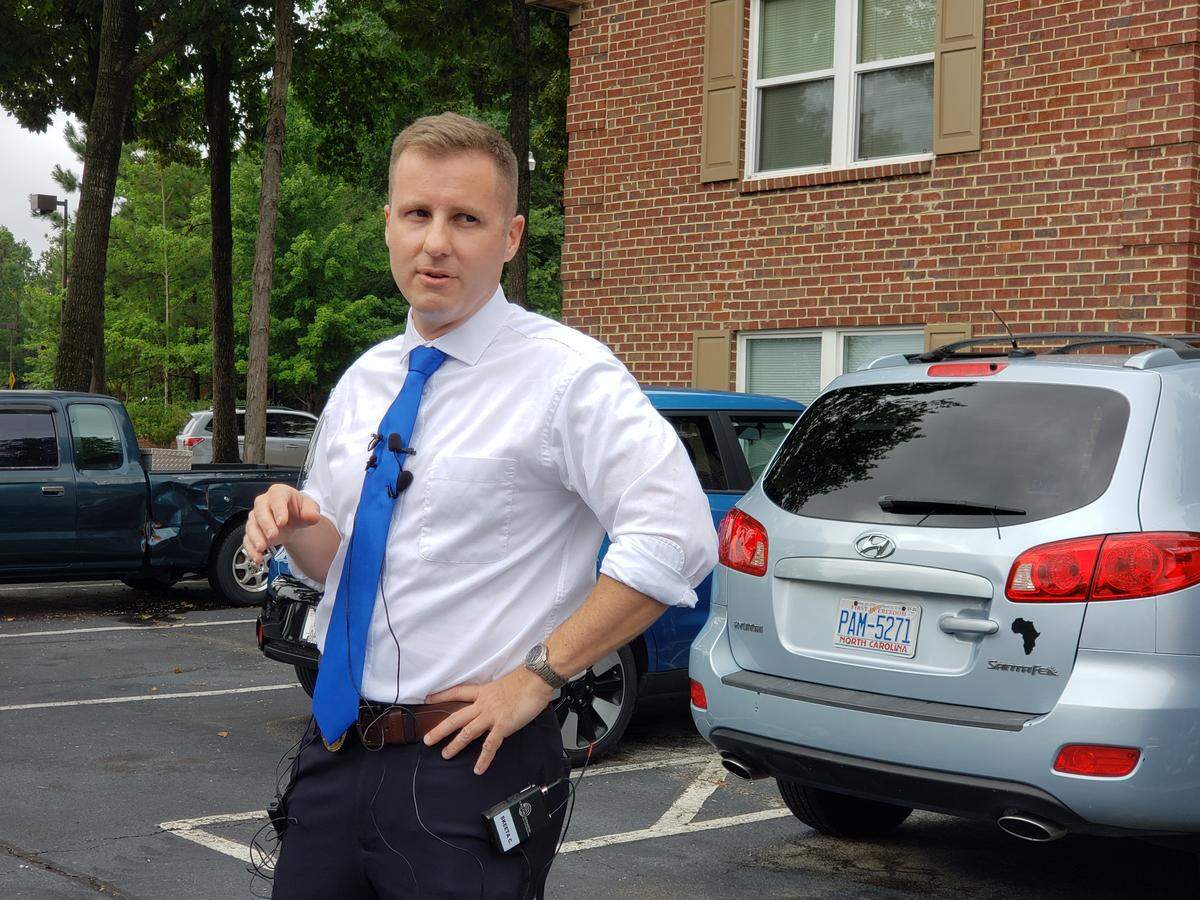
Tuesday’s briefing was the first of monthly events the Durham Police Department is planning to raise awareness about the city’s roughly 250 cold cases involving homicides that stretch back to the 1950s.
The Police Department has set up a cold case website and a phone number, 919-560-4118, for people to report information. Anonymous tips can also be reported to Crime Stoppers, which is offering an up to $2,000 reward for information.
Durham averages roughly three dozen homicides a year Piatt said. In 2017 and 2018 the Durham Police Department cleared through arrest or other actions 86 percent and 75 percent of homicide cases respectively, according to a quarterly report presented to the City Council. Cities similar to Durham’s size cleared about 53 percent of those cases and all cities cleared about 62 percent, according to the FBI.
“I think when you have that number, sometimes you lose track of people and they become statistics,” Piatt said. “We want to bring us out to the community as a police department as well as victims families together with the media to show that these folks are people.”
In the vast majority of the cold cases, the police have “suspects and or have good solid leads and we just haven’t been able to prove it enough to take it to the courtroom,” he said.
Typical challenges have included police not having much of a suspect description and crimes happening at 11 p.m. on a dark night.
“We have a couple of street lights, but if nobody is standing out here to see it then we don’t have a witness,” Piatt said.
After the shooting, Yanez-Ortiz’s wife, Luz Del Carmen didn’t want to drive at night for a while, she said through an interpreter, because she was scared the man was following her. Her son couldn’t sleep and eventually had to go to therapy.
Speaking in Spanish, Carmen said she holds out hope that that someone will eventually talk and her husband’s killer will be caught.
“We want justice,” she said, as her son interpreted for her. “That wasn’t the right way for him to die.”
This story was originally published July 23, 2019 at 6:34 PM.