United Methodist Church poised to separate over LGBTQ issues, if plan is approved
A negotiating team within the United Methodist Church has developed a plan for splitting the denomination, whose members had reached an impasse over whether to allow same-sex marriage and ordination of gay clergy.
The plan, announced Friday through the church’s news service, would allow congregations or whole conferences that lean toward the church’s traditionalist stance to vote to spin off into a new denomination. The new denomination would receive $25 million in United Methodist funds, and departing congregations would keep their local church properties.
Under the proposal, the official church language banning same-sex marriage and gay clergy eventually would be removed from the United Methodist Church’s Book of Discipline.
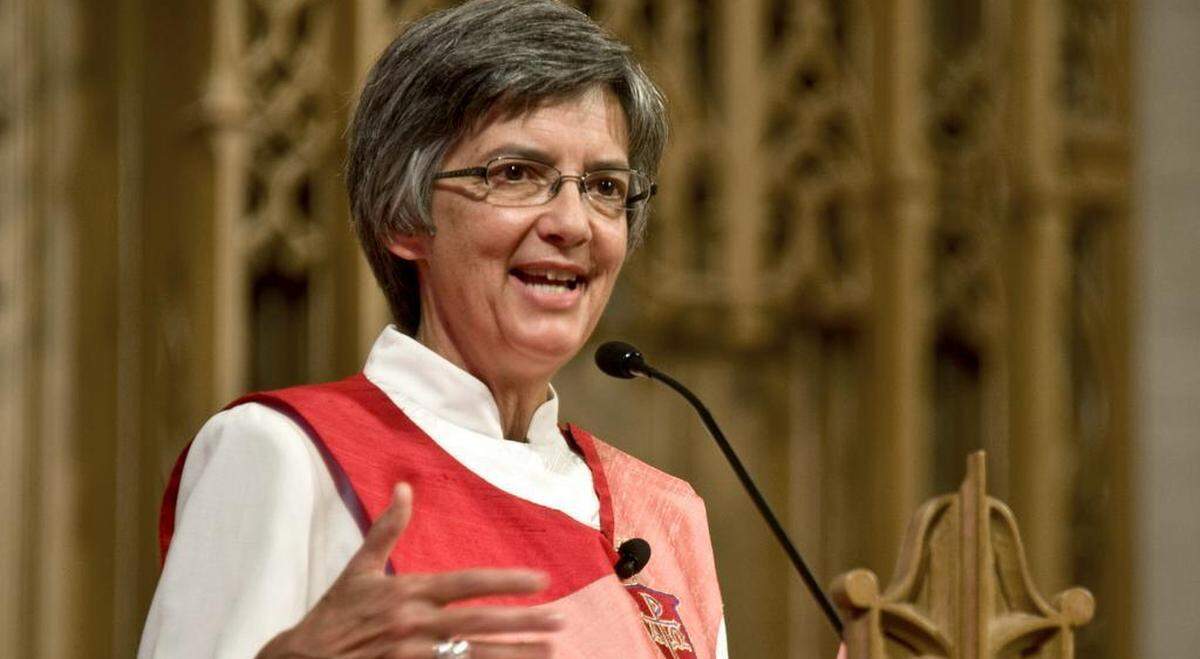
“We have experienced such division and pain and turmoil, that I think many in our church have realized that we need to create a path for people to be faithful as they sense the leading of the Holy Spirit and work to honor one another,” said Bishop Hope Morgan Ward, who presides over the North Carolina Conference.
The church said the proposal was drafted by a 16-member group of bishops and other church leaders with the help of Kenneth Feinberg, who led negotiations with the victims of the Sept. 11 terrorist attacks.
The proposal will need to approved at the meeting of the church’s governing body, called the General Conference, which is scheduled for May in Minneapolis.
The United Methodist Church claims 13 million members worldwide, including nearly 7 million in the United States. In some parts of the world, such as Africa and Asia, United Methodists take a more conservative stance toward homosexuality than many American congregations.
In North Carolina, the denomination is divided into two conferences, with more than 650,000 members as of 2010, according to the United Methodist Church.
The church has argued for decades over whether to allow the marriage of same-sex couples and the ordination of gay clergy. The denomination has barred both, and voted at a special conference to strengthen sanctions against churches that go against the bans.
Those sanctions were set to go into effect this year, but will be postponed by Friday’s announcement.
North Carolina Bishops react
Ward said Friday in a telephone interview that the group crafting the proposal — church leaders representing a wide range of United Methodist views in the LGBTQ debate — “has given a great gift to the church.” The state conference includes about 800 United Methodist churches in the eastern half of the state.
While not perfect, she said, the proposal provides a path.
“Throughout the history of Christendom, and in other religious groups, there have been times of groups coming together and merging, and times of separation,” Ward said. “And yet this great river of God’s grace and love continues to flow. I believe it’s flowing now through this effort.”
Bishop Paul L. Leeland of the Western North Carolina Conference issued a statement Friday urging members to “Reflect rather than react.
“Be prayerful for the church,” Leeland said. “Remain objective. Since this is a negotiated proposal, everyone is not entirely satisfied with the outcome, yet the denomination needs to look for the best solution to address its current impasse. “
The proposal offers a path that treats others with grace and respect, Leeland said.
“The primary question for me,” he wrote, “is how do we Glorify God and love others in our decisions? How can we be open to those who interpret and understand scripture differently as we worship God and serve neighbors while traveling along different paths of faithfulness?”
A divided denomination
While United Methodists celebrate their ability to worship and serve together, even when they disagree, deeply held beliefs about how the church should treat LGBTQ people have divided the denomination and individual congregations for decades.
The church first addressed human sexuality doctrinally in 1972, when the General Conference wrote into the Book of Discipline: “The practice of homosexuality is incompatible with Christian teaching. Therefore self-avowed practicing homosexuals are not to be certified as candidates, ordained as ministers, or appointed to serve in The United Methodist Church.”
The United Methodist Church defines marriage as a covenant “between a man and a woman,” and officially bans congregations from hosting same-sex marriage ceremonies.
Several United Methodist clergy have defied the ban, including First United Methodist Church in Charlotte in 2016. The church identifies as a reconciling congregation that welcomes LGBTQ members. The Rev. Val Rosenquist, senior pastor of the church, said Friday the denomination has no choice but to orchestrate a parting of the ways.
“I don’t see all the sides coming together on this issue, and it’s been on the backs of LGBTQ folks and their allies,” Rosenquist said in a phone interview. “All this waiting and waiting and waiting, and the fighting about it, as though it were an issue and not about the lives and sacredness of individual people. So much harm has been done. So, yeah. It’s time to stop.
“The idea of separation always hurts,” Rosenquist said. “But the harm has been going on for such a long time. And people are leaving. Why would anybody who is progressive at all look at the Methodist church? Why would anybody step into that fray?”
A traditionalist view
Like other denominations, United Methodists have argued over which is the sin: being gay or discriminating against people who are.
Ward said Friday she is optimistic the proposal will be approved at General Conference.
But it’s also possible that delegates to the General Conference could stop short of approving the plan, or any plan, that spells out a division of the church, said the Rev. Paul Stallsworth, pastor of Whiteville United Methodist Church and president of Lifewatch, a newsletter on the Taskforce of United Methodists on Abortion and Sexuality.
Stallsworth is a traditionalist who says he stands by the church’s historical teaching on homosexuality. Still, he said, he would be unlikely to separate from the United Methodist Church, even if it eventually removes the bans on gay clergy ordination and same-sex marriage. He said he doesn’t believe the church should engineer a breakup over the issue, but acknowledges that some members or churches would leave the United Methodist fold, even if the General Conference doesn’t adopt such a plan.
“I believe that my task is to be faithful to my ordination vows and to my Baptismal covenant vows,” Stallsworth said in a phone interview Friday. “And those vows have to do with faithfulness to the faith that I have received within the United Methodist Church. That would probably involve staying put and remaining faithful to the faith ... however that would work out.
The church is constantly reforming, Stallsworth said, which means that it is also sometimes deformed. “So people need to stay put and work for the enhanced faithfulness of Christ’s body, the church,” he said.
Will Willimon, director of the doctor of ministry program at Duke Divinity School, said it’s sad that the church appears headed for schism.
“A set of complex church issues were reduced to a showdown between the left and the right, ‘progressives’ and ‘traditionalists,’” Willimon said in a statement released by Duke. “Both factions love their take on the issues more than the continuance of the United Methodist Church. The bishops — unable to lead continuing discussion of our differences — have now decided that the best they can do is to oversee church disintegration.”
Ward, the bishop, said when looking at the proposal, “It’s tempting to think in terms of winners and losers.” But she said, “This is a wholehearted attempt to create ways for people currently in the United Methodist Church to live faithfully and authentically their Christian life and witness.
“I am confident that each of the 16 persons who were on this team, no one got everything they wanted,” Ward said. “Mediation is a meeting in the middle, a place where we think about the whole and try to create space for everyone, to have the most hospitable space for their life, their spirit, their mission, their growth.”
This story was originally published January 3, 2020 at 12:29 PM.