
Longtime N&O writer AC Snow reflects on his 70-year career as his column winds down
A.C. Snow, like many journalists, finds it a little unnatural to be on the other side of an interview. He has shared his life’s stories for decades in The Raleigh Times and The News & Observer.
But to sit on a couch and have someone ask him questions about himself, he finds himself initially uncomfortable.
“Be prepared for a somewhat dull interview as my life and career have been rather mundane,” he writes over email before the interview.
Over the next two hours, though, he reflects on his decades-long career in newspapers, stretching from The Burlington Times-News to The Raleigh Times (of which he was editor-in-chief for 16 years) to The News & Observer.
Though 95 years old, having written thousands of articles and columns, Snow has a remarkable memory for his career highlights. He periodically checks a list just to make sure he hasn’t forgotten a story he wants to tell. But he remains a natural storyteller, and common themes emerge.
“Well, I’ve come to think that every person I meet has a story inside,” said Snow, who will turn 96 in July. “Newspaper reporters are always looking for a story. And as you know, we all know, it may not be ‘Gone With the Wind,’ but there’s drama. And pathos. Grief. It’s an incredible profession.”
That’s why he says it has been emotional for him to retire from writing columns for The News & Observer — again. The column, first started in The Raleigh Times, continued in The News & Observer after The Times folded in 1989 and Snow retired from daily newspaper work. He still has written regular columns since then.
Sunday’s column, he says, will be his last.
At least a few times, he exclaims, “70 years!” to explain why now is the time, really, to stop. At the same time, he says writing that last column — which appears on the front of the Sunday Arts & Living section — filled him with anguish.
“You said you would do it temporarily,” Nancy Snow, his wife of 61 years, reminds him of how he has more than fulfilled that promise. “You did it temporarily from age 65,” she adds, letting him fill in the blank.
That stint turned into more years of connecting with readers about memories of growing up in the foothills of North Carolina, serving in World War II in the Air Force and the little observations about life that both amuse and move him.
Snow, the winner of numerous journalism awards, is a member of the Raleigh Hall of Fame and the NC Media & Journalism Hall of Fame.
Growing up in rural NC
“The last child in a large family, my Republican father routinely named his several sons after Republican presidents. So I was to expected be Calvin Coolidge Snow.
“But, to my Dad’s surprise, my normally submissive mother balked: ‘I’m naming this baby!’
“Eventually, my parents compromised. I was spared Coolidge, but not my mother’s choice, Aubert — a French name pronounced Au-bare, a name that was consistently questioned, mispronounced and giggled over by classmates and friends for decades to come. I enjoyed a few years of respite during my Air Force tenure when I, one of two Southerners in my squadron, was addressed as “Rebel.” At last, as a college freshman, I had the good sense to switch to A.C.” — From an Oct. 16, 2011 column
Snow was born in Dobson, a rural community in Surry County. His home and its setting permeate Snow’s columns: sweeping corn and tobacco fields, old farmhouses and churches and the stillness of “the hazy, smoky mountains that trace a soft blue pattern.”
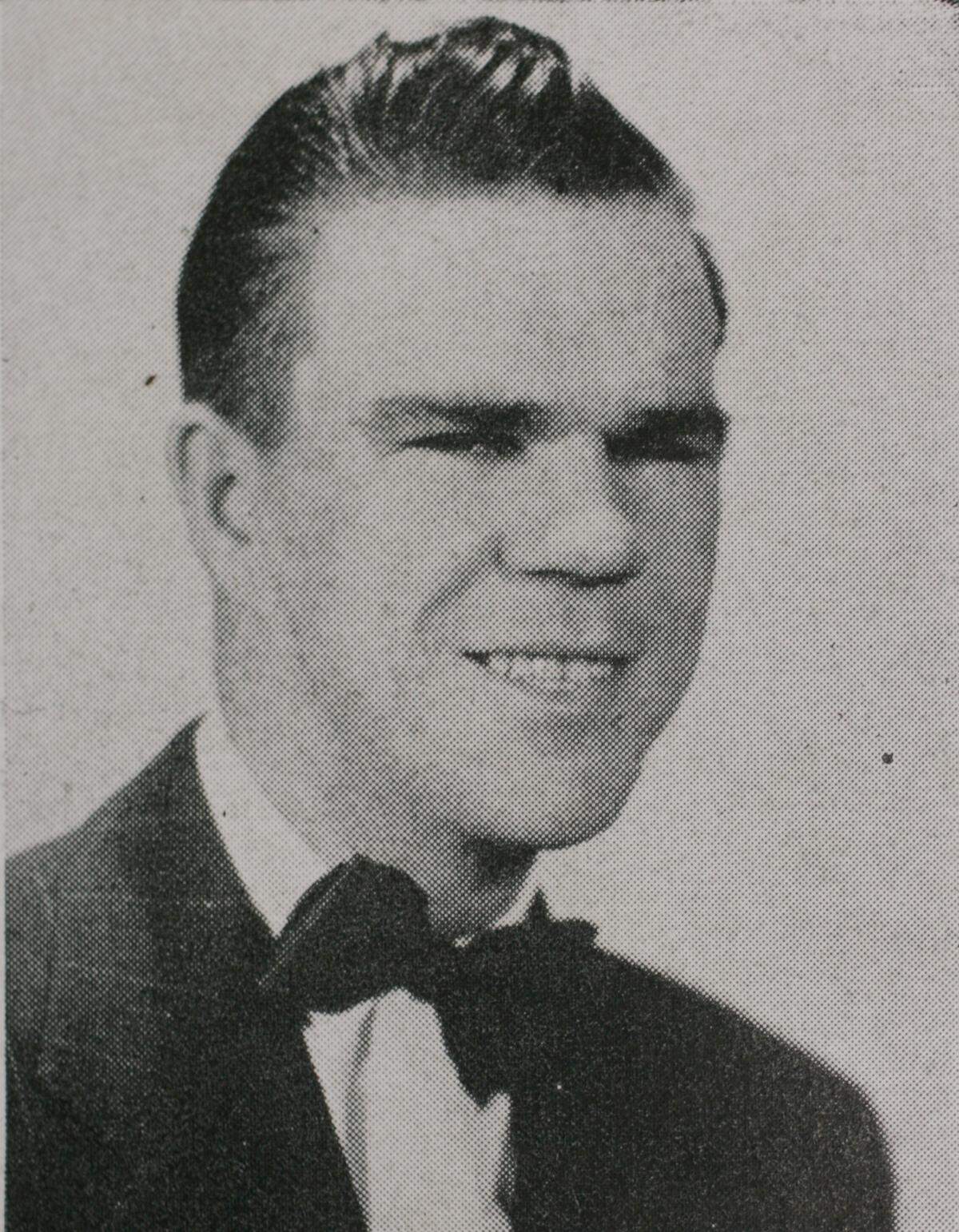
He jokes that his real name — what A.C. stands for — is a closely guarded secret, though archived columns show he wrote about it a few times.
He was the youngest of 15 kids — 10 boys and five girls. He says the siblings were separated by 40 years or so, and he ended up growing up alongside his nieces and nephews.
His pecking order in the family influenced his ultimate profession, he said.
“Well, there was always something in me that cried out for expression since I was a kid,” he said. “Part of it could be that as the youngest in a large family, I was kind of isolated and became an introvert to some extent.”
It was the Great Depression, and while there may have been struggles growing up on a farm, Snow wrote in 2015, “I wear the experience proudly, as if it were a red badge of survival.”
Snow, who graduated at the top of his class, was drafted in 1943, becoming one of his mother’s four sons to serve in the military at the same time. After serving in the South Pacific for about 18 months in cryptography, he returned home. He first attended Mars Hill Junior College, then went to UNC-Chapel Hill, drawn by his love for football and star player Charlie “Choo-Choo” Justice.
Snow graduated Phi Beta Kappa in 1950 with a journalism degree. While in school, he snagged his first professional byline with a class assignment — an interview with Betty Smith, famed author of “A Tree Grows in Brooklyn.” He pitched it to his hometown paper, The Winston-Salem Journal.
“And I got $5 for it,” he said, a touch of incredulity in his voice. “Which I never cashed.”
It proved to Snow that writing was how he wanted to share his voice, that his words could have power.
The role of the press
“A good newspaper has a provocative nature. Its mission is not only to report the news fairly and objectively. Its mission also is to seek out and expose corruption in politics and elsewhere, to report on and promote community responsibility and progress, and to befriend the poor and downtrodden.” — From a July 15, 2018 column
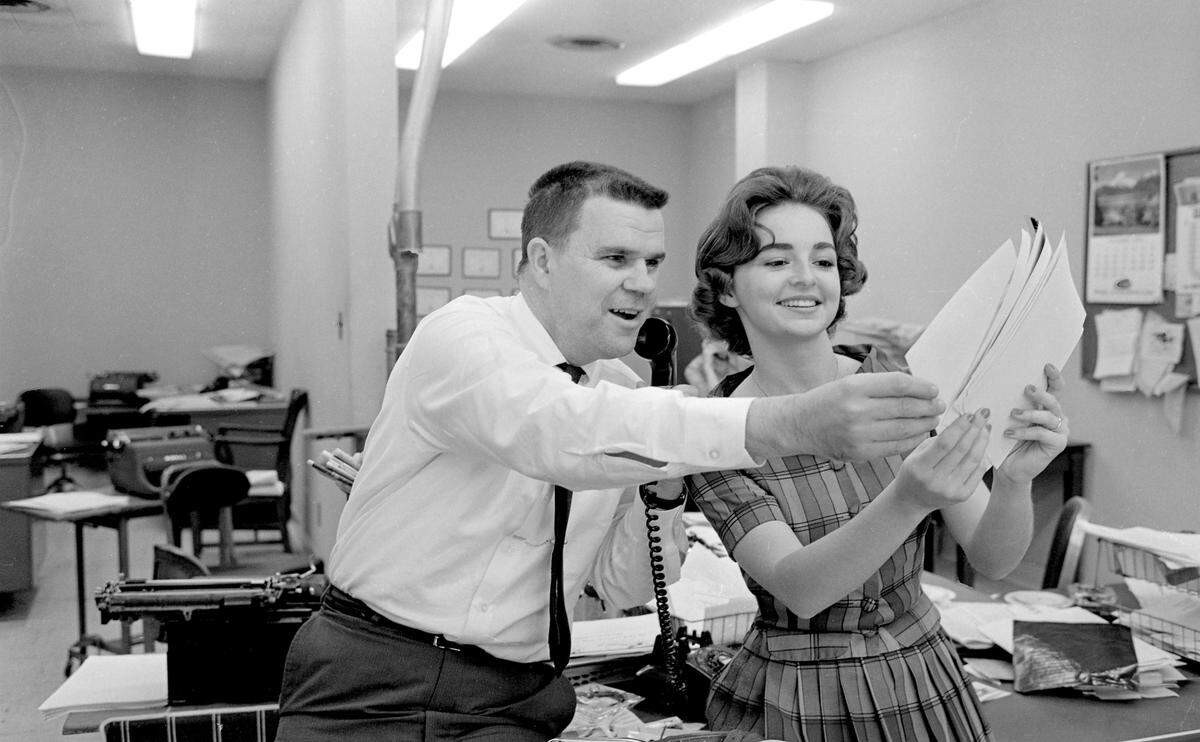
He moved to Raleigh in 1957 to work as the City Hall reporter at The Raleigh Times, then the afternoon counterpart to the morning News & Observer.
“It was a friendly place,” Snow said. “I was coming to a big city, and I was surprised it was so friendly. We had one obsession, the staff of The Raleigh Times: to scoop The News & Observer.”
The late Sen. Jesse Helms was a City Council member then and a rising figure in politics. Snow, whose columns don’t hide his political leanings, seems to use his words carefully when talking about covering Helms.
“I hesitate to talk about Jesse,” he said. “He was different, very conservative. There was a lot of controversy. He was the political star at the time.”
As a young reporter, Snow described himself as “eager” and ambitious. He said readers and his sources trusted him.
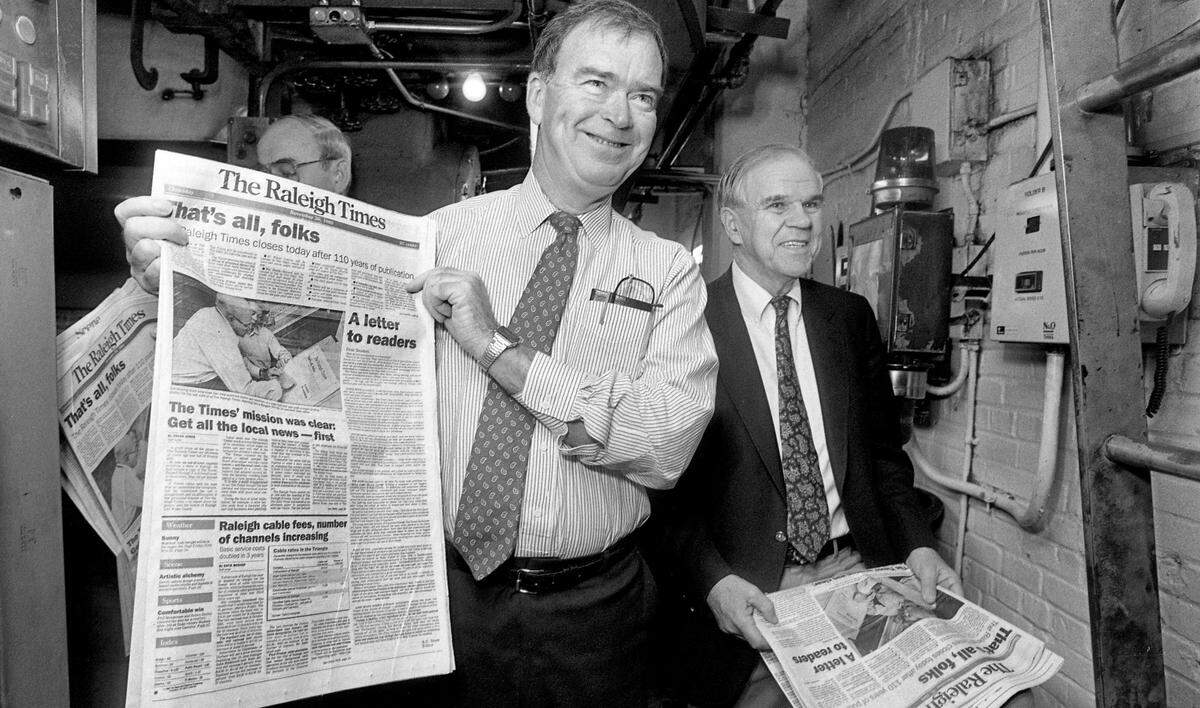
He added columnist to his title and was named city editor, news editor and then associate editor. In 1974, he was asked to be editor of the paper, a role he filled until the paper closed in 1989 and he wrote, “That’s all, folks” as the final front page headline.
But of all the jobs Snow had in newspapers, column-writing proved to be his favorite. At first, the column, called “Sno Foolin,’” started as something extra he did as a reporter, and then it became full-time. It’s what readers turned to each week, with four books published as collections of his essays.
Snow describes it as human interest column, a place to explore life and people. Sometimes a theme would carry through each week. Other times, he used the column to engage with readers.
Tackling hard topics
“Outside, afterward, I looked up at the sky, which never seemed bluer. I marveled at the mint-green leaves on the trees. Life had never seemed as sweet as it did at that moment.” — From a June 14, 2015 column
While Snow often touched on the lighter side of life, he didn’t avoid tough issues. On June 14, 2015, he wrote a column about a time he was assigned to cover the execution of a man convicted of attempted rape. Stepping outside Central Prison after the prisoner had died was like an awakening.
Today, he said the experience had a profound impact on him, and the stories he wrote about it were some of the most painful. It wasn’t just the execution itself, though that gave him nightmares. He said it was the callous comments from other people observing the execution with him.
“They were taking bets on how long it would take him to die,” Snow recalls.
When Snow worked at The Raleigh Times, segregation was still prevalent with separate water fountains for blacks and whites. Snow said while the newspaper advocated for the end of segregation, he wished society hadn’t waited so long to do something about integrating schools. Nancy, his wife, was a teacher at Broughton High School at the time, and was one of the first to teach an integrated classroom.
And then there might be the most painful column of all: when their 31-year-old daughter, Melinda, was killed by a drunk driver in 1996. In his first column after her death, he told readers how he learned of her death while he and Nancy were in Europe on a trip. Their younger daughter, Katherine Snow Smith, called them to break the news. He thanked readers for their outpouring of support.
“So many people knew me,” Snow said last week. “I tried not to be bitter because she was killed by a drunk driver.”
Connecting with readers
“One of the primary joys of my long journalism career has been my relationships with our readers. Their responses via letters, emails or in person have stimulated my thinking, contributed to my education, stirred my emotions, widened my horizons and, not least, provided fodder for comment.” — From a Sept. 16, 2018 column
Those reader comments, then and today, are what fuel Snow to keep writing and what makes it difficult to end now.
“And it’s like having a huge family and communicating with them,” he said. “Some of their reactions are unbelievable.”
Because before email and before social media, readers had no qualms about showing up at Snow’s office, calling him at home or telling him to his face what they really thought about what he wrote. Snow credits his patient and understanding wife with helping him deal with all of it.
But Snow recounts the harshest of insults with laughter. There’s the doctor who ran into him on the street and told him he enjoyed his column.
“He went to sleep reading one every night,” Snow said.
There’s the lumberjack who sent him a postcard from Oregon. Seems the lumberjack’s mother sent him one of the books of Snow’s columns.
“I read one in the bathroom every morning,” the man told Snow.
“One of my most treasured compliments,” Snow said.
Snow used his charm to defuse any complaints. When Snow was editor, a reader called him at home one night to complain about how a reporter quoted his mother.
“He told me he was coming out to my house, and he was going to beat my posterior,” Snow said. “But he didn’t use ‘posterior.’ I told him he’d have to hurry because I was just sitting down to dinner. He started laughing.”
A woman came to his office, plopped herself down in a chair and asked Snow to do something about the high price of a sausage biscuit from a shop around the corner.
Technology has changed since A.C. Snow first started writing, and some journalists have become more aggressive. He has traded his typewriter for a laptop, which he reads by the fireplace many mornings in his North Raleigh home. He keeps open the possibility of writing again if he feels “the urge to get something off my chest,” but acknowledges it’s “high time that I stopped.”
“I mean, 70 years!”
This story was originally published January 24, 2020 at 12:00 PM.