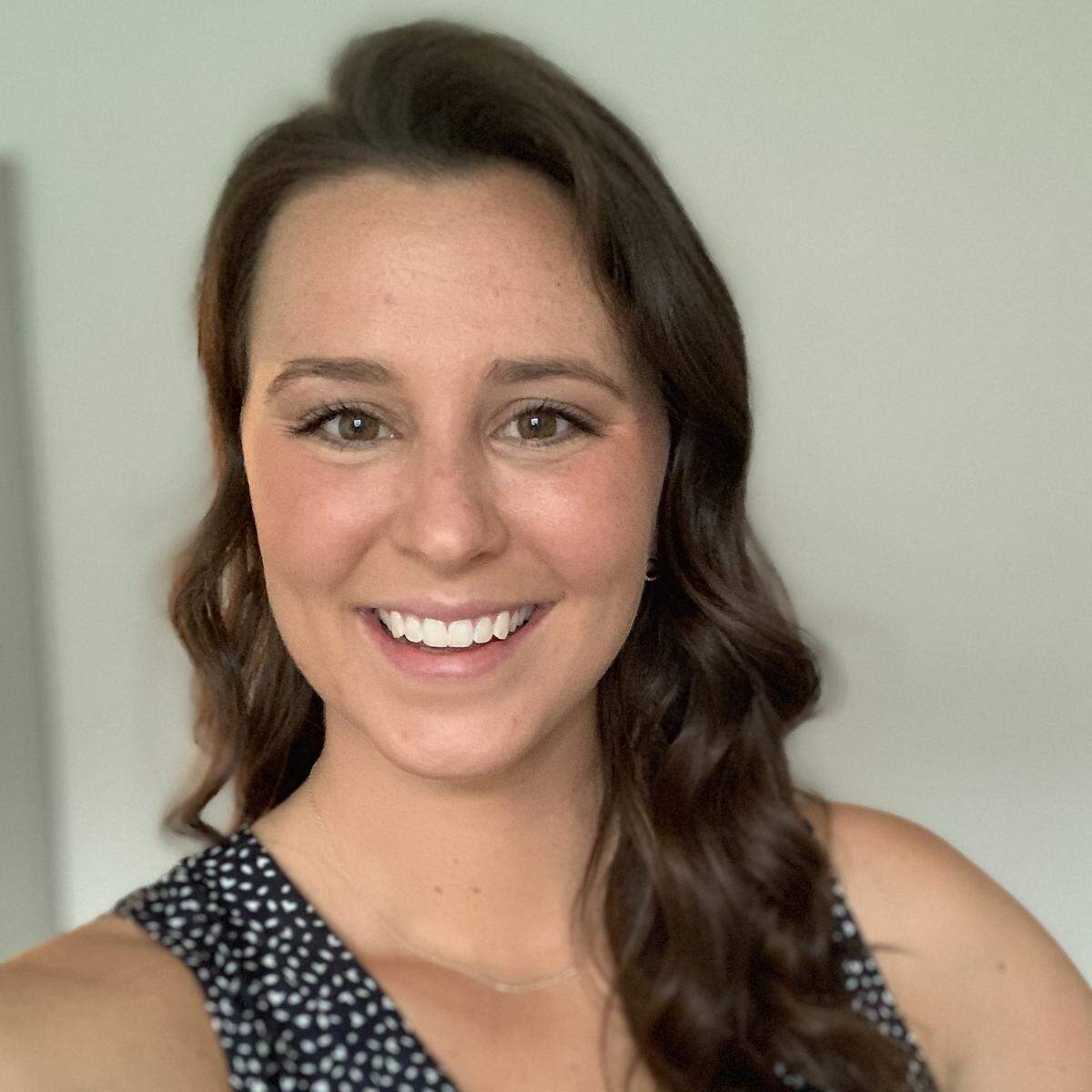
Her father, a Duke doctor, died as she dealt with pandemic. Now, she must grieve alone.
Her Saturday morning in Durham began with a walk to the store with her dogs and husband to pick up ingredients for a pie that was her grandmother’s recipe. She wanted to drop off a slice for her dad, who she hadn’t seen in a few days.
Then, she got called into work at North Carolina National Guard Joint Force Headquarters to prepare for the announcement of statewide school closures amid the growing threat of COVID-19.
“At that moment, it was the biggest honor of my entire career,” said Rebecca Feinglos Planchard, a senior early childhood policy advisor at the NC Department of Health and Human Services.
Planchard had no idea that her pleasant Saturday morning, March 14, would turn into one of the most critical moments in her career and then suddenly become the worst day of her life.
Her dad died unexpectedly that afternoon, and the coronavirus pandemic would only make the grieving process more difficult and more isolating.
A personal crisis amid a national crisis
Planchard called her dad that morning, like she did almost every day. She said she wanted to tell him about how honored she was to be tapped to help coordinate a response during “one of the worst health crises that the state or country has faced.”
He told her that he loved her and that he was proud of her. It was the last time they spoke.
Later that day, Planchard was standing in a room full of state leaders with a whiteboard marker in her hand discussing the implications the school closures would have on children and their families when a colleague told her she had two missed calls from her step mom.
That was unusual and she knew her father was dealing with health issues, so she stepped out of the room and called back.
“It was like the words didn’t make sense, I just couldn’t move,” Planchard said. “She told me, ‘your daddy has passed away.’”
Her father Dr. Mark Feinglos, 72, died of an unknown cause in his home in Durham on March 14. He worked as a physician at Duke Hospital for nearly 50 years and spent more than a decade as Chief of Duke’s Division of Endocrinology.
Feinglos had respiratory symptoms at the time of his death, and the family did a COVID-19 test post-mortem, but it was negative.
While on the phone, Planchard collapsed to the floor. She’d been hit by the absolute worst news in the middle of this intense and chaotic professional moment, she said.
“I’m on the ground just sobbing in this hallway in this building,” Planchard said. “And I’m alone.”
Several people left the meeting to check on her. For those moments, helping her stand up, getting her into a private room and talking to her step mom on the phone, they weren’t “state health officials,” they were colleagues and friends.
Dr. Mandy Cohen, Dr. Elizabeth Tilson and others who are leading the charge for the state tackling this national crisis for the North Carlinians were there to support Planchard during her personal crisis.
Funeral services scaled back during coronavirus
Planchard drove out of the maze of the State Emergency Operations Center and back to her dad’s house, her childhood home, to meet her husband and step mom.
She called Rabbi John Friedman to talk about the Jewish traditions and funeral preparations, which Planchard was familiar with because her mom died of brain cancer about 15 years ago. Things were going to look and feel a lot different this time, as the pandemic has changed funeral services across North Carolina.
Feinglos was a prominent member of the Durham community, professionally and personally, and his funeral would’ve reflected that under different circumstances. Like at Planchard’s mother’s funeral, the synagogue would’ve been overflowing with guests, police would’ve lined the streets for the procession and more than a hundred people might’ve gathered at the gravesite for a formal ceremony.
Instead, the burial was small, with just seven family members, Friedman and a few staff. Planchard had to be a pallbearer and carry her father’s casket.
For Friedman, rabbi emeritus at Judea Reform Congregation and a close family friend, the intimacy of the service was consoling and comforting. The strong sense of presentation and production that comes while standing before a large crowd at typical services was replaced by candor and laughter and stories shared, he said.
“There was something quite lovely about it because it was so small,” Friedman said. “And all the people there were the very closest of the family who could make it.”
A big adjustment for funerals and families
Stephen Davis, executive director of the North Carolina Board of Funeral Service, said it’s been a significant adjustment for funeral licensees and families handling the restrictions set by local and state governments, whether the death is related to COVID-19 or not.
Funeral homes are deemed an essential service. In his stay-at-home order, N.C. Gov. Roy Cooper specifically included a reference for families who need to mourn and pay proper respects to their loved ones who’ve died, allowing up to 50 people to attend gatherings, funerals and memorials. But some North Carolina counties have more strict rules limiting groups to 10.
“We’re not wired to say no to a family or create a lot of obstacles and rules around memorials and funerals,” said Mark Blake, a funeral director at Brown-Wynne Funeral Home & Crematory in Raleigh. “But what we’re trying to do is keep this virus from spreading and allow them the opportunity to properly grieve and honor their loved one. It’s not easy.”
Blake said they are offering to hold services through video conferences or live streams on Facebook. They’re also postponing ceremonies and working with local clergy to conduct services at cemeteries or the funeral home for immediate family members.
When a Jewish person dies, the tradition is to bury them as soon as possible and start the week-long mourning process called Shiva.
All the mirrors in the house are covered, no one wears any makeup and every morning or evening a group of people gather to pray, Planchard said. Family and friends travel from around the country to grieve with the family. The front door stays unlocked and people come in and out all day. They greet each other with hugs, sit on couches telling stories and bring over too much food.
But none of that could happen because of the coronavirus pandemic.
“To have to do it alone because of social distancing has made an already painful situation a thousand times worse,” Planchard said. “All you want is physical contact, and you don’t realize how hard it is to not have that until you don’t.”
Grubhub carriers delivered food to the front porch and some friends left notes on the door but couldn’t stay. Friedman dropped off ribbons in the mailbox for family members to wear that represent the tearing of clothes during mourning. He waved to the family through the window, and they blew him a kiss.
“Our normal social structures, religious institutions and networks who are supposed to be there physically for one another can’t be right now,” Planchard said. “It is heartbreaking and it just kind of leaves me feeling really empty right now.”
Planchard’s brother Daniel, who lives in Montreal, drove down for the funeral because he didn’t feel safe flying. But he was only able to stay for a few days because of the heightened travel restrictions. He needed to get back to Canada to care for their elderly grandmother.
Grieving alone during social distancing
That Friday night after the burial, the family normally would’ve gone to the synagogue together. They would have stood up as their father’s name was read out loud by the rabbi and recited the ancient Jewish prayer called the Kaddish to honor him.
Instead, Planchard sat in front of a screen watching a Facebook live stream of the congregation’s rabbi giving the service from his home with spotty Internet. She still stood up when the rabbi said her father’s name.
“We were trying to feel that sense of community,” Planchard said, “but how can you really?”
Planchard has been coping with the loss through social media, which would usually be avoided during Shiva. She said it’s helped her feel less isolated.
“Without that I could not possibly feel like I was mourning him,” Planchard said. “To grieve properly and effectively, you have to be seen grieving, it’s about connection.”
She talked to her dad’s old high school friends on Facebook and wrote about the time she and him applied to be on a musical game show. She posted about buying macarons from her dad’s favorite bakery on Instagram.
The family set up a Zoom call on the second to last day of the Shiva period. Some joined from Israel and 13 of her dad’s cousins and their kids prayed together in Hebrew.
She also joined a pop-up counseling group with about 4,000 other people that national grief expert David Kessler put together on Facebook. The group is for people who’ve lost loved ones and are navigating grief during this pandemic.
“I never would’ve thought I’d be posting in a group full of strangers or commenting on a stranger’s grief or ‘hearting’ their post,” Planchard said. “That group has been so comforting ... just realizing that I’m not alone.”
The Jewish funeral traditions and support during this grieving process feel cobbled together, Planchard said. But there are plans to honor Feinglos’s life in a bigger way once things settle down.
On the one year anniversary of his death, the family will gather again at the cemetery and unveil the headstone formally marking the grave.
Planchard said she will contact Duke Hospital, send invitations or do whatever it takes to get people there to honor him, because her father deserves to be celebrated.
But until then, she’ll sit in her home every Friday night live streaming the rabbi’s service.
She’ll be the only Jewish person in the room, listening to the prayers and singing along with the ones that she can find online because she doesn’t have a prayer book.
The internet will probably be cutting in and out on the rabbi’s end, she said, but she hopes that doesn’t happen when he says her father’s name.
Planchard will continue to stand up to mourn him during that moment, even if she’s standing alone.
This story was originally published April 3, 2020 at 3:46 PM.