
A transplant could save their dog’s life. COVID-19 could keep NC clinic from providing it

When Robby and Brianna Gausman adopted their chocolate lab mix, Ajax, six years ago, no one had ever heard of COVID-19.
Now it has turned everyone’s world upside-down across the globe — including, although he may not realize it, Ajax’s.
A few months ago, the Gausmans noticed that Ajax was drinking a lot more water than normal. An online search revealed that could mean calcification of his lymph nodes, and Gausmans noticed his lymph nodes were swollen.
When they took Ajax to the veterinarian, he was diagnosed with an aggressive lymphoma, a cancer that begins in the immune system. The vets told the Gausmans that chemotherapy could help extend his life.
It turns out Ajax tolerates chemotherapy well, which is good, but not enough to save him.
He got chemo once a week for 14 weeks and went into clinical remission.
Brianna’s uncle, who is a veterinarian, told them about a stem cell treatment offered at the N.C. State College of Veterinary Medicine in Raleigh. They looked into the program and found the treatment has a 20% success rate if the vets use the animal’s own stem cells and a 50% to 80% success rate if a relative can be located to be a donor.
The procedure involves total body radiation, which kills the cancer but also the bone marrow and the dog’s ability to make stem cells, which is where the donor comes in. The donor’s stem cells keep the dog alive while it recovers from the intense radiation.
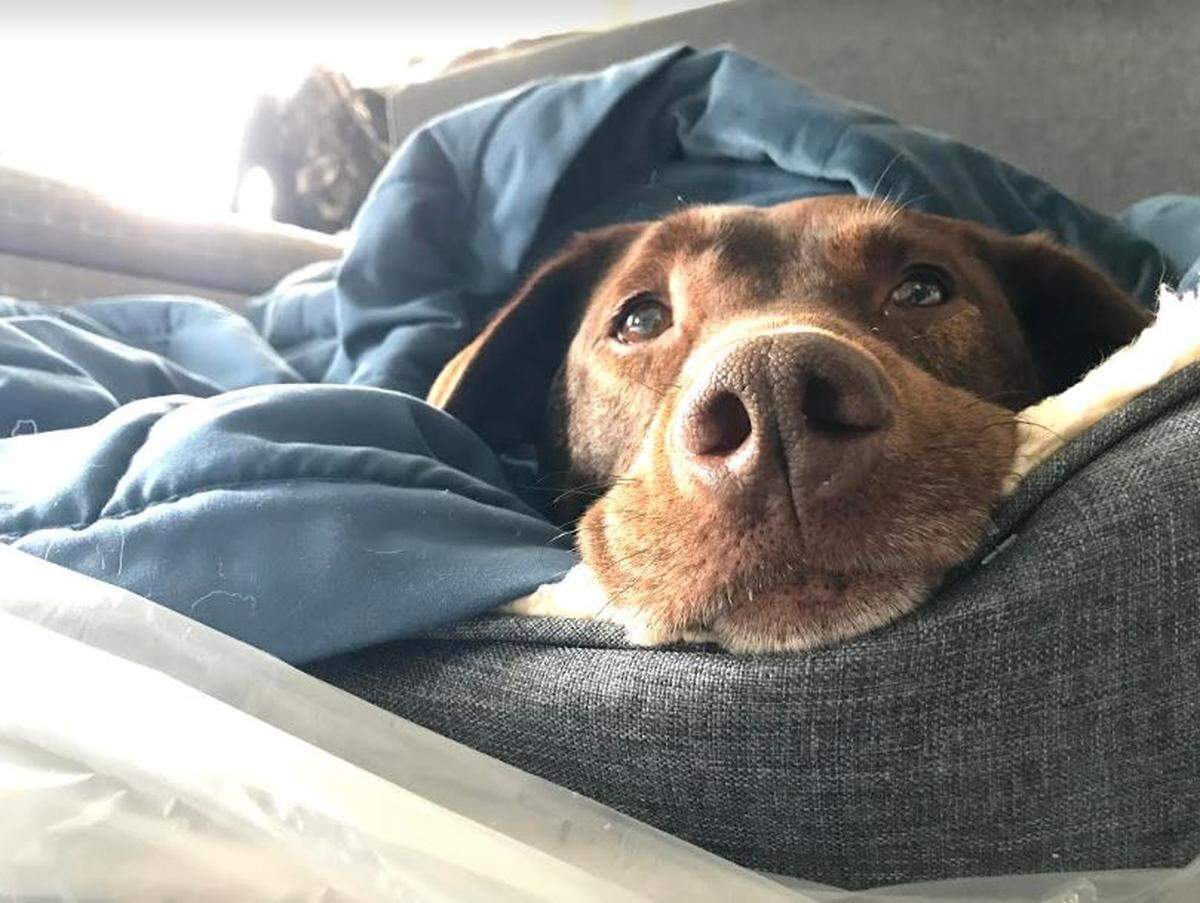
Adopted from a shelter
The Gausmans adopted Ajax when he was 8 weeks old from a shelter in South Carolina, where they were living at the time, and they didn’t know any of his relatives. They contacted the shelter and heard back that his brother, Duke, might be able to help.
A laboratory in Washington state analyzed Duke’s blood to see if he was a match, a less than 25% chance. But Duke was a match, and the procedure was scheduled for April 2 at N.C. State.
The biggest risk to the donor, said Dr. Steven Suter, the medical director for canine bone marrow transplants at N.C. State, is from the anesthesia.
Suter’s done the procedure 150 times and never had a problem with the donor, he said. The donor gets medication that boosts white blood cell production and drags out the stem cells where they can be collected. “The harvesting procedure’s quite benign,” he said.
In the meantime, though, COVID-19 precautions closed the veterinary school except for emergency procedures, and Ajax’s transplant is not considered an emergency.
Ajax’s procedure is now postponed indefinitely, even though if he were to relapse, and go out of remission, it would decrease the chance of the stem cell procedure working.
“They, I guess, are not qualifying it as emergency enough,” Brianna said.
The procedure requires a 2 1/2-week stay for the patient and N.C. State doesn’t have the staff to carry that out, Suter said. The only animals being operated on right now are “on death’s doorstep,” he said.
“I understand what the Gausmans are saying,” he said, “but medically speaking, unfortunately, it’s not an emergency.”
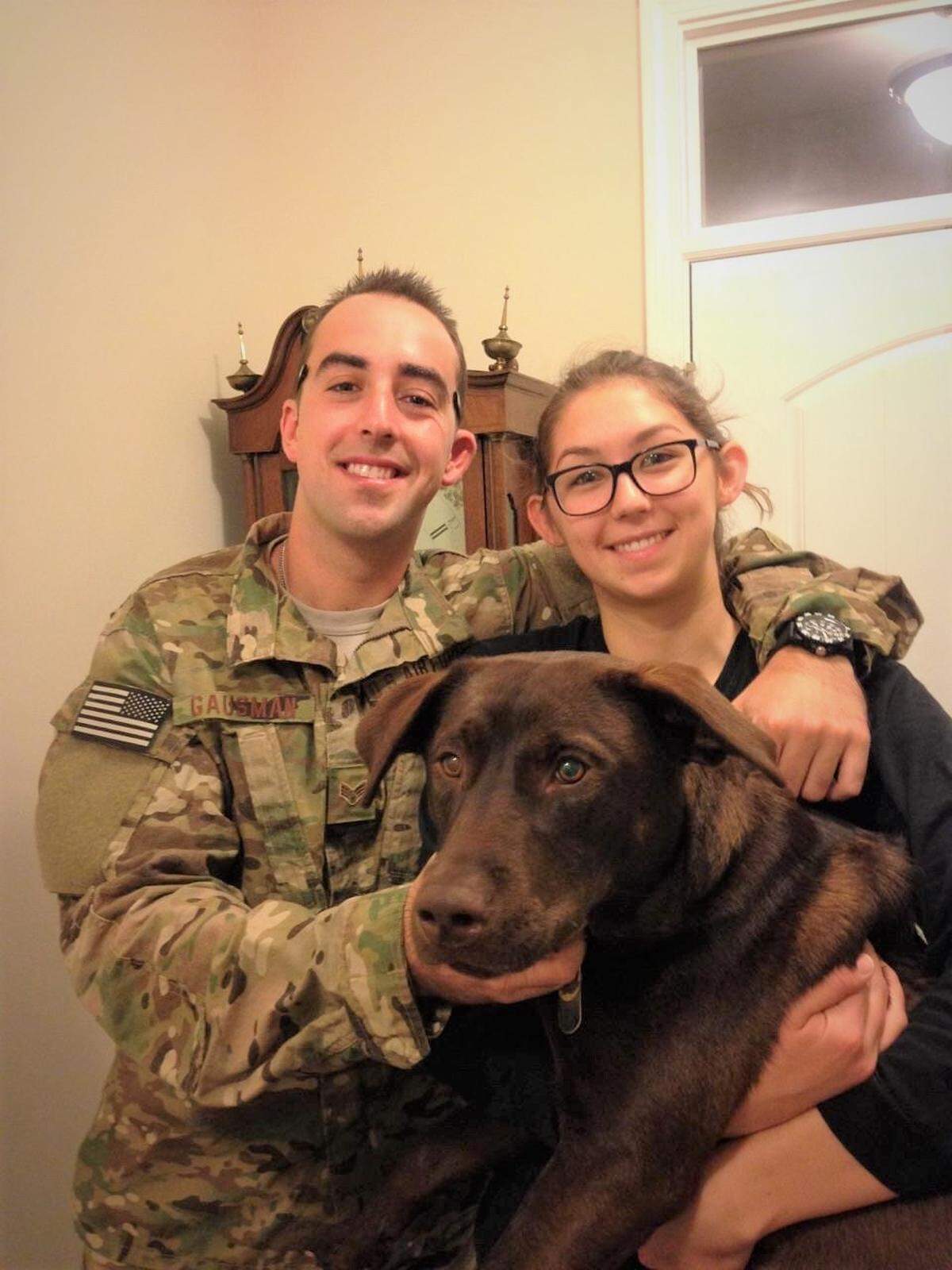
If Ajax stays well, Brianna said, he has about six months to live before he needs the stem cell transplant.
The Gausmans are also worried the lab in Washington could shut down during the pandemic and they could lose access to Duke’s blood and N.C. State wouldn’t be able to do the procedure even if it reopens.
“It was kind of a low blow to us when we found out our procedure was going to be postponed,” said Robby, an Air Force veteran and a firefighter and emergency medical technician trainee in Wilmington. “It’s just so time sensitive.”
The Gausmans moved to Durham a few years ago so Brianna could study physical therapy at Duke. She now works as a physical therapist for the Durham Veterans Affairs Health Care System.
“Both my husband and I are health-care professionals,” Brianna said. “We couldn’t support social distancing more, but it seems unfair that I can still pick up take-out food but I can’t drop my dog off for a lifesaving procedure that’s been planned out months in advance.”