
NC House passes $1.7 billion COVID-19 response bill. Lawmakers expect final votes Friday.
The North Carolina House passed its $1.7 billion COVID-19 response bill, called the Pandemic Response Act, on Thursday. The state legislature returned to Raleigh this week focused on deciding how to spend the $3.5 billion given to North Carolina by the federal government to respond to the coronavirus pandemic.
The package includes millions in funding for education, healthcare, food banks, small business loans and other COVID-19 relief.
It also includes money for coronavirus testing, contact tracing and tracking data trends as well as Personal Protective Equipment.
The House bill was passed 116-1. Rep. Michael Speciale, a Craven County Republican, was the only “no” vote. He had submitted an amendment, but House Speaker Tim Moore said amendments on the bill would keep them there longer. Speciale’s amendment would have stricken language that would have allowed mixed drinks to be sold via delivery or take out.
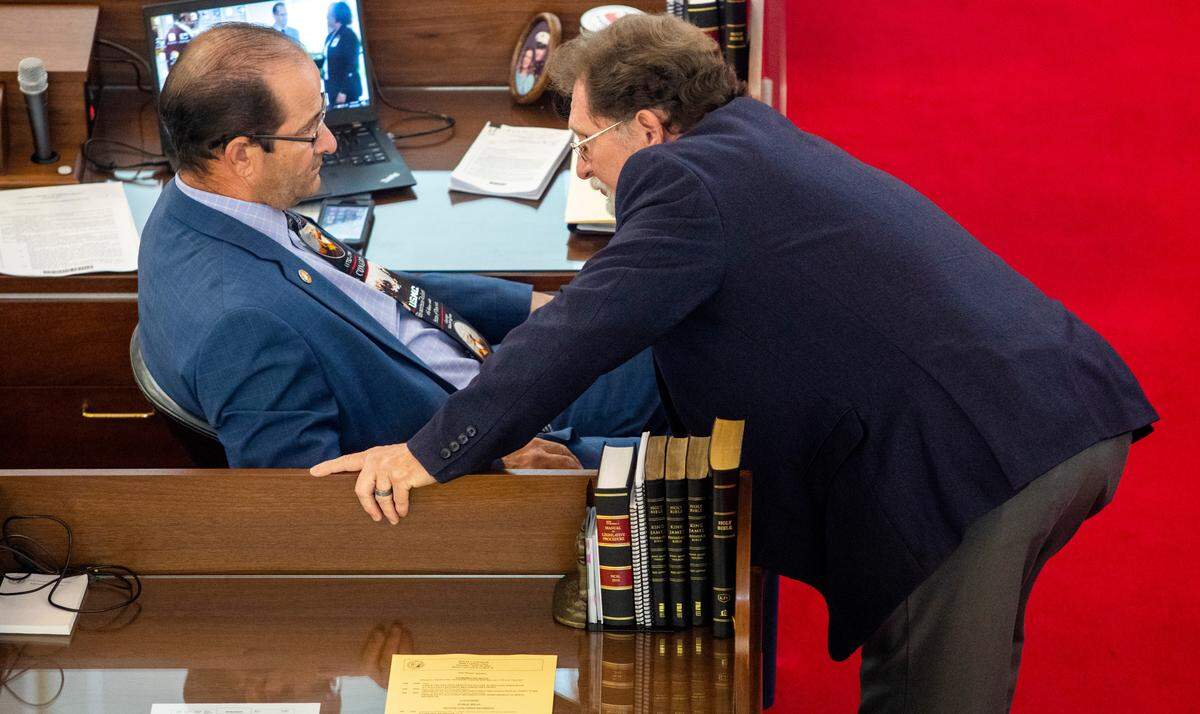
The Senate passed its own bill, the $1.36 billion COVID-19 Response Act, on Wednesday night. Both bills determine how to spend the federal money coming to the state. Senators increased funding from its original $1.2 billion plan, adding $106 million for the Department of Health and Human Services and Department of Public instruction, but the final amount is still millions less than the House’s plan.
Rep. Jason Saine, a Lincolnton Republican, said the bill was a historic moment as members of both parties worked together to fund the state’s coronavirus response. The House has spent a month in remote COVID-19 committee meetings drafting smaller bills that were rolled into one comprehensive bill. One aspect of the House’s bill that the Senate’s does not include is a temporary Medicaid expansion for COVID-19 patients.
Saine said this is their initial response to the crisis and that there will be more to come.
Rep. Craig Horn, a Union County Republican, said the K-12 education part of the bill “focuses on the immediate needs of our students.” It includes waivers for testing and modifies the school calendar, moving up the start date a week earlier to Aug. 17. The school year will still end on June 11 in the House bill.
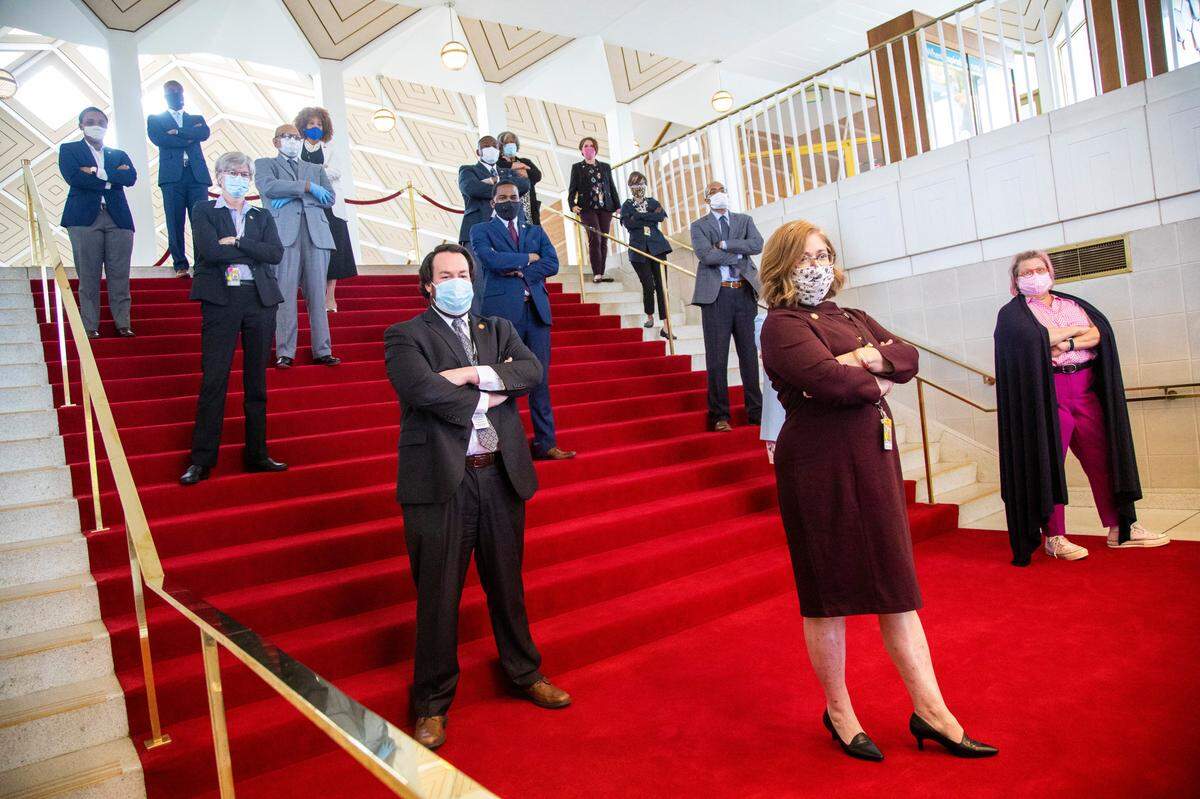
What’s next
House Speaker Tim Moore was hopeful the two chambers could come to an agreement later on Thursday, but that didn’t pan out. Instead negotiations are continuing Thursday night, and if they reach an agreement, will vote on Friday. Because each chamber passed its own bill, going back and forth could take multiple days. Moore said that instead, each chamber will submit a substitute bill that is the same, and both will vote on it. Then assuming that version passes, the bill will be sent to Gov. Roy Cooper to sign.
.
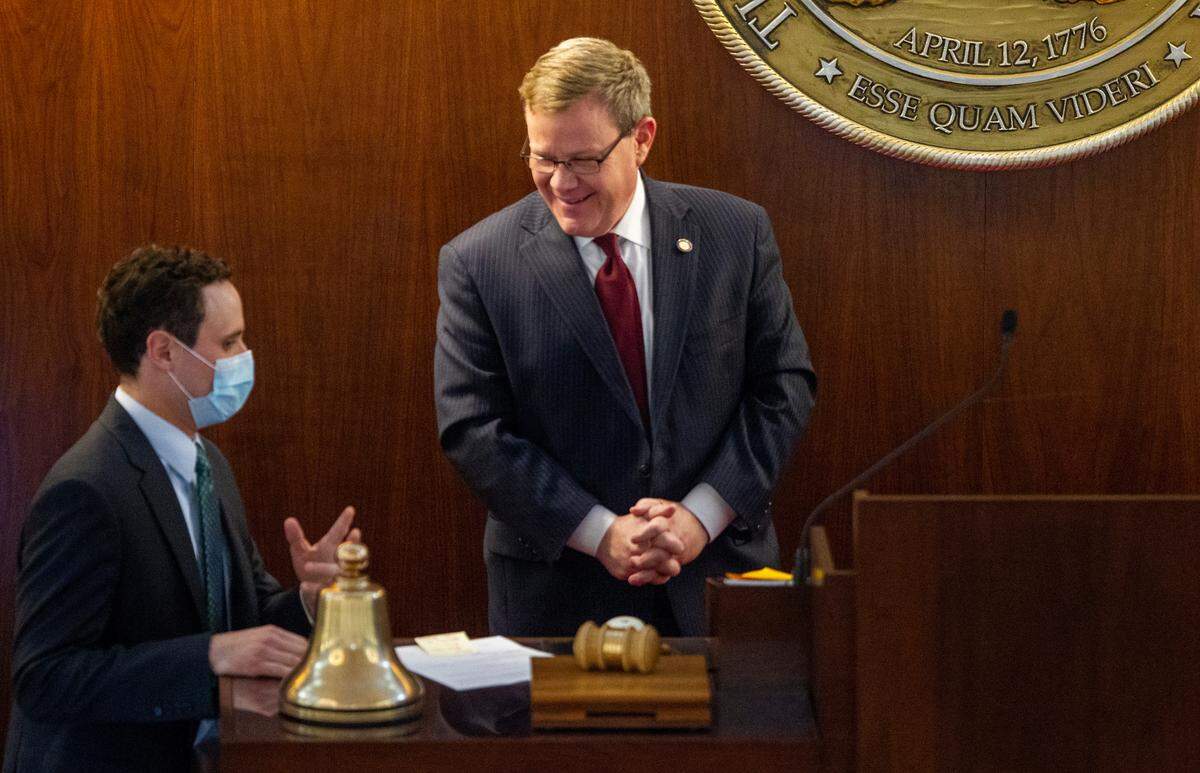
“Schedule-wise and time-wise, we are going to try ... to work out the difference between the absolutely perfect plan of the House with the not so perfect plan of the Senate,” Moore said.
Moore told reporters later on Thursday that the House will have to reduce some of its spending plan and the Senate will need to raise its plan. Either way, there will still be more than $1 billion in federal money leftover to spend.
Moore would not say what the bills’ negotiating sticking points are between the chambers. However he did say discrepancies in bills are over Medicaid expansion, education and higher education spending, among other issues.
If the House and Senate pass a coronavirus bill Friday, they won’t come back next week, he said.
The legislature is likely to return a few weeks after that to pass more COVID-19-related bills. And with a recession on the horizon, it won’t talk about spending state funds until July, Moore said. Postponing the tax deadline until July 15 meant postponing state tax revenue, too.
This story was originally published April 30, 2020 at 1:17 PM.
.jpg)