Rising tension: Lawmaker wants barbershops open, sheriff won’t enforce church limits
A coronavirus-fueled tension took several new shapes Wednesday between people who want the state to immediately reduce restrictions on businesses, churches and other gatherings and the state officials who say they want to ease the state open with a focus on safety.
A county sheriff said in a letter to constituents that he would not enforce North Carolina Gov. Roy Cooper’s restrictions on church services. A senior state lawmaker called on Cooper to allow barbershops and hair salons to reopen.
And Dr. Mandy Cohen, secretary of the Department of Health and Human Services, said the state would continue to be guided by facts and data and would, if necessary, “walk back” the Phase One reopening effort begun last Friday.
The differences over how to reopen the state’s economy come as the state reported 15,816 total cases of COVID-19 in 99 counties, according to NCDHHS. The state also reported that 597 people have died from the coronavirus, an increase of 20 since Tuesday morning.
State regulations aimed at reducing the spread of the coronavirus limit attendance at indoor worship services to 10 people in a room. In an effort to clear up confusion and address criticism, Cooper’s office said Tuesday that the stay-at-home order allows more than 10 people to attend an indoor worship service if there is no alternative, The News & Observer reported.
But on Wednesday, Johnston County Sheriff Steve Bizzell said he and his deputies will not enforce stay-at-home rules that limit attendance at worship services.
In a statement released Wednesday, Bizzell said it is “inconsistent and unfair” that retail stores are able to open every day, but people can’t go to church once a week.
Pastors are more inclined to watch out for churchgoers than stores are to look out for customers, Bizzell wrote.
“As long as I’m Sheriff, my deputies nor I will ... interfere or prevent church-goers to peaceably assemble and exercise their constitutional right to freely worship,” Bizzell wrote. “Before I would do that, I would lay down my badge and go home! NOW, LET’S HAVE CHURCH!”
Meanwhile, Republican Senate leader Phil Berger called on the Cooper administration to allow barbershops and hair salons to reopen. In a press release, Berger said 25 other states — including most states in the Southeast — had already allowed those businesses to reopen.
Cohen, responding indirectly in the state’s daily coronavirus update, said she understands that people want haircuts but said working on hair is a high-risk activity because people are in such close quarters and in a situation where wearing a mask is a challenge.
“We are less than two weeks away from thinking about a move to Phase Two where we contemplate opening barbershops and salons,” she said.
“We still see a lot of virus here,” Cohen said. “We don’t want to see a surge of cases.”
The state is taking a measured approach to easing restrictions, she said.
“If we need to, we will walk back the stay-at-home if we need to to protect the people of North Carolina,” Cohen said.
More than 8,000 tests in 24 hours
More than 8,000 coronavirus tests have been completed in the past 24 hours in North Carolina, the state’s Department of Health and Human Services reported Wednesday.
There were 470 additional reported cases of the virus since Tuesday morning after 8,213 completed tests, a 5.7% positive rate in the state. As of Wednesday morning, there have been 210,457 total tests conducted across the state.
Avery County is the only county in the state without a reported case of COVID-19. The county reported it has completed 434 tests for the coronavirus, and 367 have have come back negative, with 67 cases still pending.
Across the state, 521 people are being treated for the virus in hospitals, an increase of 46 from Tuesday.
The site is typically only updated once per day and the case counts do not give a full picture of how widespread COVID-19 is, DHHS says. Not all patients with the illness are tested.
The News & Observer has its own tally of coronavirus cases based on data from state and county health departments. As of Wednesday evening, there were 16,238 cases and 620 deaths across the state.
North Carolina reported its first confirmed COVID-19 case on March 3. In the early weeks of the pandemic, confirmed cases doubled every two to three days, The News & Observer reported.
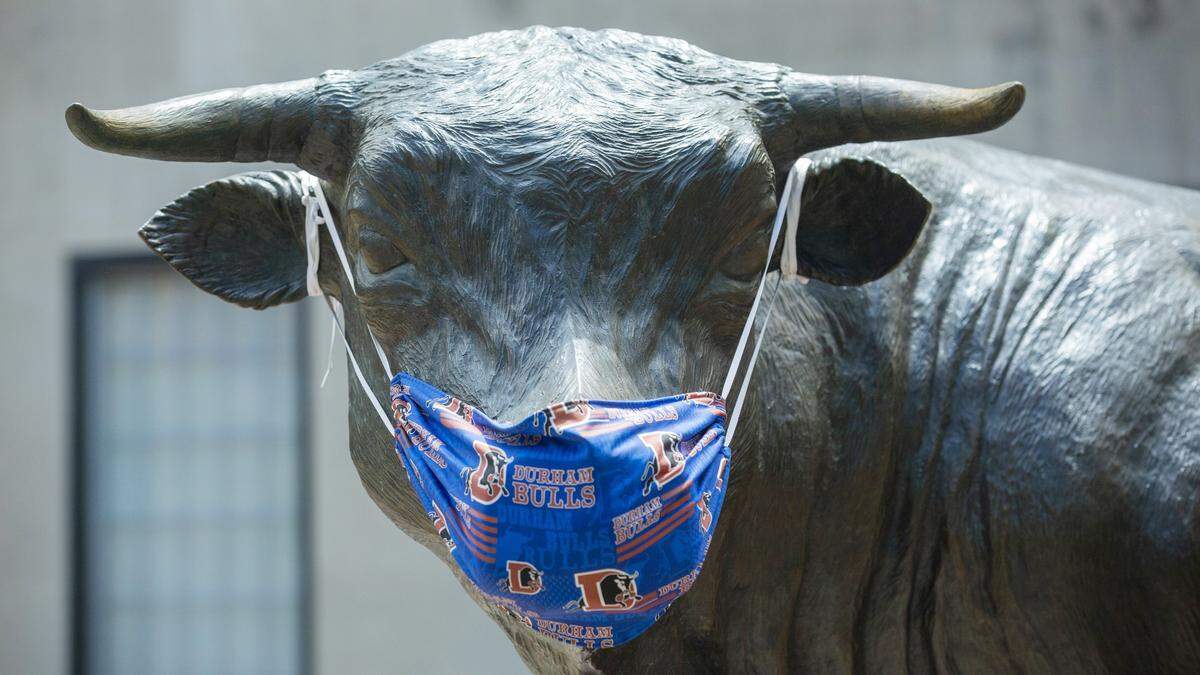
Durham and Raleigh are top cities poised to best recover
Moody’s Analytics says Durham and Raleigh are among the 10 U.S. cities that have the best chances to rebound from the pandemic, McClatchy News reported.
Places with less population density that rely more on cars will be more attractive than densely populated cities, according to the report by Adam Kamins, senior economist at Moody’s Analytics.
Durham stood out among 100 counties in comparisons of population density with the percentage of jobs requiring a college degree. Raleigh looked good in comparisons of educational attainment and average population density.
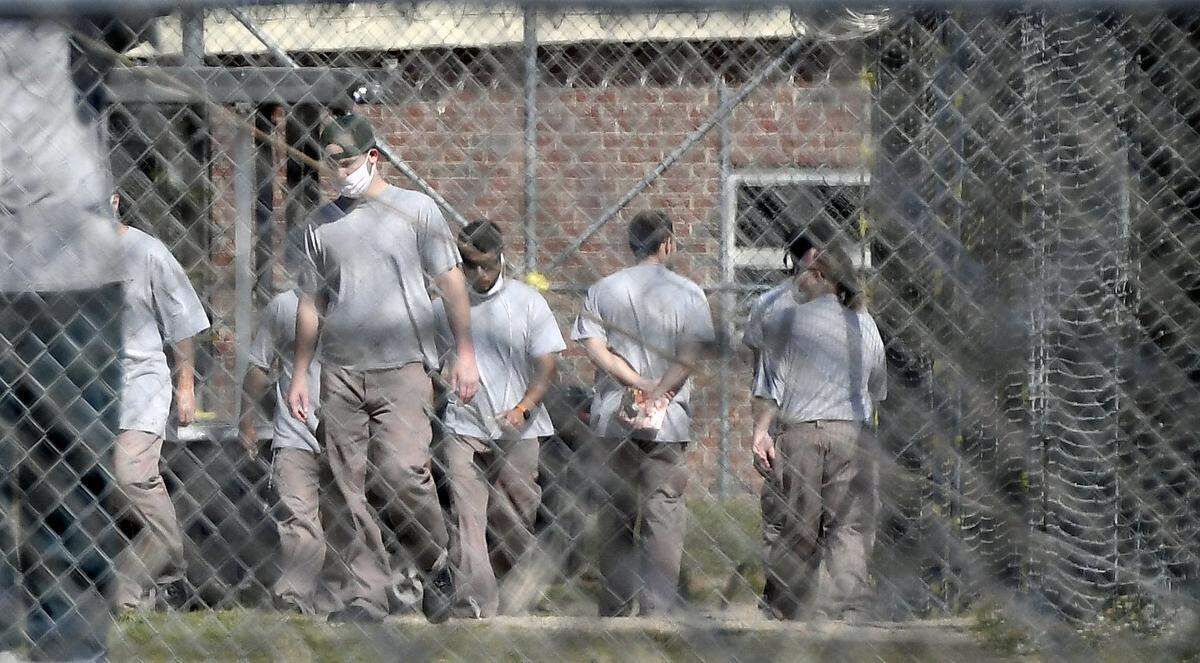
Judge rules against releasing prisoners
A North Carolina judge has ruled against civil rights groups who went to court seeking to force the state to dramatically reduce the prison population in order to curb the threat of COVID-19.
In an order issued Wednesday, Superior Court Judge Vinston Rozier denied a motion — filed by the ACLU of North Carolina, the state conference of the NAACP and other groups — which had sought the release of 3,000 inmates with 60 days or less to complete their sentences.
Attorneys for the state had argued that releasing so many people from prison would overwhelm the system.
In his order, Rozier said the relief sought by the plaintiffs would have been an “extraordinary measure.”
“While this Court is entitled to grant a mandatory injunction, like the one Pliatiffs are requesting, these injunctions are generally disfavored and are only appropriate where the case is urgent and where the right is clear,” the judge wrote.
Many prisoners have recovered, state says
Most of the inmates in the North Carolina prisons who have tested positive for COVID-19 have now met the criteria from the Centers for Disease Control and Prevention to be released from medical isolation, state Department of Public Safety officials say.
Of the 642 inmates who have tested positive so far, more than 500 have met the criteria established by the CDC, according to a DPS news release Tuesday.
Most of the inmates presumed to be recovered are housed at Neuse Correctional Institution, in Goldsboro, where more than 460 prisoners have tested positive. Of the 91 offenders who tested positive for COVID-19 at the North Carolina Correctional Institution for Women, more than 50 are now presumed recovered, DPS said.
“Staff have worked incredibly hard to contain this virus, to treat offenders who contracted it and to maintain order. I appreciate their hard work and am grateful that so many offenders have recovered,” said state prisons commissioner Todd Ishee.
Hayley Fowler of McClatchy News, and Ames Alexander of The Charlotte Observer contributed to this report.
This story was originally published May 13, 2020 at 11:25 AM.