The Jeffrey MacDonald murder case: Where are the key players now?
The Jeffrey MacDonald murder case is back in the national spotlight, with the release Friday of a new documentary series on FX.
The former Green Beret Army doctor was convicted in 1979 of the murders of his pregnant wife, Colette, and two small daughters, Kimberley, 6, and Kristen, 2, in their Fort Bragg apartment in 1970.
MacDonald claims that his family was beaten and stabbed to death by a group of hippies chanting “acid is groovy, kill the pigs.” But forensic evidence presented in the trial did not back up his claims.
“A Wilderness of Error” premieres Friday, Sept. 25, with the first three episodes airing on FX network, then streaming on Hulu the following day. The final two episodes in the series air on FX on Friday, Oct. 2, and move to Hulu the next day.
Here is the latest on some of the major players in the case, all prominently featured in the new documentary series.
Jeffrey MacDonald: MacDonald, aka Federal Inmate No. 0131-177, is still serving his life sentence at the Federal Correctional Institution in Cumberland, Maryland. He was transferred there from a California prison shortly after he married Kathryn Kurichh of the Baltimore area in 2002. The two developed a friendship after Kathryn wrote to him in prison asking how she could help him prove his innocence. MacDonald still claims he did not kill his family, but has exhausted all opportunities for a new trial.
Bernard “Bernie” Segal: MacDonald’s lead defense attorney in his 1979 trial, known for work in civil rights cases, died in California in 2011.
Wade Smith: Smith, considered one of the top civil and criminal defense attorneys in North Carolina, assisted on the MacDonald case in 1979. Later in his career, Smith was co-counsel for Ann Miller Kontz, the Raleigh chemist who poisoned her husband with arsenic in 2000. Smith also represented one of the men wrongly accused in the Duke lacrosse scandal. In 2006, Smith was appointed by the North Carolina Chief Justice as one of eight commissioners on the newly established North Carolina Innocence Inquiry Commission, created to evaluate actual innocence claims. He continues to practice law in Raleigh.
Jim Blackburn: Blackburn was the co-lead federal prosecutor in the 1979 trial and won the conviction against MacDonald. Later in his career, Blackburn became known for forging phony court documents and illegally wiring money from his law firm’s bank account. In 1993, he plead guilty to fraud, embezzlement, forgery and obstruction of justice. He was disbarred and served three and a half months in jail. Blackburn hired Wade Smith to represent him. After serving time, Blackburn worked as a host and waiter at 42nd Street Oyster Bar in Raleigh and is now a motivational speaker.
Colette MacDonald’s family: Colette’s mother and stepfather, Mildred and Freddy Kassab, worked tirelessly to see justice for their slain family. In 1987, Mildred sued MacDonald over his proceeds from Joe McGinniss’ book “Fatal Vision,” and she was granted a portion of the money. Mildred died in January 1994 and Freddy died that same year, in October. Colette’s brother Robert “Bob” Stevenson is close to 80 now, and appears in the “Wilderness of Error” documentary to talk about his sister and about the work of his parents to see MacDonald prosecuted. He told reporters in 2005 that he promised Freddy Kassab on his deathbed that he would follow MacDonald until he died. Most recent news accounts have Stevenson living near Boston.
Helena Stoeckley: Stoeckley is the Fayetteville woman who said many times that she was the “woman in the floppy hat” who was in the MacDonald home on the night of the murders, but she denied any memory of that when under oath. She was not considered a reliable witness and testimony about her was not allowed at the trial. Stoeckley was found dead inside her apartment in January 1983. An autopsy showed that she died of pneumonia and cirrhosis of the liver.
Joe McGinniss: McGinniss collaborated with Jeffrey MacDonald for the 1983 book “Fatal Vision,” an account of the Fort Bragg murders. McGinniss concluded that MacDonald was guilty of the killings, and MacDonald later sued him for breach of contract. MacDonald claimed that McGinniss pretended to believe in his innocence to maintain his cooperation. A 1987 civil trial resulted in a hung jury, and McGinniss’ publishing company settled with MacDonald out of court. McGinniss went on to write other true crime books, and also wrote about former Alaska governor Sarah Palin and Sen. Ted Kennedy. McGinniss died in 2014 from prostate cancer.
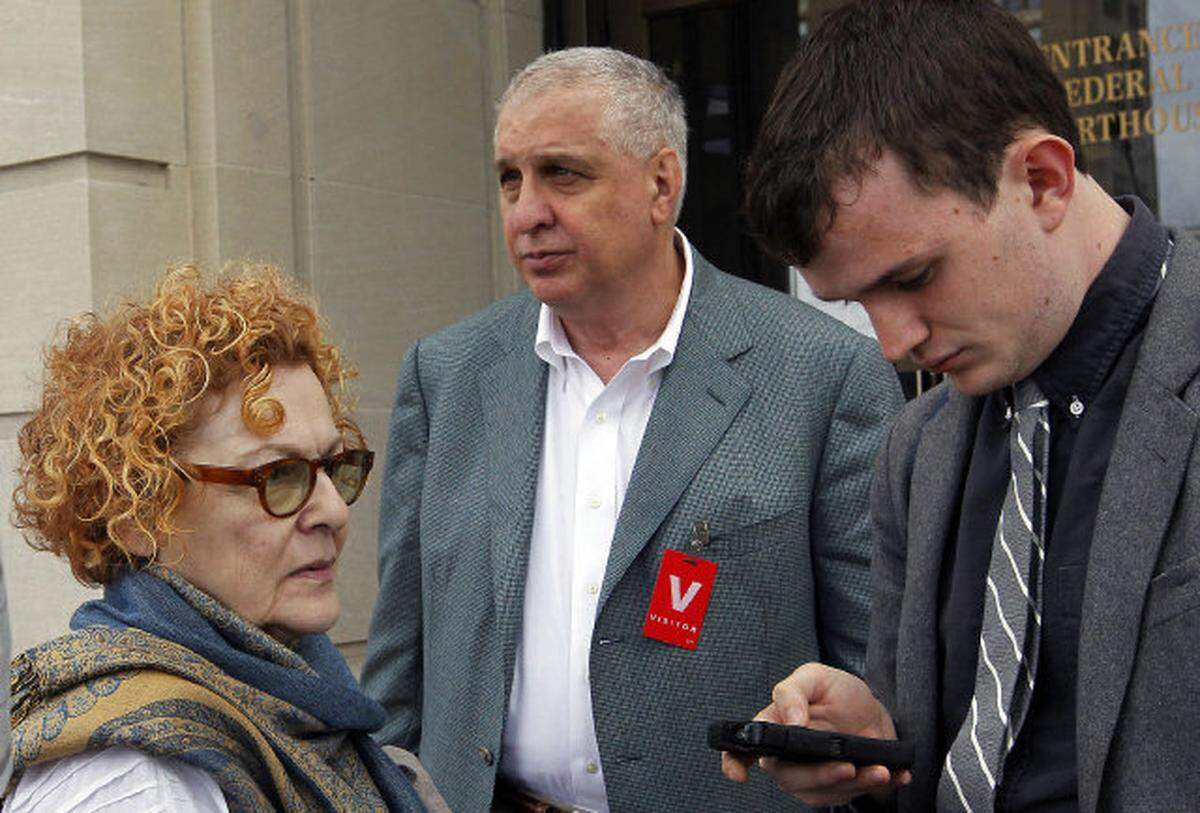
Errol Morris: The Oscar-winning documentary filmmaker, whose 1988 film “The Thin Blue Line” helped free an innocent man from death row in Texas, became interested in the MacDonald case in the 1990s. After years of research, Morris was convinced of MacDonald’s innocence and wanted to make a film about it. Unable to find financial backers, Morris released his MacDonald argument as a book, “A Wilderness of Error,” in 2012. The book is the basis for the FX documentary series of the same name. Morris, 72, lives in Cambridge, Massachusetts, with his wife, art historian Julia Sheehan.
544 Castle Drive: The Fort Bragg apartment at 544 Castle Drive where the murders took place was preserved for many years, due to the ongoing investigation. It was released by authorities in 1984 and remodeled (family belongings were still in the home at that time, and discarded, according to a Fayetteville Observer report). The housing unit was finally demolished in 2008 and the Corregidor Courts-Bougainville Neighborhood Center was built in its place.
This story was originally published September 25, 2020 at 9:00 AM.