Restaurants are in a sweet spot for outdoor dining. Here’s how diners can stay safe.
Winter, as they say, is coming.
Now that we’ve slipped by the summer swelter and the chill has yet to grab the air, restaurants in North Carolina are making the most of the time we have.
With many diners and public health officials preferring outdoor dining to meals indoors because of COVID-19, restaurants are finding themselves with a seasonal sweet spot that may be the closest we come to normalcy in months. But they also want to make sure their staffs — and customers — are taking coronavirus safety seriously.
At Garland restaurant in downtown Raleigh, owners Cheetie Kumar and Paul Siler built a wall of bamboo along Martin Street, tucking a dozen or so outdoor tables away from the rest of the city. While Garland has operated weekly take-home meals for months now, this is the first time they’ve offered regular service since the beginning of the pandemic. Kumar said there was a now-or-never feeling in the air.
“It definitely feels like this is our shot,” Kumar said. “This is a big bridge for us. We don’t know what’s going to happen. There’s tension mounting with the election, the weather’s changing.”
For safety, diners at Garland order everything on their smartphones, with a QR code summoning a menu. Kumar said the aim was to cut down on conversations between servers and diners. The restaurant spent thousands of dollars on patio tables and chairs, on wiring music to play outdoors and on plants and decorations.
Personal protective equipment is just another cost of doing business right now, and Kumar said she’s watched the price for a case of latex gloves triple.
“There are things we can do to stay safe,” Kumar said. “It’s al fresco time.”
Relax, but don’t be careless
Restaurants in North Carolina reopened in May at 50% capacity, but many chose to stay closed and just stick with takeout, as public health officials cautioned against indoor spaces. In September, some restaurants began adding outdoor tables as the heat broke, but even as they make a go at it now, the complications of winter loom.
One of the main reasons restaurants and bars are reopening is the role alcohol, especially liquor, plays in profit margins. In North Carolina, the state balked at offering cocktails to-go. So many restaurants need to be open and selling alcohol.
“Without cocktails, most restaurants wouldn’t make a profit,” Kumar said. “It’s not a secret or a shock for anyone who’s been in restaurants, but cooking for people doesn’t make you money.”
On Martin Street, Garland and next-door beer garden Capital Club 16 have cultivated an oasis-like vibe, where the pandemic can seem far away. Kumar said she wants people to be comfortable, but still vigilant. The plates are compostable, with some dishes served on banana leaves.
Dining looks familiar yet starkly different.
“I don’t want it to feel too normal,” Kumar said. “It isn’t normal. These aren’t normal times. But we want people to relax and enjoy it without being careless.”
Diners have to do their part
Restaurants have followed a COVID training program called Count On Me NC, developed by the North Carolina Restaurant and Lodging Association and the state’s Department of Health and Human Services. The program plans for social distancing, mask wearing and sanitation, but also calls on diners to do their part.
Julie Casani, medical director of Student Health Services at N.C. State University and public health expert, said safety comes down to individuals’ behavior when they decide to eat out.
The basic principles, Casani said, are:
▪ to stay as far apart as possible, given that people have to eat and talk.
▪ to wear a face covering when not eating.
▪ to try to eat outside where there’s more air circulation.
Mixing groups of friends or eating out with new people poses a risk, regardless of whether you’re sitting inside or outside. If someone is eating out with the six people they live with, the risk is the same as when they eat at home.
“The risk comes into play when I dine with friends and family out of my usual pod, even at my own table, because everyone and every pod brings their unique risk with them,” Casani said.
She said there is no absolute answer, but the closer the contact the higher the risk. And when people interact with those who they don’t usually see, they have less knowledge and “control” over the risks than when they’re in their usual pod.
Lee-Ann Jaykus, a William Neal Reynolds Distinguished Professor at N.C. State who’s been working with the food industry on COVID-19 transmission, said she’s not against people eating at restaurants.
Personally, she said she doesn’t feel comfortable eating indoors, particularly if it’s a busy place and tables are on top of each other.
“You’re at a table where you’re not social distanced because you’re sitting next to your friends or family,” Jaykus said. “You can’t wear a face mask because you’re eating and even if you’re separating tables ... if that distance isn’t pretty substantial you have the potential to be exposed to the virus from somebody at another table.”
But it’s less risky to eat outside because the air flow disperses the virus and the UV light makes it less infectious, she said.
The longer you’re close together, the more likely you are to pick up enough of the virus to get you sick.
And the virus could spread even if you’re eating with a person who has no symptoms, Jaykus said. That risk carries over to bars in a big way, because people are literally face-to-face with no masks and no social distancing, she said.
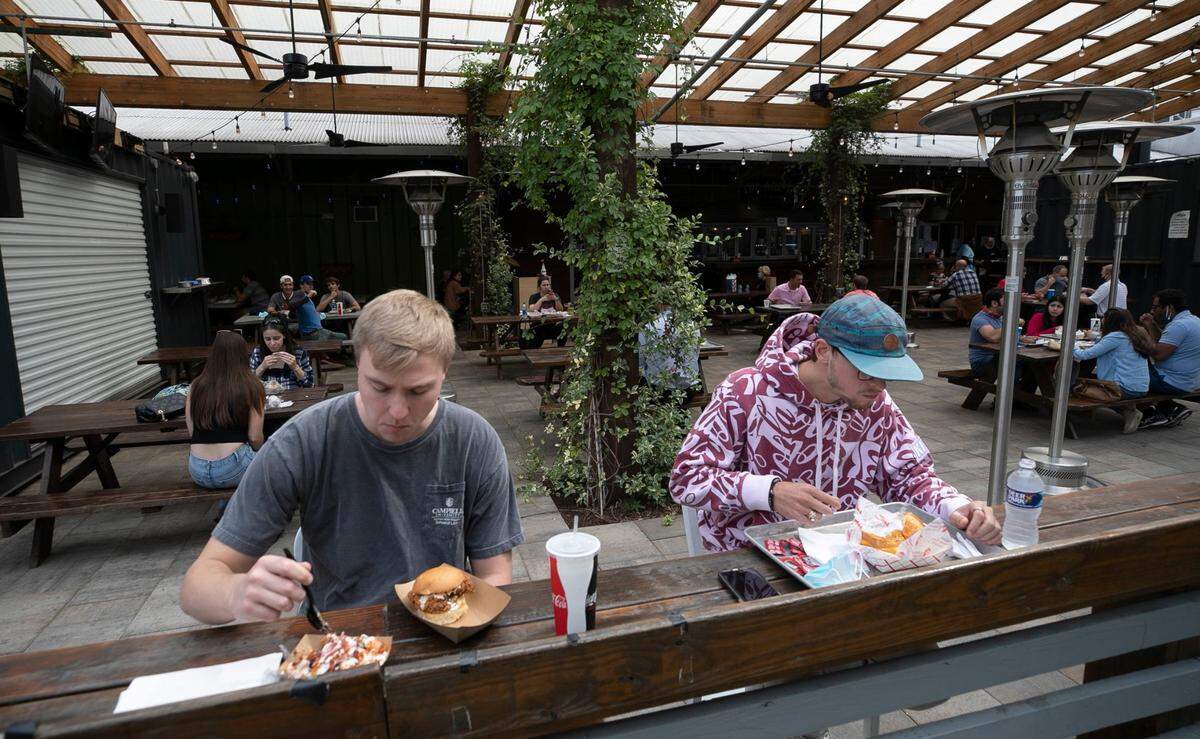
What happens in winter?
The problem winter poses for restaurants is a simple one: it gets cold.
At this point, restaurants throughout North Carolina have survived for seven months by tossing out business models, pivoting to takeout and planning for new safety measures. All that work still leaves them teetering on the edge.
“I’m extremely worried in terms of the future. Winter is much more worrisome,” said Fasil Tesfaye, co-owner of Goorsha, an Ethiopian restaurant in downtown Durham’s Brightleaf District. “If we continue as we are, we’ll survive. Any small change and it will be devastating. We’re walking like we’re on eggshells.
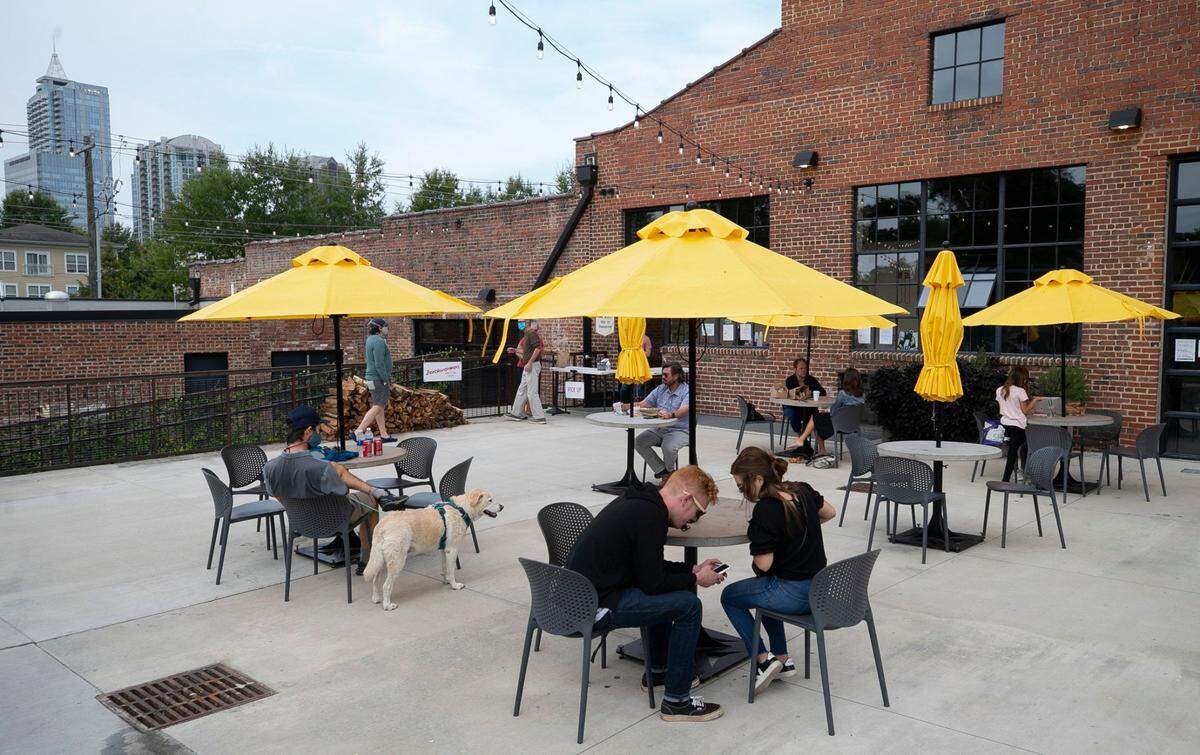
Goorsha recently announced it was opening a new coffee shop behind the restaurant, named Gojo. The new cafe will be important in the coming months, Tesfaye said, as it offers more patio seats for diners.
“Working on some additional seating, with heaters where diners can sit and still have a good dining experience,” Tesfaye said.
Now, well into into the pandemic, two-thirds of Goorsha’s business is still from to-go orders, with the other third coming from dine-in guests.
With more people going out and reconnecting with bars and restaurants, they are rediscovering what’s at stake — and what they miss with the ritual of getting a drink or sharing a meal.
“I miss ordering wine. I miss reading a cocktail menu, the energy of eating,” Kumar said. “The din of a dining room, with music in the background. I miss wine service and sharing plates, losing yourself and forgetting about time and the problems of the day. Dining out is my escapism.”
This story was originally published October 9, 2020 at 4:23 PM.