
Holiday travel taking you out of NC? These states have special COVID-19 restrictions.
Families across the nation are grappling with holiday travel plans and how to safely gather — if at all — with friends and family for Thanksgiving.
North Carolina does not have any statewide travel restrictions, and visitors do not have to quarantine upon arrival in the state. But other states have rules for people coming to or from them, including mandatory negative COVID-19 test results and 14-day quarantines. Some have also threatened fines for breaking the rules.
The Centers for Disease Control and Prevention and local and state health officials have warned against Thanksgiving travel as COVID-19 cases are surging to record highs in North Carolina just days before the holiday. As of Monday, the state reported more than 5,000 people have died from the coronavirus.
If you are planning to get together safely with people outside your household, here’s what you need to know about the rules for traveling to and from North Carolina this holiday season.
Health experts advise against holiday travel
The North Carolina health department sent out guidance for traveling over the holidays. It advises to postpone plans and stay home because flying, driving and gathering with family and friends increases the chances of getting and spreading COVID-19.
If you are planning to be with family members you don’t live with, state health officials say you should consider getting a COVID-19 test before traveling.
And even with a negative test, people should still wear a ask, physically distance and avoid large crowds, particularly indoors.
The state health department advised North Carolinians to check travel restrictions and get a flu shot before they go. Residents and visitors are also encouraged to download SlowCOVIDNC, an app that alerts users when they may have been unknowingly exposed to the virus.
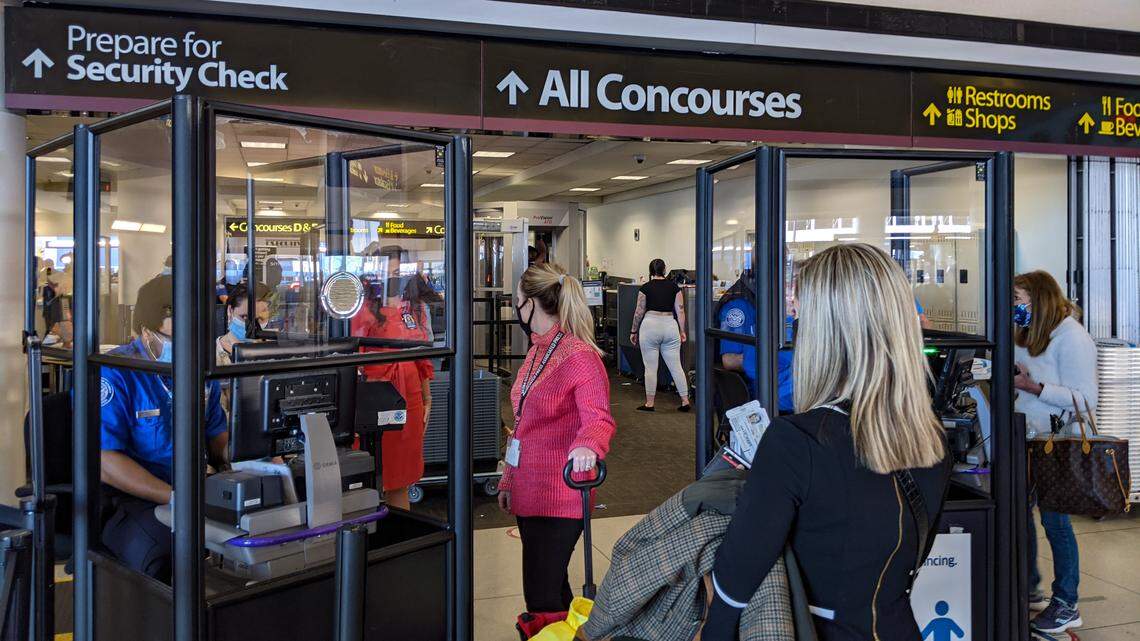
There will also be more safety measures in place at Raleigh-Durham Airport, which is expecting fewer travelers than last year, The News & Observer previously reported.
Mandatory 14-day quarantine for NC travelers
New York, New Jersey and Connecticut require North Carolina travelers to quarantine for two weeks upon arrival. The travel advisory began in June and applies to states with “significant rates of transmission of COVID-19,” which means they have a positive coronavirus test rate that’s higher than 10 per 100,000 people or those with a seven-day rolling average in which at least 10% of tests are positive. This rule does not apply for visitors spending less than 24 hours in the state, according to New Jersey health officials.
That list of high-risk states is updated weekly. Visitors must also fill out a travel health form when they arrive.
In New York, travelers can “test out” of the quarantine by getting a COVID-19 test within three days of departure, prior to arrival in New York. Once in New York, that traveler must quarantine for three days. On day four, that person can get another COVID-19 test and if those tests are negative, then the person can stop quarantining early.
In Connecticut, violating these rules may result in a civil penalty of $500 for each violation. In New York, travelers who leave the airport without completing the form will be subject to a $10,000 fine and may be brought to a hearing and ordered to complete mandatory quarantine.
New Mexico has also designated North Carolina as “high risk,” along with nearly every other state. People traveling to New Mexico are required to quarantine for 14 days or the length of their stay in New Mexico, whichever is shorter.
California, Oregon and Washington have issued a joint travel advisory that visitors from out of state, including residents, quarantine for 14 days after entering or returning to the state.
Illinois identified North Carolina as a state with “higher risk” and asks residents to avoid traveling there and to quarantine for 14 days when they come home, but there’s no official mandate. However, Chicago requires a 14-day quarantine for North Carolina visitors traveling to Chicago and for Chicago residents traveling to North Carolina. Travelers also have the option to get a negative COVID-19 test result no more than 72 hours prior to arrival in Chicago, instead of quarantining.
Those visiting New Hampshire from North Carolina and several other states must self-quarantine for two weeks. This also applies to New Hampshire residents traveling outside the state. If a traveler is asymptomatic and has a negative COVID-19 test on or after day 7 of quarantining, they may shorten or end their quarantine.
Visitors to Kentucky who are coming from states with a coronavirus testing positivity rate of 10% or more are asked to quarantine for 14 days. Ohio has a similar rule, but the threshold is 15%. North Carolina is at about 8% as of Nov. 23.
In Minnesota, out of state travel is highly discouraged. Visitors and residents that travel out-of-state are asked to quarantine for 14 days when they travel or return to Minnesota.
Negative COVID-19 test results
Alaska requires visitors from other states to submit a travel declaration and self-isolation plan online and bring proof of a negative COVID-19 test. Travelers can also buy a $250 coronavirus test when they arrive in Alaska and self-quarantine at their own expense until they get the results. The same rules apply for Alaska residents traveling out of the state.
Massachusetts identifies North Carolina as a high-risk state. Visitors from North Carolina and other states on that list must fill out a travel form and quarantine for 14 days or produce a negative COVID-19 test result that was administered within 72 hours of their arrival. Visitors and residents traveling to or from North Carolina must quarantine until they receive a negative test result.
Travelers could face a $500 fine per day if they don’t comply, according to the state. States become “lower-risk” in Massachusetts when the average daily cases per 100,000 people are below 10 and the positive test rate is below 5%, both measured as a 7-day rolling average.
Pennsylvania identifies North Carolina as a state with “high amounts of COVID-19 cases.” Visitors to Pennsylvania are required to get a negative COVID-19 test within 72 hours prior to entering the state. If someone cannot get a test or chooses not to, they must quarantine for 14 days, according to the state. The same rules apply for Pennsylvania residents traveling to NC. People who violate the order could be fined up to $300.
Washington, D.C. put North Carolina on its list of “high-risk” areas, so people traveling to D.C. must get a COVID-19 test within 72 hours of traveling. If the test is positive, the person should not travel. Private institutions like universities, employers, hotels, hospitals, congregate care facilities and houses of worship may ask visitors about their recent travel and may require proof of a negative COVID-19 test. D.C. residents traveling to North Carolina are required to self-quarantine for 14 days or get a negative test result 72 hours after they return.
If North Carolina residents want to travel to Vermont, they must self-quarantine for 14 days or for seven days if they get a negative COVID-19 test. This mandatory quarantine applies to anyone returning or traveling to Vermont.
People traveling to Rhode Island from North Carolina must quarantine for 14 days because the state has a positive testing rate of 5% or higher. Travelers don’t have to quarantine if they bring proof of a negative COVID-19 test taken within 72 hours. They can also stop quarantining if they get a negative test result while in Rhode Island.
North Carolinians and others looking to travel to Maine must quarantine for 14 days when they arrive or sign a form stating they’ve received a negative COVID-19 test within 72 hours. They may also get tested upon arriving in Maine but must quarantine while awaiting results. This policy also applies to Maine residents who travel to North Carolina.
For those looking to visit Hawaii, all visitors arriving from out-of-state must self-quarantine for 14 days. The only exception is for travelers who arrive with negative test results from an FDA-approved nucleic acid amplification test performed using a nasal swab at a Clinical Laboratory Improvement Amendments certified laboratory. Travelers must have their negative COVID-19 test results in hand before their departure for the State of Hawaii starting Nov. 24. These rules also apply to Hawaii residents who travel outside the state, including to North Carolina.
People traveling to or from Kansas need to quarantine for 14 days if they’ve attended a mass gathering event out-of-state with 500 or more people who are not socially distanced or wearing face masks. Anyone who has been on a cruise ship or river cruise since March must also quarantine.
Maryland visitors and residents are asked to get a COVID-19 test in the 72 hours before they arrive or upon arrival. Maryland residents who have traveled to a state with a positivity rate of greater than 10% in the past seven days should get tested and self-quarantine until they receive a negative result.
No travel restrictions for NC
There are no statewide travel restrictions in the following states as of Nov. 23, but travelers should check state and local guidelines for updates.
This story was originally published November 24, 2020 at 5:45 AM.
