
‘A tough bird.’ Rescued eagle in Raleigh fights to stay alive after lead poisoning
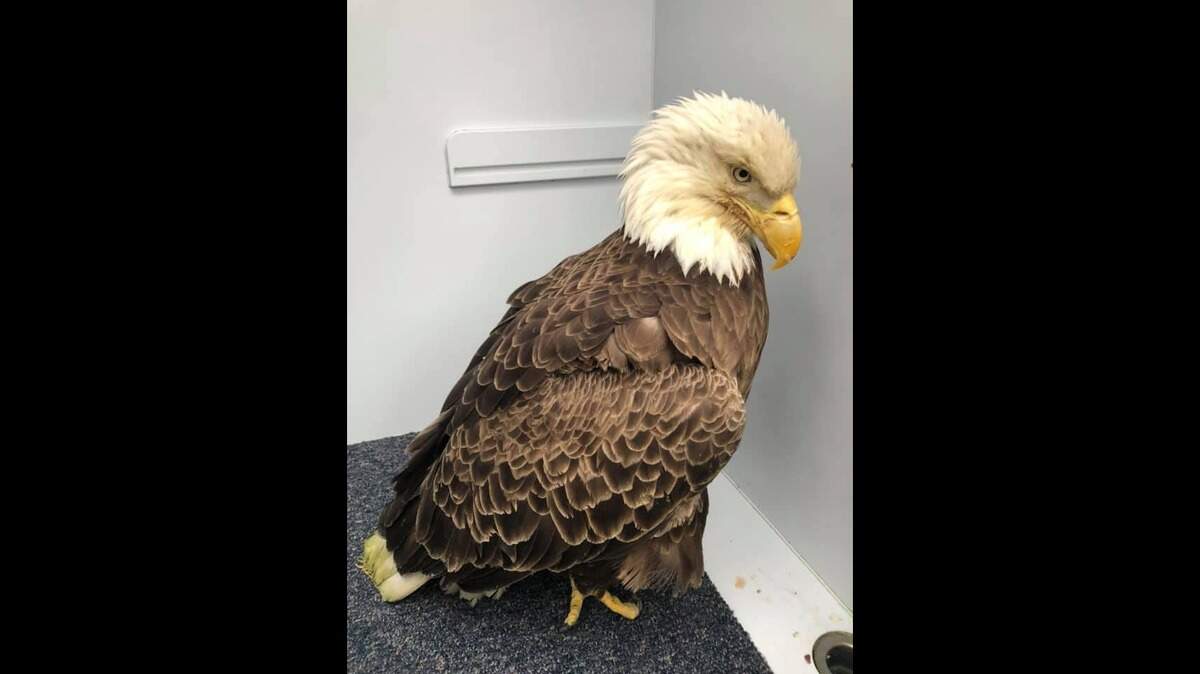
When a rescued bald eagle was brought to American Wildlife Refuge in Raleigh — dazed and unable to fly — he was given about a 20% chance of survival.
After being diagnosed for lead poisoning and starting to receive treatment, that chance is now around 55%, said Steve Stone, the director of animal care at the refuge.
Four days after his rescue, Stone said the eagle can’t do much more than stand up or lay down, and doesn’t respond to touch. But that’s still progress.
“This is obviously a very determined bird, because he’s alive,” Stone told The News & Observer Tuesday. ”That is pretty amazing.”
Raleigh Police officer P. Kostka was responding a call about the male eagle Friday and found the bird about 15 feet from the exit ramp at Interstate 540 and Aviation Parkway. Kostka wrapped him in a blanket and took him to an emergency animal hospital, police said.
The eagle was transferred to the refuge, where he was diagnosed with lead poisoning.
He’s now called Airie, and Stone said his chances of a full recovery remain uncertain. Questions persist about whether he will survive the initial lead poisoning, and whether he will ever be able to return to the wild.
The treatment is helping. Tuesday marked the first day Airie was able to eat the food placed before him without assistance. The eagle had been starving to death when he was rescued, Stone said.
“Even though he’s still alive, it’s touch and go,” Stone said. “Every single thing he does is a good thing, because it means he’s still alive.”
He’s “a tough bird,” he said.
Lead poisoning in birds caused by hunters, fishermen
Airie most likely consumed the lead that made its way into his blood, Stone said. The refuge has treated four other bald eagles for lead poisoning in the past year.
Stone said a measurement of 10 to 20 parts per million of lead present in the blood indicates a high lead content in need of treatment. Airie tested over 50 parts per million.
As a bird of prey, eagles usually encounter lead in the animal remains left by hunters and fishermen.
Stone pointed to “gut piles,” the intestines left behind by hunters after they remove them from kills. They’re often laced with the lead that splinters when a lead bullet hits the animal. He added that an eagle also might ingest a fishing sinker, a weight typically made of lead that’s attached to a lure, while hunting fish.
The American Eagle Foundation reports that lead poisoning is “a leading concern” for many bird species, including eagles, with millions affected annually.
The effects of lead poisoning can be fatal, and can cause loss of balance, gasping, tremors and an impaired ability to fly, according to the foundation.
The refuge has been treating Airie with Calcium EDTA, a medication that reacts with the lead in his blood to turn it into something harmless. But too much of the medication can also be dangerous, Stone said.
It’s “a poison to kill another poison,” he said, comparing it to chemotherapy treatments for cancer patients.
Still, he said he has seen birds with less lead content than Airie who couldn’t even stand up.
‘This is not a first-time thing.’
Stone expects Airie’s recovery to take months, and it will take time to identify whether he has suffered permanent brain damage.
If he does have permanent damage, which could prevent him from ever returning to the wild, Stone said his future is “pretty grim.”
His future will be determined by the U.S. Department of Interior, which manages wildlife refuges, according to Stone. Under current laws, there are few facilities with enough funding to adequately house bald eagles long-term.
“Right now, there are eagles that are hurt that are waiting for somebody to have enough space in their area,” he said. “When we get an eagle that has a broken wing and will never be able to fly again, the federal government tells us we have to euthanize it.”
Stone said the refuge will learn more about Airie’s condition Thursday after he completes the first five-day cycle of treatment. At that point, he may stay with the refuge for another cycle of the treatment, or he may be transferred to a large rehabilitation center that’s better equipped to house him — like the Cape Fear Raptor Center in Wilmington.
It’s one of two centers in the state that has enough space and the right permit to rehabilitate eagles, Stone said. AWR does not currently have enough land to provide a 100-foot flight cage for its birds, he added.
Conservation groups have for years advocated for a ban on lead ammunition and fishing tackles — legal changes that they say would prevent other birds from experiencing the kind of poisoning that Airie has.
But in 2017, then-U.S. Interior Secretary Ryan Zinke overturned an Obama administration ban on their use on federal lands and waters. The ban had been issued one day before former President Donald Trump’s inauguration.
Until the law changes, Stone says eagles will continue to suffer from lead poisoning.
“This is not a first-time thing,” he said. “This has pretty much become the routine, and will be the routine until that law comes to be.”
And while Airie is resilient, Stone said, other birds haven’t made it.
“They are pretty amazing animals,” he said. “They’re tough, but they are just animals. Just like we are.”
This story was originally published March 17, 2021 at 6:15 AM.