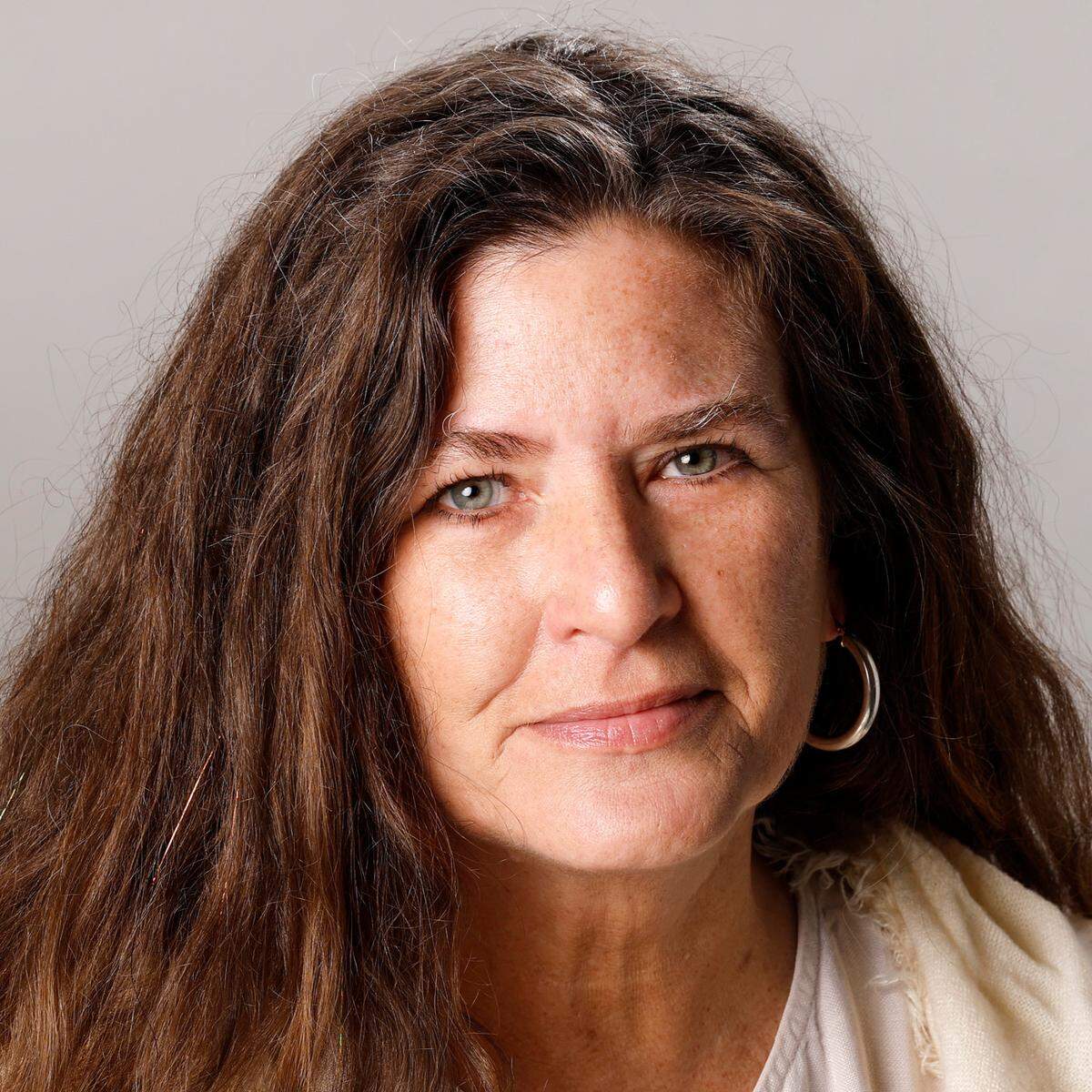
Nat White Jr., a Durham native who helped integrate Duke and mentored many, has died
Nathaniel B. White Jr., a Durham native who helped integrate the undergraduate class of Duke University in 1963, became a statistician for the National Institutes of Health and promoted economic development in Black neighborhoods in North Carolina, Tennessee and Georgia, died in Atlanta March 19.
He was 75.
White was the son of Nathaniel B. White Sr., who advanced Civil Rights in Durham in the 1960s by pushing to integrate local institutions from the Boy Scouts to the board of Durham Technical Community College.
“Nat” White Jr. was born into a segregated world, beginning life at the former Lincoln Hospital, a medical facility built in the Hayti neighborhood of Durham with a gift from Washington Duke. Duke reportedly gave the money, originally earmarked for the construction of a monument to enslaved people who had worked on behalf of the Confederacy during the Civil War, after being convinced that a hospital that served only Black people would help preserve segregation.
White grew up attending all-Black schools in Durham, graduating in 1963 from Hillside High School. He was the top male student in his class.
Walter Jackson attended public school with White from the 7th grade until graduation and also was a member of White Rock Baptist Church, where White and his family attended. Jackson said that because Hillside was Durham’s only Black high school, students there were connected with all the students from across the city who were within two years in either direction of their age — a whole generation in one place.
Jackson recalled piling into White’s father’s station wagon full of Hillside kids and traveling to sporting events at other schools. White’s father also drove a group of Hillside students to weekly science seminars at all-white Durham High School.
‘Hoping they could keep up with us’
At the time, Jackson said, Hillside was nationally known for its no-nonsense teachers and administrators whose strict disciplinary style kept students focused on academics. Hillside graduates went on to become leaders in their fields.
When asked once about whether he and his classmate, Mary Mitchell Harris, Hillside’s valedictorian that year, were intimidated at the prospect of attending Duke University coming out of an all-Black high school, Jackson said White replied, “Nah. We were just hoping they could keep up with us.”
In interviews, White said he initially expected to attend Hampton Institute (now Hampton University) in Virginia, as his father had. A high school counselor encouraged him to apply to Duke.
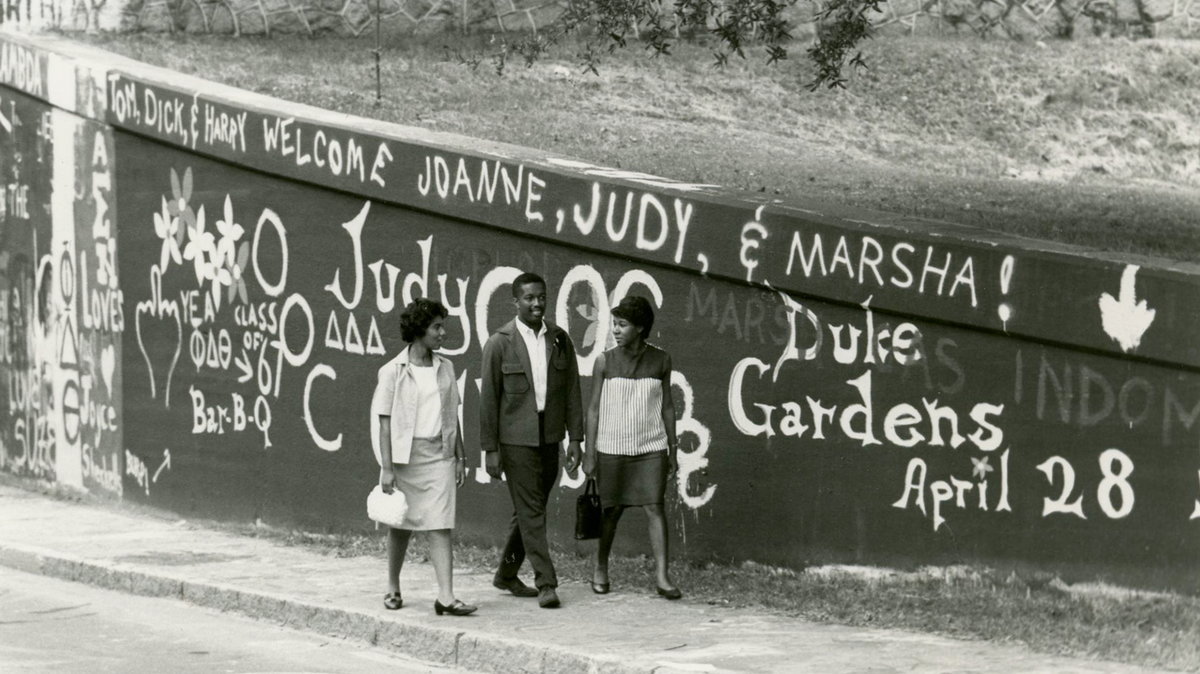
He, Mitchell and three other Black students were accepted and attended that fall as Duke’s first African American undergrads. Classes began just a few days after White got home from attending the March on Washington, at which the Rev. Martin Luther King Jr. gave his “I Have a Dream” speech.
When they arrived on campus, White and others said in an interview, each thought they were the only Black student there, though eventually they all connected. White said he never had a class with another Black student and never had an African American instructor while at Duke.
While some students were cool or indifferent to him, White said he only experienced one incidence of overt racism, when a student hid a black cat in his dresser drawer in his dorm room. Classmates in the dorm knew who had played the prank and dealt with the student, he said.
In 1969, 50 to 75 students took over the Allen Building on Duke’s campus to bring attention to the needs of African American students.
After graduating from Duke, White went to UNC-Chapel Hill for a graduate degree in statistics, and was hired by the National Institutes of Health in Bethesda, Maryland. He served as a statistical consultant to researchers, helped with epidemiological studies and reviewed grant proposals.
Revitalizing Hayti and Fayetteville Street
In the 1980s, Jackson said, he moved back to Durham to work on the revitalization of Durham’s Hayti neighborhood and the Fayetteville Street Corridor. Both had been part of the glory days of Black Wall Street, a district of successful black-owned businesses and financial institutions that thrived in the late 1800s and early 1900s despite Jim Crow laws.
In 1992, White was appointed director of the Public Health Services Institute and of the Office of Sponsored Research at Morehouse College, an HBCU in Atlanta. He also was affiliated with Morris Brown College, another HBCU in Atlanta.
Just as he had been part of a network of high school students from across the city, White was connected to people all over North Carolina and the nation, and he relished being a conduit for them to connect with one another.
Camille Roddy, a 1987 graduate of UNC, met White when they helped organize a reunion of early Black graduates of the university. White became a mentor to Roddy and was the major reason she applied to Duke’s Divinity School, where she graduated in 2019. She recently became the first African American woman in North Carolina to be commissioned as a deacon in the United Methodist Church.
“Nat just had this incandescent spirit that just wanted him to connect everybody that he knew,” Roddy said. “If you were a friend of Nat’s, you were a friend of everybody that he knew. If there was a gift or a talent that you have, and there was a gift or a talent that someone else had that could push both of you, he wanted you to be connected so that you could both be the best you could be.”
A raconteur
White was a talker, a raconteur who loved to tell a story and who could remember details that gave credence to the tales the same as if he was reading them from a book.
Roddy said that in the 10 years she knew him, she had never known White to drive, but that didn’t stop him from traveling. He might decide to catch a train or a bus and go visit a string of people on a circuitous route, arriving sometimes in the early morning at a train station needing a ride. Roddy, who lives in Winston-Salem, once got a call from White at 1 a.m. when he landed at the train station in Greensboro.
“I need a ride,” he told her.
“He could make the most absurd thing seem normal,” Roddy said. Of course, she got up, got dressed and went and collected him.
White was married in 1971 to Sylvia Hall, with whom he had three children.
He is survived by a brother, Joseph White, of Durham; daughter Natalie White of Atlanta; four grandchildren and two great-grandchildren.
He will also be outlived by the philosophy that guided him, Roddy said.
‘(Methodism’s founder) John Wesley says that an educated person is being all that God has created you to be,” Roddy said. “Nat’s legacy is encouraging people to be all that God has created them to be.”
A funeral service is planned for 11 a.m. on April 3 at Liberty Baptist Church in Atlanta.
This story was originally published March 26, 2021 at 5:30 PM.