
An Elizabeth City pastor and parishioners grapple with police killing of Andrew Brown
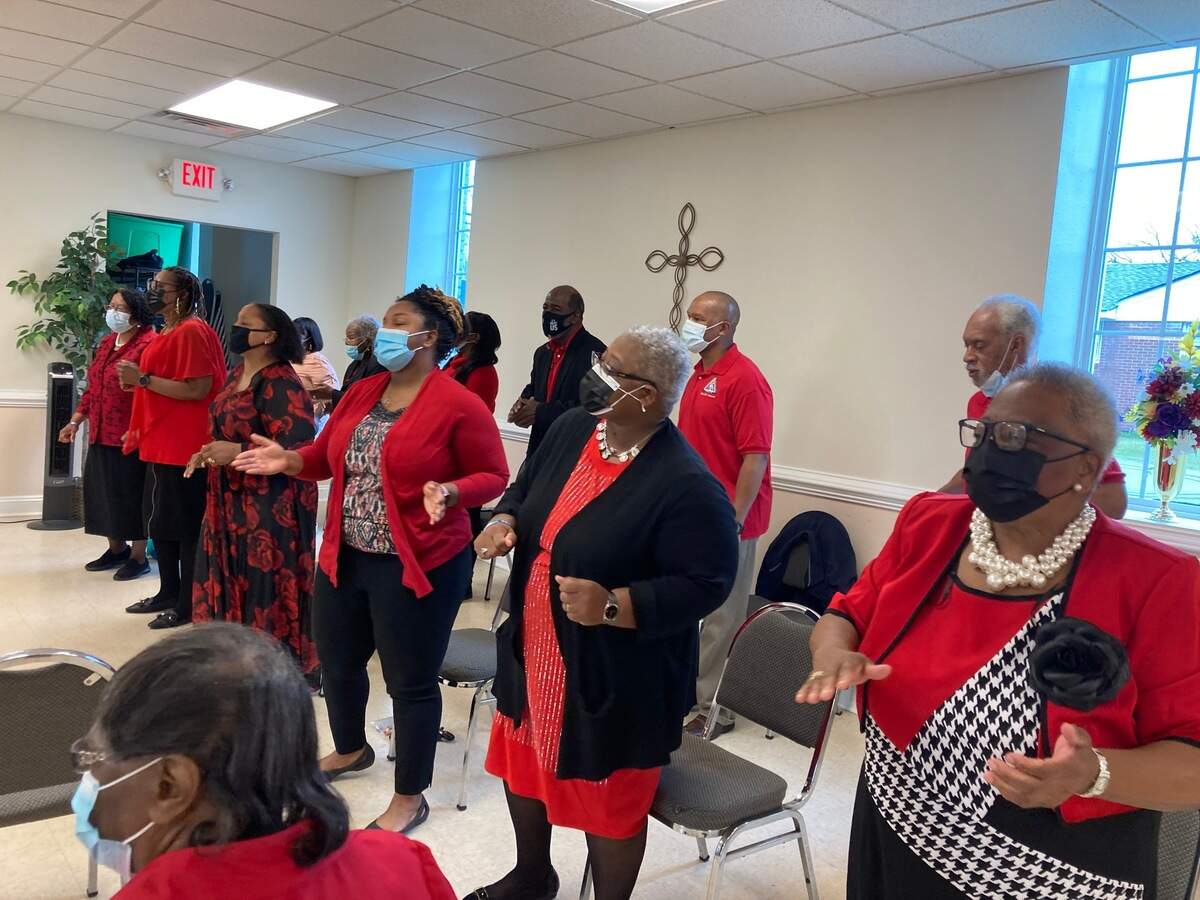
The moments before the 11 a.m. service at Mount Lebanon AME Zion Church were similar to most others in the 171-year history of the Elizabeth City congregation.
Parishioners trickled in, every member of the choir dressed in red. The chair of the church’s trustees wished a minister a happy birthday as she entered the room. The church’s keyboardist hummed as he shuffled into his seat.
But this wasn’t just any Sunday, of course. Not in this church, not in this city.
Since Wednesday, 18,000-person Elizabeth City has found itself thrust into the national spotlight after Pasquotank County Sheriff’s Office deputies shot and killed Andrew Brown Jr., a 42-year-old Black man, while serving a warrant at his Perry Street home.
Less than 24 hours before Sunday’s service, Rev. William Barber II stood inside Mount Lebanon behind members of Brown’s family and in front of members of the clergy. Barber called for justice, as well as changes to public records laws governing the release of body camera footage in North Carolina. Keith Rivers, the head of the local NAACP, then demanded Pasquotank County Sheriff Tommy Wooten II tender his resignation over his handling of the shooting.
Rev. Javan Leach, the church’s pastor, took that same podium Sunday morning. Early in the service, Leach addressed Brown’s slaying, calling on his congregation to care for others in Elizabeth City’s Black community.
“If Black lives matter, we need to show them from the inside out. I mean, how do you show that Black lives matter? Love one another. ... Love them with their pants sagging down, love them,” Leach said. “Love them even if they have materials that are not legal — love them anyway.”
Then, Leach addressed the circumstances around Brown’s death. Brown was shot and killed as he fled while officers served an arrest warrant and a search warrant.
“Everyone has the right when in custody to be processed safely. Whatever happened to serve and protect? Whatever happened to innocent until proven guilty?” Leach said. “Let me tell you something: Sin brought a warrant on every one of you in here.”
‘I’m glad I don’t have boys’
Kiera Gilliam was one of the dozen or so people in the choir on Sunday, along with Janiyah, her 15-year-old daughter. Cassidy, Gilliam’s 4-year-old daughter, was also at the church, running up to her mother and asking to be held during some of the songs.
Following the service, Kiera Gilliam described the past several days as “hectic.” Like many others, Gilliam was shocked that a police shooting could happen in tiny Elizabeth City. Her mother works at P.W. Moore Elementary School, which is about 650 feet from Brown’s Perry Street house.
Wednesday is a cleaning day at the school, Gilliam said, so children were not there at the time of the shooting around 8:30 a.m.
“I’m glad I don’t have boys,” Gilliam said.
She continued, “That’s sad — to be glad that your kids are female — and that doesn’t make it any less likely that something like that would happen to them, but it seems that our black males are really targeted.”
Justin Herman, 21, was another parishioner at the church on Sunday. Like Gilliam, his mother works at P.W. Moore.
Herman learned about Wednesday morning’s shooting from his mom, who sent him a text message telling him what had happened. Herman quickly sought assurances that his mother was alright and then returned to work at a heating and air conditioning company.
“It was just like, here we go again. Another one, another one. Another — somebody else who looks just like me killed by a cop,” said Herman, who is Black.
Herman took a long pause, shaking his head and looking down and collecting himself before choosing his next words.
“It just makes me sad that we’re just getting numb to it. I hate to say it but it’s just the truth,” he continued. “It’s just starting to feel numb to see more and more people that look like me just dying at the hands of the cops.”
When he drives, Herman said, he is careful to follow the speed limit. If Herman is pulled over, he tries to be unfailingly polite and keeps his hands on the steering wheel, avoiding quick movements. He makes sure the license and registration are on the dashboard before the police officer approaches the car.
“Even if I do all those things, there’s no telling,” Herman said. “It’s still possible that they’ll — it’s still possible.”
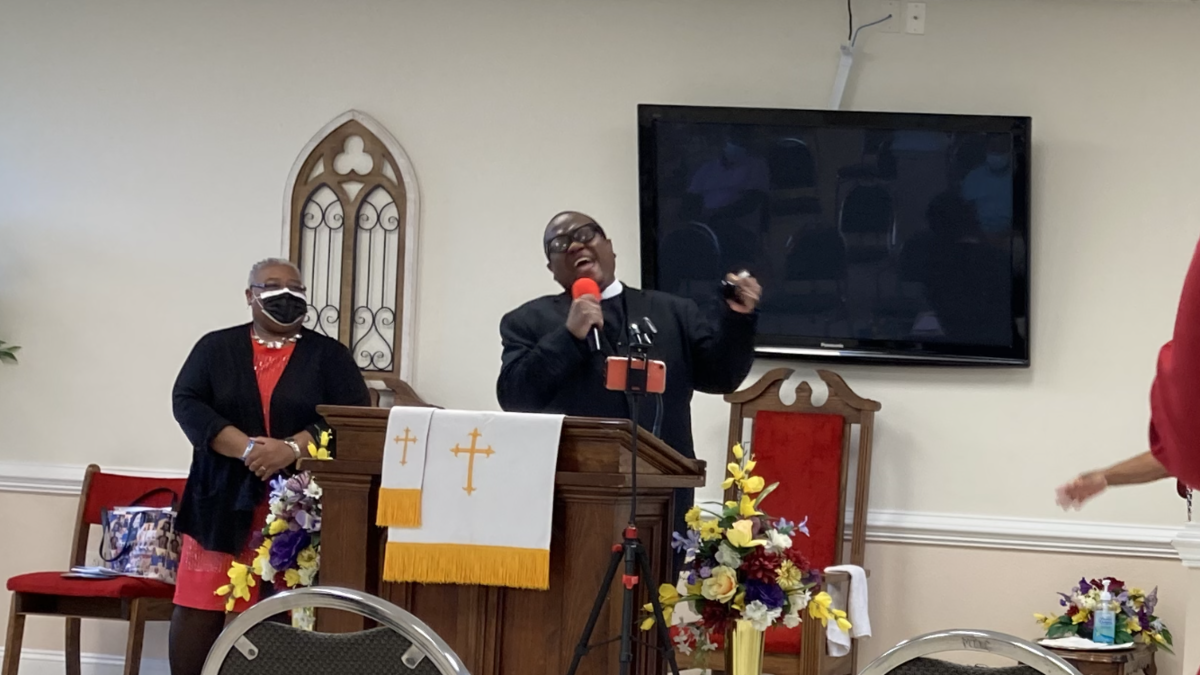
Leach, the pastor, shares Herman’s fears.
Speaking with The News & Observer after Saturday’s press conference, Leach said, “This young man is 42 years old. I’m 40 years old. That could have been me. And most people would probably say or think, ‘Oh, you’re a pastor,’ but when I’m in a regular shirt and pants I definitely could have been him.”
As Sunday morning trickled into Sunday afternoon, Leach closed out his sermon by talking about shadows. A shadow, Leach said, can shape our perception of one another without actually revealing anything about a person.
“The reason why we are hating each other and shooting at one another and are separate is because we are too busy looking at each other’s shadow,” Leach said. “The shadow of a young Black man with his pants falling, the shadow, the shadow, the shadow of a Black man in a car, you don’t know what he has or a woman in a car, but yet the car may be empty.”
Leach continued, saying that fear, homophobia, racism and sexism all cast shadows of their own that can distort how people view one another. And when people are paying attention to those “shadows,” Leach continued, it is impossible to actually see one another.
“You’ve got to be careful not to study shadows,” Leach said, “but you need to study someone’s soul.”