
John Dee Holeman, legendary blues musician and NC native, dies at 92
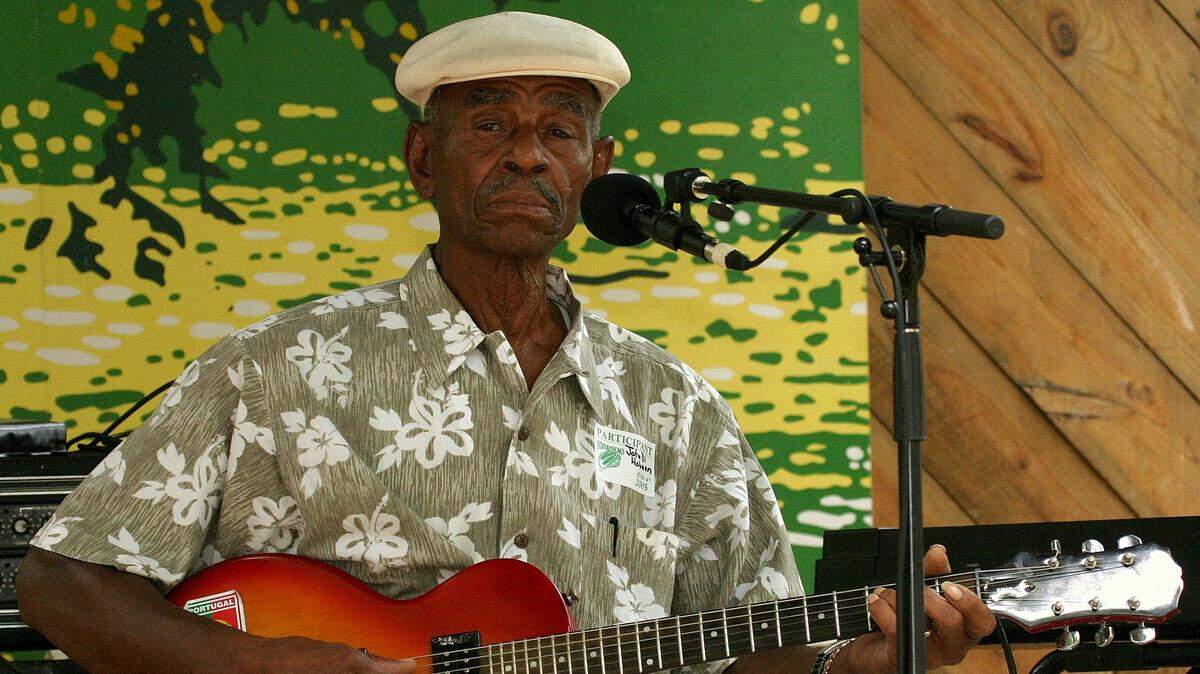
John Dee Holeman, a widely celebrated blues musician whose music took him from Durham house parties to tours across the globe, died Friday. He was 92 years old.
Holeman, who was born and raised in North Carolina, gained renown as a legendary guitar player, blues singer and dancer.
Interviews with those who knew him describe an influential figure and constant performer, who remained humble and kind as he left his mark in stories, song and dance.
Holeman was born on April 4, 1929, in Hillsborough. Later growing up on a farm in Orange county, Holeman learned to play guitar during the long nights spent tending to the fires of the tobacco barn.
Following in the footsteps of musical influences like Blind Boy Fuller, Holeman joined a long line of talented blues musicians based in Durham, where he relocated in 1954 and lived for much of his life.
Holeman is survived by his wife, Joan, who lives in Roxboro.
‘He could take that guitar anywhere.’
Glenn Hinson, a professor of folklore and anthropology at UNC-Chapel Hill, described Holeman as “one of the last elder statesmen” of the East Coast blues tradition.
“There’s a legacy in the blues world of carrying on and updating a deeply traditional sound,” he said. “A lot of people came to know that music through him.”
Hinson met Holeman in 1976, while trying to document the history of the Durham blues scene.
While Holeman hadn’t yet reached a wide audience, he was gaining local attention as a talented musician. He would go on to perform at the Bicentennial Folklife Festival that same year, and his skills would later attract the attention of the U.S. State Department, which would invite him to tour across the globe as part of its arts initiative.
“When pushed, he could take that guitar anywhere,” Hinson said. “He was an amazingly facile guitarist.”
Today, Holeman’s accolades include dozens of festival performances, a National Heritage Fellowship and a North Carolina Folk Heritage Award.
Greg Bell, the festival and events director of the Eno River Association, said he must have been in fifth grade the first time he saw Holeman perform.
“It showed me an aspect of music that I had not seen before,” Bell said. “It was not commercial or packaged. It spoke directly about the human experience.”
Bell, who coordinates the annual Festival for the Eno in Durham, said Holeman never missed the event in all its years — only failing to perform once, in 2019, when his time on stage was prevented by a thunderstorm.
“My greatest joy in seeing him perform at the Eno was seeing him backstage, hanging out and telling stories with fellow musicians,” Bell said. “There was a shared history that he and some of the other musicians who came up in that era have. That was very special to me, to be a fly on that wall.”
“That whole tradition was embodied in him,” Rebecca Conley, a tap dancer who serves on the board of the North Carolina Youth Tap Ensemble, said of the musicians and dancers who Holeman had learned from.
Bell described Holeman was “a very gentle, patient man” with a “wry sense of humor.”
Conley, who was friends with Holeman for a decade, said he would often introduce songs with a personalized story that could make the room laugh.
“He was funny,” she said. “He was a showman.”
She added she can still picture him walking around the house with his cane, ”still bright in his eyes, still smiling, still laughing.”
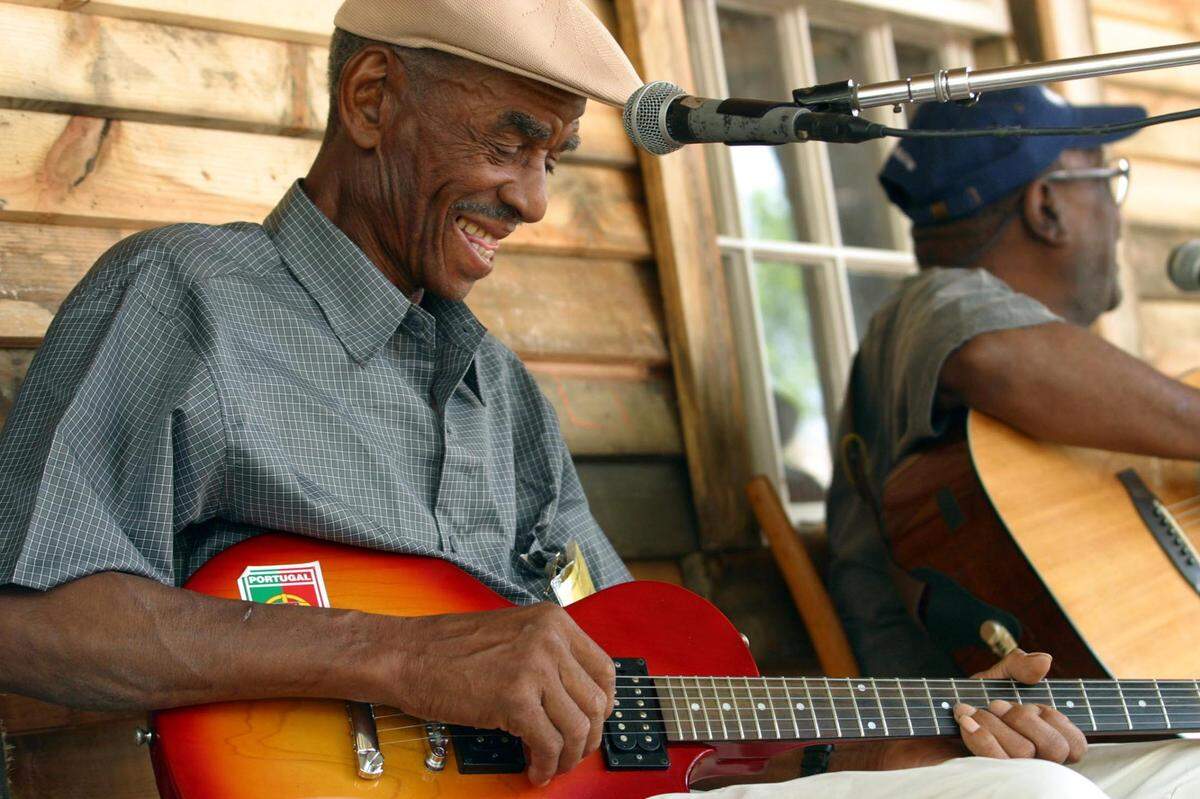
‘A true tradition bearer’
Holeman’s talents extended beyond his music. As a famed dancer, Holeman was among the rare artists to master multiple forms.
Junious Brickhouse, a dancer, choreographer and folklorist, said Holeman’s abilities in storytelling, music and dance were those of “a true tradition bearer.”
“If that isn’t something to look up to, I don’t know what is,” he said.
Holeman mostly performed “buck dancing,” a style of folk dance that is closely tied to the blues and originated in African American communities.
“There’s not a lot of African Americans that identify publicly as buck dancers,” Brickhouse said. He explained the term has been associated with racist terminology that dates back to the time of slavery.
“Buck dancing is not popular African American culture, but it is very clear that it is a large part of our history as African Americans,” he said. “I embrace it, and John Dee helped me to do that. He took a lot of the stigma out of it for me.”
As a folklorist, Brickhouse had initially sought out Holeman for an interview about dance. But instead, “we just became friends,” he said.
To Brickhouse, Holeman’s legacy stands as “a call” to “everyone who is in the lineage of a buck dancer — whether that is tap, whether it is jazz, whether it is hip-hop.”
“We’re his legacy,” he said. “And we have work to do.”
“Particularly for those of us who are white practitioners of Black art forms, which I am,” Conley said. “It’s really, really important for us to not just say, ‘We enjoy doing that movement. Or we enjoy singing that music.’”
“That comes attached with stories,” she said. “John Dee knew family members who had been enslaved... And the music industry is not set up for people like him to thrive.”
Conley said she hopes people will be “respectfully curious” about Holeman and the traditions that he carried on in his life.
Holeman was first hospitalized in Hillsborough in April, Brickhouse said. After a brief return home, he was moved to Person Memorial Hospital in Roxboro. On Friday, Holeman died from a heart attack.
“Hillsborough, Orange County, Durham County — they aren’t huge places, but he made them big with his talent,” Brickhouse said. “He made them larger than the municipality. He made them a cultural home.”
This story was originally published May 2, 2021 at 6:09 PM.