NC restaurants have full dining rooms and are desperate for workers. Is this the future?
While shopping at Office Depot one day, Zweli’s Kitchen co-owner Leonardo Williams tried to recruit a new hire for his Durham restaurant.
He met an employee at the office supplies big box store who said she had only ever worked in restaurants before, but lost her job last year amid the COVID-19 pandemic. Williams tried to bring her back to the industry, offering her a full-time job. Ultimately she passed.
“It’s tough out there. It’s really tough,” Williams said.
In February 2020, the month before the pandemic made its way to North Carolina, there were more than 522,000 people working hospitality jobs, the most in the state’s history. Two months later, that number was nearly cut in half, falling to 287,000 as most restaurants, bars and hotels responded to COVID restrictions with widespread layoffs.
Now that the worst months of the pandemic appear to be in the past, most of those jobs have come back, adding a few thousand at a time over the past year as North Carolina has eased restrictions.
But there are still around 80,000 jobs missing, with only 441,000 hospitality workers in the industry as of April 2021, the latest figures from the North Carolina Department of Commerce.
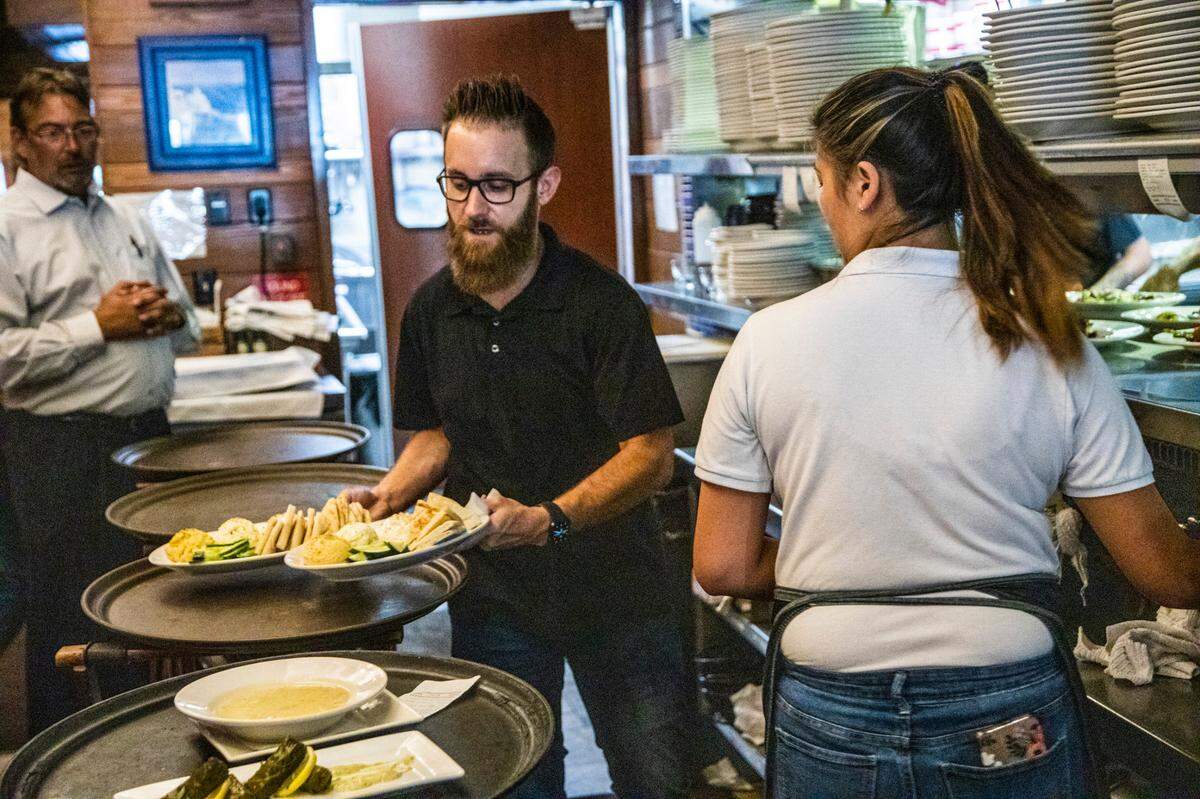
Nearly every restaurant in the Triangle is trying to hire workers — servers, bartenders and especially cooks. A new jobs board on the North Carolina Restaurant and Lodging Association website has 300 open positions statewide, plus more on other jobsites.
Since North Carolina removed most dining and gathering restrictions, the dining public has returned to restaurants and bars in full force. A stroll through downtown Durham or Glenwood South is like time traveling to pre-pandemic days, as patios and dining rooms bustle.
But that abrupt return to a kind of normalcy has pushed one of the hardest-hit industries — restaurants — into another kind of dilemma. North Carolina Restaurant and Lodging Association president Lynn Minges said the worker shortage threatens to keep the struggling industry from rebounding.
“Now that there’s great demand and people are eager to dine out, we’re facing a different crisis,” Minges said. “We’re finding ourselves trying to rebuild a workforce.”
What’s fueling staffing struggles?
There’s no one reason for the widespread lag in staffing, Minges said, pointing to the front-line reality of restaurant work, the fact that some found other jobs and childcare issues as possible barriers. She also said North Carolina’s continued participation in the $300-per-week federal unemployment program, which is set to expire in September, has been a factor.
“Extended unemployment has been a disaster,” Minges said.
Other restaurant owners pointed to unemployment as well. But LM Restaurants president Amber Moshakos said it’s not as simple as that.
“It’s not just about the unemployment,” said Moshakos, whose company owns Carolina Ale House and Taverna Agora, among other restaurants. “The number one reason is childcare. Parents have had to make some difficult decisions. We’ve all under-valued the role of childcare and schools.”
From restaurants to different careers
In April, Rae Henderson left her job as a fine dining pastry chef in the Triangle. She called the job “cushy” by restaurant standards, with health benefits and a 401k. She said she bawled like a baby on her last day.
Still, she said she’ll never go back.
“Being quarantined at home, I got to spend time with my family for the first time in six years,” Henderson said. “I realized I was so isolated and didn’t even notice.”
Now Henderson has an office job, she’s taking flying lessons and is looking forward to baking her sister’s wedding cake, something she said she wouldn’t have been able to do before. The nature of restaurants serving graduation meals and first dates and Sunday dinners means restaurant workers often miss those moments themselves, working a schedule that’s at odds with the rhythms of the rest of the world. Henderson said the pandemic offered her a peek into that and she didn’t want to give it up.
“It feels like there are so many more hours in the day,” Henderson said. “Kitchens often don’t have windows, and seeing the sun is a huge, huge thing.”
Colin Harris left his last restaurant job last spring after seven years in the industry, starting as a server and moving to the kitchen as a chef and kitchen manager. The restaurant industry was a detour for him after college, as his two-year program expanded into a four-year degree. Instead of doubling his student debt, he got a job in a restaurant.
He later got his MBA while working his last job. Now he works in Research Triangle Park for a medical device company, having loved many aspects of the restaurant industry, he said, but realizing it wasn’t his passion.
“I think for some people it’s a career choice and path, but for other people, it’s not their passion and they fall into it,” Harris said. “They’re making more money than they thought they could at that age and are attracted to that.”
Gray Brooks, co-owner of Durham’s Pizzeria Toro, said that after the pandemic and all the changes it wrought, most restaurant workers today are either in for the long haul or looking for something else.
“At this point, you’re either trying to get out or you’re smitten in love with it,” he said.
Spending on restaurants is soaring
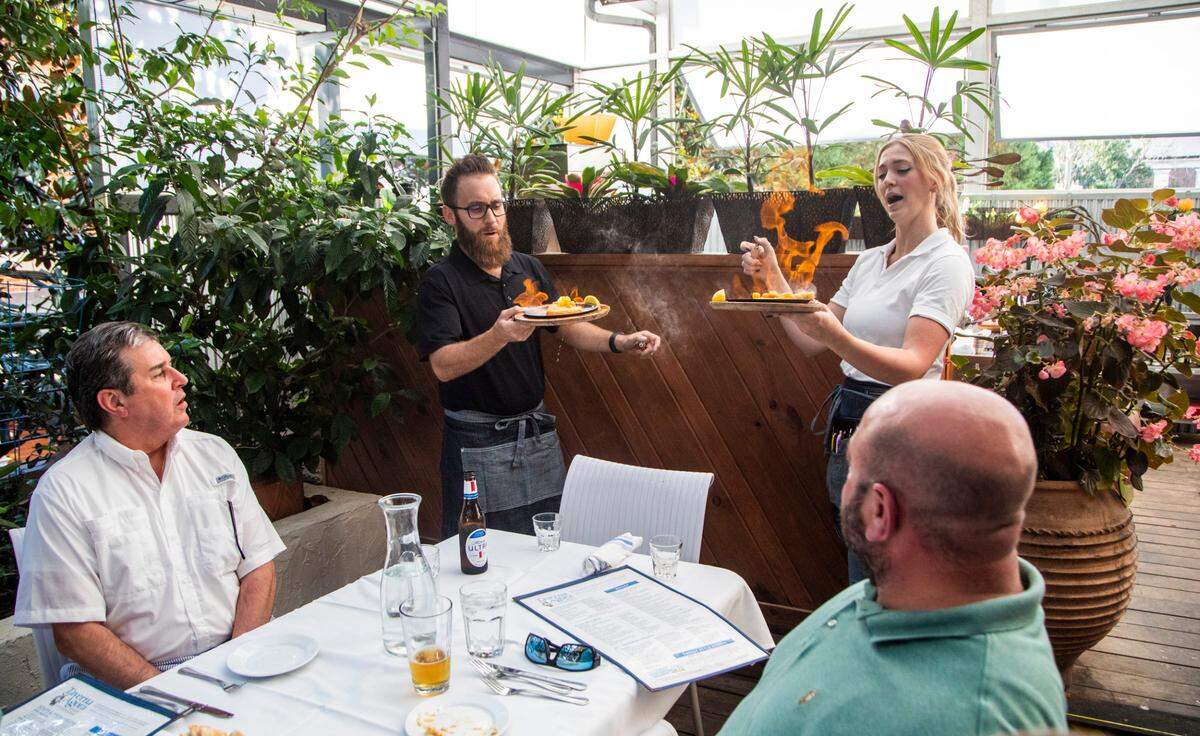
While the industry is still without nearly 15% of its workforce, new U.S. Census data shows that Americans spent $67.2 billion in bars and restaurants in May — the highest figure on record. That eclipses the $66.3 billion spent in January 2020, pre-pandemic.
“This is what keeps restaurant owners up at night,” Moshakos said. “Most places are short staffed. We have amazing team members, but they’re working incredibly hard and guests aren’t always understanding.”
Restaurants across the Triangle are operating with new employees, and some hiccups are likely. The pandemic largely paused the opening of new Durham bar Annexe for one year, but when it did open that meant training barbacks, servers and bartenders all at the same time.
That led to a rough week, owner Daniel Sartain said, prompting a post on Instagram apologizing and asking for patience.
“It’s simply being a little understaffed,” Sartain said. “Training people while you’re understaffed is essentially pulling double duty. It takes a lot of energy from the guests. ... Everything bottlenecks.”
Sartain, who also owns the sister bar of Annexe, Bar Virgile, said the staff of the two bars is currently at 11, when in normal times it would be 20. Those numbers forced the two restaurants to end to-go orders and an outdoor patio that had operated for months in order to focus on indoor guests.
Short-staffing isn’t always obvious, Sartain said.
“The customer can’t necessarily see that (a bar) is down a person or short staffed and there’s generally not an inclination to ask,” Sartain said. “Really it’s the house’s job to figure it out.”
Signing bonuses and other incentives
The high demand for cooks, servers and other restaurant workers means some corporate restaurants like Texas Roadhouse, Carrabba’s and Bonefish Grill have all held local hiring fairs. Signing bonuses are suddenly common incentives, with the likes of Bojangles offering $500 cash for staying six months.
Locally, LM Restaurants is offering a signing bonus, a referral bonus and is exploring employee perks like gym memberships, Moshakos said.
The venerable Raleigh steakhouse The Angus Barn had a staff of 420 before the pandemic and is now around 270 to 300, co-owner Steve Thanhauser said. Most of the losses came from part-time workers. The Angus Barn added signing bonuses of up to $750 and held its first job fair last month in its 60-year history. It netted maybe a dozen new workers, he said.
“It’s unlike anything I’ve ever seen,” Thanhauser said. “We’re calling it the Roaring 20s; it’s like freaking Prohibition was repealed. It’s just so hard when you can’t get labor like you could in the past.”
Would rethinking tipping help?
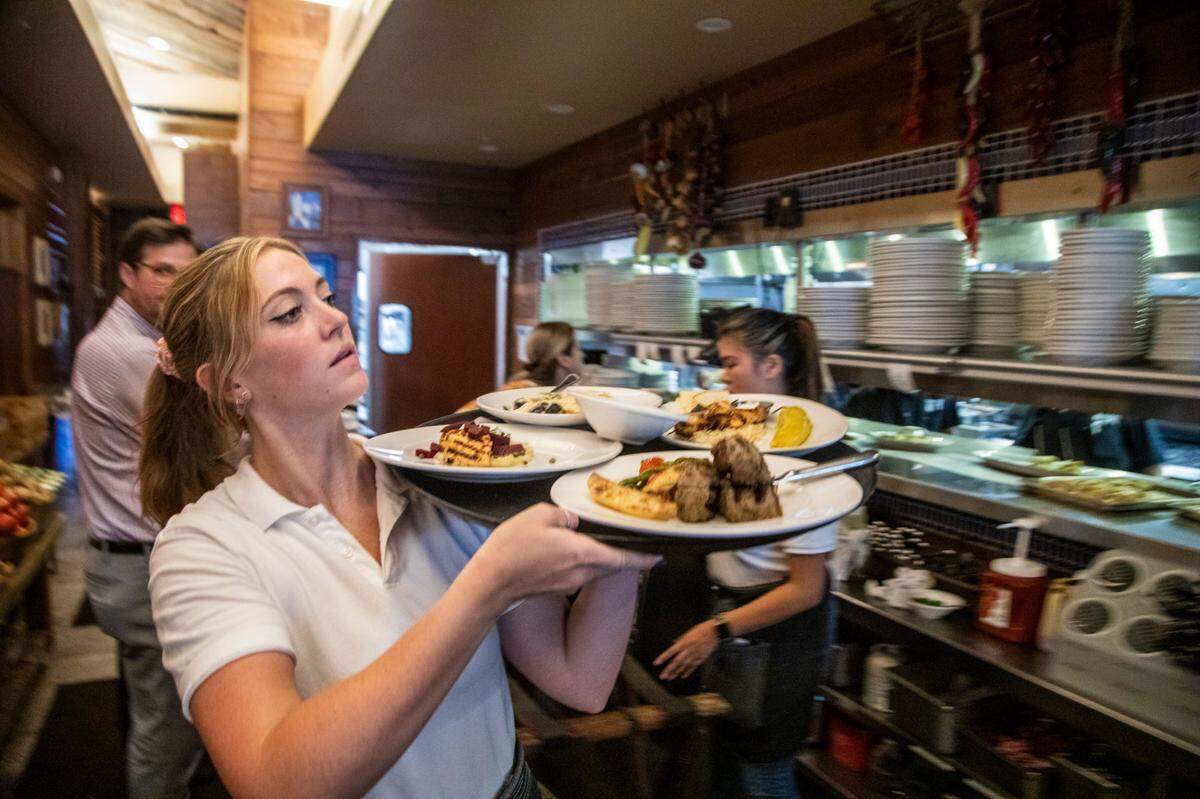
The demand for restaurant workers and local and national campaigns for better wages have led to an increase in hourly pay. The average hourly pay for restaurant and hotel workers was $15.41 in May, up from its previous high of $14.71 in February 2020, according to N.C. Department of Commerce data.
Famously, though, the tipping structure in restaurants leads to a unique and controversial pay model. In restaurants, owners pay tipped employees a fraction of the $7.25 federal minimum wage, possibly $2.13 an hour, with the majority of pay for servers and bartenders coming from the 15, 18, 20 or 25% tips left by diners or bar patrons.
But some local independent restaurants are beginning to chip away at the institution of tipping, seeing this as another path to pay equity in an industry that’s long struggled with disparities. Tipping, they say, has fed inequality, opened workers up to possible discrimination and developed a gulf between front and back of house workers.
The dining room of Pizzeria Toro will open soon for the first time in 15 months. When it does, checks will have a new 20% service charge. Co-owner Brooks said additional tipping is still possible, but is no longer expected. The move follows raises for front of the house workers above minimum wage. The service charge money will be shared among all of Toro’s workers. Tipping, Brooks said, traditionally led to significant pay disparities between workers.
“It comes down to the whole idea of having dignity in your job; it’s a way of leveling the playing field,” Brooks said. “The problem about tipping is it puts this weird power in the hands of the customer to reward or punish workers.”
Raleigh restaurant Garland similarly changed its pay model during the pandemic, raising server wages in order to pool tips, but not adding a service charge, so nothing will be different from the diner’s perspective. Co-owner and chef Cheetie Kumar said the shift is an attempt to change restaurant culture.
“We’re trying to address the most problematic parts of how restaurants structure their pay,” Kumar said. “It’s a difficult job — skilled but believed to be unskilled, the pay isn’t good, the culture isn’t good and tipping is traditionally evil.”
Delivery, takeout and ghost kitchens are here to stay
Zweli’s, the Durham Zimbabwean restaurant, had a staff of 10 in early June, less than half of its pre-pandemic workers. Williams said the shortage is forcing different kinds of restaurants to compete for the same workers, pitting corporate chains against independents. The minimum hourly rate at Zweli’s is $12.50 an hour, above minimum wage, but WIlliams said he’s often promoting the restaurant’s culture rather than compensation.
“It’s the first time Zweli’s and Chili’s are competing on the same level,” Williams said. “Places offering a $400 signing bonus, giving away free iPhones, we can’t compete with that. We can offer work in a culture that appreciates you, where you actually have value.”
Because of being short-staffed, Williams said the Zweli’s model has to temporarily shift away from full service. Now Williams said diners are encouraged to order and pay on their phones using a QR code, which sends their orders straight to the kitchen. The change saves servers about five to 10 minutes per order, he said.
“We’re going to need at least 20 on staff to function normally,” Williams said. “We have to figure out our operations so it doesn’t take a big team.”
With fewer workers, Williams believes the dining world will see a shift to the kinds of models that pare down traditional restaurant service. He said look for more fast casual and counter service, where diners stream through a line and order at a register, receiving their food later.
He also expects to see more ghost kitchens, a kind of restaurant in name only, which prepares dishes from a menu to be picked up or delivered, but has no actual dining room.
Ghost kitchens became popular in some cities during the pandemic, as delivery and takeout became the norm and dining rooms remained closed.
“We’ve all had to get more efficient and more agile,” Williams said. “The pandemic offered an opportunity to press reset, and we’ve had to develop more strategies to get more butts in seats.”
Similarly, delivery apps like DoorDash and GrubHub are here to stay, Brooks said, despite how much restaurants loathe them. The shift, Brooks said will leave a question mark in the middle tier of restaurants, as the experience of fine dining and the convenience of fast casual continue to change what it means to eat in a dining room.
“It will be tricky to keep dining alive in this country,” Brooks said. “It will be a different kind of dining.”