Work begins on unusual bike path that will connect two Raleigh greenway trails
Raleigh will soon begin to close a gap in its greenway system with a bicycle path that will be the first of its kind in the city.
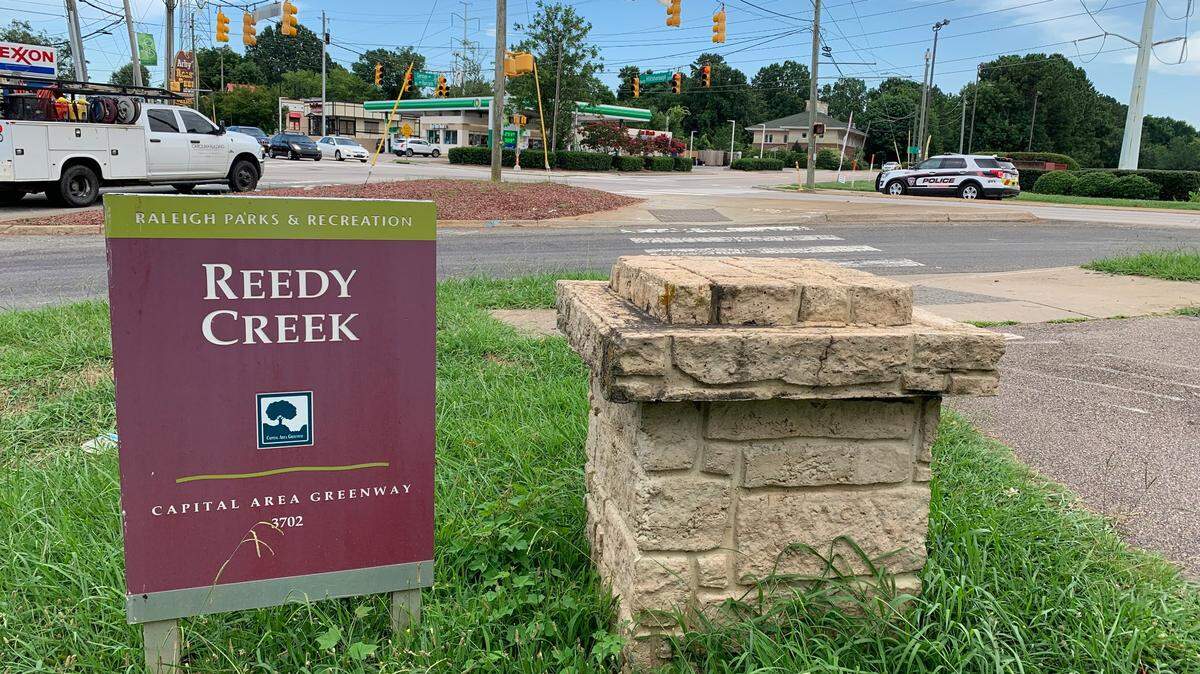
The Gorman Street Connector will make it easier for cyclists, walkers and runners to travel between the Reedy Creek and Rocky Branch trails near Meredith College and N.C. State University. The connector will give them a designated space along Gorman Street, from Hillsborough Street over the railroad bridge to Sullivan Drive.
The connector will mostly consist of a 10-foot-wide multi-use path on the west side of Gorman. But as the path approaches the railroad bridge from either side, pedestrians will be steered to the existing sidewalk while cyclists will be directed onto a new two-way bike lane set off from vehicle traffic with a low concrete curb and flexible white posts.
This will be Raleigh’s first two-way cycle track, a street within a street just for bicycles. Cycle tracks are designed to help riders feel more confident by giving them added space and protection from traffic, said Mary Sell, interim executive director of Oaks & Spokes, a cycle advocacy group.
“It’s definitely going to feel a lot safer, I think, for the majority of people than a conventional painted bike lane,” Sell said.
Construction begins next week and should be finished by the end of the year. The entire connector will only be about a third of a mile long.
“It seems like a pretty small project, but it provides a necessary connection between those two trails,” said Chad Cantrell, project manager for the city engineering department. “And it improves the safety of getting over that bridge.”
The city will build the connector within the current footprint of Gorman Street and its existing sidewalks. The travel lanes on this stretch of the street are unusually wide, about 18 feet, and they will be narrowed to 11 feet each to make room for the new path.
“For this classification of road, 11 feet is pretty typical,” Cantrell said. “Maybe the bridge was set to 18 feet to plan for future lanes, but this helps get this project going with the extra space for the cycle track.”
The project will cost $629,000, with about two-thirds covered by federal grants and the rest by the city, Cantrell said.
Connector part of broader city effort
The idea for the Gorman Street Connector began to take shape in 2014, as the city looked for ways to make getting around by foot and bicycle safer and easier. It took another five years to bring the project before the City Council for approval, only to have the coronavirus pandemic further delay the start of construction.
Sell said cyclists hope future cycle tracks and other innovative bike paths come easier.
“This was probably a good learning experience for the city, because it is the first of its kind,” Sell said. “And hopefully now that we’ve done it once, we can do it many more times.”
As work on the Gorman Street Connector begins, the city is moving to help bridge another gap for cyclists and pedestrians in West Raleigh, this one between the State Fairgrounds and the N.C. Museum of Art.
The city has begun acquiring the right-of-way needed to build a 10-foot-wide multi-use path on the west side of Blue Ridge Road. The $5.5 million project will include new crosswalks and a pedestrian bridge over Wade Avenue, parallel to the Blue Ridge Road bridge, as well as changes to the intersection of Blue Ridge and Reedy Creek Road at the main entrance to the art museum.
Construction is expected to begin next spring and take a year to complete. The new path would tie into one the N.C. Department of Transportation plans to build along Blue Ridge near Trinity Road.