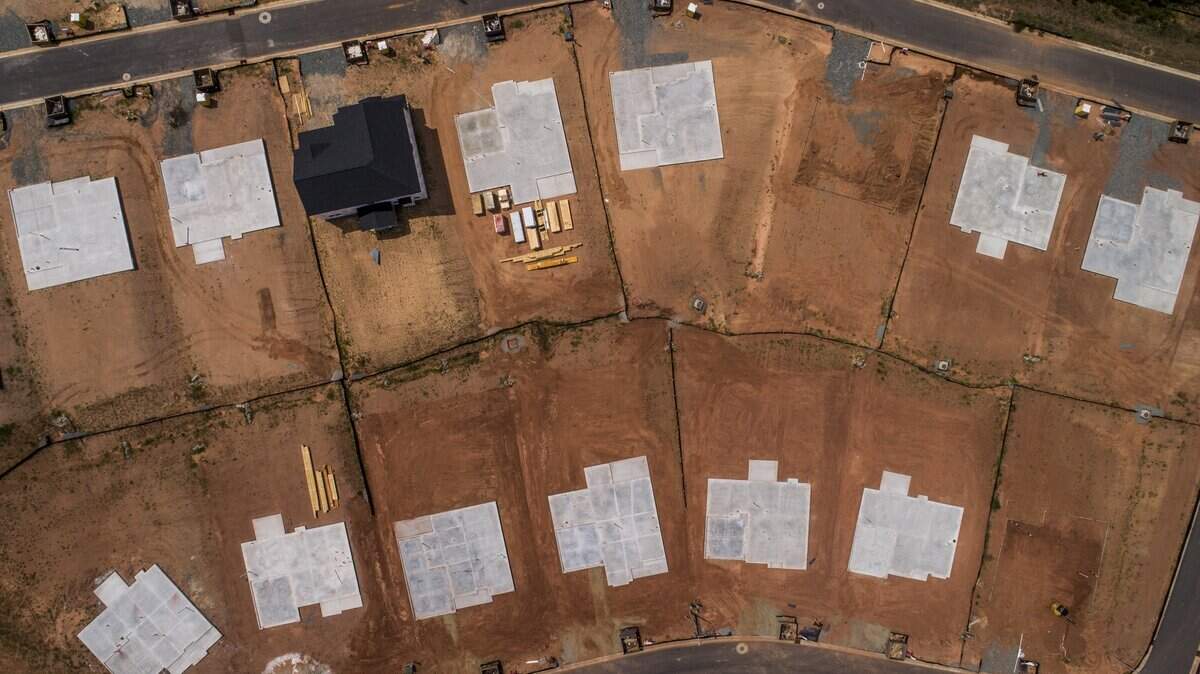
New construction is underway Friday, Aug.13, 2021 at the Bridgeberry subdivision in Holly Springs.
Travis Long
tlong@newsobserver.com
Raleigh
New data from the once-in-a-decade census count made it official last week — North Carolina’s population isn’t just bigger, it’s more diverse.
The 10.4 million people who now call the Tar Heel State home identify as more multiracial overall. And a smaller percentage described themselves as Black or white. That’s despite raw population gains in nearly every racial and ethnic group.
Non-Hispanic white residents dropped from about 65% of the North Carolina population in 2010 to about 60% in 2020. Hispanic, Asian and multiracial communities, meanwhile, each increased their shares of the state’s population by one percentage point or more.
By one measure, nearly every oneof the 2,700 census tracts in the state saw an increase in diversity over the past decade, an analysis by The News & Observer has found. Tracts aren’t exactly neighborhood-sized, but they’re close, with an average of about 4,000 residents each.
“These are real and meaningful increases in diversity,” said Rebecca Tippett, director of the Carolina Demography at the Carolina Population Center at UNC-Chapel Hill.
Sussing out the reasons for these shifts is likely to take time. But with the data now public after months of delay, planners and demographics can examine it closely in the coming months to better understand how North Carolina is evolving at the local and state levels.
Defining diversity
One way to measure the diversity of a community — whether it’s a small census tract of thousands or a county of more than 1 million — is to use the diversity index. That’s a calculation of the likelihood that two random people living in an area describe their races or backgrounds differently.
The state as a whole remains slightly less diverse than the country by this measure, 58% in North Carolina compared to 61% nationwide. That’s up from 52% in North Carolina in 2010.
Still, more than 90% of the state’s census tracts saw an increase in diversity over the decade, the N&O’s analysis shows.
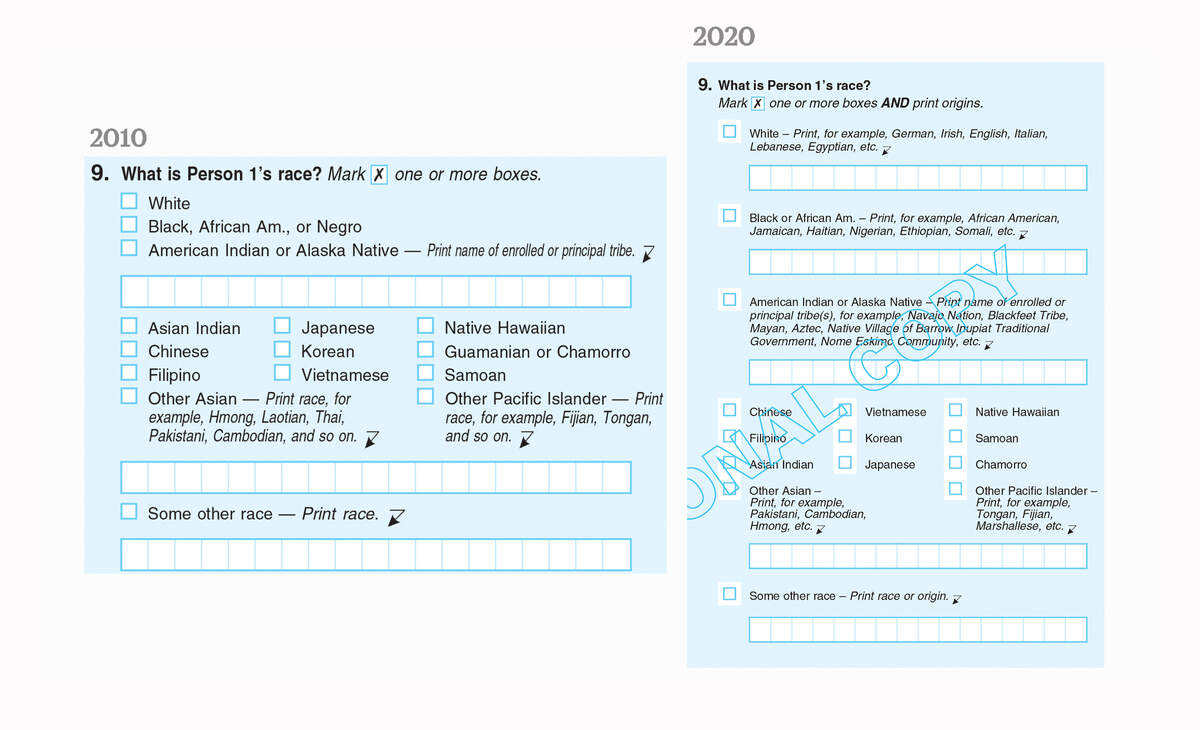
Changes to the race question in the 2020 census form added write-in categories for origin and ancestry for every racial category. In 2010, that option was only available for people who identified as American Indian, Asian or some other race. Scott Sharpe ssharpe@newsobserver.com
For the 2020 count, the U.S. Census Bureauslightly revisedhow it codes race and ethnicity, which remain two separate categories on census forms.
For the first time, all residents were asked to note their ancestries. That allowed the census to capture more about the origins of respondents who previously only identified as Black or white.
At the same time, the bureau in 2020 captured more responses when anyone penciled in multiple ancestries. The agency now captures six origin categories in its data instead of just two, like in 2010.
But if one of those ancestries conflicts with the race entered by a respondent, the bureau may reclassify them as multiracial in the final census numbers.
Say, for example, you only check the box for “white,” and underneath, you also write in origins of “British” and “Nigerian.” Because the U.S. Census Bureau codes British as “white” and Nigerian as “Black or African American,” you’d be counted as “two or more races” rather than “White alone.”
In a recent post explaining the changes, U.S. Census statisticians wrote that “these improvements more accurately illustrate the richness and complexity of how people identify their race and ethnicity in the 21st century.”
And it appears to have had an effect.
In North Carolina, non-Hispanic multiracial residents saw one of the largest increases in the share of the state’s total population, jumping from 1.6% in 2010 to 3.9% in 2020.
At least a portion of that growth, Tippett said, is real, evidenced by a jump in the population of multiracial children born to mixed-race families. But some of it might be the result of new counting techniques coupled with a growing awareness of individual ancestry — a “23andMe effect,” Tippett said.
“I think what we’re seeing here is an increase in fluidity,” she said.
Untangling those conflicting signals isn’t easy. But after a decade where Hispanic and Asian populations in North Carolina increased by 40% and 65% respectively, answering the broader diversity question is a little more clear cut.
“Even if you wanted to totally ignore the increase in the multiracial population, we saw meaningful increase in the third and fourth largest ethnic groups in the state,” Tippett said. “That’s not just the artifact of a question change.”
Tyler Dukes is the lead editor for AI innovation in journalism at McClatchy Media, where he leads a small team of journalists that helps the company’s 30 local newsrooms responsibly harness data, automation and artificial intelligence to elevate and strengthen their reporting. He was previously an investigative reporter at The News and Observer in Raleigh, N.C. In 2017, he completed a fellowship at the Nieman Foundation for Journalism at Harvard University. He is a graduate of North Carolina State University and grew up in Elizabeth City, N.C.