‘We are often many things at the same time.’ Hispanic, Latino/a, Latinx, or Latine?
“The diversity hire.”
That’s how Sól Rivera used to describe working at different white-owned salons over the last seven years between New York and, more recently, Durham, North Carolina.
“Hispanic” is the ethnic category Rivera would traditionally need to check on a job application, form or questionnaire. But as a non-binary person of Cuban and Puerto Rican descent, Rivera often resorts to the category “Other.”
“As I came more into my own gender identity, and kind of figuring out where I stood politically, I never really felt super aligned with the fact that, you know, Hispanic was a term that did come from [the government],” said Rivera, who uses they/them pronouns.
Instead Rivera identifies as Latine, which they feel is more inclusive. As the co-owner of Obsydian Studio in Durham,
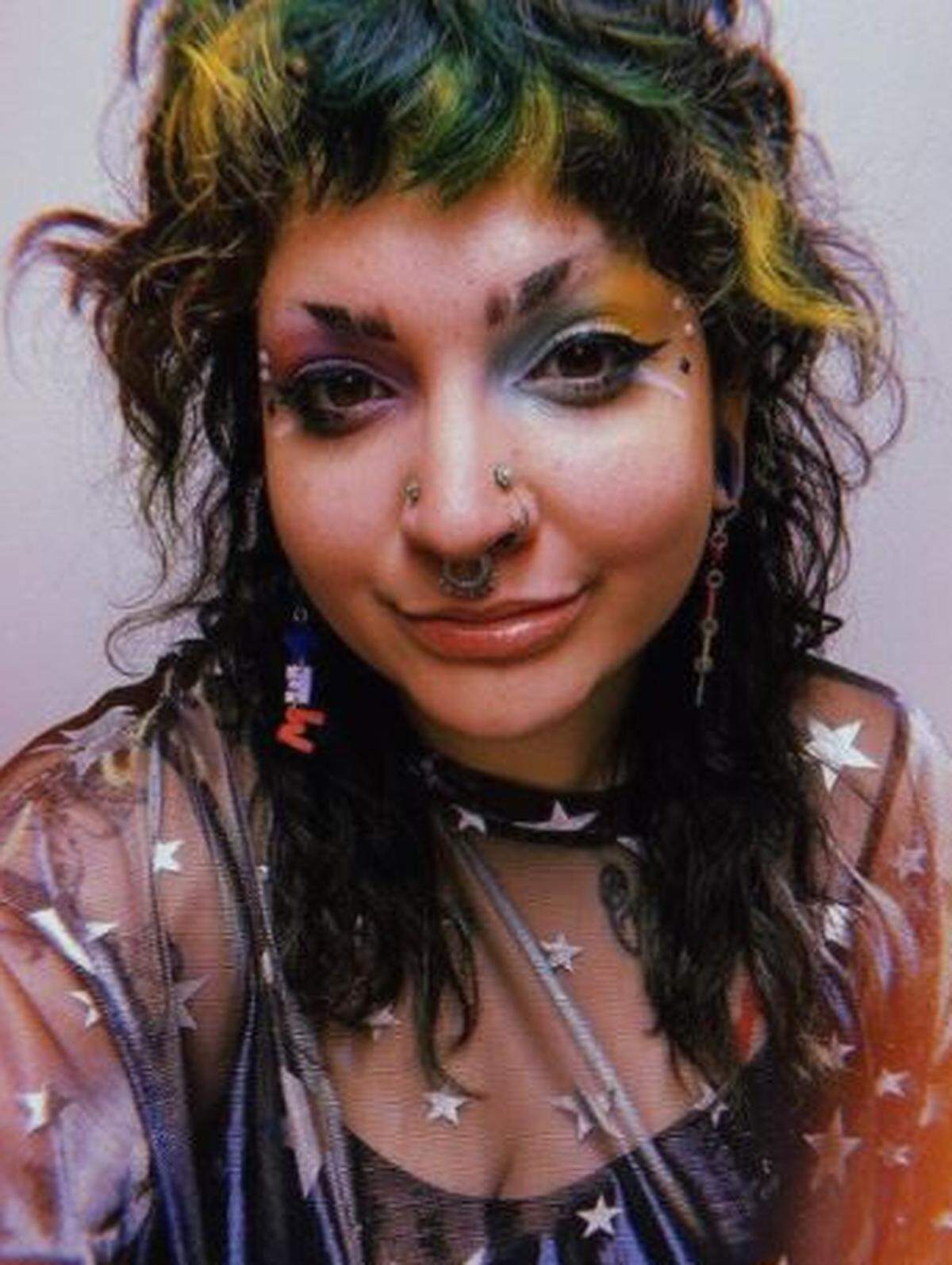
Rivera and their business partner rely heavily on inclusive language since their clientele is predominantly LGBTQ.
Like Latinx, Latine is a gender-neutral alternative to Latino (for a male) or Latina (female) used to describe people of Latin American descent. Other variations are also tied to race, like Afro-Latinx among Black people of Latin American descent and predominantly African phenotype.
But you won’t normally find these options in official and legal documents or forms outside of businesses like Rivera’s.
In the last few decades, people within the community, and even scholars, have embraced Latino to replace the term Hispanic. The Oxford English Dictionary defines Hispanic an adjective or noun to describe people relating to Spain or to Spanish-speaking countries, especially those of Latin America.
Many find Latino is more inclusive of non-Spanish-speaking cultures in Latin America, like the Mixtec and Trique indigenous tribes in Mexico, whose only connection to Spanish-speaking Mexicans may be shared geography. For others, it also helps separate their identity from their country of origin’s history of colonization by the Spaniards.
Since the Nixon administration in the 1970s, the U.S. government has widely used Hispanic as the universal term to identify people of Spanish-speaking origin.
‘What we call ourselves’
The debate over Latino and its variations versus Hispanic isn’t new, says Cecilia Márquez, a history professor at Duke University.
“It’s not the first time that we’ve debated what we call ourselves, and it won’t be the last,” she said. “It’s not a category that emerges from nature; it’s something that was built by people.”
Latinx and its other gender-neutral counterparts entered the mainstream by way of the LGBT community in the late 1990s and early 2000s, Márquez says.
“If we can treat these sort of new terms and these debates as invitations to think about inclusion, how more people can feel included in the community and feel represented, then they can be really healthy,” she said. “I think the problem is when these debates become ways of policing who is and is not legitimately a member of the Latino community.”
A recent Gallup poll found only 4% of Hispanic and Latino adults in the United States prefer the term Latinx to identify themselves.
Fifteen percent prefer “Latino” while even more, 23%, prefer “Hispanic.”
Overall the poll, which sampled 302 adults, found most Latinos don’t really care, with 57% saying it does not matter to them.
Márquez says it all comes down to choice, with gender being just one of many reasons Latinos continue to identify in different ways.
“The extent to which, you know, a Puerto Rican and a Guatemalan find common community, that’s a choice that people are making. They’re saying there is some value in building community together, but it’s not natural,” she said.
“There’s no natural reason that people from these communities should have anything in common. It’s a willingness to see their futures, their destinies, as linked to each other,” she explained. “And that maybe we can build a community that is more powerful than us in isolation.”
Growing Latino population
This kind of decision-making process is one that nonprofit organizations representing historically marginalized communities often face.
North Carolina has one of the fastest-growing Latino populations in the country. It increased by nearly 30% in the last decade and surpassed 1 million people in 2019. Wake County has the second-largest Latino population after Mecklenburg County, followed by Forsyth, Guilford and Durham counties.
Raleigh-based El Pueblo Inc. promotes Latin American culture and engages North Carolina’s Latino community in civic life. Verónica Aguilar, communications coordinator, says it’s often her job to decide the type of language used with their members and clients.
“The different terms that people use to refer to the Latin American community in the U.S. — There’s so many!” Aguilar said. “Latinx is the term that we’ve mostly used for our communication purposes. If it’s not Latinx, it’s Latino/a.”
Aguilar says she and her team try to make their communication inclusive, knowing there will never be a perfect answer.
“In Spanish, we do tend to hear folks mostly talk and refer to the Latin American community as hispanos or latinos,” she said. “But whenever we do get backlash from using the term Latinx, because we do, it’s generally from someone who is older, and speaks Spanish, and is unfamiliar with the term.”
This story was originally published October 5, 2021 at 12:21 PM.