
160 tenants behind on rent applied for aid. Their landlord won’t accept the money.
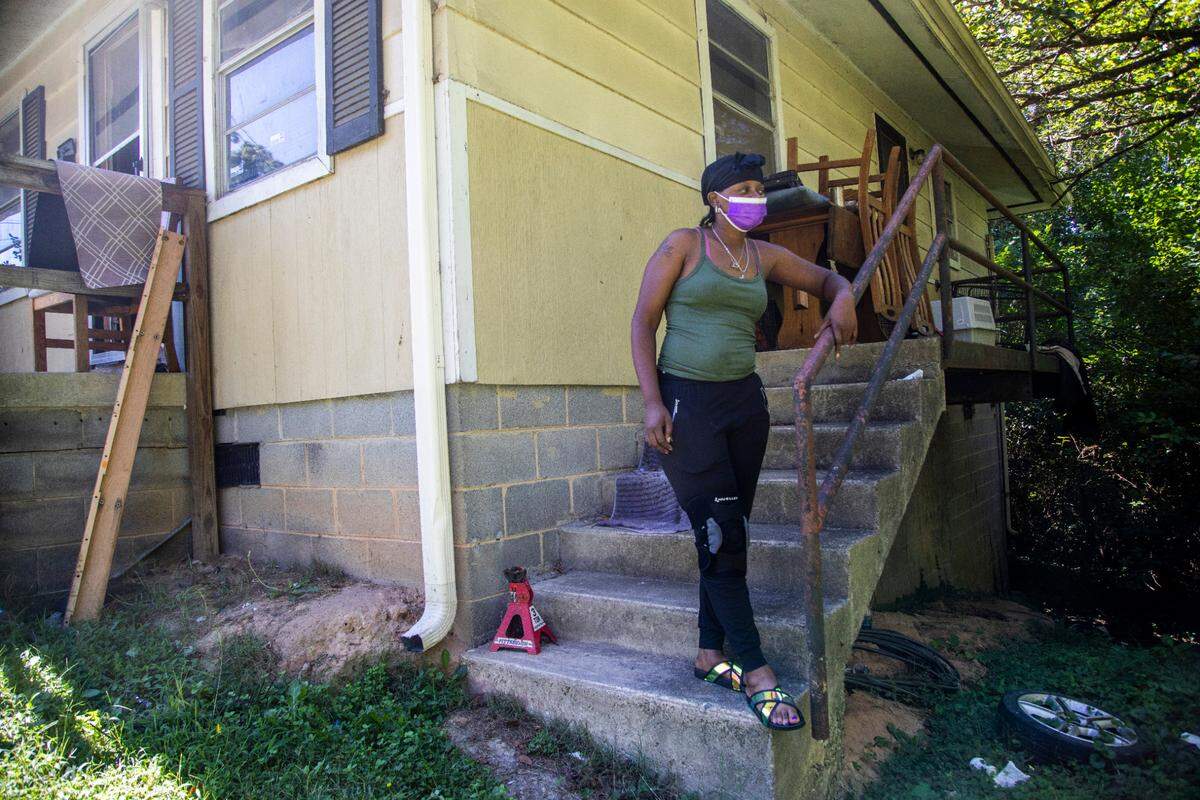
Akilia Jones’ financial woes started in March of last year when the COVID-19 pandemic shut down her son’s school in Durham, forcing her to quit her job while she looked for child care.
Jones, like many, looked to the government for unemployment insurance, but it took weeks for her to receive payments.
Bills piled up, so the 31-year-old single mother decided to pay for child care out of pocket and return to her fast food job last August.
Then a leak at her new apartment led to high water bills. One month it was over $400, she said.
When winter hit, she paid high electric bills after she bought space heaters to keep her family warm due to inadequate heating from the baseboard, Jones said.
While on a drive in December, a driver ran a stop sign and T-boned her car. The accident tore ligaments in Jones’ knee, putting her out of work until this past June.
With limited income from unemployment payments, Jones was forced to choose between getting caught up from the past several months or paying rent. And with her Legal Aid attorney informing her that partial payments won’t protect against eviction, Jones decided to use her limited income to pay other bills until her landlord, Rick Soles, addressed the maintenance issues at the apartment that were driving up her utility costs.
“My kids can’t be in here without lights and water. It’s hard to make the choice, but I have to make the choice that’s going affect me right now, and that’s the light and water,” Jones said.
Jones hasn’t paid rent since Dec. 31 and is currently over $7,000 behind. She applied for emergency pandemic rental assistance from Durham County, along with 160 other tenants that rent from Soles, according to the county.
But even with over $9 million left in federal funding in Durham’s program, there’s a problem: Soles won’t take the assistance.

And with the U.S. Supreme Court ending a nationwide moratorium on pandemic-related, non-payment evictions about a month ago, he’s been filing in court for repossession of his property.
On Thursday and Friday last week, Soles was the plaintiff in over 100 eviction hearings.
Jones was one of the defendants.
“This was an act of God, something out of everyone’s control,” Jones said. “He needs to accept this assistance. Like half of us won’t make it, if he doesn’t take this assistance.”
Of the 160 tenants that have applied for aid, he’s only completed his portion of the application for two of them, which are under review by the county. He told the magistrate in court last week multiple times that’s he not accepting aid from the program.
Durham’s program is funded by rental assistance in the December stimulus from Congress. Federal guidelines allow aid to go directly to tenants if landlords refuse after a reasonable effort is made to convince them otherwise.
But the county said the best way to keep the aid disbursement accountable is to require landlords to participate.
Numerous tenants said in court that they had applied, but it didn’t matter. The courts can’t compel landlords to take the money.
In almost all the cases last week that weren’t dismissed by Soles, a judgment was granted if the tenant was behind on rent, even if they applied, meaning Soles is able to have the sheriff remove the resident from his property if they don’t appeal within 10 days.
Soles said he was still willing to make payment arrangements with the tenants, but Sarah D’Amato, a Legal Aid attorney representing some of the renters, said landlords can still act to remove the tenants after 10 days.
“Even if they’ve worked out an agreement, but they haven’t paid on their agreement, he still has a judgment that he can execute on,” she said.
And the debt many owe is beyond their means. As of Aug. 15, Soles said, 166 of his tenants are behind on rent, ranging from $1,500 to $14,500 per household.
“People are now recovering still from COVID,” D’Amato said. “The payment plans he talks about are $200, an extra $500 a month, on top of their monthly rent. They don’t have that money.”
Why he won’t accept the assistance
Down the hallway from the courtroom in the Durham County Courthouse where Soles was collecting judgments to evict tenants, the county Department of Social Services had social workers helping tenants and landlords navigate rental aid applications.
DSS program manager Lee Little said if Soles went down the hall and filled out his portion of the aid applications, he could be paid up to 12 months of past unpaid rent and three months of future rent per tenant. The county processes payments in about two weeks once the application is complete, he said.
That’s if the tenant has lost income due to the pandemic and earns 80% or less of the area median income.
But Soles said he’s not taking any assistance from the program at this point because, he says, the landlord-tenant agreement doesn’t explicitly list how much he would receive.
“I’m not signing on just with them saying, ‘We can help.’ I want you to tell me a dollar amount,” Soles said. “Show me the numbers, and then I’ll sign on.”
“It’s not helping the people who need help, and I can’t take the blame for it,” he said.
But on the agreement, the landlord can specify the amount of rent owed, plus fees up to 5%.
If the tenant and landlord agree that the amounts are correct, Little said, in virtually all cases, DSS will pay the full amount requested, unless the amount doesn’t match the agreed upon rent on the lease. The county also prioritizes cases where the tenant is facing imminent eviction.
“That agreement is our way of justifying and making sure that the amount is the same, so we will go off of what is on the landlord agreement because both parties have signed off,” Little said. “The amount that he puts on there is 99% of the time what we pay if they’re eligible.”
But Soles wants to know the amount he will get before he signs anything. He’s even willing to accept other portions of the agreement, he said, such as not evicting a tenant for 60 days after the repayment period.
“Process the individual and call Rick Soles and say, ‘We can help them. We’ll pay $6,000,’” Soles said, referring to a hypothetical tenant. “I’ll sign it. I’m committed.”
But DSS can’t process applications until Soles acts on his portion, Little said.
As of Sept. 24, the latest available information, over $8.4 million has been sent to landlords.
“There’s plenty enough landlords that have signed on,” Little said.
He said that the county has reached out to Soles to try to address his concerns with the program.
The county has made payments on behalf of over 1,400 households as of last week, averaging about $5,870 per tenant.
That amount is among over 7,200 applications, and over 2,100 of those are awaiting information from landlords like Soles.
As for landlords that refuse assistance, Janeen Gordon, DSS assistant director of aging and adult services, said there’s only a handful.
“We have had a very good relationship with our landlords and continue to do so to make the process as easy as possible for them,” she said.
D’Amato said that she hasn’t seen landlords refusing assistance to the degree that Soles is. She said most refusals of aid are due to landlords selling property to get out of the rental business, not for non-payment.
The rest of Durham’s rental aid applications are waiting completion from the tenant, are under review by DSS, or the payment is on the way to the landlord.
“We’re working as hard as we can, six days a week, sometimes seven days a week,” Little said. “Trying to help alleviate this pandemic crisis.”
Maintenance issues
At Jones’ apartment, in addition to the water leak and damaged baseboard heating, there was a damaged electric outlet, and plywood on an outside wall covering a hole.
The water leak caused mold, giving her son irritations on his skin, Jones said.
“I’m willing to make a payment plan and pay him if he’s going to do what he’s supposed to do as my landlord,” she said.
Other tenants that faced Soles in court said they had maintenance issues at their apartments as well.
D’Amato said many of her clients who rent from Soles send her pictures and videos of damage to their units.
She said Legal Aid has the city come and inspect the units for damages. If it’s severe enough for the apartment to be considered uninhabitable, tenants, like in Jones’ case, can file a counterclaim against the eviction filing.
“As a landlord, you have the duty to keep the premises in a fit and habitable condition,” D’Amato said.
Soles called this legal strategy a defense mechanism. He said most tenants who have called the city are behind on rent.
“I’ve got like 800 other tenants that don’t go through Legal Aid. They don’t have to call the city. All they have to do is call our office. Plumbing’s not working? We send a guy out there,” he said. “We understand our responsibility. It’s a two-way street. Tenant pays rent. Landlord maintains the property.”
But Jones said she had been calling Soles’ office about the issues with her unit since October, before she stopped paying rent.
Soles said that that his office hasn’t received any maintenance requests from Jones. He said in emergency situations, such as Jones’, the maintenance request should be in writing.
Jones said she was never given an email address to put anything in writing. Soles said they prefer phone calls over emails.
“When we call in for the work orders, there’s no way to have a paper trail,” Jones said.
To put requests on paper, Soles said, tenants could drop it off at the office or send by physical mail.
He declined to comment specifically on the maintenance issues at Jones’ apartment.
D’Amato said using the city inspection to file a counterclaim puts everything in writing and on the record. But the damages aren’t used as a defense against the actual eviction because the lease is still breached on the tenant’s end because of nonpayment.
“We bring [the counterclaims] up, because it’s possible that the magistrate will award some damages, but it’s usually not to offset the amount owed for a rent case,” she said.
“Most of our clients, the main thing they want is for their house to be fixed,” D’Amato said. “They want to have heat in the winter. They want to have sewage not in their yards. They want to have electricity that works and full use of their home.”
‘A fighting chance’
DSS has announced that the county will stop accepting rental aid applications on Oct. 4 to focus on its backlog of applications, The News & Observer reported.
Soles can still complete his tenants’ applications past that date since the process has already started.
But in order for Soles to be reimbursed lost rent over the past several months, he would need to complete applications from tenants before the program’s funds are lapsed.
And funds are going fast. Funds disbursed have increased monthly since June. So far in September alone, the county has administered over $3 million in rental aid.
“Give us a fighting chance because that’s what this money is for, to allow us a chance to get caught back up,” Jones said. “Give us the chance to do right by you.”
This story was originally published October 1, 2021 at 10:51 AM.
CORRECTION: An earlier version of this story incorrectly said that aid from the December stimulus must go directly to landlords. Federal guidelines allow rental aid programs to send money directly to tenants after a reasonable effort is made to include landlords. Durham County and city decided the best way to administer funding in an accountable way is to require landlord participation.
The story also mischaracterized advice that Legal Aid gave to Akilia Jones. Legal Aid only informed Jones that partial payments don’t protect against eviction.