Raleigh’s Latino community celebrates the Day of the Dead to ‘remember our lost ones’
Raleigh’s Latino community came together Sunday to remember not only loved ones who’ve died but others who’ve been the victims of violence, accidents and COVID-19.
Several grassroots groups came together Sunday to erect four altars for the Day of the Dead, the holiday in which the living honor those who have died. Organizers of the event, held outside El Pueblo’s office in Raleigh, said the event is especially meaningful after the pandemic caused last year’s community celebrations to be postponed.
“In Mexico, we celebrate the Day of the Day to remember our lost ones, and a lot of the community members, due to COVID, they lost a lot of family members, whether they’re in Mexico or here,” Iliana Santillan, executive director of El Pueblo, said in an interview Sunday. “There’s been a lot of losses.”
The Latin American holiday originated in Mexico and combines indigenous Aztec practices with aspects of Catholicism that the Spanish brought to the region, The Charlotte Observer reported.
The Day of the Dead is normally celebrated Nov. 1-2.
“We think that it’s important for us to have these traditions and be able to share our culture,” Santillan said. “There are a lot of people who are interested in learning more about, how is the Day of the Dead different from Halloween.
“People sometimes get them confused. But the Day of the Dead is a very cultural thing that people in Mexico do.”
To celebrate the Day of the Dead, families set up an ofrenda, or altar, with favorite foods, drinks and other things enjoyed by their loved ones who have died. Music is often played, too.
Remembering those who’ve been lost
In Raleigh, four open-air altars were installed:
▪ One altar was for anyone who wished to bring an offering or photograph of their loved one.
▪ A second altar was in honor of victims of domestic violence and women who were killed because of their gender.
▪ A third altar was in memory of essential workers who have lost their lives due to COVID-19 or in workplace accidents.
▪ The fourth altar was in memory of LGTBQ+ people who have died in detention centers.
Santillan said the themes for the altars came from the grassroots groups which helped El Pueblo organize the event: Popular Action Committee (CAP), Justicia y Esperanza, Hendfact Henderson Fuerza Activa and Mujerx Organizing Remarkable Opportunities (MOON).
Griselda Alonso of MOON laid tamales at an altar to remember undocumented people who’ve died while trying to cross the U.S. border or in detention centers.
“A lot of these folks, they didn’t get to go back home to their families,” Maria Jose Alonso, Griselda’s daughter, said in an interview. “So we’re basically giving them a place to be honored even if they’re not with their loved ones and even if they didn’t die where they were born.”
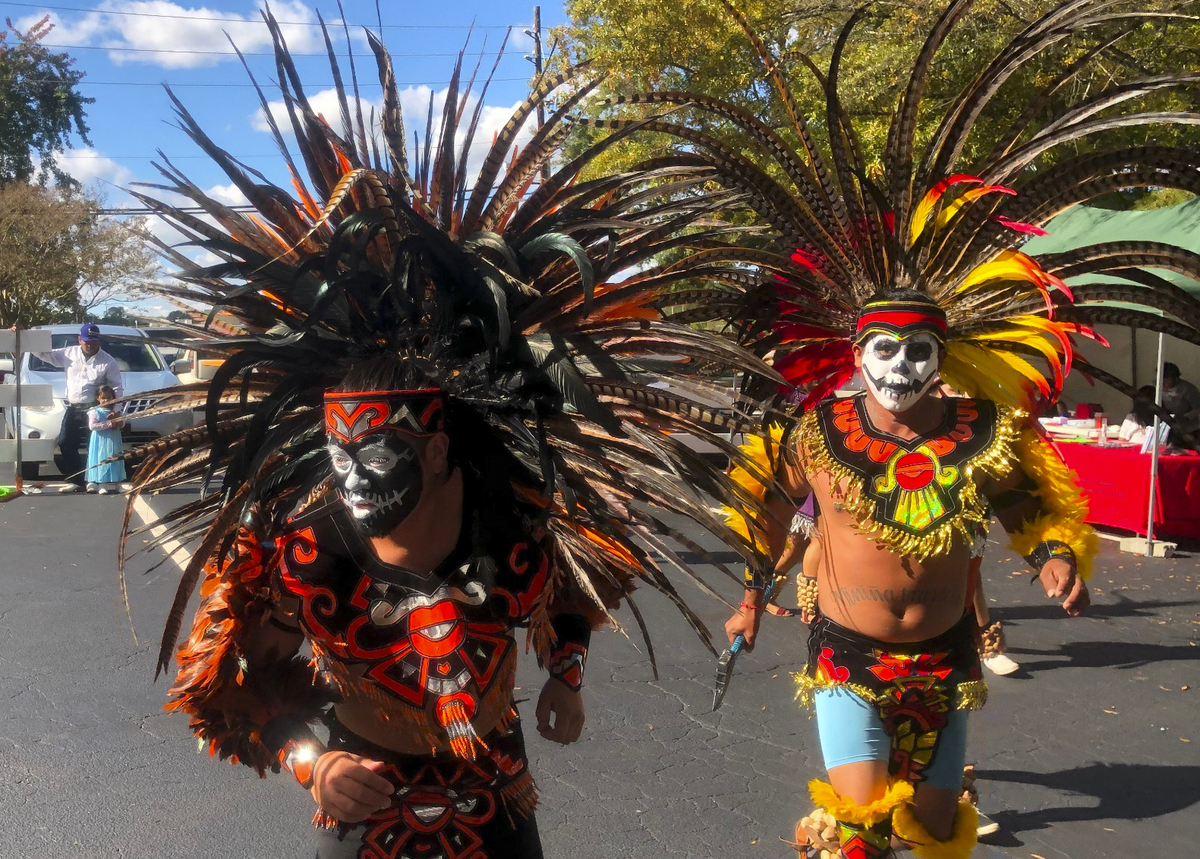
In addition to the altars, the event featured traditional dances, food and a COVID-19 vaccination clinic.
“We’re still continuing to see a lot of misinformation from folks who haven’t gotten (vaccinated),” Santillan said. “We’re taking this opportunity for them to come here, have fun and also get the vaccination.”
Learn more about the Day of the Dead
The City of Raleigh Museum will hold a pair of free, in-person events about the day.
At 7 p.m. Monday, the museum will host a roundtable discussion about “What The Day of the Dead Means to Me.” Participants will include Vice-Consul of Guatemala Cristina España and Consul General of Mexico in Raleigh Claudia Velasco Osorio.
From 6 p.m. to 9 p.m. Friday, the museum will host its 5th Annual Day of the Dead Altar “dedicated to both women and those we have lost to the pandemic.”
The museum is located at 220 Fayetteville St. in Raleigh. Go to https://bit.ly/3bphh0I for more information.
This story was originally published October 31, 2021 at 4:58 PM.