Scary figures, disembodied voices: Julian Carr home that some say is haunted is for sale
In 1794, the Scottish immigrant James Hogg settled in present-day Orange County and built a home on land that once belonged to the Occaneechi tribe.
Nearly a century later, in 1891, Julian Shakespeare Carr — the Chapel Hill industrialist and notorious white supremacist — and his wife Nannie bought the home north of the Eno River.
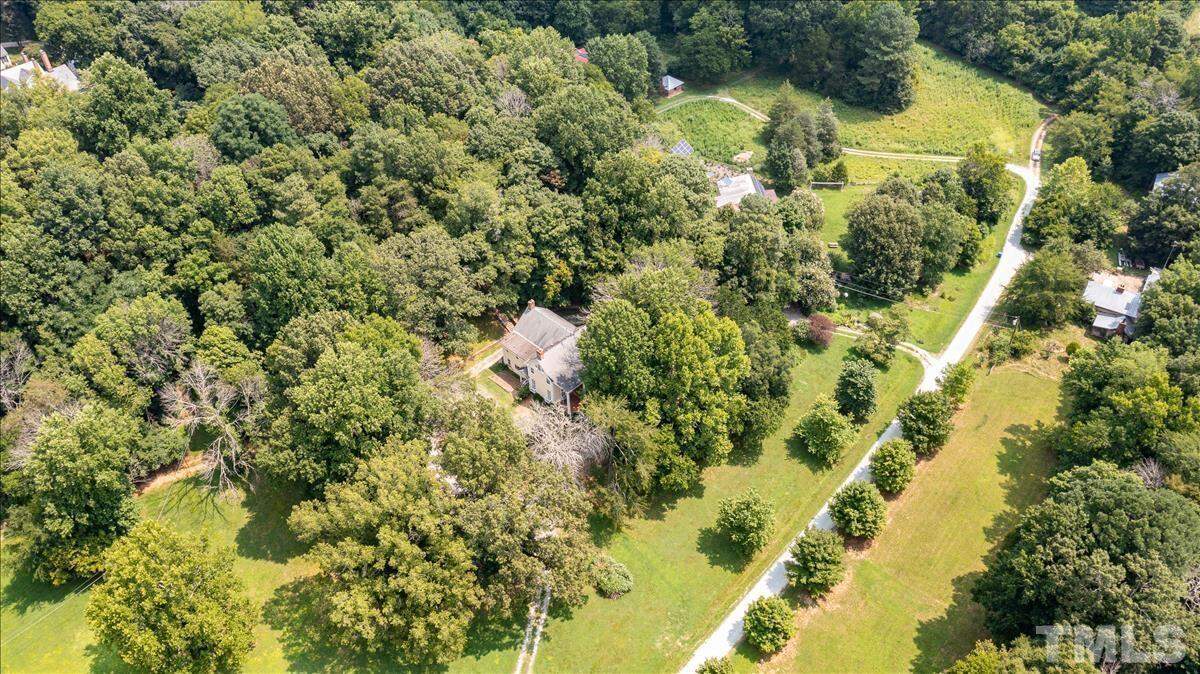
Now, 130 years later, the stately and historic “Poplar Hill” home in Hillsborough that sits on 1.96 acres at 209 Burnside Drive is up for sale, with an asking price of $865,000.
According to one of its recent residents, this 227-year-old home is as haunted as its gets.
In a first-hand essay in the magazine Bitter Southerner, writer Tom Maxwell described his brief tenancy there with his wife, Brooke, as “thoroughly haunted.”
Eerie voices called them by name and ghoulish apparitions tormented them in and around the house.
Matt Johnson, who bought the home in 2020 with his wife, Samantha, to remodel and raise their children in, says the house has been quiet in his family’s time there.
“I don’t know what the definition of ‘haunted’ is,” Johnson, 35, told The News & Observer. “But we haven’t seen anything out of the ordinary.... The house is fantastic, it’s beautiful, it has that beautiful Southern traditional look.”
Ghosts aren’t the reason they’re selling home, but rather the trouble in finding the right design for renovating the house, and a preference for a location closer to their jobs and with another public school district, he said.
Johnson said his family is “in and out” of the home; they aren’t in the house often because their main residence is elsewhere in the town.
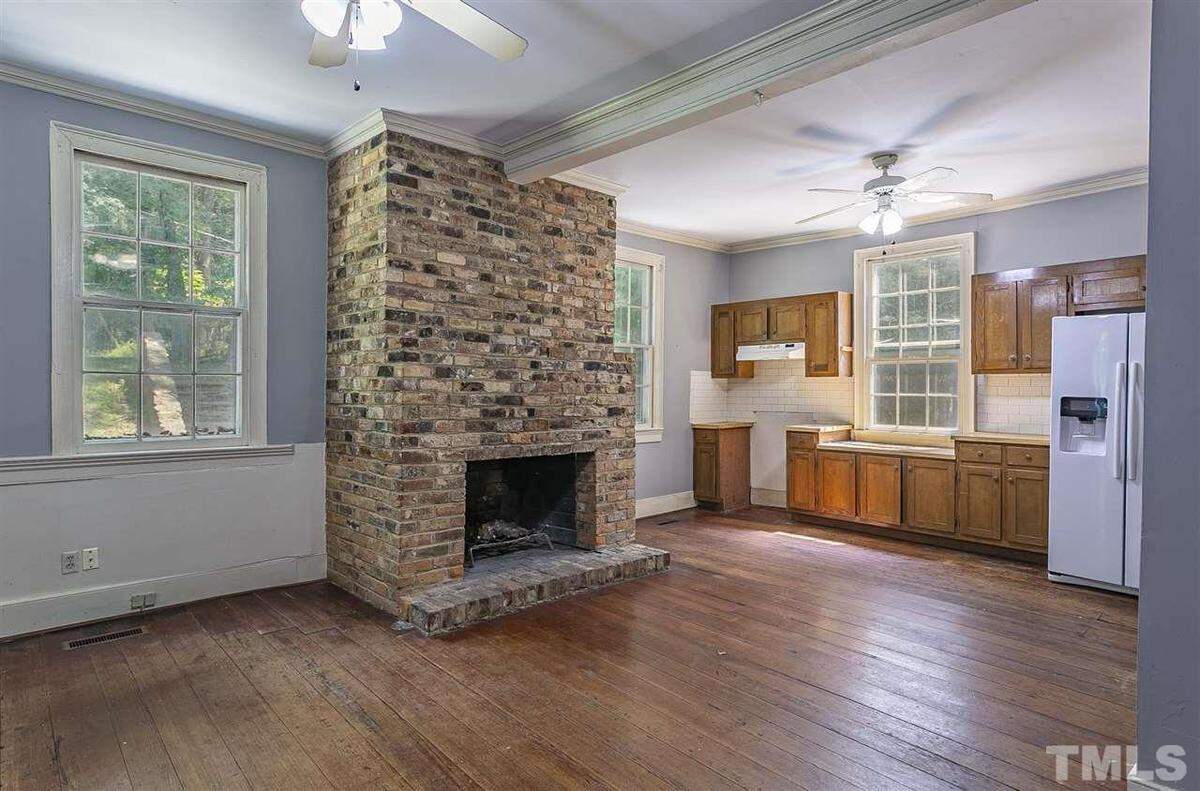
The house does boast several beautiful characteristics: Greek revival pillars, a brick stairway entrance and porch, French windows, five separate fireplaces, a long shallow balcony and original wide plank wood floors.
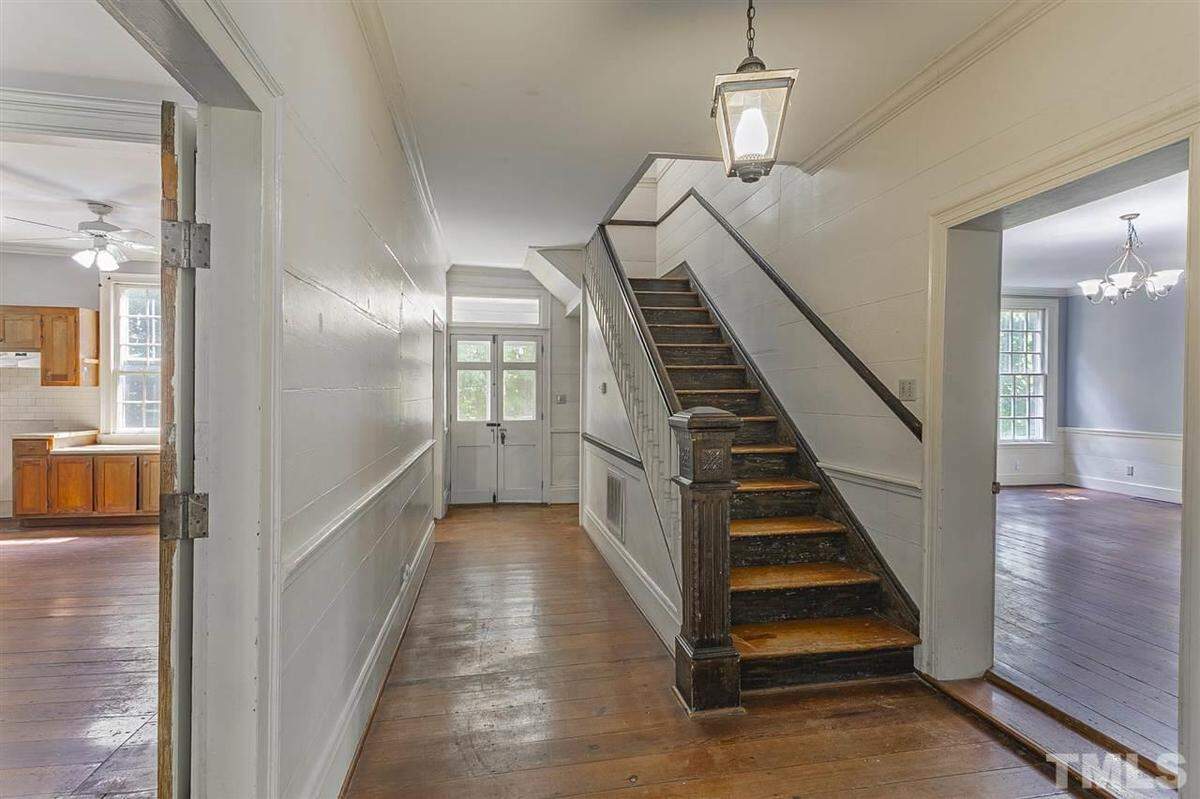
The listing by Coldwell Banker HPW Realty describes the four-bedroom, 2.5-bathroom home of 3,548 square feet as the fifth-biggest property in the downtown Hillsborough area.
It makes no mention of the house’s history or any ghostly claims, but according to Zillow, North Carolina state law doesn’t require a seller to disclose paranormal activity or if a death occurred on the property.
Haunt of the Hillsborough home
Bottles that flew off the shelves and shattered themselves alone.
The sound of phantom vehicles pulling up on the gravel driveway and the entryway door creaking open.
A dark figure that would “come out of the chimney, the firebox, and crawl across the floor and appear next to me in bed,” Brooke Maxwell told CBS 17 in 2019.
These are some of the paranormal phenomena the couple and their daughter witnessed at the home before ending their lease early in 2015.
In his 2016 essay in Bitter Southerner, Tom Maxwell — once the lead singer of the Chapel Hill-based 1990s band Squirrel Nut Zippers — alternates between writing about his family’s experiences, and the history surrounding the home.
“We stood on the uneven brick, waiting for our dog to pee,” Maxwell wrote. “He suddenly strained the leash, pulling Brooke to the west side of the porch, near a dark little band of trees by the shed. Out of the black, a tan figure advanced. It had bowed legs and no head. It shimmied towards Brooke in a crouch, whipping its long, thin arms like tentacles. Then it receded back into the trees.”
Maxwell and his wife had been drawn to the house by its affordable rent and lush, deer-populated woods, but quickly found that there were more unsettling things beyond its dark colonial and racist past.
He describes progressively going from a disbelief to constant fright.
Ghosts appeared in the form of shadowy mists and even a woman with a white bonnet and a long brown dress walking outside the house, then disappearing.
The Johnsons didn’t have that experience.
“There’s nothing that we’ve really seen that’s really been out of the ordinary or anything like that,” Johnson said. “I kind of hate to sell it a little bit. We really wanted to fix it up.”
A previous tenant of the home lived for there for a couple of years and had no paranormal experiences that he shared with him and his wife, Johnson added.
A scary history
The home was visibly located near historic hunting ground and near markings of where the Occaneechi tribe lived, Maxwell wrote, speculating that it may perhaps be literally built atop an Indian burial ground.
Maxwell surmises that the haunts there maybe “accrued like emotional residue on the usurious intent of its several owners.”
Its first owner, James Hogg, assisted in the colonial effort of taking land from Native Americans in North Carolina during the time that the pioneer Daniel Boone blazed the Wilderness Trial.
After he died, his family lived there for around 90 years until the infamous Carr bought the home.
Carr, a Confederate veteran, was a supporter of the Ku Klux Klan who funded the 1913 creation of the now-toppled Silent Sam Confederate monument on the campus of the University of North Carolina. In his dedication speech for the statue, he bragged about using a horsewhip to beat a Black woman, a fact spoken of often by the protesters who eventually knocked the statue down in August 2018.
The first renovation of the “plain old farmhouse” that Hogg built was commissioned by Carr as well, according to Maxwell.
The troubling history didn’t end there: In the 1980s UNC anthropologists discovered the remains of an Occaneechi community and grave site yards away from the house. It had the remains of children and young men who were “killed violently.”
At one point, the home was included in a Hillsborough ghost tour, CBS 17 reported.
For his part, Johnson and his wife were not made aware of the entirety of the history of the home and of its previous owners.
“I’m sorry to hear that. It’s news to me,” he said.
“We knew that a fellow named Julian Carr lived here but we never looked into all of the history.”
This story was originally published October 29, 2021 at 2:44 PM.