
In life, this homeless Raleigh vet struggled. In death, he receives full military honors
For more than a decade, Dominic Fiumara lived in a tent at the back of a Raleigh cemetery, where he was known as a tough, elder statesman of the city’s homeless.
He showed the world a gruff face with a scraggly gray beard. Even when he smiled — with most of his teeth missing — he tended to frighten people.
“He was, to be honest, a mean SOB that you stayed away from,” said Stefan Youngblood, the Raleigh faith leader and community organizer who befriended Fiumara at a soup kitchen. “Dominic was kind of beautifully broken, but that’s all of us.”
An Army veteran with a Bronze Star
Nobody who shied away from Fiumara on the sidewalks knew he once wore a uniform, serving 15 years in the U.S. Army, lastly with the 1st Cavalry Division.
They did not know he fought in the Gulf War, or that he earned the Bronze Star.
They did not hear about the demons that pulled him out of polite society, leaving him so estranged that nobody noticed for weeks when he died at 63.
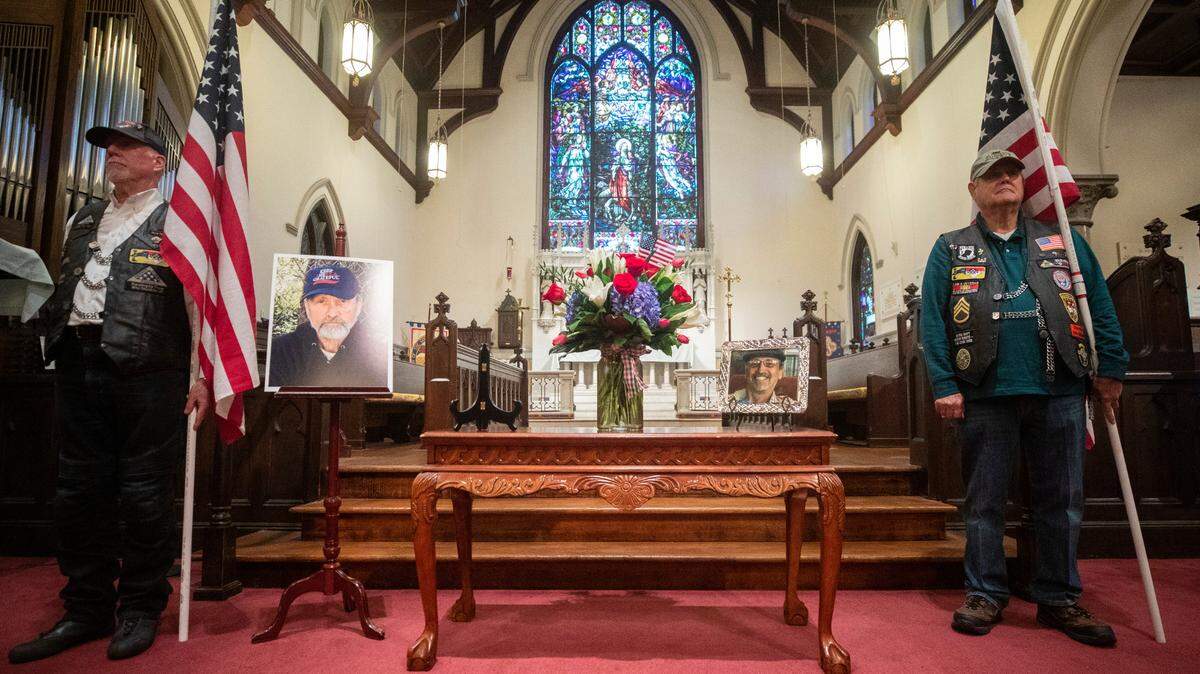
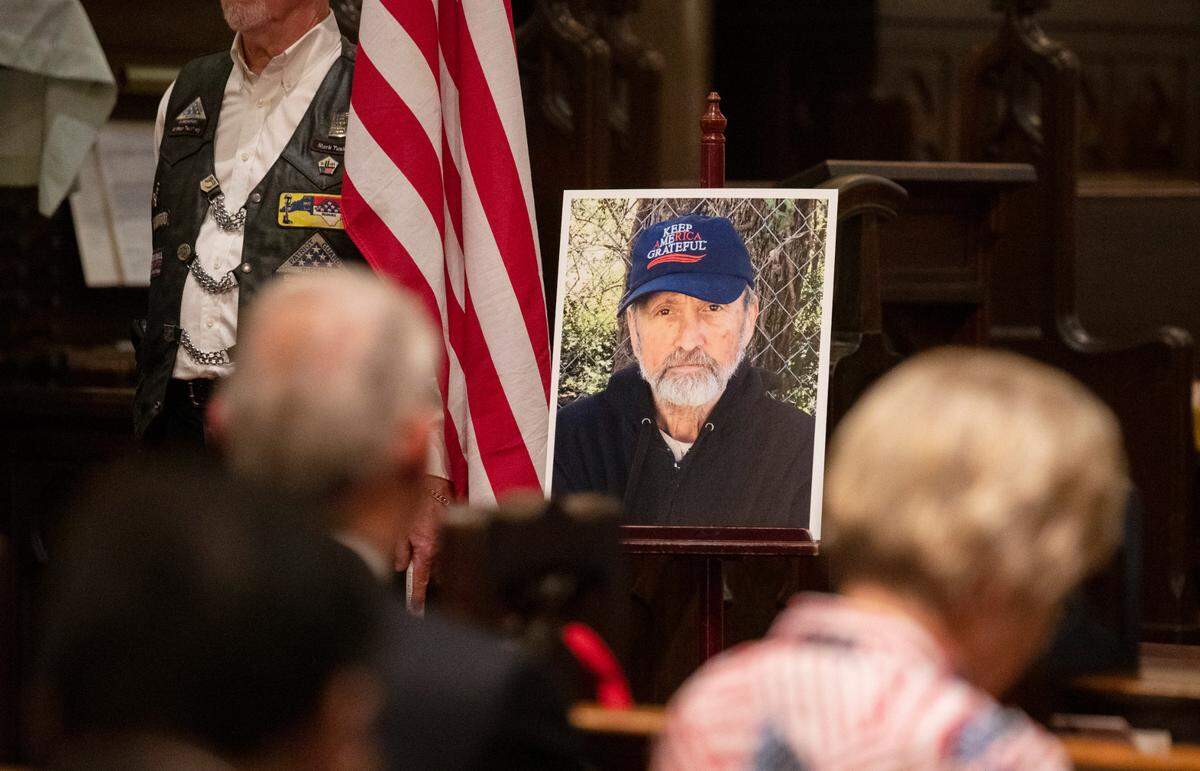
On Thursday, Fiumara received full military honors and an hour-long funeral service at downtown Raleigh’s Church of the Good Shepherd, where he sometimes slept on the floor. A dozen Patriot Riders in leather vests formed a color guard, and a folded flag sat next to his portrait.
Soon, his ashes will be buried at Arlington National Cemetery.
“What brings us here in common bond, some would call humanity,” said the Rev. Ray Warren of White Plains Methodist Church in Cary, where Fiumara sometimes spoke to Sunday school classes. “His story was raw, sometimes harsh, but real.”
Hope? He ‘didn’t have any. At all’
Fiumara owes his rescue from obscurity largely to Youngblood, who knew where to find him in the alleys and bushes. Youngblood got him a phone, got him clean clothes, let him use his shower and — most notably — arranged for him to get a new set of teeth courtesy of Raleigh dentist Scott Earp.
He heard Fiumara talk about his self-described bad divorce, about losing his business, about abandoning his daughter, and Youngblood asked him what he thought about hope.
“I didn’t have any. At all,” said Fiumara, filmed on Youngblood’s phone. “The reason I was still alive is just to see what comes up next.”
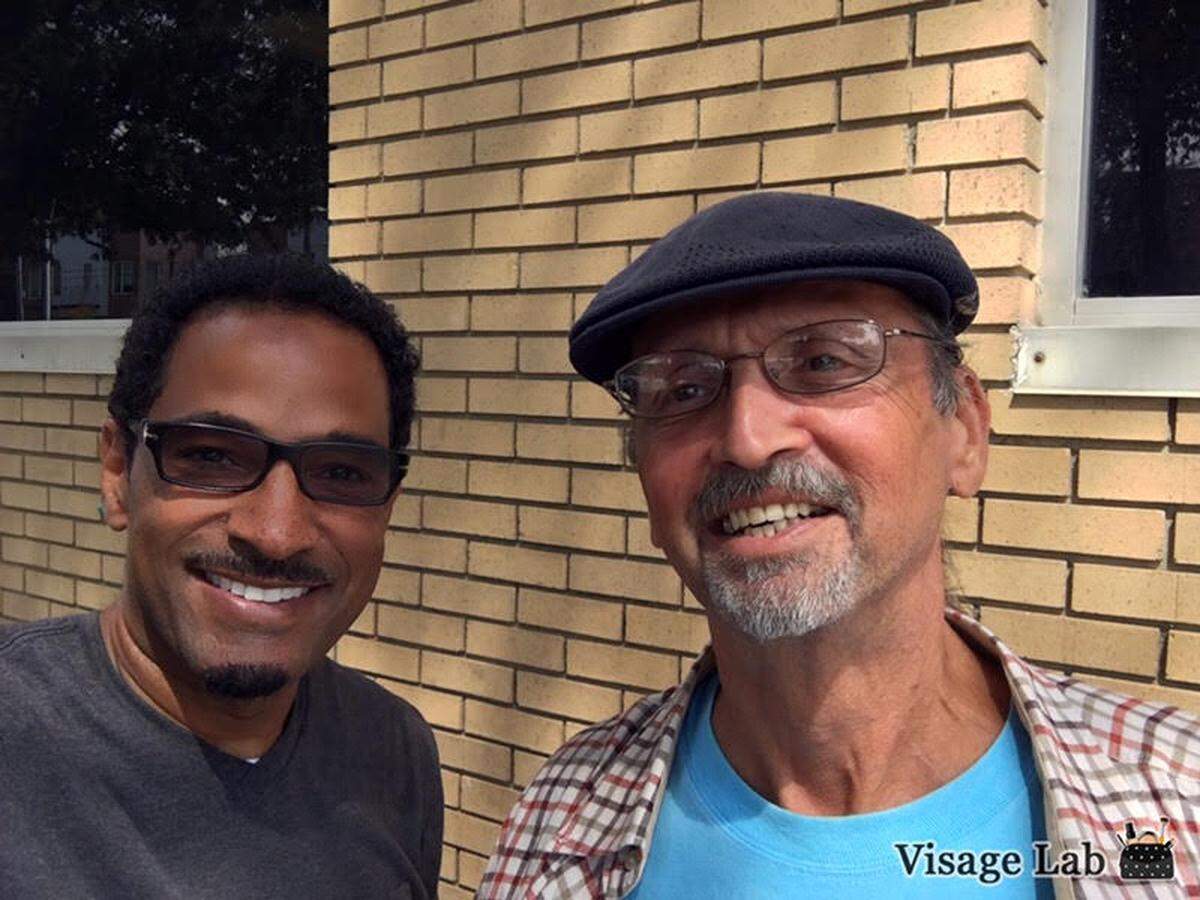
A few years ago, Youngblood started taking his homeless friend to a class he taught at William Peace University, introducing him to students who had never met anyone living in a graveyard.
In doing so, he brought a man who had struggled with alcohol, spent numerous nights in jail and owed more than $20,000 in child support into a college classroom — not as a cautionary tale but as a lesson in open-mindedness.
Those students would help Fiumara move into an apartment on Seagram Court, where he had furniture and books.
‘You never know who might be Jesus’
“I think God is always around and he speaks to us all the time,” said Youngblood. “The problem with stepping over people and not asking their name is you never know who might be Jesus.”
Fiumara read anything he could find, often asking to be dropped off at the library rather than at his tent. Dr. Katie Otis, who co-taught the Peace class with Youngblood, gave him a biography of President Harry Truman with the thickness of a phone book. Fiumara read it all.
Last Christmas, when Youngblood called him, Fiumara said he was enjoying the night in the red flannel pajamas Otis had bought for him, and he took several pictures of the tree he got from students. Other than a few essential documents, these were the only pictures on Fiumara’s phone.
When he died, he left behind a string of unlikely connections.
“I learned about the authenticity of homeless people who have real families, real stories and real struggles that everyday people do not see,” said Mikayla Brown, Peace class of 2020, in her review of Youngblood’s class. “I saw pride, hope, regret and strength.”
Still, one mourner Thursday noted that Fiumara felt inadequate and tortured, calling himself a “monster” because he had killed people as a soldier. Monsters, she assured him, feel no remorse.
Whether he took that comfort is unclear. Fiumara died alone on his couch in late August.
But his name will join thousands in Arlington, and a white cross will mark his soldier’s life — free, finally, of its burden.