
Deep-frying a turkey? If you must, avoid fires with these Thanksgiving tips
Some holiday traditions satisfy so deeply because they feel a bit wrong: serving cranberry sauce right out of the can, offering marshmallows as a condiment, deep-frying a turkey.
The last one — turkey dunked in boiling oil — is so sinful that the National Fire Protection Association recommends against doing it at all. Case in point: a single Thanksgiving turkey fire burned three homes in Massachusetts last year, displacing 27 people and sending one burn victim to the hospital.
But for diners who want their bird cooked like it came from Bojangles — crispy on the outside, juicy within — I offer these safety rules tested in my own back yard. Beyond my advice, be sure to watch a detailed how-to video..
Set aside your inner Gordon Ramsay, channel your inner Smokey Bear, and it can be safely done.
Rule no. 1
Cook outside. This is not negotiable. Choose a flat spot on a nonflammable surface, clear of leaves and children. Decks, being mostly wooden, are no good. One huge risk of turkey fires is a cooker sitting on unstable ground, so get it wobble-free before you light a flame. Also, if cooking with propane — as I did — keep the tank several feet away from the fire.
Rule no. 2
Get some good gear. Kits are widely available, but a 30-quart pot, a cooking stand, a perforated rack, a lifting hook and a clip-on thermometer are essential.
Rule no. 3
Measure the displacement. An even bigger threat to fried turkey safety is a pot spilling over onto the fire. Using too much oil is a common mistake. Cooking oil will ignite.
So first things first, place the turkey on the perforated rack and lower it into the empty pot exactly as it will be cooked. Fill the pot with water until the turkey is just submerged, and mark or measure the water line. It should be well short of the pot’s lip. This is how much oil to use.
Mine measured 11 inches down from the top, and for me, getting there took about 3 gallons of peanut oil.
Rule no. 4
Stay with the pot at all times, and monitor the temperature like it’s your own heart rate. The oil needs to cook to 325 degrees Fahrenheit. Mine took about 30 minutes to get that hot, and without the turkey the oil looked deceptively calm. It does not bubble much before the bird arrives. Cut propane flow as needed to keep the temperature as constant as possible.
Rule no. 5
Get the turkey good and dry. Likely, it’s been soaking in brine with lemons and salt. Pat it down inside and out.
Rule no. 6
Cut the fire when turkey and oil meet. Once the liquid hits 325 degrees, turn off the propane for the lowering of the turkey. That way, if unforeseen spillage occurs, the oil won’t run down over flames.
For me, the bubbling starts as soon as soon as meat touched oil. To be extra safe, I used a cooking buddy to lower it down, connecting the hook to a kayak paddle we both could hold. This way, we managed to lower it slowly and keep hands clear of heat.
Rule no. 7
Do not use a lid. Bugs that fall in the oil will add flavor.
Rule no. 8
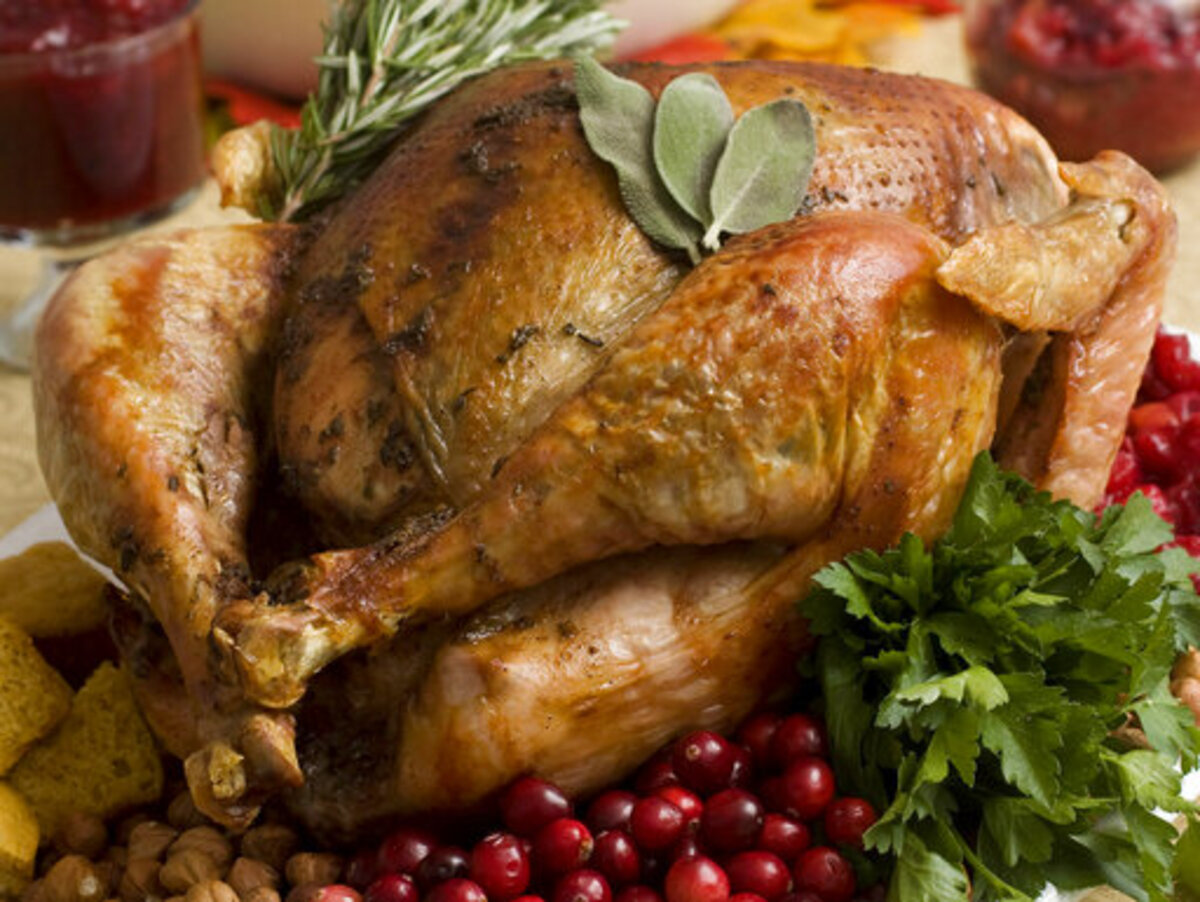
Cut the fire again when the bird is done. Turkeys take about 3 to 4 minutes per pound to cook, and I lifted mine out of the cauldron after about 45 minutes. When it hits the air, it should be golden brown. Have a stock pot at the ready to avoid carrying the turkey on its hook.
Rule no. 9
Do not dump the oil. Not even in the woods when nobody’s looking. Raleigh will collect it through January, and Wake County will take it for recycling.
Rule no. 10
Let the turkey rest for 30 minutes. This may be the hardest part. Keep cats off the kitchen counter, dogs safely out of smelling range and your own greedy hands to themselves until grandpa says grace.