
NC women left their jobs in the pandemic. The struggle for child care may keep them away
Cheyenne Stanley is used to multitasking. Until February, she was a manager at a 24-hour convenience store in Raleigh, where she ran the register, organized schedules, stocked the floor, cleaned bathrooms and dealt with customer complaints.
She worked while juggling child care for her newborn, Serenity Bragg, who was born in December, and her 10-year-old, Rachel Goodwin. She’d wake up at 3 in the morning to go to work, where she filled out paperwork under the fluorescent lights of the convenience store while it was still dark out. At six, she’d come home to Knightdale to bring Rachel to school and Serenity to day care. Then she’d drive back to work as the sun rose over the highway.
Stanley’s multitasking has looked a bit different during the pandemic. In February, she left her job of five years at the convenience store to stay home with her children. Stanley wasn’t the only one. Hundreds of thousands of women also left the labor force, according to figures cited by Politico. A MetLife survey of 2,000 working adults conducted in September found that 20% of women say they’ve had to leave the paid labor force during the pandemic.
Many women, like Stanley, stopped working because of child care. As schools shifted to remote learning, families needed a parent to stay home to care for the children. More often than not, that parent was the mother. Functioning day cares had become scarce, and, without a vaccine for months, there was the added worry of children and staff getting sick.
“I made really good money as a manager, but by the time I got done paying for child care, I was making less than I’ve ever made,” Stanley told The News & Observer earlier this year. “And it’s always been that way. If you work a full-time job and you don’t make at least $20 to $30 an hour, it’s pointless to have a daycare.”
With COVID-19 vaccines now available for adults and children aged 5 and older, many hoped life would return to normal — and that included women going back to work.
But as the pandemic continues and new variants emerge, including the most recent omicron variant, “normal” isn’t quite here yet. Parents face new challenges before they can return to work, with child care continuing to be prohibitively unaffordable for many families.
In a survey conducted by the North Carolina Justice Center and released in February, 30% of women who weren’t working because of the pandemic reported child care as the main factor for their unemployment, compared to 4% of men.
“You’re working your butt off to bring home very little,” Stanley said. “You’re pretty much working for child care.”
Part of President Joe Biden’s Build Back Better Act, which passed the House but is stalled, perhaps permanently, in the Senate, would include federal funding to address some of those child care concerns. That includes early childhood education for children under 6; providing child care expenses at licensed providers to families who meet income eligibility requirements; and raising wages for child care workers.
On Dec. 20, N.C. Gov. Roy Cooper said if the Build Back Better Act isn’t passed, the lack of access to affordable, quality child care will hurt families and employers. The act, which includes a provision capping child care costs at 7% of income for low- and middle-class families, has faced opposition from Republicans, including Sen. Richard Burr of North Carolina.
“It’s one of the issues now affecting people in the workforce,” Cooper said at a news conference. “And when you have working parents who are paying 25, 30 percent of their income on child care, that makes it hard for them. They need to get back to the table in Washington and negotiate something to try to help people with health care, prescription drug prices and particularly the child care.”
A November report from Ready Nation, a bipartisan arm of the Council for a Strong America, supports Cooper’s statement, saying North Carolina’s economic recovery from the pandemic will be “hindered” because of a lack of child care options for families.
The inability for some women to both work and make sure their children are cared for is a symptom of problems that have existed long before the pandemic — and, unless something changes, will continue to exist long after it.
“Child care hasn’t been working for a long time in the U.S.,” said Logan Harris, a policy analyst at the North Carolina Justice Center. “As with so many things, COVID just revealed how fundamentally disinvested the system was, and how much it needs investment in order to be able to function for families.”
A toll on working-class families
Earlier this year, Vice President Kamala Harris called the exodus of women from the workforce a “national emergency,” and experts warn that women remaining out of the workforce could have long-term effects on the economy.
The longer a person is out of the workforce, the harder it becomes to rejoin. And every year that a woman doesn’t work, she not only loses that year’s wages, but also incurs losses in wage growth, benefits and retirement savings.
While nearly all families with children had to make difficult decisions during the pandemic about child care, for working-class families, the choice between traditional child care options and working was particularly stark. Remote work usually wasn’t an option, and the price of child care often rivaled a parent’s salary.
Sara Fearrington, a single mother and Waffle House server who lives in Durham, has three school-aged children. Early on in the pandemic, her adult daughter, who has her own children, also lived with them. Fearrington worked mornings and her daughter worked evenings so that they could take turns watching the kids, then 10, 12, and 14, during remote schooling.
When Fearrington’s older daughter moved out, she had to teach her children to care for themselves while she was away at work. She made a routine for them and called them during her work breaks.
“They’re never alone,” Fearrington said. “I have a great village, I have a lot of neighbors, my older children would check in. But I shouldn’t have to sit here and teach my daughter how to cook eggs at 10 years old because I have to go to work. But there were no options. What could I do?”
Stephanie Meyers Spalin, a mother of four who lives in Apex, quit her job at the beginning of the pandemic to stay home with her children while they did remote schooling. She couldn’t afford to arrange for someone else to watch the kids — then aged 8, 11, 13 and 15. As an employee at a car dealership, she didn’t have the option to work from home.
“I quit because I’m more of the primary caregiver than my husband,” Spalin said. “And I am more of the primary caregiver because — because he makes more money.”
Still, her family relied on both of their incomes, and living on only one income was difficult.
“We’ve struggled for years, and we’d finally gotten to a comfortable financial place when I was working, so leaving that was really hard,” she said. “We had to move apartments, and we had to go on food stamps because I wasn’t making money.”
After her kids returned to school in-person this fall, Spalin was able to start working again, but re-entering the workforce was harder than she expected. She couldn’t find a job for months. She re-applied for her old job, but didn’t hear back. She’s heard of other mothers who also struggled to get their old jobs back once they could start working again.
Despite many industries experiencing staffing shortages, the competition was fierce.
“Right now everyone is applying for jobs,” she said. “I’ve been a manager before, I know what to look for in applicants. I was turned down by multiple places before I got a job at Starbucks.
“They don’t tell you this, of course, but I know a lot of it was because of, ‘What if schools shut down again, does she have to leave her job?’” she said. “I’m sure they look at that. I know I would.”
Although she was eventually able to find a job, her family is still struggling to make ends meet because of the time she took off.
“There are still so many families, including my own, where we’re struggling,” she said. “People want to say we’re going back to normal. No. It’s not normal yet.”
School is a lifeline
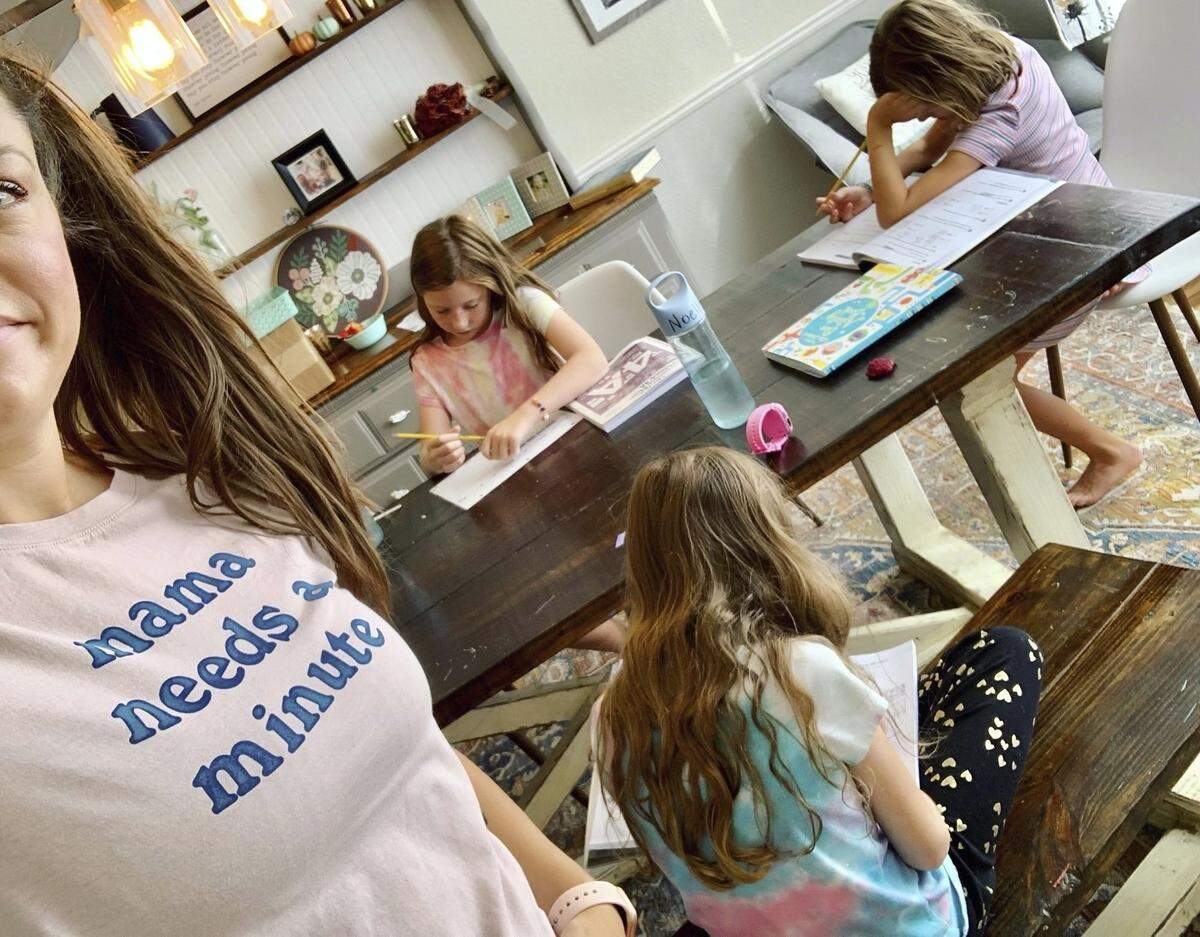
For many families, public schools, and the free child care it can provide, is a lifeline. With the loss of that lifeline, many mothers stayed home to fill the gap. One of the most dramatic cuts to the labor force happened in September 2020. Following schools’ announcements that they would continue with remote schooling for the foreseeable future, more than 865,000 women stopped working, according to the Bureau of Labor Statistics.
The Bureau of Labor Statistics reported that this September, at the start of another school year, more than 300,000 women dropped out of the labor force — the largest decline since last September.
Those women who did work created their own support systems to care for their children, relying on friends and family, organizing babysitting rotations, or finding other makeshift solutions, including creating “pods” with other families who followed COVID-19 protocols.
For Stanley, arranging child care was always hard financially. But the pandemic — and especially the inconsistency of in-person school — made it nearly impossible.
At the beginning of the pandemic, Stanley’s partner was away for weeks at a time for work. Stanley couldn’t keep up as Rachel’s school switched between remote and in-person instruction, and it was hard to find an affordable day care for her newborn. Stanley ended up setting up cameras in her house to watch Rachel when she was alone during remote school. Sometimes, Serenity would spend the night in her mother’s office at the convenience store.
“When I came back from my maternity leave in January, the pandemic had reached a whole new level,” Stanley said. “Employees were dropping like flies. I was working 18 to 20 hours a day with an infant and a 10-year-old.”
There were days when she was so tired while working that she would think to herself: “Am I going to ever go home? Am I going to survive this?”
Something had to change, so in February, she left her job.
She decided she would make a go at running her own business out of her home. She started a business called Chey by Design, which sells products like candles, soaps and T-shirts, and organizes arts and crafts events. The business allowed her to try to keep working while having the flexibility to stay home with her children.
Working and watching both her kids at the same time ended up being harder than she expected. She often stayed up until 2 a.m., completing orders after everyone else had gone to bed. With Rachel back at school, she was hoping to have more time during the day to focus on filling out orders and scheduling events.
But within the first week of the 2021 school year, someone in Rachel’s class got sick with COVID-19, and she had to stay home for two weeks. After that, Rachel got seasonal allergies, and she couldn’t go to school because of her symptoms.
It felt like a repeat of last year. Rachel was in for two weeks, out for two weeks. Some of the assignments Rachel was getting weren’t working on her internet at home. Stanley didn’t know what the following week would look like.
But this time, Stanley was home instead of working, so it was easier to keep up.
“I think the best thing for us was me being at home with the kids, especially during the pandemic. I was fortunate enough to have a [partner] who was able to help, you know, pay the bills while I was at home,” she said.
“There’s a lot of people out there that didn’t get that option.”
Day care isn’t a benefit
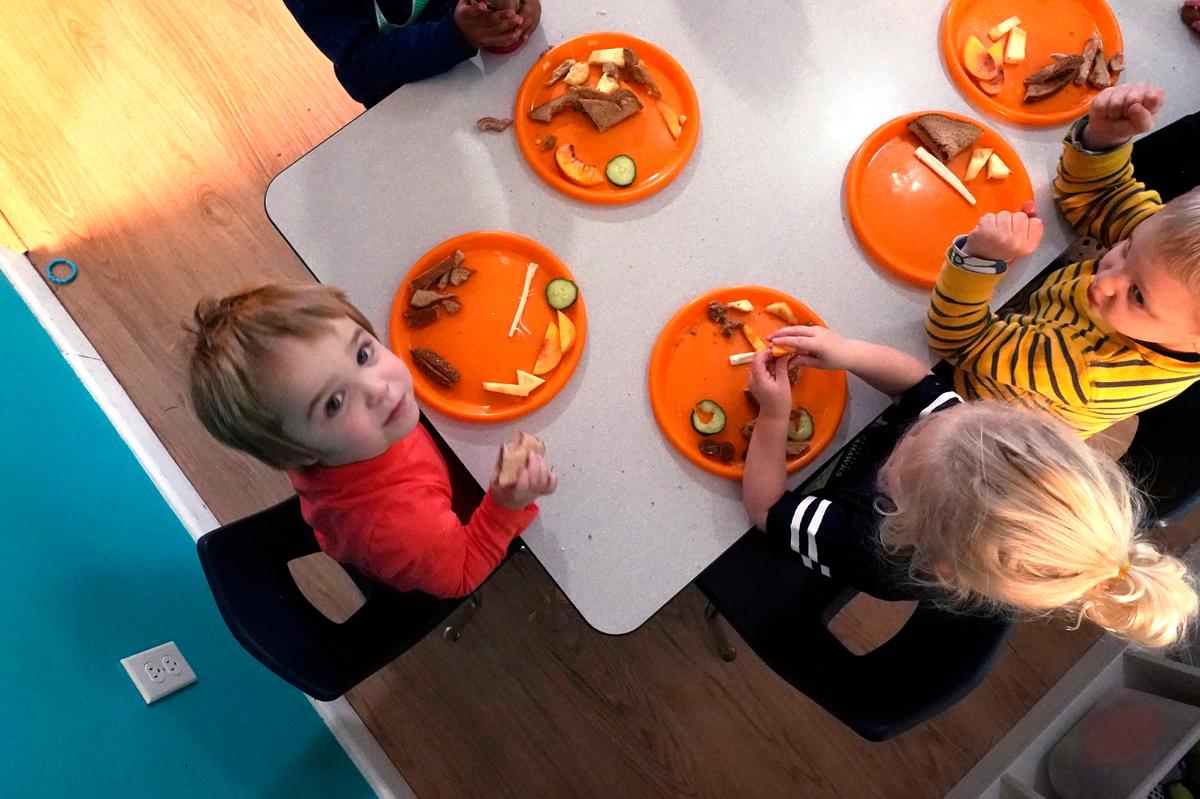
If school is a lifeline for those with school-aged children, for those with children younger than 5, lifelines are harder to come by.
The vast majority of jobs don’t provide child care assistance as a benefit. At the end of October, the waiting list for child care subsidies in North Carolina was over 18,000 people long, according to Elizabeth Everette, an assistant director of the North Carolina Division of Child Development and Early Education.
Alexandra Maria Landeros, who has a preschool-aged daughter, received child care assistance through the University of North Carolina, where her husband is a graduate student. Because of that assistance, she was able to keep working while her husband was in school. Landeros works as an operations director for Poder NC, a 501(c)(3) Latinx organization.
Without the assistance from UNC, she said, she likely wouldn’t have been able to afford care for her daughter.
“I would hear stories about people who made pods with the grandparents, and I would also hear of these families, like, putting together their own schools and hiring a nanny,” Landeros said. “People of higher socioeconomic backgrounds had the privilege to pursue that option. Life was very different for people who couldn’t.”
Mary Beck, who lives in Clayton, quit her job in 2011, when she and her husband decided that she would stay home with their two sons until their youngest entered kindergarten. They couldn’t afford child care, and she wasn’t able to work from home.
Because Beck made less than her husband, she was the one to stay home.
After their younger son entered kindergarten in 2019, Beck began looking for jobs, finding one at a Scholastic Book Fair warehouse in March 2020.
Three weeks later, her new employer had to make cuts because of the pandemic, and she was laid off.
If she wasn’t laid off, Beck said she would have quit her job anyway, to watch her children, now 7 and 12, during remote schooling. Just as she stayed home when her children were younger, she knew she would be the one to stay home when they were home for virtual instruction.
“Ultimately, I am the primary caregiver, because I’m the mama and that’s what moms do,” Beck said. “And I think that’s something that’s just sort of expected in our society. At least for all my friends, everyone that I know, all the women are the primary parent. It’s just sort of an automatic thing for us.”
Shortage of child care workers
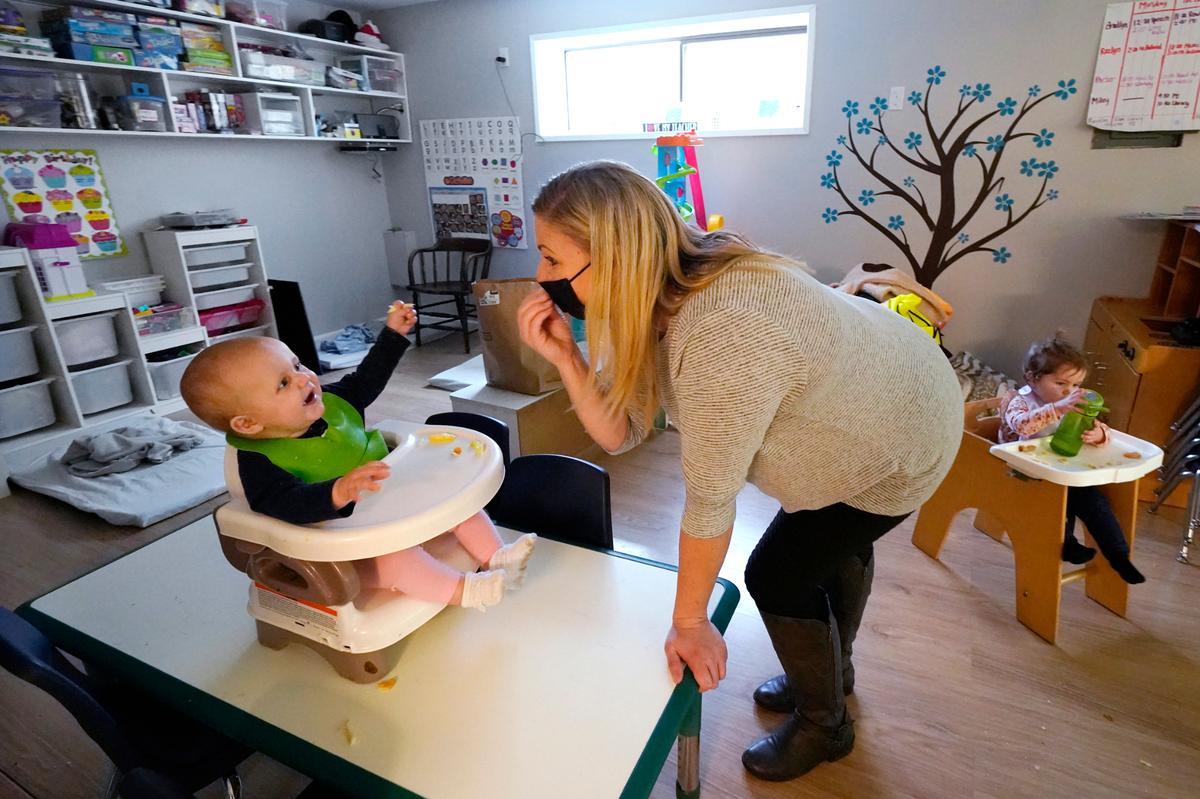
The report from Ready Nation says a shortage of workers, largely due to low wages, leads to fewer children served and reduced hours at child care facilities.
The average hourly rate of a day care worker is $10 to $12 an hour, less than that of an average retail worker, according to a U.S. Treasury Department report from September. Child care workers are 95% women, and disproportionately women of color.
“Investing in these policies may have a significant price tag now, but that’s because we’ve failed to invest for so long,” said Rasheed Malik, an associate director of research at the Center for American Progress. “Right now, we’re making parents and child care workers pay the price for that. But by investing in this problem collectively, we would see gains for everyone.”
Nina Jacobs, who runs a day care in Clayton called Academy of Angels, is one of them. Before the pandemic, Academy of Angels offered 24-hour care, catering to parents who worked jobs with irregular hours.
After the pandemic started, she cut back those hours, though she tried to accommodate the day care’s parents, many of whom were essential workers. She opened earlier or stayed open later for parents who needed it, and she offered pay-what-you-can services to parents who couldn’t afford tuition.
She’s had trouble hiring and retaining enough staff, and being flexible with parents meant that she worked late nights and early mornings for little pay. But she’s determined to keep her center open.
“Everything I do is for my students and my parents,” Jacobs said.
It takes a village
As the school year continues, public officials continue to work to keep children safe. Though the COVID-19 vaccine is available for children 5 and older, vaccination rates among children in North Carolina remain relatively low compared to the rest of the population.
As of Dec. 20, 18% of North Carolina children aged 5 to 11, or 161,410 children, had received at least one dose of the vaccine since it became available in early November, according to the N.C. Department of Health and Human Services. Forty-six percent of children ages 12 to 17 have had one shot, or over 366,000 people.
That means many school districts have implemented mask mandates, despite pushback from some parents.
Until more children are vaccinated, the possibility of people getting COVID-19 and prompting a class or school quarantine lingers.
For Stanley and Beck, they’ve been forced to be nimble, cobbling together child care solutions for the range of school options they might face.
Once Beck got a new job, she coordinated with other working parents to arrange child care.
“Luckily I have a village of friends who help out, and friends who have teenagers who drive and they help out,” Beck said.
But these networks of child care can often feel flimsy, and they also depend on a certain level of security — having extended family nearby, for example, or trusted friends and neighbors.
“I know that it’s been such a struggle for so many other families that don’t have family in the area,” Beck said.
This month, Stanley returned to work full-time. She returned to work not because child care options have improved, but because she has to — her family is saving to buy a house, she said, and they need two incomes again.
Stanley is back to working nearly 14-hour days while trying to piece together child care for her children. When she is at work, Rachel stays with her godmother. Serenity is attending a drop-in day care until an opening at a full-time day care opens for her in January.
While almost everything about the world from two years ago may seem different now, Stanley’s child care situation — apart from the added uncertainty from the pandemic — is largely the same.
But before she decided to return to the workforce, Stanley and her friends relied on each another to care for their kids. On a fall afternoon, she kept an eye on her two children as well as her friend’s two kids. She hoped to tackle er list of tasks for the day: a meeting with Amazon, where she planned to start selling her products, and filling custom T-shirt and candle orders.
Serenity, her youngest, was exploring the living room floor, gravitating toward the couch to try to stand herself up against it. The older kids were watching a movie, sharing Capri-Suns and Cheez-Its.
By early evening, Stanley’s friend came to pick up her two children. While collecting the diapers, toys, and extra clothes she packed for her kids, she talked about her upcoming schedule, wondering when she’d need to go to work, when day care would be open, who would watch her kids.
“Any day that you need something like today, that’s fine,” Stanley said. “I completely get it. I did it for years, trust me. Working till one, two o’clock in the morning was no fun with kids.”
“They just expect us to drop everything,” her friend replied.
“Oh yeah, they do,” Stanley said. “You know I’m here for you if you need me.”