Raleigh police want to release video of fatal roadside shooting, but it’s not up to them
After Raleigh police shot and killed a man they encountered at the scene of a wreck on I-440 Tuesday, the department said it will petition for the video’s release to the public. But they won’t have a final say in who gets to see it.
In North Carolina, judges decide when, and how, the public at large can see law enforcement video. Anyone who wants a public copy of footage from a law agency – even the agency that recorded it – must petition the court to get a judge’s approval.
Judges watch the footage, and hold hearings to get input from those involved.
When judges order the footage released, the law allows them to put “any conditions or restrictions on the release” that they deem appropriate, the law dictates.
Wake County’s court, which has handled several petitions for law enforcement video, has ordered videos released in the past including Raleigh police’s footage from the George Floyd protests in 2020 and a traffic stop in which a man accused officers of using excessive force.
Some police agencies, like Graham when police pepper-sprayed protesters in 2020, have resisted releasing body camera video to the public.
Others have voiced support for family who want to publicize the video, as the Pasquotank County Sheriff’s Office did after the fatal shooting of Andrew Brown last year. In that case, the district attorney played a portion of the footage at a press conference. But a judge prohibited the sheriff’s office from releasing the full video.
The News & Observer and other news outlets are appealing that decision.
But it’s not uncommon for North Carolina law enforcement agencies to proactively ask courts to allow release.
Fayetteville Police Chief Gina Hawkins filed such a petition in Cumberland County on Tuesday, requesting permission to show footage from her officers’ body worn cameras, and won a judge’s approval to do so “in the interest of justice,” The Fayetteville Observer reported.
She said the footage – which captured witness’ descriptions of trying to help 37-year-old Jason Walker after off-duty Cumberland Sheriff’s Lt. Jeffrey Hash opened fire on him – wouldn’t seriously threaten the investigation.
As was the case after the Raleigh shooting, a witness there had shared a video online from the scene of the shooting that drew public outcry from across the internet, which Hawkins cited in her petition.
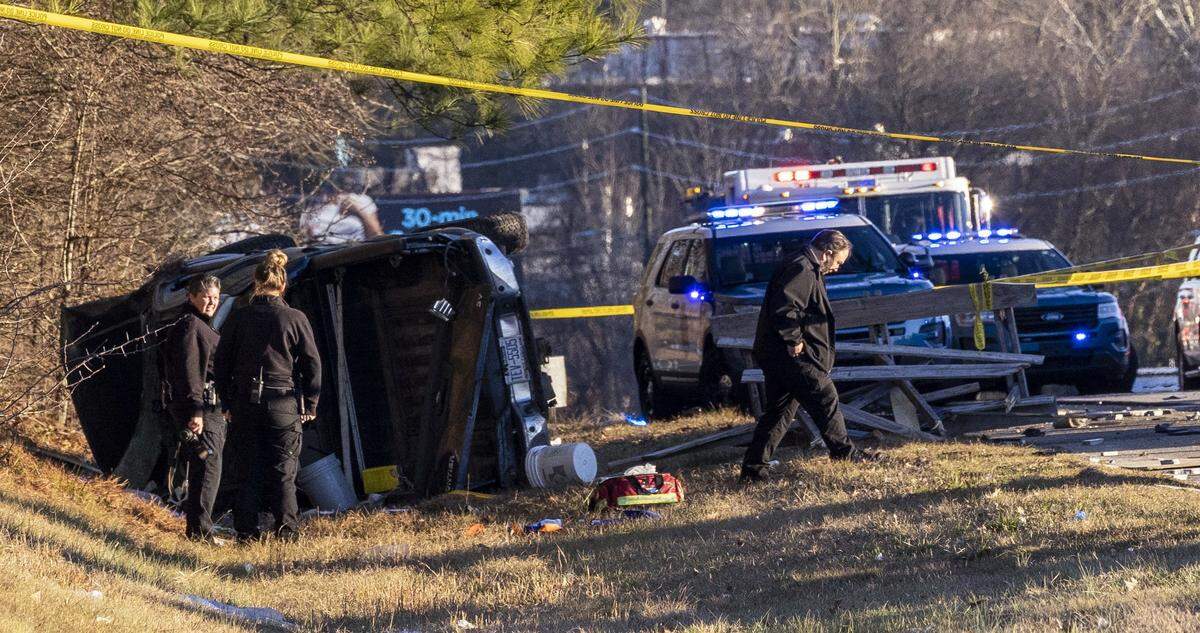
In the Raleigh shooting, police said their officers responded to a crash where callers reported that someone was intoxicated and “an individual was armed with a knife.”
Chief Estella Patterson said the man was holding a knife, which he didn’t drop when police ordered him to. They used a Taser on him “to try to defuse the situation,” Patterson said, at which point he “swung the knife toward officers.” At that point, officers opened fire.
Body cams not uniform in Triangle
It’s one of three Triangle law enforcement shootings in the new year. Last week, Durham County sheriff’s deputies fatally shot a woman who they said had pointed a shotgun at them, and on Wednesday Durham police killed a man who they accused of attacking a convenience store clerk.
Raleigh’s posted policy orders police who’ve been assigned body worn cameras to turn it on as soon as possible in “all contact involving actual or potential violations of the law” as well as any interaction that “becomes adversarial,” and to leave it on until the situation ends or the officer leaves.
Durham sheriff’s deputies didn’t have body cameras when they fatally shot 28-year-old Stephanie Wilson at her Bahama home on Jan. 4, spokeswoman AnnMarie Breen said. A contractor has been setting up a system for which the county approved funding last year, she said, and the department plans “to be rolling them out very soon.”
The Durham Police Department has outfitted its officers with body cameras since 2017, but hasn’t responded so far to The News & Observer’s questions about whether they were recording when officers fatally shot a man who they said assaulted a store clerk Wednesday morning.
A 2021 audit found that the department had amassed over 50,000 hours of footage by 2020, but that officers sometimes uploaded footage late or mislabeled it, endangering its usefulness to investigators.
A few states, including neighboring South Carolina, require law enforcement agencies to use body worn cameras. The Tar Heel State does not; leaving it up to each department to decide if – and when, and how – officers’ interactions with the public will be recorded.
The state legislature has instead focused its power on dictating access to the footage. Rules vary depending on who’s requesting a chance to view or get copies of the video, but people who appear in it can generally ask the agency for permission to watch. They can also appeal to a judge if law enforcement denies that request.
This story was originally published January 13, 2022 at 5:26 PM.