How are Google Doodles made? Two NC Doodlers explain the process
Google Doodles — those artistic changes to Google’s usual logo, created to celebrate an event or honor a significant person — can teach, inspire and, at the very least, add some fun to your day.
The doodles began as static images, but have evolved with time to include videos, animations and even interactive games. Over 5,000 have been made since Doodles got started in 1998 — and two important Google Doodle team members have close ties to North Carolina.
▪ David Sharek, a Google Doodle user researcher, lived in the Raleigh area for about 20 years and received a Ph.D. at NC State University before moving to Hawaii.
▪ Erich Nagler, a Google Doodle art director, moved to the Asheville area over a year ago.
“As an artist, it’s been so inspiring to live in Asheville,” Nagler said. “It’s such a creative place for art, music, painting, bluegrass. I particularly love the River Arts District and seeing the glass blowers, wood sculptures and metalwork that artists do around here. It makes me want to collaborate with more local artists and tell these on-the-ground stories.”
We talked to Sharek and Nagler to learn more about how they joined the Google Doodle team and what their favorite Doodles are.
They also gave us info on a contest for kids.
How Nagler became a Google Doodle artist
Nagler had a background in graphic design and illustration, working for magazines and book publishers before joining the Doodle team.
When he saw that a Doodle position opened up, he was excited at the prospect of big-idea storytelling through illustration.
His job involves artistic oversight, Doodle creation and design, plus art education. His most recent Google Doodle came out in December: animated art for painter Georges Seurat’s 162nd birthday.
To view this Doodle and its history, visit google.com/doodles/georges-seurats-162nd-birthday.
Before moving to the Asheville area, Nagler was on the west coast, and he often did talks and art instruction with students in Oakland.
“I always made sure to come with plenty of stickers!” he said. “It was incredibly important for me to show these kids that there’s so much career potential as an artist, and there are great opportunities for working artists and visual creatives, because that wasn’t something I was exposed to as a kid.”
His hero growing up was Walt Disney, and he would point to him as someone using art and visual storytelling to change the world.
“Now, my job as an art director is often to nurture [creativity] in all the people I work with from any age, any level of their career,” Nagler said. “To help even professional working artists have that voice of doubt in their head and that inner saboteur. A big part of my job as an art director is to make artists believe in themselves and believe in every stroke.”
Analyzing the Google Doodle user experience
Sharek doesn’t pick up a paintbrush at work, but as a part of the Doodle team, he thinks about user experience and how Doodles can reach audiences to educate and foster a love of learning.
“My role is after the fact to show the impact that Doodles have,” Sharek said.
“If you think about it from their point of view, you might think it’ll have a great impact but how do you know who they’re reaching? What emotions is the Doodle evoking? Are we hitting the mark? Are we inspiring and delighting? Is the Doodle surprising in a good way?”
Sharek worked as a multimedia programmer and designer before deciding to go back to school, itching to go learn and eventually be a professor in psychology.
“That program easily set me up for working at Google or pretty much anywhere,” he said. “There were a few programs teaching it before user experience was even a thing. It was teaching what we call ‘human factors’ which turned into ‘user experience,’ and it set me up for anything I wanted to do. I was so lucky Google was hiring.”
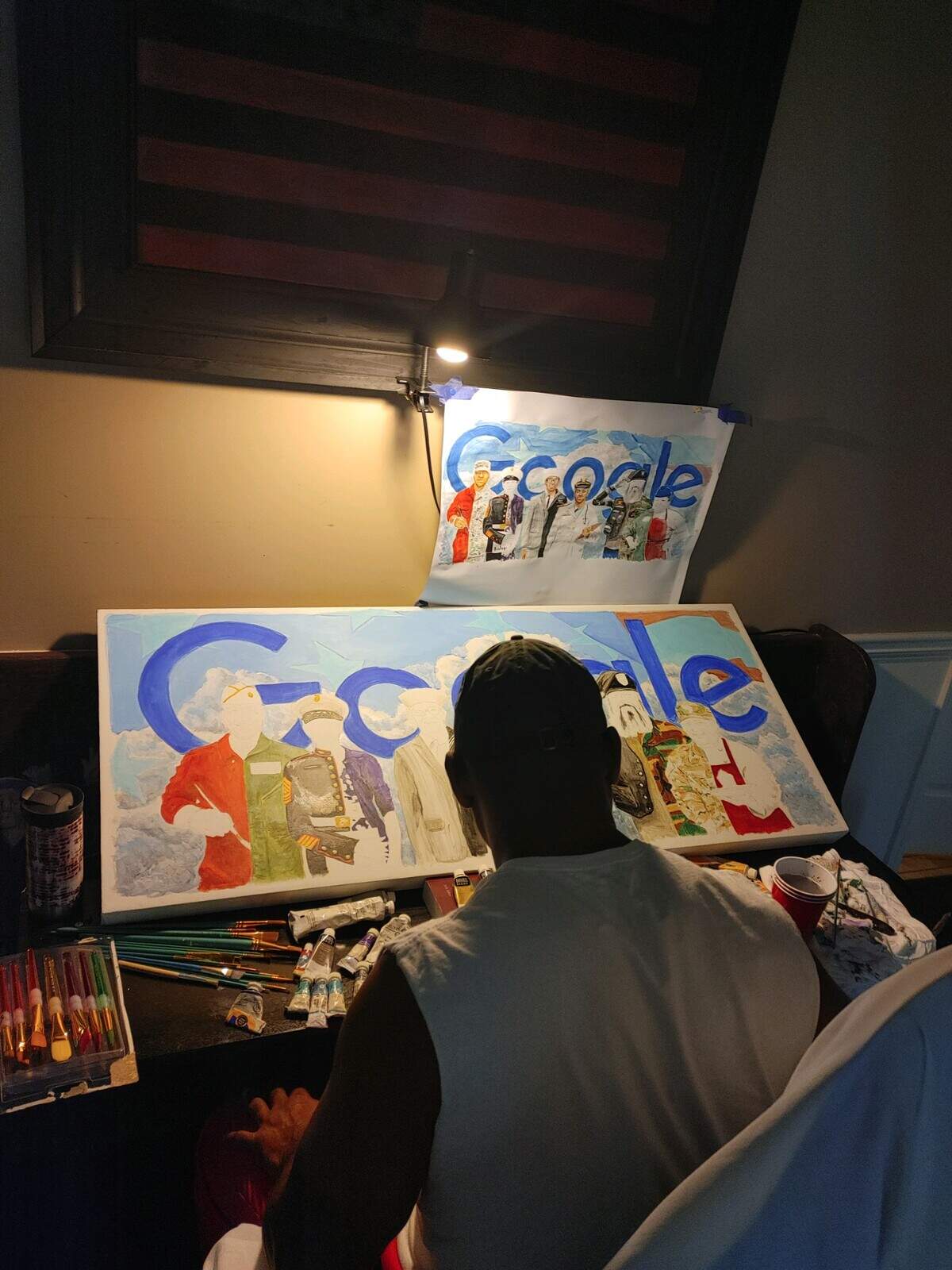
How Google Doodles are made
▪ The idea. The first step of a Google Doodle is launching the idea. The Google Doodle team talks through topics internally, putting together a calendar of Doodles and ways that they’d like the idea to be presented, such as a game, animation or video.
▪ Research. Then, the Doodle team dives into research. Sometimes, when researching for a cultural holiday or event, Doodlers will find artists who are a part of that culture that they believe can work with them to tell the story well.
“Luckily, when I reach out, the answer is almost always yes,” Nagler said. “People get really excited, and a common reaction is ‘Is this real?’”
▪ Sketch. The Doodle is first created as a black and white pencil sketch. It eventually becomes a tighter drawing that’s painted and colored.
“Sometimes we make animated gifs, which usually start as a static illustration, then we talk through ideas about how to make it move and how motions can create that satisfying loop,” Nagler said.
It can take from a few months to years for Doodles to be made, but there have been especially quick Doodles that have been turned around in under a day.
“One of the fastest Doodles ever launched was when scientists discovered water on Mars,” he said. “It was a big news item, and one of our artists had the idea to feature the planet sucking through a straw.”
The animated Doodle took six hours.
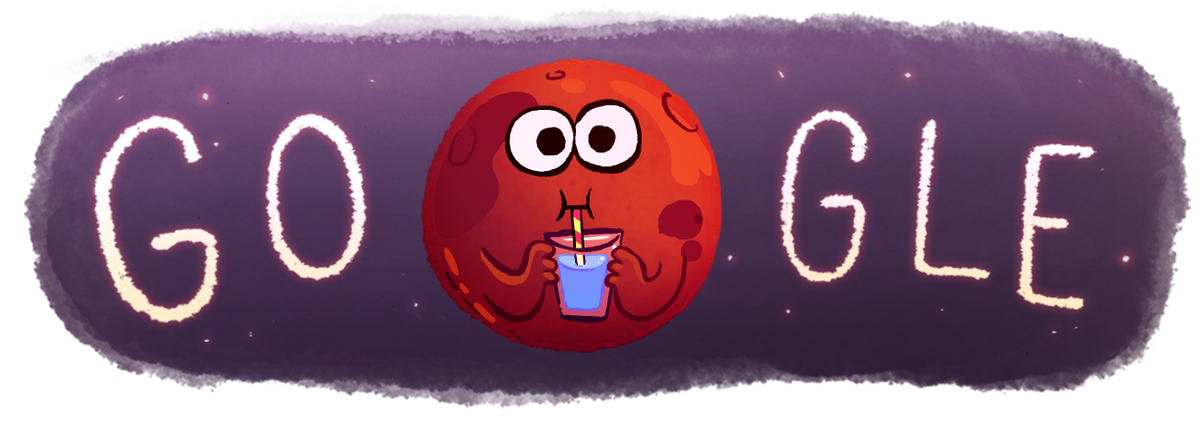
To view this Doodle and its history, visit google.com/doodles/evidence-of-water-found-on-mars.
Google Doodles that are cross-collaborative efforts are more involved, requiring more artists and more time to complete.
A favorite Google Doodle?
Both Nagler and Sharek mentioned Champion Island, last summer’s Tokyo Olympics Doodle, as a favorite of theirs.
“To create a large, interactive experience like that, and I think that was over a year in development, we collaborated with a Japanese animation studio that did a lot of the scenes and character development,” Nagler said.
“We knew the Olympics were coming up, and we had an idea for a large-scale game to build, so it was a huge process.”
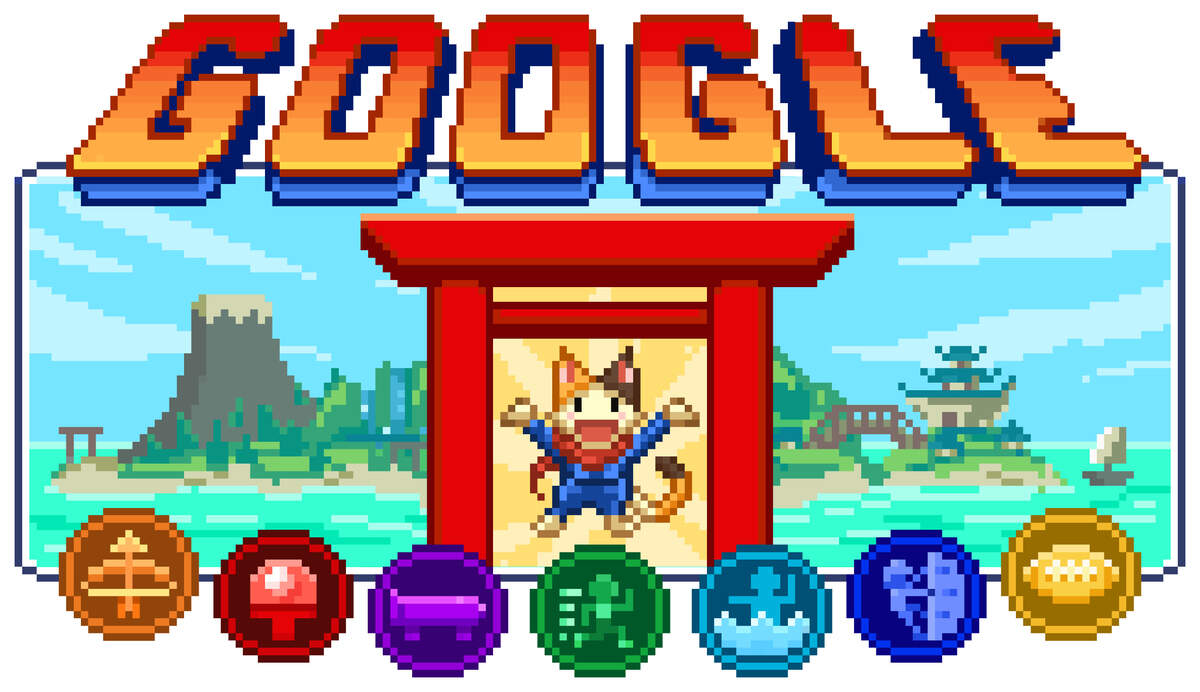
To view these interactive Doodles, how they were made and more behind-the-scenes elements, visit google.com/doodles/doodle-champion-island-games-begin.
Things to know about Google Doodles
Here are three things that many people don’t know about Google Doodles:
1. You can click on a Doodle for more information about the holiday, event or person that it’s honoring.
“That’s another cool thing that our research shows not everybody knows about. When you click on the Doodle, you get more information about it,” Sharek said.
2. There’s an archive of every Google Doodle ever made, from static images to videos to complex games.
“Here in the U.S., you’re not going to see all the Doodles we create for other countries to celebrate their heroes and holidays and pioneers, but if you go to google.com/doodles, you can see all the other countries’ Doodles too,” Nagler said. “I think it’s a fascinating trip around the world.”
3. Google Doodles come with vignettes about how the Doodle came about. Sometimes, these will feature interviews with family members or conversations with guest artists who made the Doodle possible.
“My favorite Doodle featured Israel Kamakawiwo’ole — he’s the Hawaiian ukulele player who sang ‘Over the Rainbow,’” Sharek said. “If you go into the Google Doodle archive, you can learn how the team created that Doodle, what his family said when we talked to them and a lot more.”
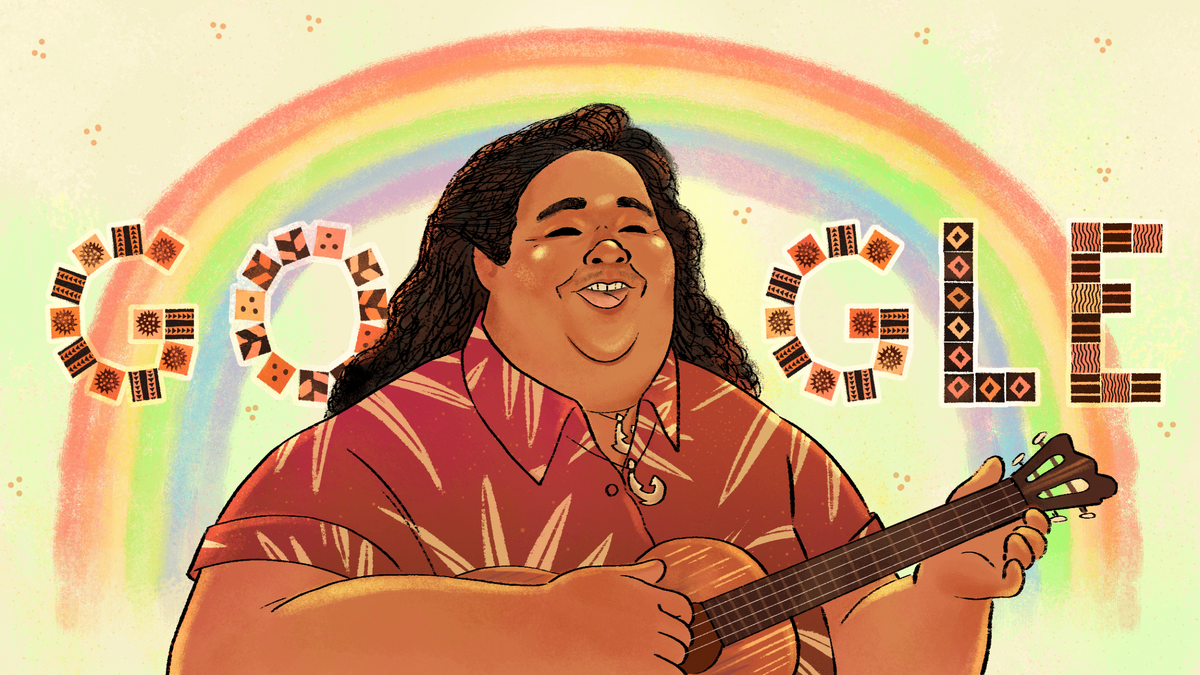
To view this Doodle and its history, visit google.com/doodles/israel-kamakawiwooles-61st-birthday.
Doodle for Google youth contest
Doodle for Google is an annual contest for K-12 students. There are winners in each state, and one national winner gets their Doodle featured on Google’s website for 24 hours, along with a hefty scholarship prize.
This year’s theme is “I care for myself by…”
“I like that this year is focused on self care,” Nagler said. “Young people are so full of wisdom in all facets, so I’d like to see how they care for themselves, which is going to teach the rest of us how we can do it better.”
Here’s the advice Nagler offers to applicants:
▪ “Don’t be afraid to color outside the lines! That’s always my advice to young artists out there,” he said. “I just love looking at the Google for Doodle entries every year. This year’s theme is so important.”
Last year’s theme was “I am strong because…” and 2020’s theme was “I show kindness by…”
The deadline for entering the contest is Friday, March 4.
For more information, including how to apply and how submissions will be judged, visit doodles.google.com/d4g.
What’s your favorite Google Doodle?
Are there any Google Doodles that have stuck with you? Type your answer below, or email kcataudella@newsobserver.com.
This story was originally published March 3, 2022 at 11:34 AM.