What is Ramadan and how do Muslims in North Carolina celebrate the holiest month?
Ramadan Mubarak! In Arabic, this means “Blessed Ramadan,” and the greeting is used during Ramadan to send well wishes to Muslims observing the month and its traditions.
For Muslims, Ramadan is the holiest month of the year. Many celebrate by gathering regularly in the evenings, trying to read the whole Qur’an during the month and fasting from sunrise to sunset.
A common observance is to avoid eating and drinking, including water, while the sun is up.
When is Ramadan? As Ramadan follows the lunar calendar, its start and end dates differ each year. In 2023, Ramadan (pronounced “ROM-uh-don”) begins in the evening of Wednesday, March 22, and ends in the evening on Thursday, April 20.
“Ramadan is a high time for us Muslims. We are at our zenith,” Imam Abdul Hafeez Waheed told The News & Observer. Waheed has served as a Muslim leader at Duke for over 30 years.
“Muslims really look forward to the month of Ramadan,” he said. “There’s always this great anticipation. It means so much spiritually and in so many other ways for our community.”
Here’s what to know about the month, its traditions and celebrations:
Why is Ramadan celebrated?
Ramadan is the ninth month of the Islamic calendar. It was the month when key parts of the Qur’an – Islam’s holy book – were first revealed to the Prophet Muhammad.
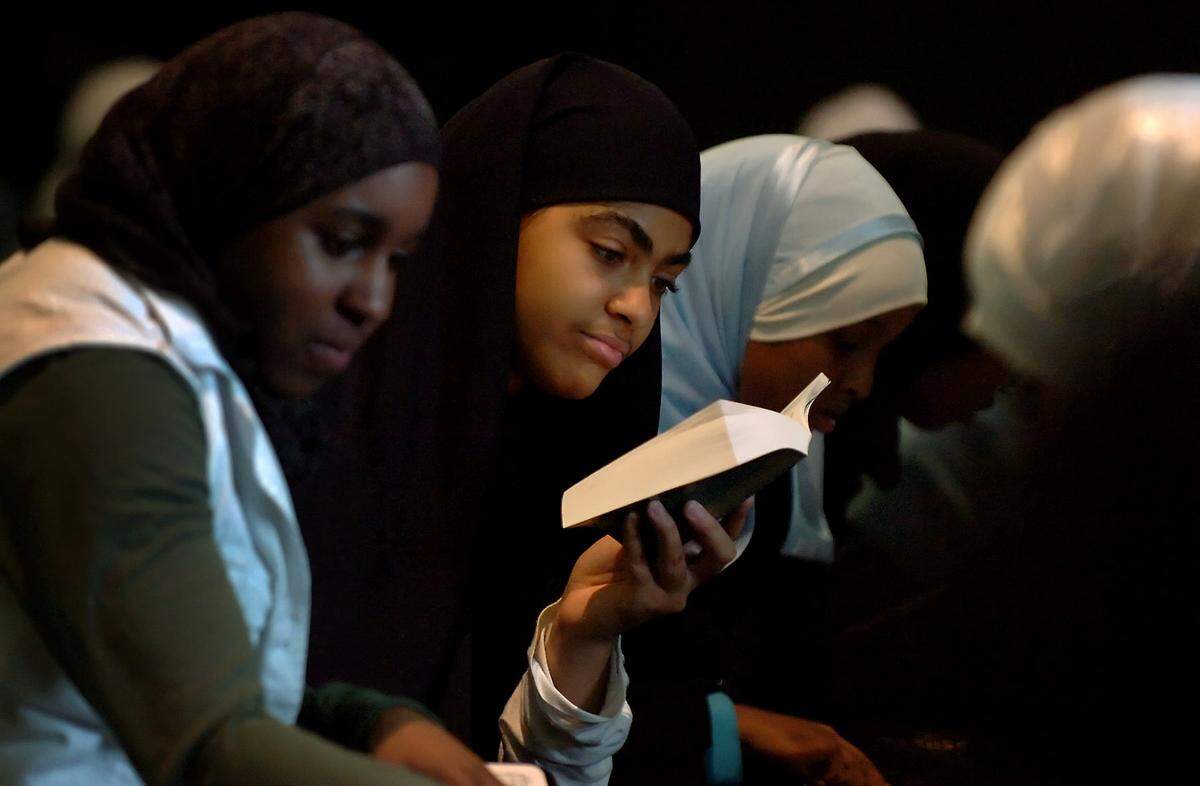
“Ramadan is a month of intense spiritual rejuvenation with a heightened focus on devotion, during which Muslims spend extra time reading the Qur’an and performing special prayers,” according to Islamic Networks Group.
Here’s what the Qur’an says, according to Harvard University’s Pluralism Project:
“It was in the month of Ramadan that the Qur’an was revealed as guidance for humanity, clear messages giving guidance and distinguishing between right and wrong. So any one of you who is present that month should fast, and anyone who is ill or on a journey should make up for the lost days by fasting on other days later. God wants ease for you, not hardship. He wants you to complete the prescribed period and to glorify Him for having guided you, so that you may be thankful.” (Qur’an 2:185)
The “Night of Power” (Laylat al-Qadr), which is commemorated on one of the last 10 nights of Ramadan, was when it is believed God revealed the first verses of Qur’an to the Prophet Muhammad.
“There’s a multitude of reasons why we do this. One is for God consciousness,” said Al Rieder, outreach director for non-Muslims at the Islamic Association of Raleigh.
“When we’re fasting, feeling hungry and thirsty, we are more aware of the whole point of why we’re doing this. It’s because of God, and we’re going to think of and remember God more often. You can focus your time on religious knowledge, studying and memorizing more Qur’an, which is a big deal for us.”
Who must fast during Ramadan?
Fasting is a core component of Ramadan. In fact, this is one of the five pillars of Islam. (More on that later.)
Fasting does not look identical for every person, as some observers cannot avoid food and drink for that long — such as pregnant people, children, seniors and people who are sick.
But people observing Ramadan refrain from more than just food and drink from sunrise to sundown. Sexual activity and behaviors that are deemed immoral, like unkind speech and impure thoughts (such as jealousy and anger), are also avoided.
“Fasting is not just of the stomach, but also of the tongue, mind, and heart, as the Prophet Muhammad is reported to have said, ‘Fasting is a screen; so when one is fasting, let them abstain from foul talk and from behaving impudently,” the Pluralism Project says.
Muslims eat before the sun rises and after the sun sets. The meal before dawn is known as suhur, and the meal after dusk is called iftar. (Note: Spellings can differ between Muslim communities.)
Dates are common foods to eat during iftar, as they were a popular choice by the Prophet Muhammad.
All Muslims who have reached puberty are asked to fast, while older children (beginning around seven years of age, ING said) may participate in limited or symbolic fasting.
“The ultimate goal of fasting is gaining greater God-consciousness, known in Arabic as taqwa, signifying a state of constant awareness of God. From this awareness a person should gain discipline, self-restraint and a greater incentive to do good and avoid wrong,” ING says. “In commemoration of the revelation of Muslim’s holy book, the Qur’an, Muslims attempt to read the entire book during Ramadan. The entire Qur’an is also recited during special nightly prayers.”
What is Eid al-Fitr / Breaking the Fast?
Eid al-Fitr is the Festival of Breaking the Fast.
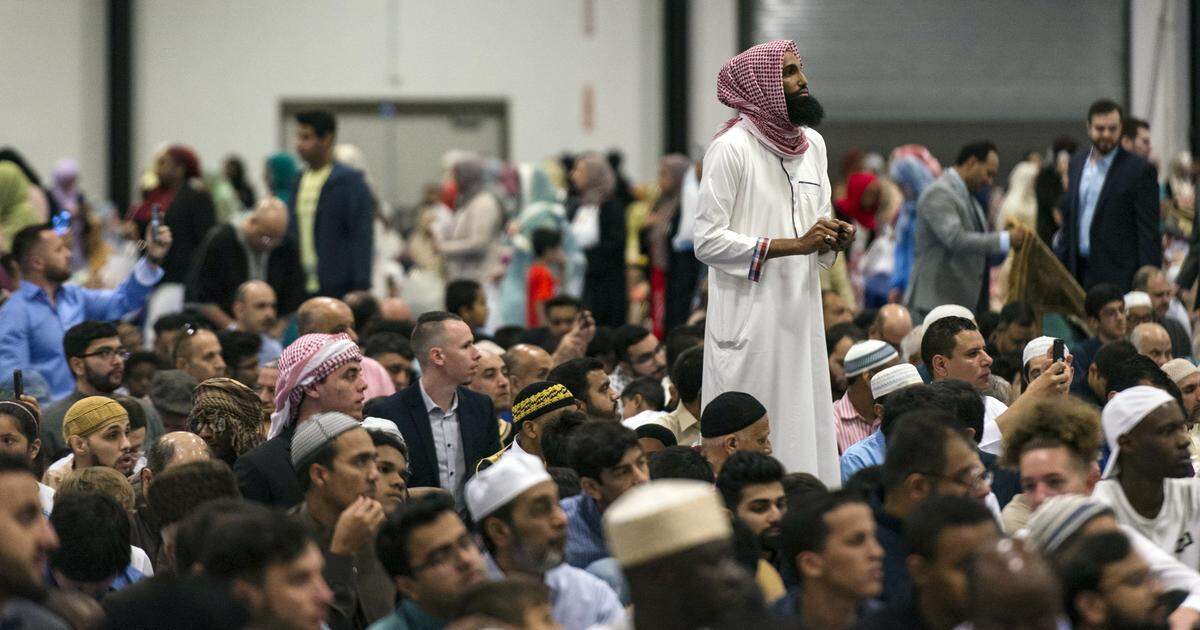
“Children traditionally receive new clothes, money or gifts from parents, relatives and friends. A special prayer and sermon are held the morning of Eid day, followed by a community celebration usually in a park or large hall,” ING said.
“Food, games and presents for children are important parts of the festivities, as friends and family spend the day socializing, eating and reuniting with old acquaintances. The greeting ‘Eid Mubarak!’ means ‘blessed holiday!’”
Some Muslims make Eid al-Fitr a day for acts of charity, ending the holy month in service to their communities, according to the Pluralism Project.
“We have a requirement in our religion to do something called Zakat, your annual payment to the poor and needy. Many people pay this during Ramadan,” the Islamic Association of Raleigh’s Rieder said.
“Many people donate even more during Ramadan. As you’re feeling hungry and thirsty, thinking about people who feel like this all months of the year and not by choice. We also volunteer at soup kitchens and food drives and organize free meals for those in our communities.”
What are the five pillars of Islam?
Fasting during the holy month of Ramadan is one of the five pillars of Islam, which are the core beliefs and practices of the faith.
Here are the five, according to the North Carolina Consortium for Middle East Studies:
- Profession of Faith (Shahada): “Professing that Allah is the true God and Muhammad is his messenger.”
- Prayer (Salat): “Praying five times a day in the direction of Mecca.”
- Alms (Zakah): “Paying a tax or giving a certain amount of money to charity.”
- Fasting (Sawm): “Fasting from the sunup to sundown during the holy month of Ramadan.”
- Pilgrimage (Hajj): “Going on a spiritual journey (pilgrimage) to Mecca.”
What is the Ramadan prayer schedule?
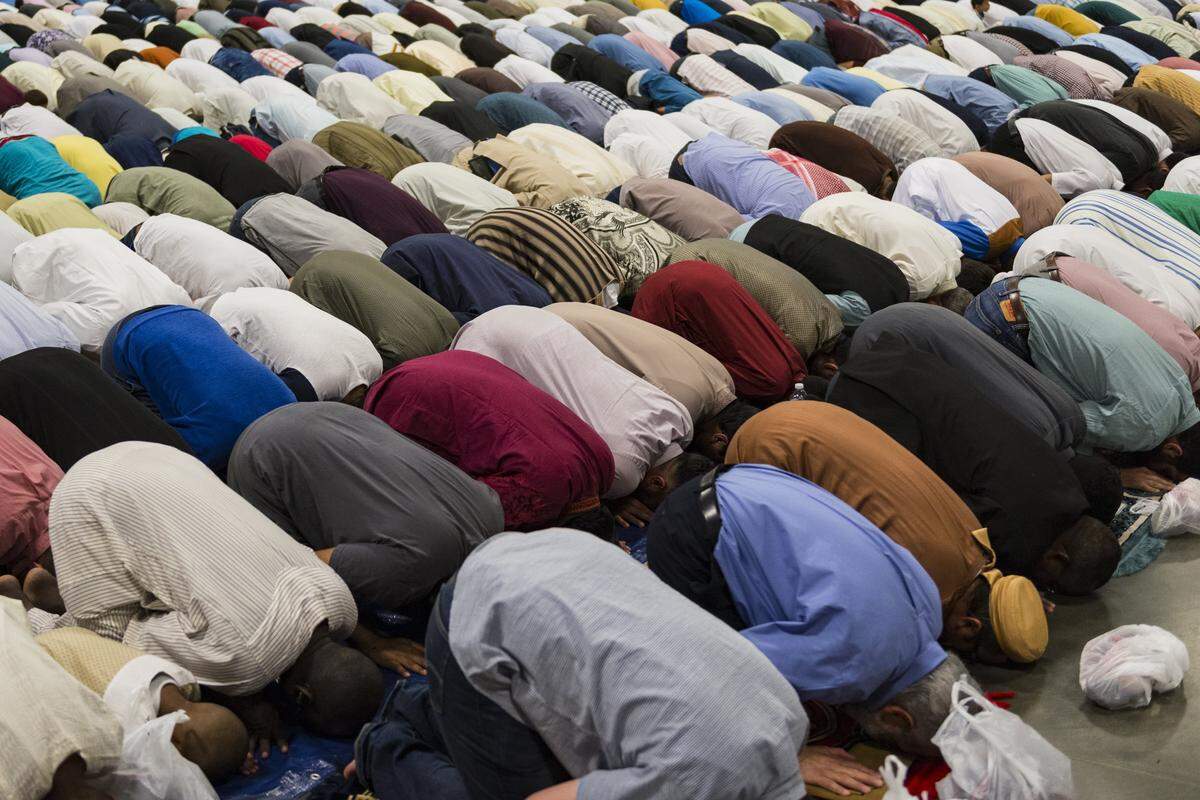
Usually, Muslims observe five prayers a day.
This is what that schedule looks like:
- Fajr: Sunrise prayer
- Zuhr: Noon prayer
- Asr: Afternoon prayer
- Maghrib: Sunset prayer
- Isha: Night prayer
During the month of Ramadan, many Muslims also observe Tarawih prayers (also spelled Taraweeh, which means “rest and relaxation” in Arabic). This prayer follows iftar.
Ramadan events in Raleigh, Durham, Cary
If we missed any Ramadan events in the Triangle, please send details to ask@newsobserver.com.
▪ Young Professionals/Family Iftar (Cary): LHP Feed the Love presents Young Professionals/Family Iftars every Thursday during Ramadan at LHP. When: Thursday, March 23 at 7 p.m. Where: 1127 Kildaire Farm Rd., Cary Info: Search “Young Professionals/Family Iftar” on Eventbrite.com
▪ New Muslims Iftar/Dinner (Raleigh): W e invite all our newly converted brothers and sisters to join us for iftar/dinner on Saturday, the 25th of March at 7:00 PM. This will be a wonderful opportunity for you to meet other Muslim brothers and sisters in the community and break fast and pray together. When: Saturday, March 25 at 7 p.m. Where: Islamic Association of Raleigh, 808 Atwater St., Raleigh Info: Search “New Muslims Iftar/Dinner” on Eventbrite.com
▪ Convert Care Iftar (Cary): LHP Feed the Love presents Convert Care Iftar. Join us every Tuesday during Ramadan for an iftar centered around converts and open to all. When: Tuesday, March 28 at 7 p.m. Where: 1127 Kildaire Farm Rd., Cary Info: Search “Convert Care Iftar” on Eventbrite.com
▪ Muhammad Messenger of Peace + Iftar Dinner (Apex): Ahmadiyya Muslim Community invites you to Iftar dinner where we will celebrate the life of Prophet Muhammad and explore his character. When: Saturday, April 1 at 6:30 p.m. Where: John M. Brown Community Center, 53 Hunter St., Apex Info: Search “Muhammad Messenger of Peace + Iftar Dinner” on Eventbrite.com
▪ IRUSA Grand Iftar (Durham): Join us, Shaykh AbdelRahman Murphy and Qari Abdellah Marhoum, to reflect on the greatness of this beautiful month, be moved by the recitation of the Quran, break our fasts and pray together, and celebrate the remarkable impact your charity makes in the lives of so many of our sisters and brothers around the world. Tickets range from $15 to $400. When: Sunday, April 2 at 6 p.m. Where: Sheraton Imperial Hotel Raleigh-Durham, 4700 Emperor Boulevard #282, Durham Info: Search “IRUSA Grand Iftar” on Eventbrite.com
▪ LHP Qiyaam and Suhoor (Cary): L HP Qiyaam and Suhoor Night will feature halaqah, reflection circles, Qiyaam led by Qari Ali Hida, tasty Suhoor, and more. Do not miss out on this night of worship and fellowship in Sha Allah! When: Sunday, April 9 at 12 a.m. Where: 1127 Kildaire Farm Rd., Cary Info: Search “LHP Qiyaam and Suhoor” on Eventbrite.com
▪ Ramadan Session (Raleigh): As-Salaam Islamic Center presents Ramadan Session 2023: The Qur’an, the Final Frontier. Tickets range from $15 to $55. When: Friday, April 14 at 1:30 p.m. Where: 1214 East Lenoir St., Raleigh Info: Search “Ramadan Session” on Eventbrite.com
This story was originally published March 31, 2022 at 1:45 PM.