Remembering when the world’s biggest plane came to RDU and lamenting its loss in Ukraine
In 20 years working at Raleigh-Durham International Airport, Ron Jewett has missed presidential visits and other big events, but he made sure he was on hand when the world’s biggest airplane came in for a landing.
The Antonov AN-225 Mriya, a cargo plane built by the Soviet Union to carry its version of the space shuttle on its back, made its one and only visit to the Triangle on a rainy morning in October 2006. Jewett, now RDU’s vice president of facilities management, was a construction engineer at the time and was standing on the airport’s apron when the big plane came in.
Which is one reason he was sad to learn recently that the Mriya was destroyed in its hangar north of Kyiv in Ukraine after the Russians invaded in late February.
“I remember when it was here wondering, ‘How many of these are there?’” Jewett said. “There turned out to be only one ever made that size. And I guess to an aviation guy it’s analogous to some of the artifacts in the Middle East getting destroyed. Sort of a piece of history.”
The Mriya, which means “dream” in Ukrainian, weighed up to 640 tons loaded and was large enough to carry wind turbines, tanks or a diesel locomotive. It had six engines, 32 tires and a wingspan of 290 feet. By comparison, the wingspan of the Hughes H-4 Hercules, the famous Spruce Goose, was 30 feet longer, but that plane is shorter than the Mriya and flew only once.
At nearly 276 feet, the Mriya was more than twice as long as the Wright brothers’ first flight at Kitty Hawk.
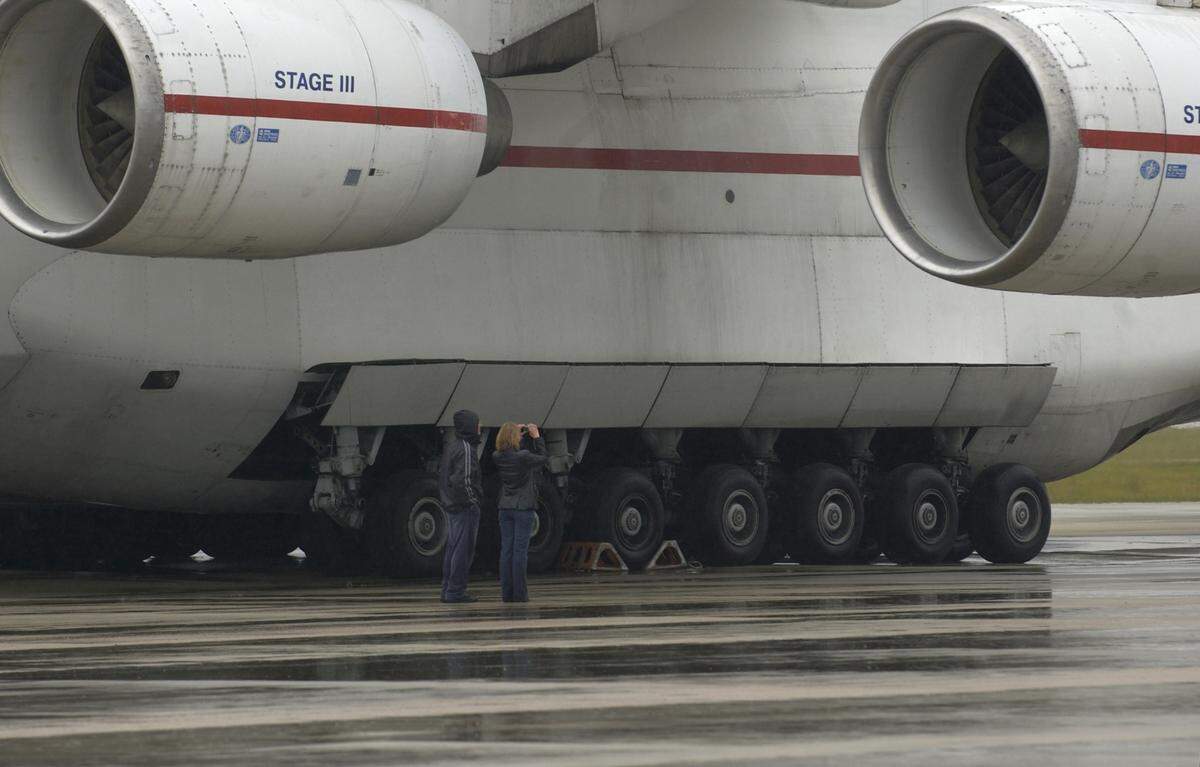
The Mriya has been a workhorse for Antonov Airlines, a Ukrainian cargo charter company that refurbished the plane after the collapse of the Soviet Union and put it back into service in 2001. On its final commercial flight in early February, it carried 90 tons of COVID-19 tests from China to Denmark.
The Mriya came to RDU to pick up a 120-ton electric power plant built by General Electric and Vulcan Amps of Bladen County and deliver it to Tanzania in Africa. Local media reported on the plane’s visit the day before, and a crowd gathered in the airport’s Observation Park and other vantage points to watch it come in.
Among them was Brian Marks of Raleigh who brought along his 8mm video camcorder. Asked this week why he wanted to see the Mriya, Marks wrote by email: “Big plane. Who wouldn’t?”
“It was super big, super loud,” he wrote.
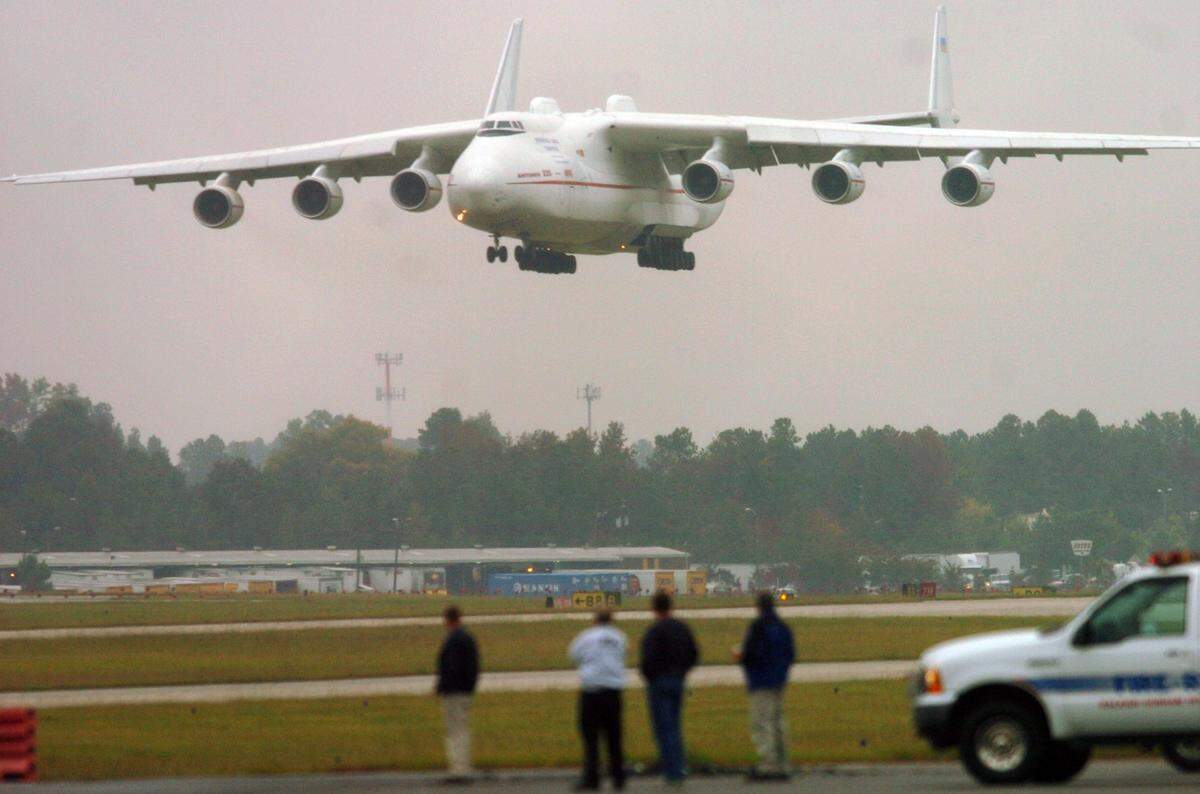
Jewett notes that all approaching planes look like small dots in the sky, and it’s not until they’re on the ground, near another plane or other landmark, that you can appreciate their size.
“It was raining hard off and on that day, and it probably added to the mystery a little bit as it came out of the clouds on the approach,” he said.
Jewitt stuck around to watch the nose of the plane lift open skyward and the first tractor-trailer load being backed into the plane’s cavernous cargo bay.
“The aircraft kind of sank to its knees, if you will, and the nose came straight up,” he said. “It was pretty astounding to see how far in the air that nose went when it was in that position.”
The Mriya carried 21 crew members that day, most of whom left the airport for a 12-hour respite at a nearby motel. The plane took off for Africa around midnight, with planned refueling stops in Canada, Ireland and Egypt.
The Antonov Airlines website says it planned to keep the plane in operation until at least 2033. It was based at the airport in Hostomel, a strategic target of the Russians early in the invasion that began Feb. 24.
Photos of the plane show its massive wings and most of its engines still intact. But from the wings forward, the fuselage has been destroyed, and the nose, now painted in the yellow and blue of Ukraine, is crumpled on the ground.
This story was originally published April 29, 2022 at 3:25 PM.