NC Transportation Museum’s ‘Jim Crow’ railroad car gets special historic designation
Spencer Shops, the old railroad repair complex that houses the North Carolina Transportation Museum, has been on the National Register of Historic Places since 1978.
Now, for the first time, a piece of the museum’s collection has received its own recognition on the national registry as well.
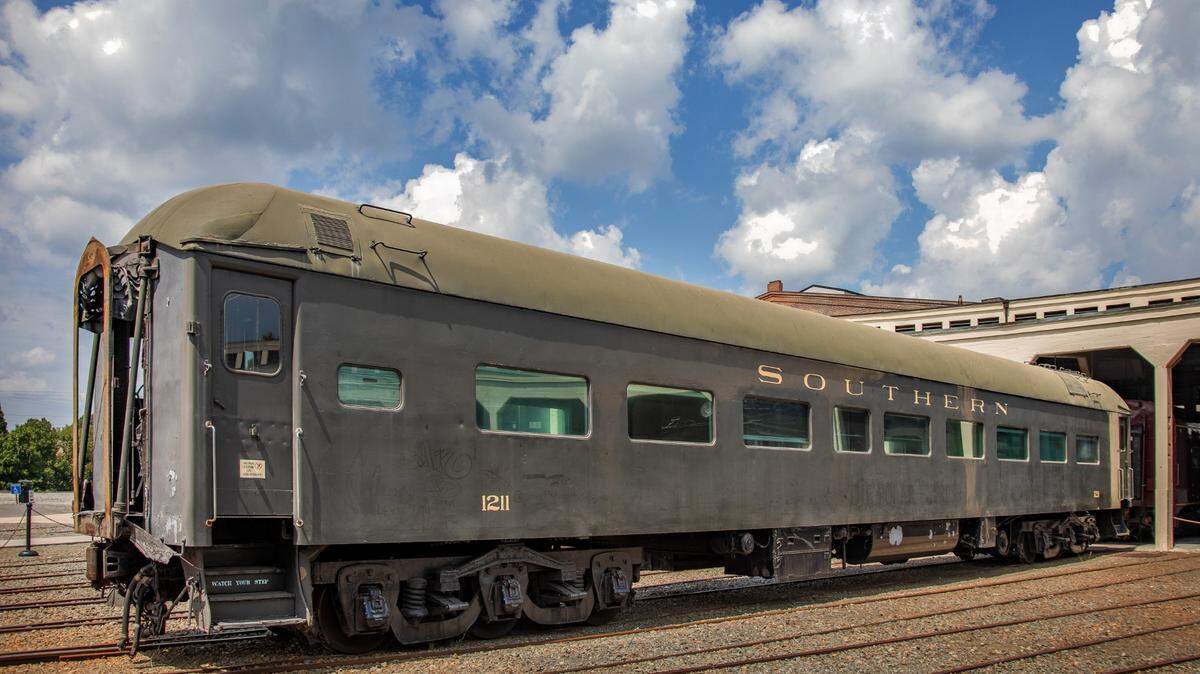
Southern Railway Car No. 1211 helps tell the story of racial discrimination in America. Built in 1917 by the Pullman Company, it was partitioned by the railroad in 1939 to enforce racial segregation required by state Jim Crow laws. The car’s 44 seats were divided into two sections by a wall, with half for whites and half for Blacks.
The museum has received a grant from the National Park Service to restore the car’s interior to how it looked in the 1940s and 1950s, said Mark Deaton, director of visitor services.
“It’s an opportunity to tell that part of the history of how the Jim Crow cars were used,” Deaton said. “It seems to be important history to reflect on right now. And for the future.”
When restoration is complete, car No. 1211 will be one of only a few coaches on display anywhere that show how railroads enforced Jim Crow segregation in the South. Another notable example is a 1918 Pullman car at the Smithsonian Museum of African American History and Culture in Washington, D.C. Southern Railway had that car partitioned in 1940.
The transportation museum received a $287,000 grant from the National Park Service that will allow it to remove asbestos and lead paint, restore the floor and walls and deal with rust and other structural problems.
It will also help with either restoring or replacing the seats. The museum removed the original seats and was storing them in a boxcar when someone set it and several other cars on fire in January 2021. It’s not clear that the seats can be salvaged, Deaton said.
“We might try to find some similar seats and have them recovered to simulate what it would have looked like,” he said.
Jim Crow train cars had two sets of bathrooms
Also still to be determined is which section of the car was for Black passengers and which for whites. There are two sets of bathrooms on the car, one larger than the other, and it’s commonly assumed the seats near the smaller bathrooms were for Black passengers. That’s how the car at the Smithsonian is displayed, according to the Smithsonian website.
But in researching Jim Crow cars for the North Carolina museum, Tyler Trahan found plans for segregated cars built in the 1940s for Southern Railway that show larger restrooms and nearby seating labeled for “colored” passengers. According to the National Register application, Trahan found a Southern Railway bulletin that explained that whites had “spartan accommodations” in the coach because they also had access to smoking and lounge cars, while Black passengers did not.
The National Register application says Southern Railway likely enforced segregation on car No. 1211 until 1961. The Interstate Commerce Commission had ordered an end to segregation on trains and in train stations in 1955, in response to the Supreme Court’s Brown vs. Board of Education decision that declared segregation in public schools unconstitutional.
But Southern states continued to enforce segregation laws into the 1960s. Only after the Freedom Riders challenged segregation on buses in 1961 did the federal government get serious about enforcing its own order.
Southern Railway retired car No. 1211 in 1969 and donated it to the National Railway Historical Society’s Atlanta chapter. The N.C. Railroad Company bought the car in 1980 and donated it to the transportation museum.
The state-owned museum, near Salisbury in Rowan County, restored the exterior of car No. 1211 and put it on display with others in the museum’s roundhouse. Eventually, when it is fully restored, people will be able to walk through the car and read about the history of segregated train travel.
Deaton said the interior restoration work will take place in the roundhouse and could take several years.
This story was originally published June 6, 2022 at 2:13 PM.