
Wellness vendor peddles ‘cognitive clarity’. NC fire marshals shut their devices down.
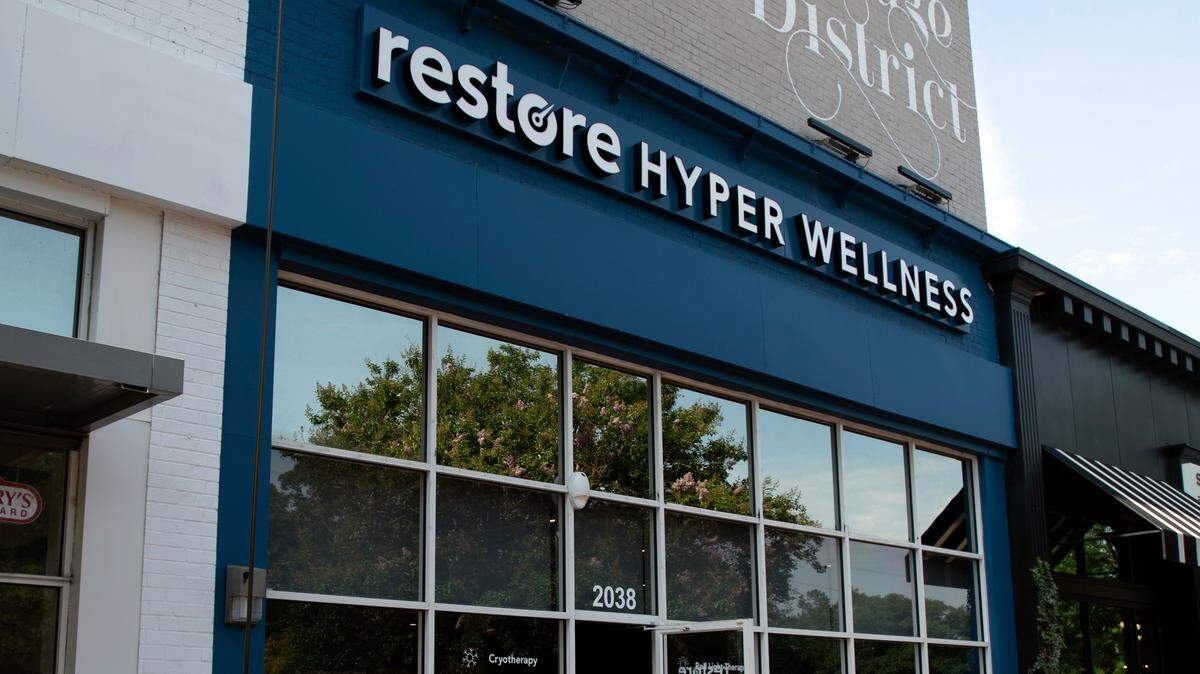
The Raleigh Fire Department has ordered a fast-growing wellness company to stop using hyperbaric chambers that the firm claims will “have you feeling like you turned back the hands of time.”
The chambers, as used by Restore Hyper Wellness, do not comply with fire safety standards, a top North Carolina fire code official concluded.
Charlotte’s fire department ordered Restore to halt use of its chambers at three locations for the same reason earlier this month, The Charlotte Observer reported. Durham’s fire marshal is taking a wait-and-see approach.
Medical hyperbaric oxygen therapy puts patients in pressurized chambers so their lungs can absorb more oxygen to treat the bends in scuba divers, radiation injuries in cancer patients and stubborn wounds in people with diabetes.
It’s not the same as the “mild hyperbaric oxygen therapy” increasingly offered by the wellness industry, which boomed during the COVID-19 pandemic. Restore, which is expanding with private equity investment, sells the “mild” version at coast-to-coast franchises.
Restore claims that its therapy can help “optimize sleep, speed up athletic recovery, repair muscles and boost cognitive clarity.”
Critics say the wellness industry lacks proof that it can deliver the promised benefits. But it’s the risk of devastating fire that is prompting some officials to shut the chambers down, at least temporarily.
After receiving a tip, a Raleigh fire inspector visited the Restore location in the Village District on June 16. He found that there was no fire suppression system in the building but noted in his report that the business disputed the conclusion of the state Fire Marshal’s Office that it needs one.
In written statements to The News & Observer, Restore defended its safety record and said it provides services “in accordance with relevant regulations and guidelines.” Its Raleigh location opened in December.
“Restore has provided over 130,000 mild hyperbaric oxygen therapy sessions to clients without incident, and is happy to collaborate with the city and state to ensure protocols continue to provide safety,” a spokeswoman wrote.
An unresolved appeal
A company representative is now in talks with Charlie Johnson, the state’s chief fire code consultant, in the hopes that Johnson will revise his opinion, officials said.
Johnson left the door open to that possibility. If Restore gets a formal interpretation from the National Fire Protection Association saying it is exempt from the rules that apply to healthcare facilities, he will reverse himself, Johnson said.
Getting that document, however, may not be easy.
The code does not address the specific type of hyperbaric chamber that Restore and other wellness companies use, said Gregory Harrington, principal engineer with the NFPA. That means these decisions rest with local officials.
The NFPA has received a request for a formal interpretation, but the request didn’t meet the group’s standards for processing, so none was issued, Harrington said Tuesday.
The organization may clarify its preferred interpretation in the code’s next edition, in 2024, he said.
In the meantime, different jurisdictions are taking different stances.
In contrast to Raleigh and Charlotte, Durham has opted to allow Restore to offer hyperbaric oxygen therapy while Johnson and company officials hash it out.
“We don’t want to compromise any public safety, but obviously we want to make sure they’re in violation before we affect someone’s business,” the city’s fire marshal, Jody Morton, said.
Across the country, there’s a similar patchwork. Some fire marshals have ordered cease and desist orders to wellness companies while others let their chambers continue operating.
Some fire marshals in Virginia, Georgia and Utah have chosen to shut the service down, said Tom Workman, who for many years tracked the industry as part of his work in quality assurance for the Undersea & Hyperbaric Medical Society.
‘Less of a fire, more of an explosion’
What Restore calls “mild hyperbaric oxygen therapy” involves putting someone in a human-sized zippered bag and giving the person supplemental oxygen.
The FDA has not approved the bags for use with oxygen tanks or oxygen concentrators, or for any reason other than treating altitude sickness.
The devices do not go to the pressures required for most therapeutic uses, said Dr. Helen Gelly, a physician who has practiced hyperbaric medicine for more than 30 years and recently briefed Georgia fire marshals on the risks.
The fire risk comes from the oxygen under pressure.
“In a hyperbaric environment, you’re essentially turbo charging the oxidizer,” one of the three elements necessary for a fire, along with fuel and heat, said Rachel Lance, a biomedical engineer and researcher at the Duke Center for Hyperbaric Medicine and Environmental Physiology.
“What that means is that things that are not normally flammable become excellent fuels inside a hyperbaric chamber.”
A cellphone, for example, could turn deadly, she said.
Some wellness companies, such as Durham’s BR3 Studio, say on their websites that electronics are allowed during treatments.
In an email, however, BR3 said that it had changed that policy because it wanted to “promote a disconnected sensory deprivation experience.” The company later received a notice from its device supplier telling it to refrain from allowing electronics on the advice of fire marshals, the email said.
The Restore spokeswoman did not directly answer a question from The News & Observer about the company’s policy.
Last year the Food and Drug Administration published a fact sheet debunking common false claims about the treatments, and the American Medical Association is now urging the FDA to take further action against the wellness industry.
The powerful physicians’ organization recently voted to “oppose the operation of ‘mild hyperbaric facilities’ unless and until effective treatments can be delivered in safely in facilities with appropriately trained staff including physician supervision and prescription and only when the intervention has scientific support or rationale.”
The FDA recommends checking with your health care provider before seeking hyperbaric oxygen therapy and to use facilities that have been inspected and accredited by the Undersea & Hyperbaric Medical Society.
The consequences of using hyperbaric chambers without appropriate safety measures can be dire.
“When a fire occurs in a hyperbaric chamber, it’s less of a fire and more of an explosion,” Lance said.
This story was originally published June 24, 2022 at 6:00 AM.