
Where do deer, bears, elk and turtles need help crossing the road in North Carolina?
Along with money for roads, bridges and airports, the big federal infrastructure bill signed into law last fall included $350 million for projects that make it easier for animals to cross highways.
Now a wildlife advocacy group is recommending the best places in North Carolina to make changes to help everything from elk to box turtles avoid getting hit by cars.
Wildlands Network used several criteria to identify hot spots, including traffic and wildlife collision counts, road characteristics and the proximity to protected land and wildlife habitat. The group started with 179 sites, then narrowed the field down with the help of wildlife experts to what it considers the 20 top priority crossings where animals could use some help.
Most of the sites are in rural areas, from the mountains through the Piedmont and Sandhills to near the coast. But two are in the Triangle, in Durham and Orange counties.
Building wildlife crossings can be expensive, and North Carolina will be competing with other states for federal grants, said Ron Sutherland, chief scientist for the Wildlands Network, a national group with people based in Asheville and Durham.
“This means North Carolina needs to be strategic about investing in crossing projects that will have the greatest impact on wildlife and travelers’ safety,” Sutherland said in a written statement. “So, the question of the moment is: Where do we need wildlife road crossings in North Carolina? This report is our answer to that question.”
Wildlife collisions are costly for humans as well as animals. The N.C. Department of Transportation counted 56,868 animal crashes statewide from 2017 through 2019, resulting in nearly $157 million in damage and five deaths and 2,857 injuries to people.
And that tally doesn’t include the unreported collisions that kill countless small mammals, reptiles and amphibians.
Two priority crossings in the Triangle
Wildlands Network identified six priority sites in the Blue Ridge Mountains, six on the coastal plain and four each in the Sandhills and Piedmont. Five of the sites involve interstates, while many of the rest are on state and federal highways near national forests and wildlife refuges and state game lands. There’s one on U.S. 19 where it intersects the Blue Ridge Parkway.
In the Triangle, the group recommends a crossing at Interstate 85 in eastern Orange County, which cuts across a wildlife corridor between Eno River State Park and Duke Forest.
“I-85 and parallel U.S. 70 form a near-impenetrable barrier across this corridor that otherwise links Jordan Lake to the south and Falls Lake to the north, both of which have extensive protected forestlands,” the group writes. “This area is plagued with wildlife-vehicle collisions caused by white-tailed deer.”
The second Triangle site on its priority list is where N.C. 54 crosses New Hope Creek in southwestern Durham County. The road creates a barrier for bobcats, turkeys, deer, river otters and turtles that traverse the hardwood forest surrounding the creek, the group says.
NCDOT hasn’t decided where it would put new wildlife crossings under the federal program. The U.S. Department of Transportation has not yet begun seeking grant applications, said Jamie Kritzer, spokesman for NCDOT.
“Once they do, we intend to apply for money to construct wildlife crossings in North Carolina,” Kritzer wrote in an email. “The call for projects will outline the kind of projects that would qualify, and that will give us a better idea of what we will be seeking.”
Wildlife crossings come in many forms
There are numerous strategies for helping animals avoid getting hit by cars. They include tunnels or culverts of various sizes under a roadway as well as specially-designed bridges to give animals safe passage over. Special fencing is usually built nearby to steer animals toward the crossings.
In Graham County, where the Appalachian Trail crosses N.C. 143 at Stecoah Gap, NCDOT is planning to build a land bridge, planted with vegetation, to carry hikers and wildlife over the road.
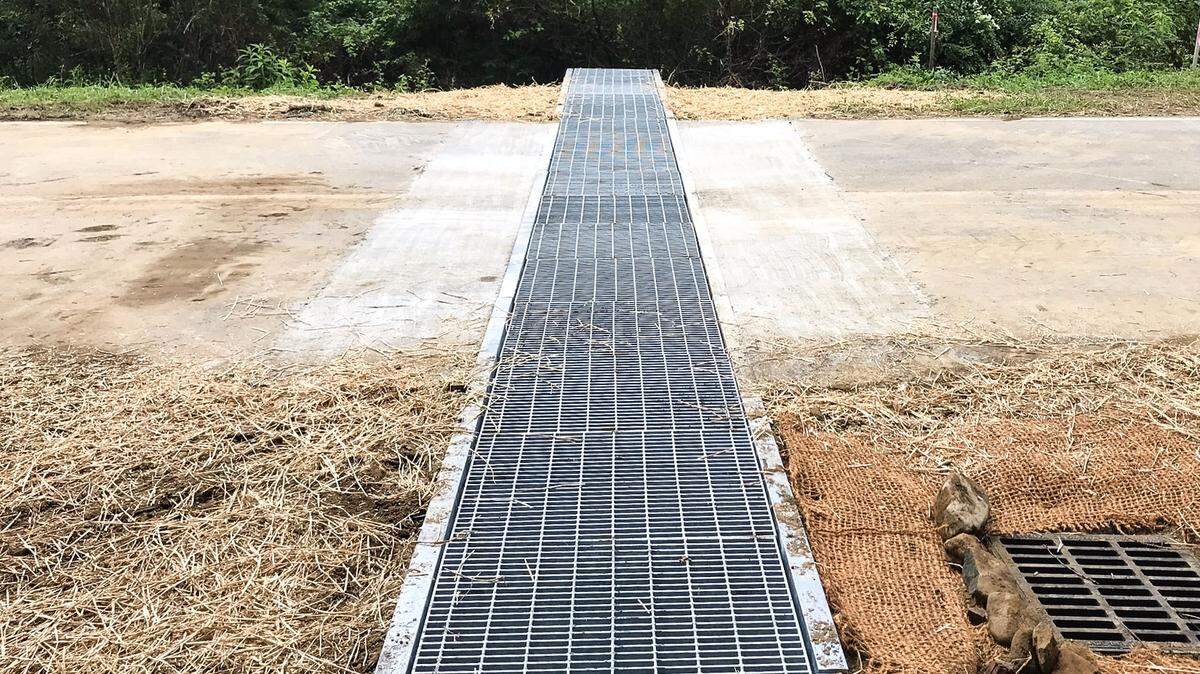
This summer, NCDOT, working with the U.S. Fish and Wildlife Service and other groups, completed a small tunnel under a state highway in the northwest corner of the state for snakes, frogs and small animals. The concrete tunnel has a grated metal top to allow sunlight in and connects two parts of a wetland that the road bisected.
Sometimes engineers simply consider the needs of animals in designing road bridges. In 2005, NCDOT built a higher and longer replacement bridge for U.S. 15-501 over New Hope Creek in Durham to make more room for wildlife, primarily deer that follow the creek. (The N.C. 54 site in the Wildlands Network report is a few miles downstream.)
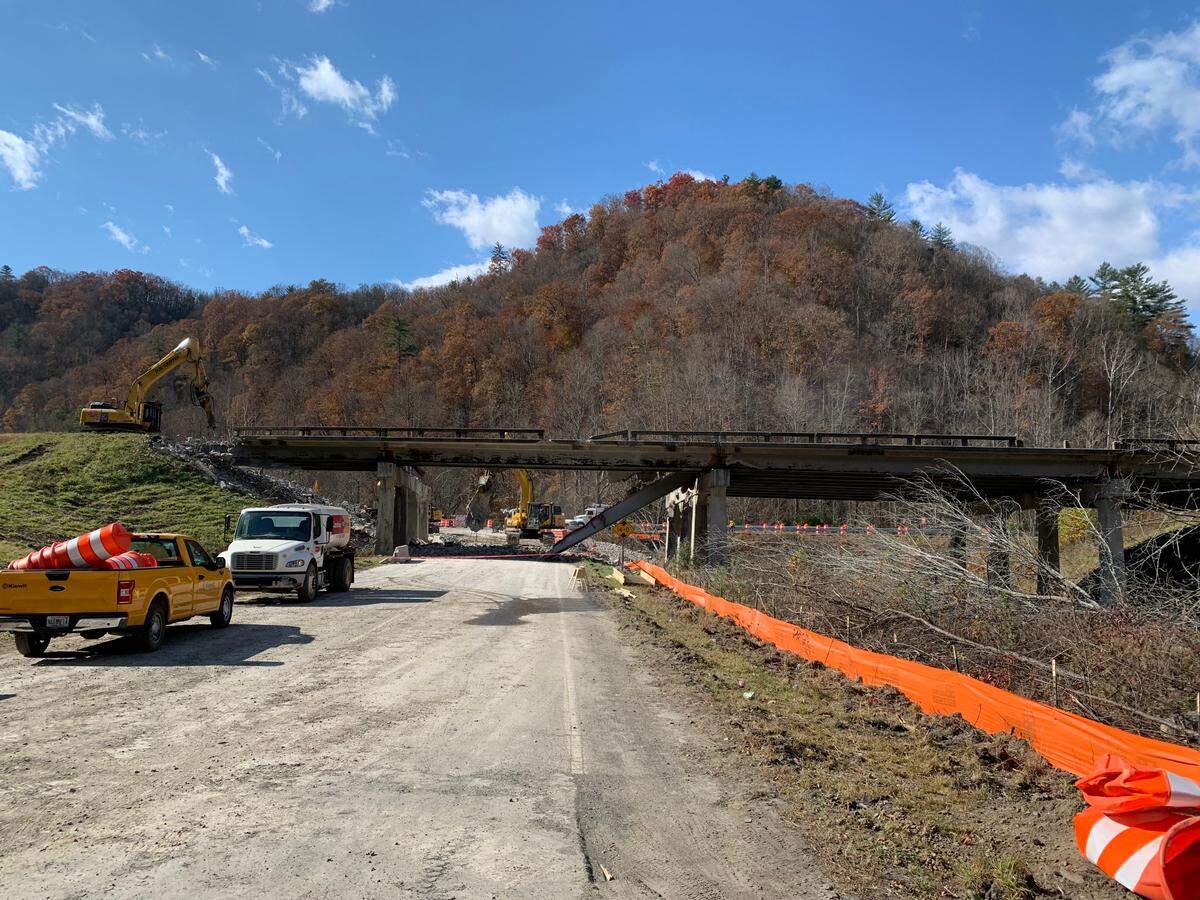
This year, the state completed a new bridge to carry I-40 over Cold Springs Creek and Harmon Den Road near the Tennessee state line. The bridge was just as long as the one it replaced but was redesigned to include more space for animals to follow the creek under the highway.
NCDOT will also build new 9-foot-tall fences to direct bear, deer, elk and other wildlife toward the bridge opening.
This story was originally published September 6, 2022 at 2:03 PM.
