
NC’s greatest ghost stories, from haunting angel to headless woodsmen to ghost cat
In the 1840s, when gold fever struck North Carolina, a pair of miners toiled at the bottom of a 500-foot hole in Rowan County, searching for treasure in the darkness.
They formed an ugly partnership in that mine shaft, a grizzled veteran and a tenderfoot hungry for riches to feed his family. But when they stopped to stretch, disaster struck from the sunlight above.
To the old miner’s shock, a wooden timber tumbled down and impaled his rookie companion through the head. The young miner expired inside the cold Earth, choking out a final wish: Take care of my boy.
The old man agreed, raising the orphaned son as his own, telling stories of the brave daddy who’d toiled with pick and shovel.
But the boy already knew. Every morning at dawn, the father visited their house in Gold Hill, always bearing the same warning from the grave.
“Don’t work in the mines.”
Such is the haunted folklore of North Carolina.
Every state has its ghost stories, but North Carolina, which claims rights to Blackbeard, Bigfoot and a sea monster lurking inside Lake Norman, boasts an overflowing coffin full of them.
Some are famous enough for their own festival: Beast Fest in Bladenboro. Some tingle enough spines to earn their own beer joints: Boojum Brewery in Waynesville.
But these, including the Gold Hill miner, are the seven best — at least in this morbid scribe’s opinion. Read them and tremble.
Oakwood’s angel
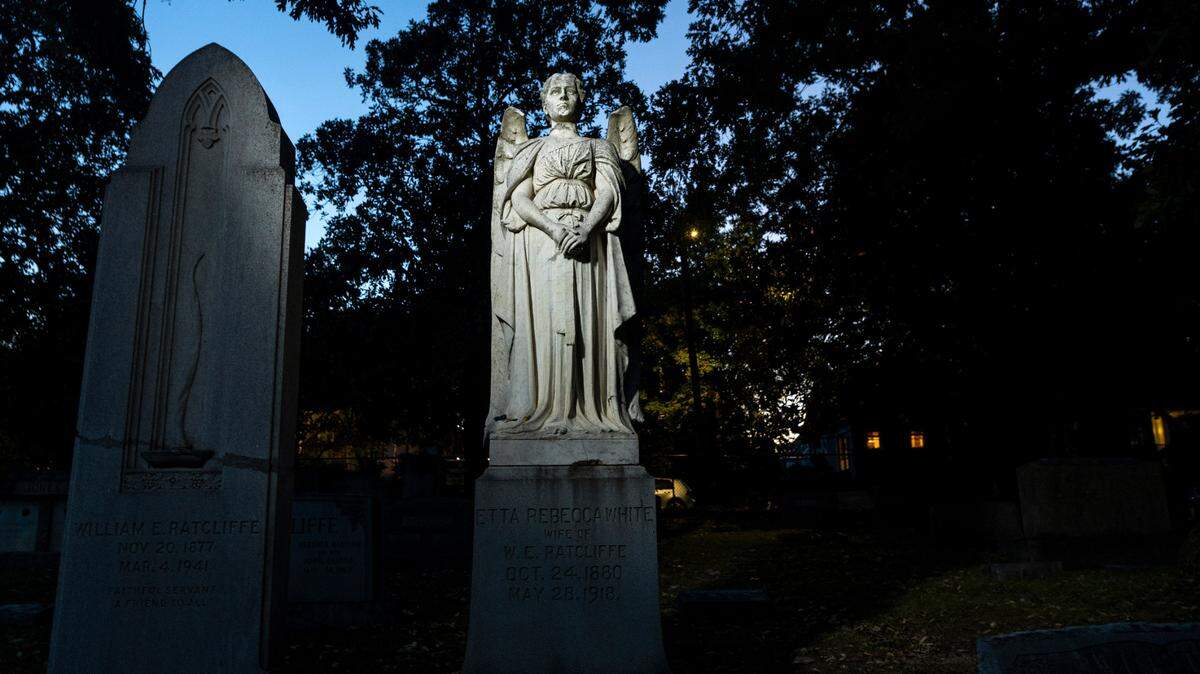
In daylight, Etta Ratcliffe’s angel monument strikes a gentle pose, wings tucked harmlessly behind her shoulders, eyes cast far over the horizon.
Even at 8 feet tall, cast in granite, her stony likeness shrugs off Earthly visitors, ignoring the coins, stones and trinkets they place in her folded hands.
But visit Raleigh’s Historic Oakwood Cemetery by night — only with a guide or permission, please — and the marble angel will drop her gaze and stare straight into your soul. Depending on the degree of urban legend, she may spin her head, flutter her wings or otherwise deliver turmoil from the grave.
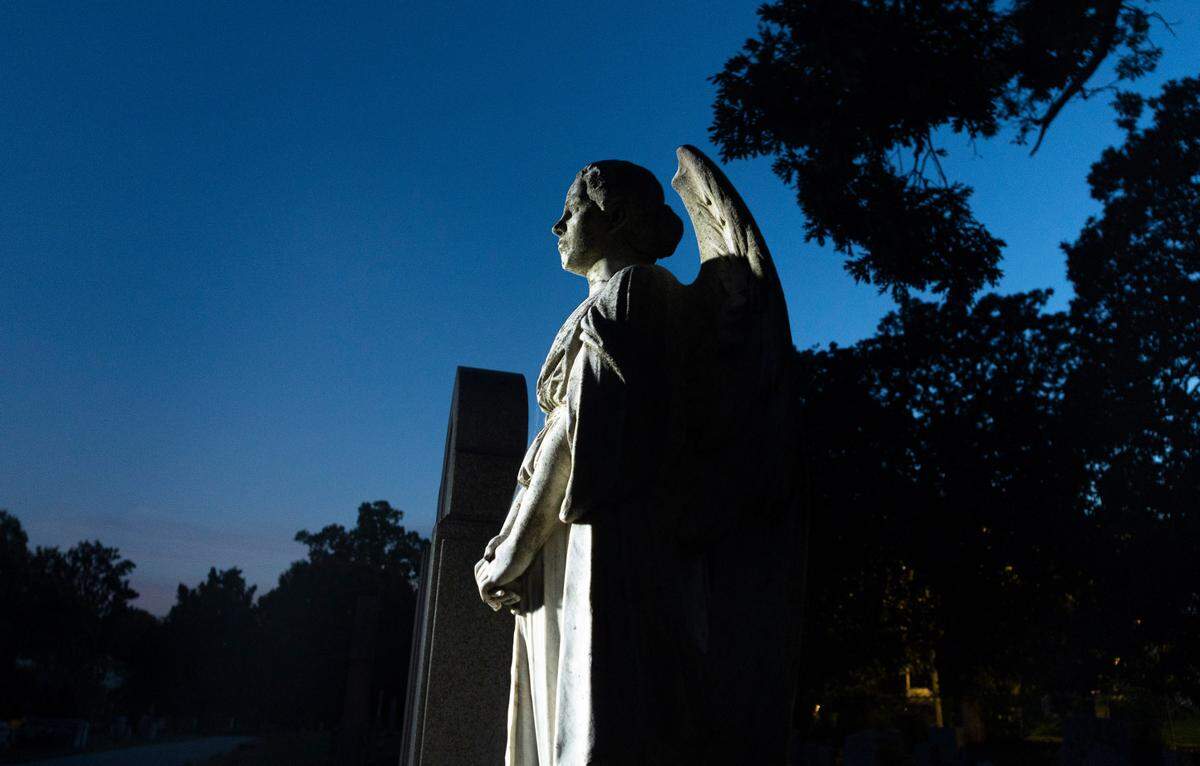
I have seen this happen — just the staring part. Trick of the light, perhaps, but still stamped in my brain’s dark places.
In life, Etta Rebecca White Ratcliffe married a hosiery factory magnate and bore four children. But in 1918, at only 37, she developed the vitamin B deficiency known as pellagra, known to trigger dementia in severe cases. She died in Dorothea Dix Hospital after just a few weeks.
Her statue led an equally turbulent life.
William Ratcliffe ordered it carved in Italy, but the ship carrying it foundered off the coast of Wilmington, sending the angel into the depths below. It remained on the sea bottom for years until getting plucked out and hauled to Raleigh.
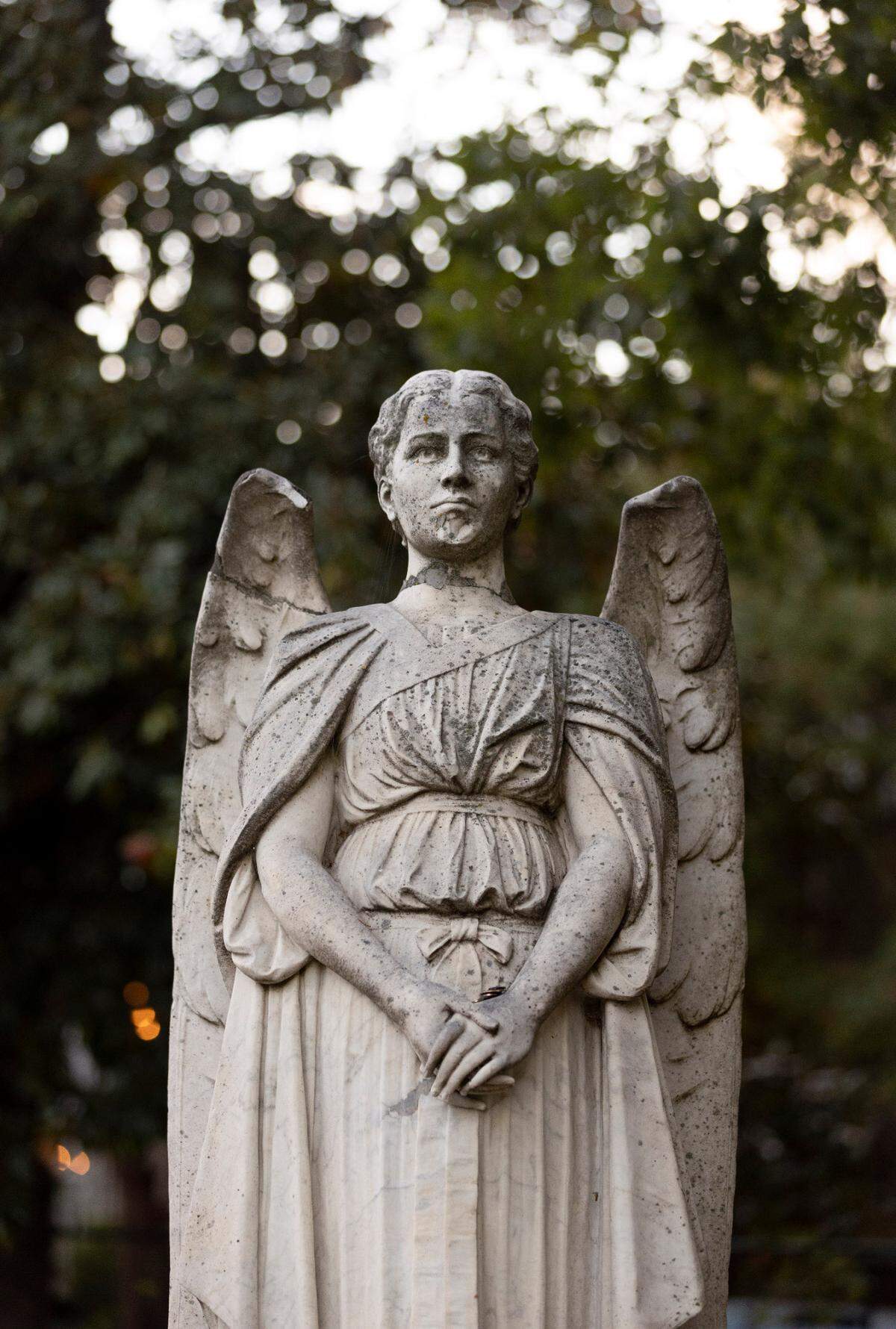
And even perched for eternal rest, the Ratcliffe angel found little peace. Both its head and the tips of its wings are mortared in place, cracks showing where they have broken free in the past.
I suspect now that she protects the dead around her, watching for disrespectful intruders who disregard graveyard decorum and ignore No Trespassing signs.
She sees you coming. If you come to gawk at her, she’ll glare right back.
The handshake
By all accounts, George Deans qualified as a 19th-century playboy, a country gentleman with a university education, a penchant for carousing and a sharp eye for the ladies.
He strutted about Goldsboro in the 1850s with these assets on full display, catching the attention of one Rachael Vinson — only 17 and wide-eyed in the ways of love.
This tale of a jilted sweetheart’s revenge has many versions, but in all of them, the highly sought Rachael rejected every lovestruck gent but George. She followed him breathlessly, pitching furious woo, until he finally agreed to marry.
And then mercilessly broke his promise, leaving Rachael to sputter into slow death by rejected heroine’s disease.
“Within weeks, her almost uncontrollable grief was replaced by sickness and fever,” writes Daniel W. Barefoot in his book “Seaside Spectres.” “Her body was robbed of its vigor; her tender heart was broken; her gentle soul was stripped of its raison d’être.”
With death approaching, Rachael called Deans to her bedside and made a grim promise: “I realize I can never have you in this world, but I shall claim you in the next.”
Soon after, Deans was wandering home from a Christmastime party, tipsy with drink, when a foggy shape rose from a cemetery wearing the face of his spurned lover.
The spirit clasped his hand, and Deans felt the chill to his bones.
When he reached home, his hand started to wither, fading until it dangled uselessly at his side. He lived another 32 years with the stark memory of that graveyard rendezvous, never marrying.
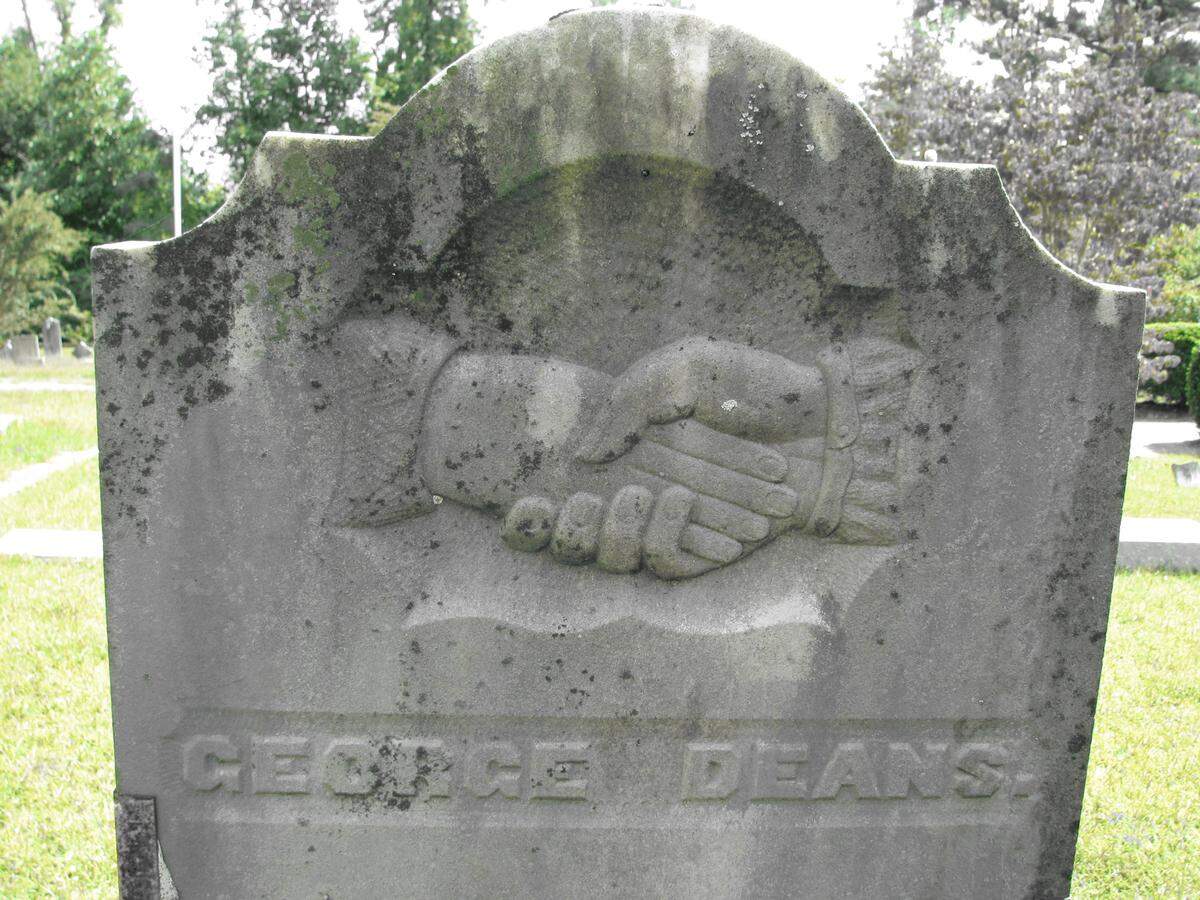
When he finally died, buried in Deans Cemetery down a dead-end road, he ordered that dreadful handshake chiseled on the stone just above his name.
Rachael rests not 30 feet away, a hand on her marker as well — this one holding a bouquet of wilted roses.
Chopped to pieces in the Cabelands
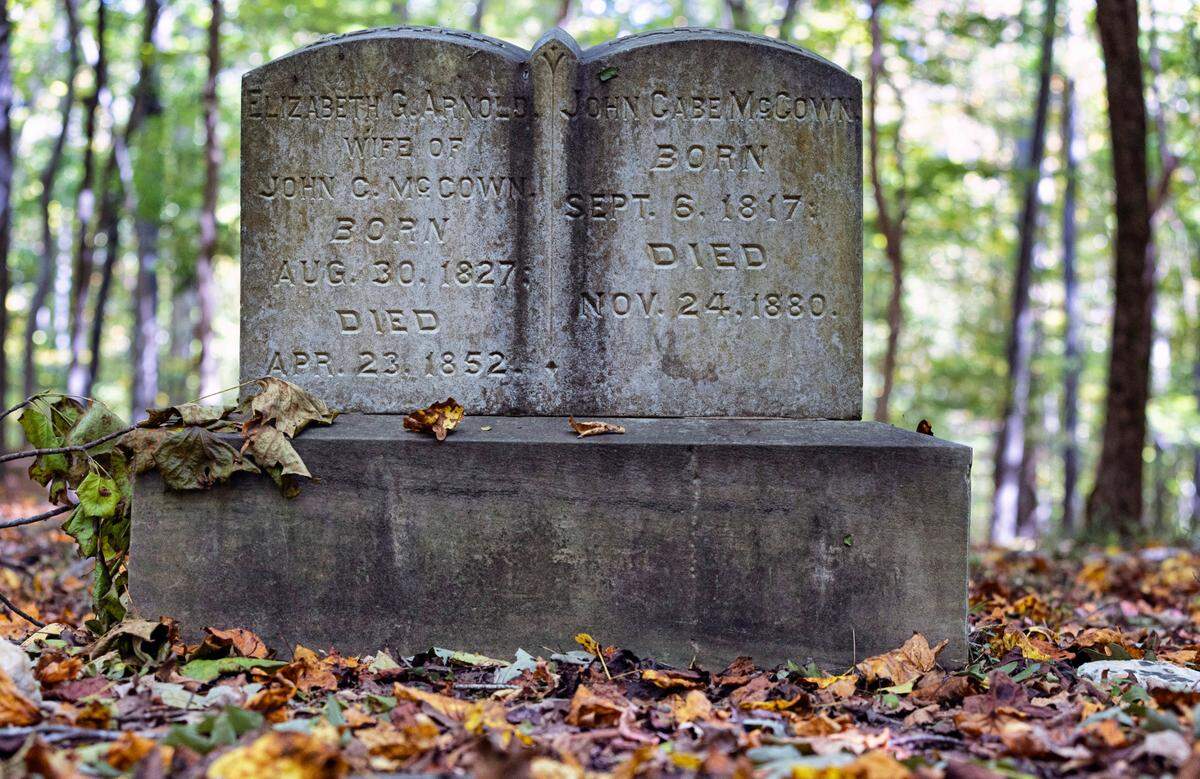
Deep in the Durham woods, a dozen mossy gravestones poke from the ground like mushrooms you shouldn’t eat — scattered in a long-forgotten place.
In the Cabelands Cemetery, the air hangs heavy with the damp smell of old leaves and slow decay. The oldest stones, crooked and cracked, show only faint inscriptions left by the people who made their living at mills along the Eno River, feeding logs into saw blades, grinding grain for bread.
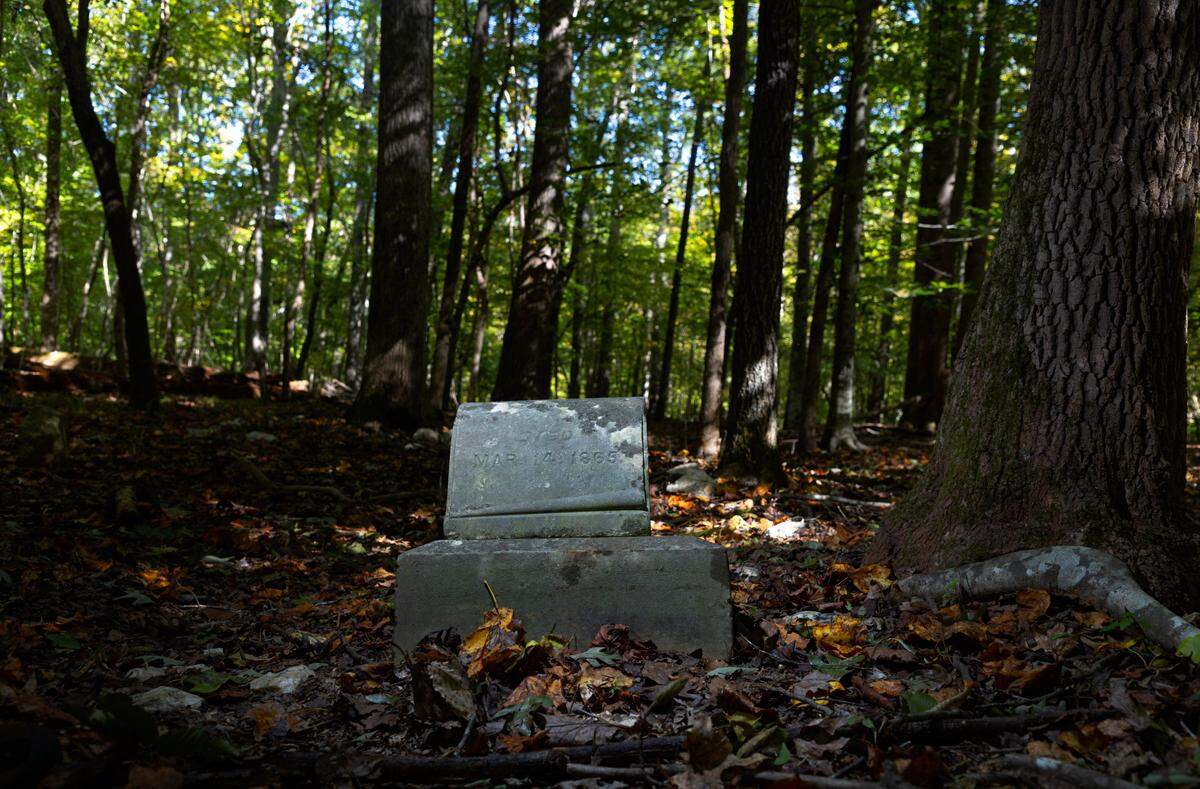
The half-sunk markers lie off the main trail that runs through Eno River State Park, but sometimes hikers will stray down the unmarked cemetery trail and swear they hear whispers on the graveyard wind. Some of the more dedicated ghost hunters have stood in the ruins of the old mill and heard the men who toiled building its head race, shaping arches out of granite boulders.
And as local legend tells it, one of those luckless men still walks those woods.
His name was D. Cole, and little is remembered about him beyond his final moments along the Eno. On that day, he paused to rest in his daily drudgery, setting his knee on the conveyor belt of the nearby Cole Mill sawmill.
That blunder sent him flying face-first into the blade, which shot him out the back end in three pieces.
For decades, locals spotted his headless spirit along the river bank, looking to piece himself together for the afterlife. At age 95, Harry Umstead could still recall the accident from his boyhood, when his father rode off on a horse to find a doctor.
“One night,” he told the N&O in 1989, “a tenant farmer came to my mother, whose name was Elissa, and he said, ‘Miss Lissie, I done seen the bugger again, walking down the (road) without a hat.”
He walks there still, scouting his scattered limbs, scoffing at the easy life of hikers.
Gov. Fowle’s deathbed
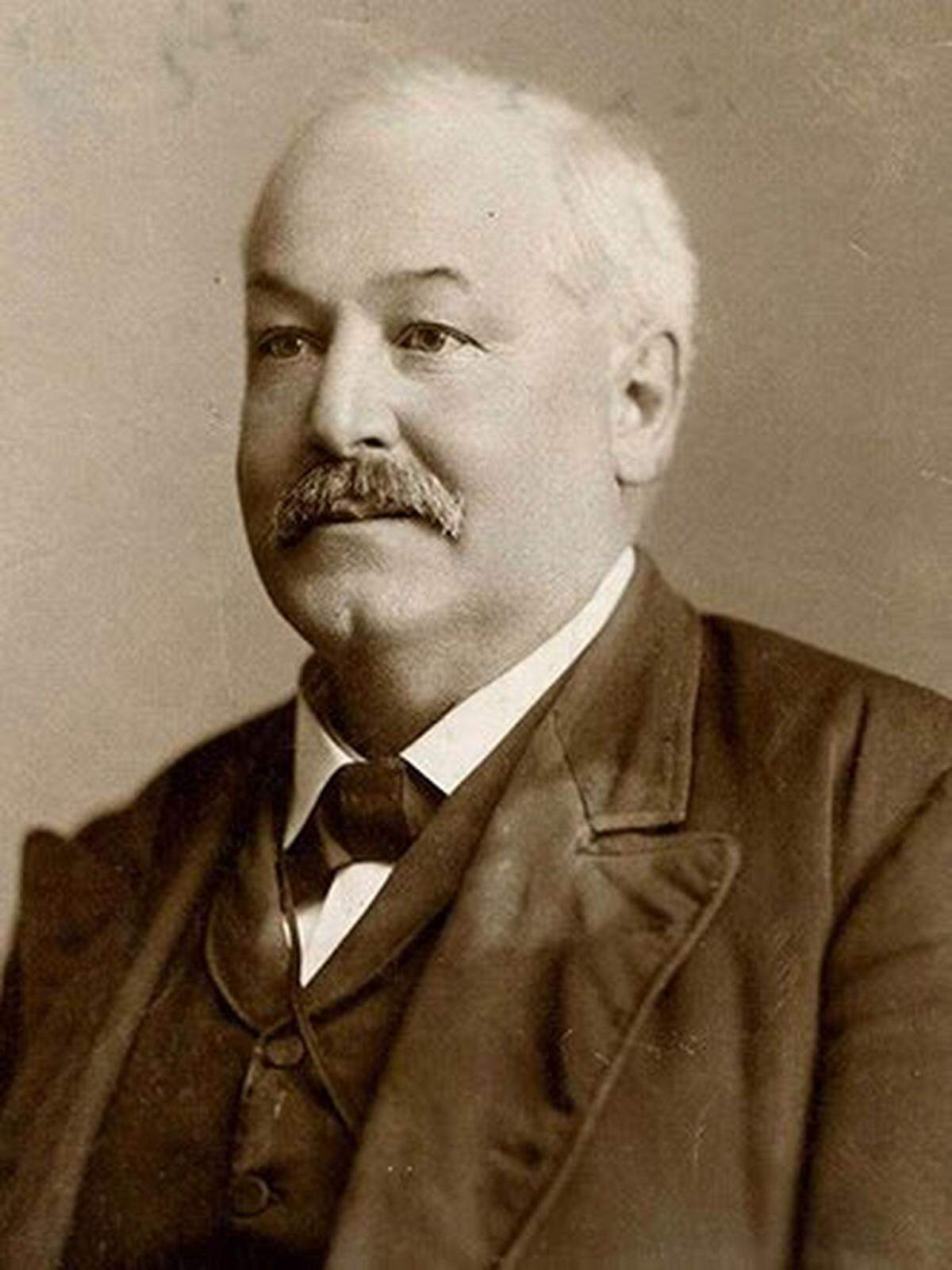
In April of 1891, Gov. Daniel G. Fowle complained of sudden indigestion, a fierce affliction that sent the mustachioed statesman to his custom-made bed.
A widower, he rested alone in the ornate wooden bed custom-made for his stocking feet. But as the night wore on, the governor’s stomachache turned deadly, and he pressed his electric alarm button with increasing urgency, summoning his family to his bedside.
“I feel faint,” he told them, and his head fell to the pillow.
News of the governor’s death spread quickly across Raleigh, reaching the Capital Club at 1 a.m., where it cast a gloom over the merriment of the Domino Ball. “The notes of the music were hushed,” the N&O reported, “and the revelers with awe-stricken faces stopped their gayeties.”
Fowle was, after all, the first governor to occupy the newly built Governor’s Mansion, and he had hardly fitted his bulk to the mattress where he expired.
And perhaps for that reason, Fowle never left.
Since his death at 60, his spirit has menaced at least two of the chief executives who followed — one of whom had dared to move the ghost governor’s old bed.
“One evening, Mrs. Scott and I were in the bedroom reading, and we heard this strange knocking,” former Gov. Bob Scott wrote the N&O in 1970. “It seemed to be coming from the wall near where the headboard of Gov. Fowle’s bed had stood. The knocking had a rather unusual cadence, like bouncing tennis balls from a high distance.”
As time wore on, the ghost provided a sort of comfort to the mansion’s occupants — an adviser from beyond.
“We have a ghost in the Governor’s Mansion,” Gov. Jim Hunt told a Durham radio station in 1993. “It’s the ghost of a previous governor who died in his bed. And I sleep in that bed.”
Years later, Gov. Pat McCrory called Fowle “a good ghost.”
“I said goodnight to him, every night,” McCrory told the N&O in 2017. “I never heard a reply, but I just assumed he was there. I wasn’t scared of him because he left a good legacy.”
Cat ghost with a man’s face
Nearly every house dating to colonial times houses some kind of ghost — usually a stiff old woman in a Victorian gown who floats around with a candle and maybe plays piano.
In Hillsborough, the 18th-century home known as Seven Hearths is no exception, its principal spook being a willowy young girl who died of consumption and appears in a window every once in a while.
If she were Seven Hearths’ only ghost, she wouldn’t even make this list’s runner-up.
But this Hillsborough spook hotel, painstakingly restored, flaunts a second and far more novel spirit.
Well into its long life, Seven Hearths was home to Dr. William Hayes, who kept his practice there around the 1920s. He not only believed human beings could be patched up and mended while on Earth, but also, as a spiritualist, that he could contact their souls in the afterlife.
As a bonus, this kooky doctor was convinced people returned from death reincarnated as animals. History is silent on whether Dr. Hayes imagined a full afterlife menagerie with his patients reborn as kangaroos and fruit bats or whether eternity reassigned them as simple house pets.
Regardless, according to NC Ghosts, “Hayes seems to have gotten halfway there, as his spirit has been seen roaming the halls of Seven Hearths in the form of a large tabby cat with the head of a man.”
The restoring owners report no sign of Hayes, or whether his four-legged spirit sports a mustache or a hat. But legend holds that his patients with unpaid bills have all returned as mice.
Wreck of the Caroll A. Deering
In 1921, a Coast Guard watchman spied a vessel caught in the shoals off Cape Hatteras with its sails set — hard aground in the coastal snares known as the “Graveyard of the Atlantic.”
Bad weather kept anyone from boarding, so the ship, the Caroll A. Deering, bobbed on the waves for another four days without a crewman in sight.
Finally, when rescuers stepped on its deck, they found its wheel and rudder damaged, the logbook missing and the lifeboats gone. In the galley, their food prepared for dinner.
Unable to pull it free, the Coast Guard blew the Deering to the ocean bottom with dynamite.
A furious investigation drew no solid conclusion.
The last time anyone heard from the Deering, it had passed Cape Lookout at the southern end of the Outer Banks. There, an officer at the lighthouse reported speaking to a strange man on deck, who shouted through a megaphone and reported the anchor lost in a storm. Nobody else on deck seemed to be doing any work.
Mutiny got tossed about as a theory because the original captain took sick on the Deering’s voyage to Rio de Janeiro, and there were multiple reports of grumblings from both the replacement captain and his crew on the way back.
Perhaps Communists had captured it. Or pirates. Or rum runners. Maybe the men on board had simply tried to row their way out of a storm, though in sight of land, and gotten swept out to sea.
But the most tempting explanation involves the Bermuda Triangle, to which the disappearance is often tied.
It is said that on winter nights, desperate voices carry from just offshore, in perpetual panic as they try and row home.