What smells? Bradford Pear trees are blooming early in NC — and stinking up the place
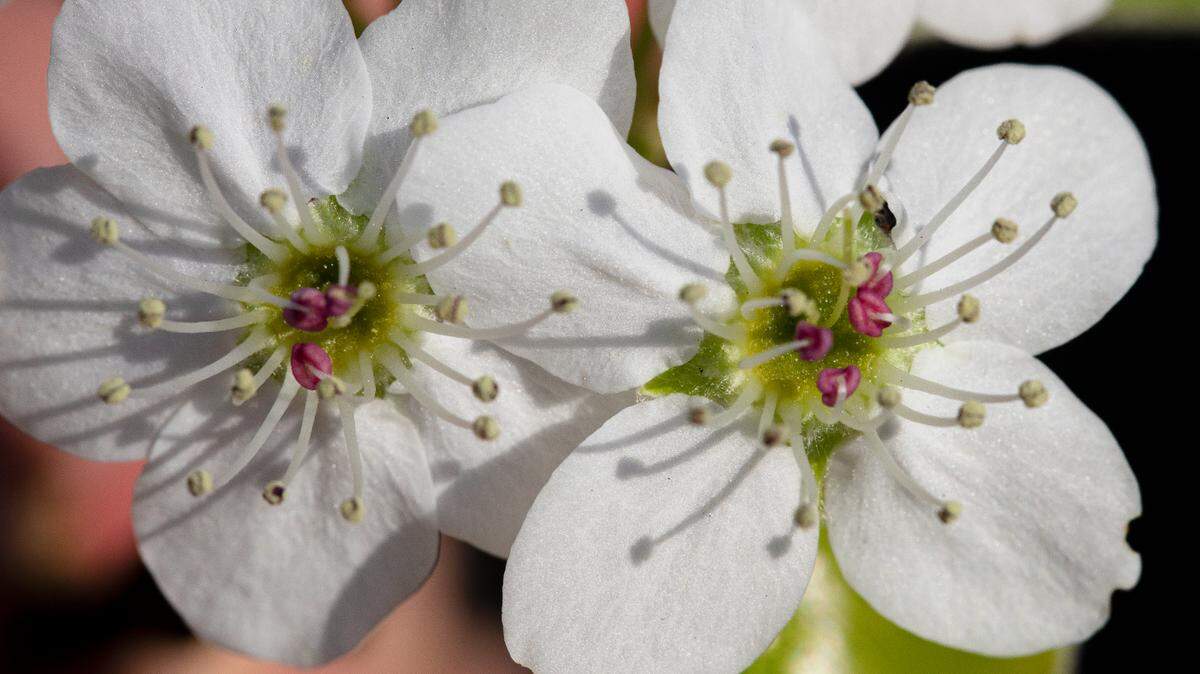
There’s no better way to say it — Bradford Pear trees stink.
But their smelliness isn’t the only reason to hate them. Kelly Oten, an NC State Extension forest health specialist, talked to us about their weak branches and invasive qualities that make the tree an all-around bad idea.
“The Bradford Pear is a detriment to wildlife and our area’s native plants,” Oten said.
“It’s so bad, we had to put a bounty on it. We’ve had a program in place since last year encouraging people to dig up these trees and get a free tree in return.”
Some states (most recently Ohio) have banned the sale and planting of Callery Pear cultivars, including the Bradford Pear.
Here’s what to know about Bradford Pear trees in North Carolina:
What makes Bradford Pear trees stink?
The tree emits two specific (stinky) chemicals that draw flies in so the tree can get pollinated. Flies are the Bradford Pear’s main pollinator, and flies are attracted to smelly things, Oten said.
What does a Bradford Pear tree smell like?
Rotten fish.
“The kindest and most accurate description I’ve heard is a fishy smell,” Oten said. “There are other, more colorful descriptions out there. But I say fishy.”
Why are Bradford Pear trees bad?
Sure, they stink, but that’s the most minor reason to hate the Bradford Pear, Oten said.
In fact, the Bradford Pear is a cultivar (or variety) of the Callery Pear. There are other kinds of trees that fall within the Callery Pear category that share these bad qualities, such as the Cleveland Select or Aristocrat.
“People are most familiar with the name Bradford Pear, but it’s not just that tree we want to see removed,” Oten said.
Callery Pears have symmetrically oval shapes, bloom early and can take to almost any kind of soil, which has previously made people opt to plant them in neat rows to line driveways and surround parking lots, Oten said. But these ornamental properties are exactly why they’re such bad news.
Here’s why forestry experts want Callery Pears, including Bradford Pears, gone:
▪ They’re invasive: Wildlife will eat the fruit the trees produce, defecating and spreading their seeds in areas like empty lots and pastures. Callery Pears can grow in almost any soil type, so dispersed seeds will start sprouting trees just about anywhere.
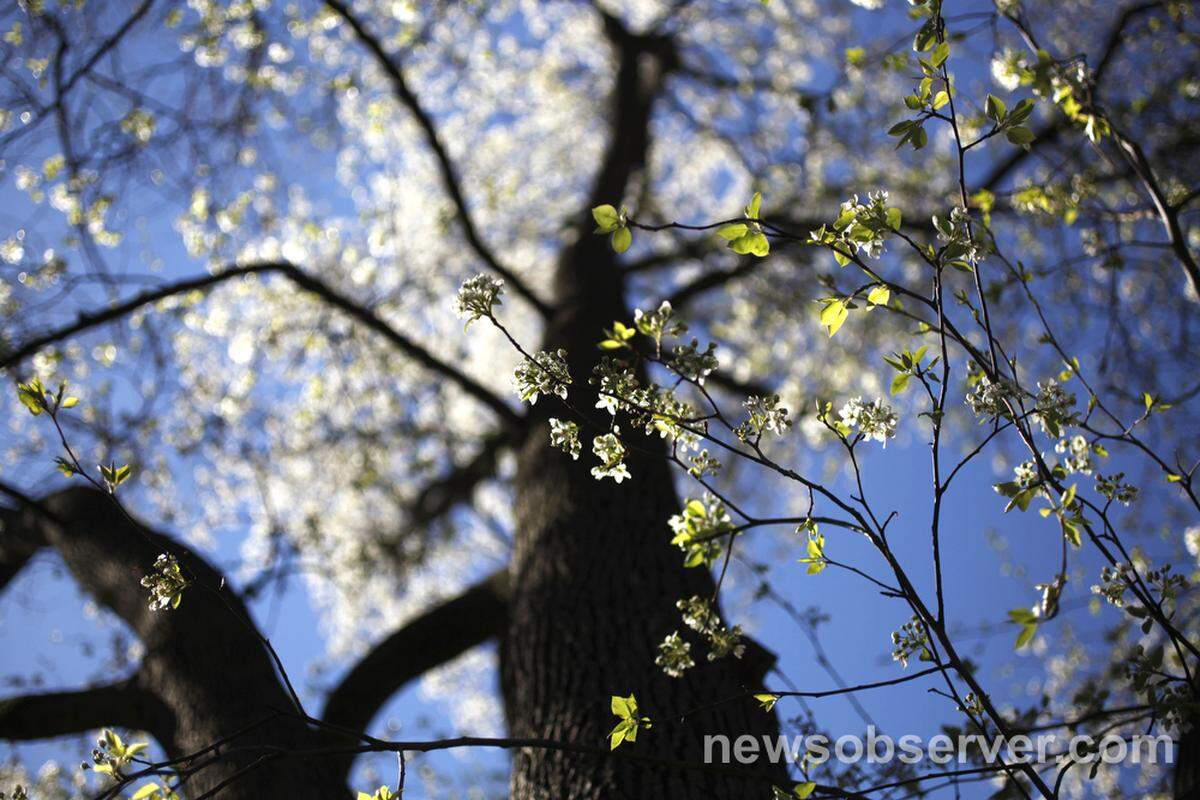
▪ They bloom early: Callery Pears, including Bradford Pears, often show North Carolinians spring is just beginning. When you see the white and pink blooms and smell the trees’ signature stench, you know the other flowering trees will soon blossom.
But the early bloomers shade native plants, taking away resources from the plants our wildlife and ecosystem rely on.
▪ They collapse our food web: Caterpillars feed on Callery Pears more than native trees, and fewer caterpillars means less food for many birds and other wildlife.
“They create a food web resource issue and put nature out of balance,” she said.
▪ They’re brittle: Its branches are angled sharply upward, giving its canopy a “pretty oval shape that many landscape designers really like,” Oten said.
But sharply angled branches cause weak branch unions.
“When a windstorm comes along, trunks may split and branches might fall right off. This can even happen on sunny, windless days,” she said.
“They injure people, they damage your property, but at the very least, they make a big mess to clean up.”
▪ They’re pointy: Callery Pear varieties can have two- to three-inch thorns jutting out of their branches.
“When they grow in pastures or in forests, animals can’t get through their normal routes because these dangerous trees are standing in their way,” Oten said.
“Then people will take out their tractors to rip them out, but the thorns will puncture their tractor tires. It’s a mess.”
What do Bradford Pear trees look like?
Here are the characteristics of Bradford Pear trees, according to the NC Bradford Pear Bounty program:
- Bark is gray-colored (even slightly orange) and irregular with vertical fissures.
- Leaves are shaped somewhat orbically with small “teeth” around the edges. They’re arranged alternately along the tree’s twigs.
- Flowers can be white or pink, and they give off a foul smell.
- Fruit is small, round and brown in color.
To see photos, visit treebountync.com.
How to get a free tree in North Carolina
There’s a bounty on Callery Pear trees and their cultivars — including Bradford Pear, Aristocrat and Cleveland Select trees. Forestry experts want you to remove these trees from your yard and show them proof.
Your reward: A free tree per removed Callery Pear, giving participants up to five free trees.
“Just take a before and after photo. When people come to our bounty events, they have their cell phones out to show photos of the tree in their yard, then the tree removed from their yard,” Oten said.
There are two bounty events in the spring and two in the fall in North Carolina:
- Wake Forest: March 18
- Newton: April 22
- Wilmington: To be determined
- Sanford: Oct. 28
For details, visit treebountync.com.
This story was originally published February 23, 2023 at 3:22 PM.