Are snakes always in groups? Are baby copperheads more dangerous? Answers to questions
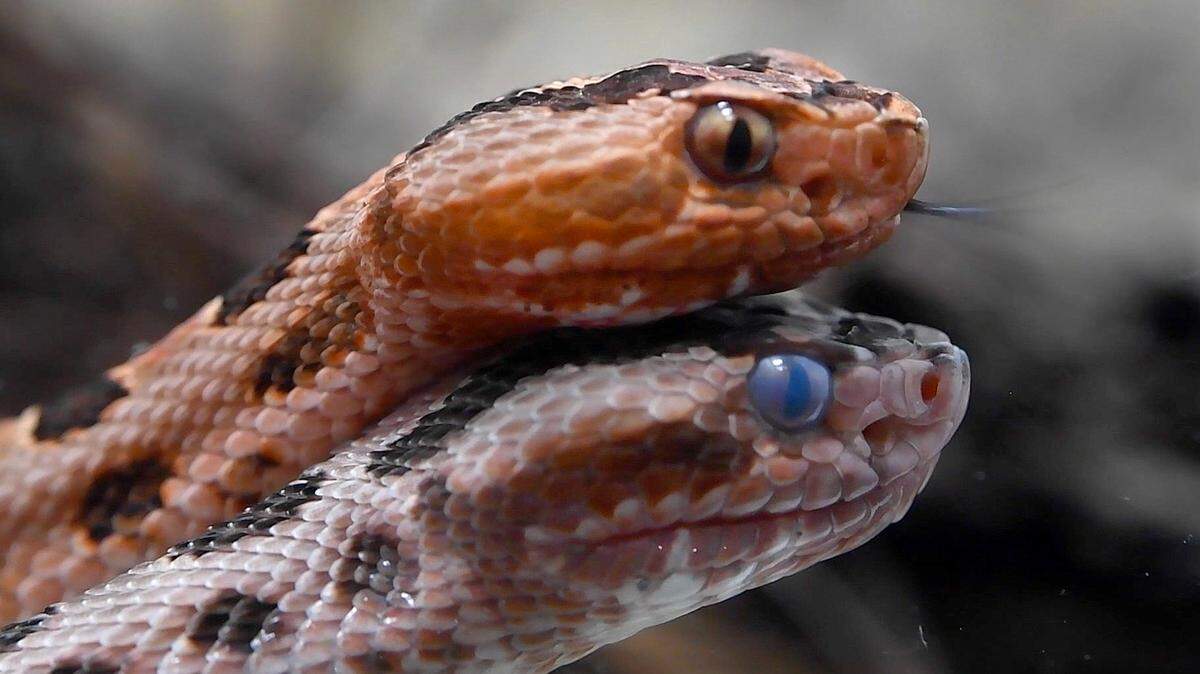
It’s snake season in North Carolina, so it’s a good time to bust (or confirm) some popular myths about venomous snakes.
We put together a list of commonly believed facts about snakes — particularly, venomous snakes — and reached out to an expert to find out what’s true and what’s not.
Our expert is Jeffrey Beane, Herpetology Collections Manager at the North Carolina Museum of Natural Sciences in Raleigh. We also used information from the NC Wildlife Commission website.
Snake myth #1: Do venomous snakes have triangular-shaped heads?
Verdict: True — but so do some other snakes.
A commonly shared bit of advice is that most venomous snakes have a triangular or diamond-shaped head, while nonvenomous snakes have a tapered head.
It’s true that venomous snakes have a more triangular shaped head, but it’s not a reliable way to determine if a snake is venomous or not, says NC Wildlife, because some nonvenomous snakes (such as a rat snake) can mimic the triangular shape of venomous snakes. They do this by flattening their heads when threatened (to avoid becoming the prey of another animal.) So you can’t go by head shape alone.
Snake myth #2: Are snakes that rattle rattlesnakes?
The verdict: Nope.
Just as with snakes who can change their head shape, some non-venomous species rattle their tails to trick predators into thinking they are venomous, says NC Wildlife.
Snake myth #3: Do venomous snakes have oblong pupils?
Verdict: Not necessarily true.
Another tricky but often shared tip is to check out the pupil shape. Venomous snakes have been said to have oblong pupils that look like a slit in the center of the eye, whereas nonvenomous snakes will have a round pupil.
In fact, according to a fact sheet on the NC Wildlife website, a snake’s pupils can dilate just like human’s, and can look round. The best way to know whether a snake is venomous is to know the venomous snakes common in your area and what they look like.
Snake myth #4: If you see one snake, are others nearby?
Verdict: Sometimes true.
Snakes do not “travel” in pairs or in groups, Beane told us, but there could be situations in which snakes are in groups.
“Most of the time, snakes are solitary, but there are certainly times when they may be encountered in pairs or larger groups,” Beane said. “Obviously, this would include during mating, which requires at least one male and one female, so it is not uncommon to see a pair together during mating season.” (Mating season is generally speaking any time during warm weather months.)
Beane said that some snakes, including many pit vipers, practice something called “mate guarding,” which means the male snake may remain with the female for days after mating to “guard his genetic investment” from other males.
Other reasons snakes may be in groups include communal hibernating or gathering at popular spots for feeding, basking or giving birth, Beane said.
“Also, since snakes don’t appear by magic or spontaneous generation, but exist in populations like all other animals, if you see one there are obviously going to be others of that species somewhere in the general vicinity,” Beane said.
Snake myth #5: Will snakes chase after you?
Verdict: Nope.
There’s an old myth that certain snakes will chase you. Beane says that’s just not true.
“Snakes do not chase people,” Beane said. “Some species may stand their ground when confronted, or crawl rapidly toward a person who happens to be between the snake and where it wants to go.
“If snakes wanted to chase humans, then every time a human walked outside, they would be chased by snakes.”
Snake myth #6: Are snakes more aggressive in the spring?
Verdict: Not true.
Snakes are not aggressive, Beane said, but they may be defensive.
“Self-defense and aggression are very different things,” Beane said. “If snakes were aggressive toward humans, then humans would be attacked by snakes every time they walked outside.”
Snakes have different ways of defending themselves, said Beane:
- camouflage.
- fleeing.
- secrecy.
- releasing unpleasant smelling/tasting musk.
- feigning death.
- pretending to look dangerous or unpalatable.
- biting.
“A snake that defends itself by biting is no more ‘aggressive’ than one that defends itself by playing dead or fleeing,” Beane said. “It’s merely a different method of self-defense — a different strategy to facilitate being left alone.”
Beane said the season has little or nothing to do with whether a snake will be more likely to defend itself by biting, other than the fact that a warm snake is more likely to bite (or do anything else) than a cold snake.
Snake myth #7: Is a baby copperhead bite more potent?
Verdict: It’s complicated.
You’ll often hear that a bite from a baby copperhead is more dangerous than the bite from an adult, because the baby can’t control the amount of venom it uses.
We asked Beane about this for a previous story about copperhead snakes and his answer was: “It’s a little bit complicated.”
Beane confirmed that young copperheads may be less likely to control or withhold the amount of venom they inject, but that they also don’t have as much venom as a mature snake. Here are some points to consider, says Beane:
▪ Defensive bites vs. prey-seeking bites. A copperhead will bite for two reasons: to kill and eat prey or to defend itself. Beane explained that when striking prey to kill it and eat it, a baby copperhead will inject as much venom as necessary to achieve that goal. When a copperhead bites a human, that’s a defensive bite, and the snake isn’t likely to use as much venom in those cases (or sometimes, no venom at all). “It is not advantageous for snakes to waste venom — it’s metabolically expensive to make, so they don’t want to bite anything other than prey items,” Beane said.
▪ More concentrated venom? Beane told us that a newborn’s venom “may or may not be slightly more concentrated than adult’s,” but that because a larger copperhead has a lot more venom to inject, the larger snake would probably more than make up for any differences in chemical composition. Plus, Beane said, a larger or more mature copperhead has longer fangs, which can penetrate a sock or thick skin, so it has more “delivery capacity” than a juvenile snake. A mature copperhead can also “strike a greater distance and with more force and accuracy,” said Beane.
▪ Baby copperhead bites just aren’t as common. Most bites from copperheads on humans seem to be from adults, Beane said. “I don’t hear much about people being bitten by newborns,” Beane said. “Personally, if I had to choose being bitten by a newborn copperhead or an adult, I would choose a newborn because of the potentially much smaller quantity of venom.”
More questions about snakes?
Have more questions about snakes you’d like for us to answer? Let us know at ask@newsobserver.com
This story was originally published April 25, 2023 at 2:54 PM with the headline "Are snakes always in groups? Are baby copperheads more dangerous? Answers to questions."