
Poking around in rhinoceros poop may turn up ways to help rhinos reproduce
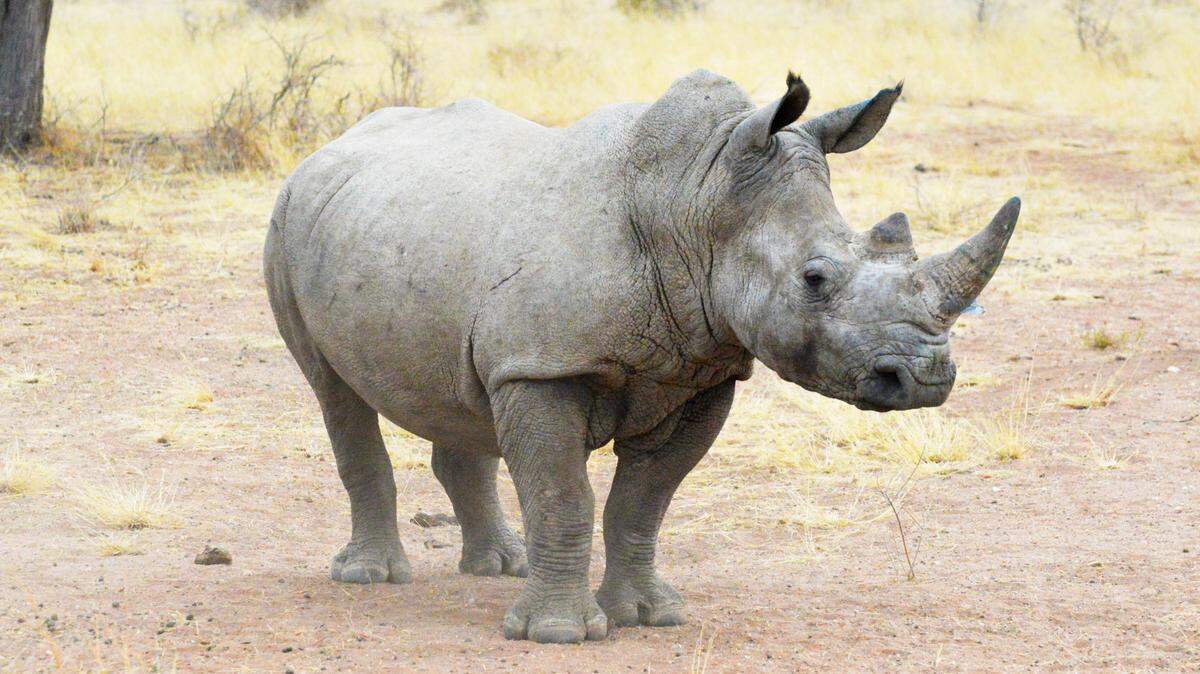
In 2020, graduate student Christina Burnham was seeking a master’s thesis project focused on southern white rhinos. Her original plan had been to study the blood biochemistry of wild southern white rhinos, but due to the pandemic, she couldn’t fly thousands of miles to study them in the field.
However, just a few miles away, at the North Carolina Zoo, lived a group of captive southern white rhinos, and at the time, little was known about their gut health, so Burnham pivoted.
When wild populations are threatened by poaching, habitat loss or human conflict, captive populations serve as species safeguards, so by focusing on captive southern white rhino populations instead of wild ones, Burnham could still contribute to species conservation efforts.
Her passion for conservation began when she was a kid, but the passion to protect rhinos wasn’t kindled until she was an undergraduate student at N.C. State University. One summer, she joined a study abroad program called the Namibia Wildlife Aerial Observatory Project and traveled to Africa to do anti-poaching work using drones.
“I loved it. The work we did actually helped save some rhinos on the property,” Burnham said in an interview. “I knew that I really wanted to do field work again in the future.”
When COVID-19 derailed her initial fieldwork plans, Burnham turned to North Carolina Zoo veterinarian Jb Minter, who helped her plan a new project that would focus on the microbiomes of the rhinos at the zoo.
Because there are fewer rhinos at the zoo than in the wild, Burnham had to compensate for the limited sample size. So she asked zoo staff to collect poop samples from eight female southern white rhinos once a month — from July to September 2020 and from January to March 2021 — and studied how their microbiomes differed over time.
The pea-sized poop samples were then sent to the lab, where Burnham extracted the microbial DNA and found that the microbiomes of the eight rhinos differed depending on their age, the season and their reproductive status.
“It’s telling a story about the stability of a rhino microbiome over time,” said Erin McKenney, assistant professor and director of undergraduate programs in the Department of Applied Ecology at NCSU, and co-author of the study, in an interview.
The samples were collected from two rhinos that were less than 2 years old, two that were between 3 and 7 years old, two adult rhinos that had given birth at the zoo, and two that had been unable to.
When Burnham compared the adult samples to each other over time, she found consistent differences between them. The samples from the two rhinos that had given birth had an elevated level of a group of bacteria called Rikenellaceae, which helps break down compounds that lower the animals’ ability to reproduce. The samples from the rhinos unable to give birth contained an elevated level of a different group of bacteria, called Mobiluncus, which has been associated with poor reproductive outcomes in other species, including cows, primates and even humans.
“There may be a connection there. But we need to do further research,” Burnham said in an interview.
Burnham is now collecting samples from wild rhinos to compare their microbiomes to those at the North Carolina Zoo. With more samples, she hopes she can more confidently draw inferences and conclusions about rhinos’ gut microbiome health and someday make recommendations about potential treatments or probiotics to boost the reproductive success of captive populations.
“I think microbes could provide a solution for understanding these animals better,” McKenney said.