
Air quality update: What to know in the NC Triangle for Friday
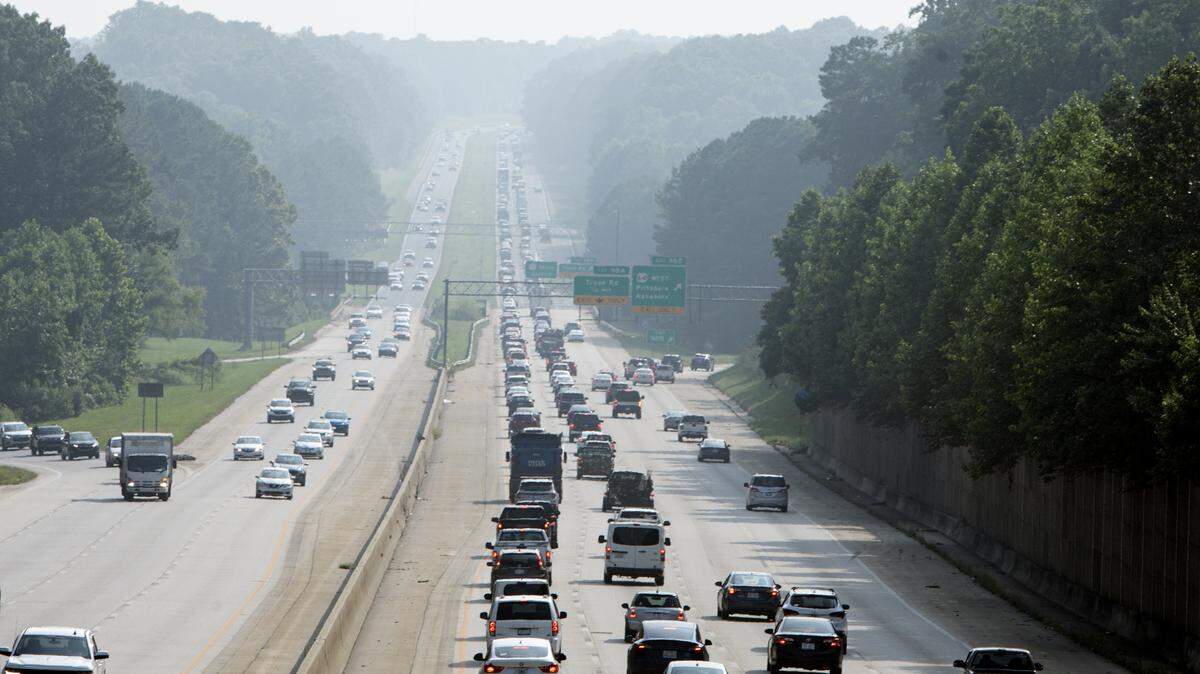
A Code Orange air quality alert remains in effect for most of the Triangle and much of central North Carolina until midnight Friday, according to the state Division of Air Quality’s (DAQ) most recent forecast.
The DAQ forecasts Code Yellow ranges for Saturday and Sunday, which are also expected to be hot and humid with rain and thunderstorms that could cleanse the air and dissipate the smoke.
The Triangle began the day Thursday under Code Yellow, but that warning was updated to Orange shortly before 10 a.m.
Code Orange on the Air Quality Index represents unhealthy air quality for sensitive groups. Older adults, children of any age, and people with respiratory conditions such as asthma should limit prolonged or heavy exertion outdoors.
The air quality alerts are due to wildfire smoke traveling south from Canada.
Code Yellow is considered “moderate” air quality, which is deemed acceptable by the Environmental Protection Agency, however, there may be some health concerns for a small number of unusually sensitive individuals.
Code Orange on the Air Quality Index represents unhealthy air quality for sensitive groups. Older adults, children of any age, and people with respiratory conditions such as asthma should limit prolonged or heavy exertion outdoors.
The smoke carries particulate matter, which can cause lung damage and aggravate certain lung conditions.
Joseph Roise, an N.C. State professor and wild fire expert, recommends people use fitted N95 masks to filter out the particulate matter.
What makes smoke harmful?
Smoke is caused by combustion, the process of converting biomass in the presence of oxygen into heat, Roise explained. That’s also known as burning.
As the biomass burns it generates materials like carbon monoxide, carbon dioxide, methane and other unhealthy chemicals and byproducts, including particulate matter.
Particulate matter consists of microscopic pieces of biomass that we breathe in. Particles that are 2.5 micrometers in size — commonly referred to as PM 2.5 — are the most damaging to people’s lungs.
What’s moving the smoke?
Roise explained that a low-pressure system is a natural air system that forces air higher into the sky. As the hot air from the wildfire rises, it pushes the smoke up into a “plume,” which stays together for several miles.
The smoke might be very concentrated when it’s blown up into the air, but it disperses as it gets blown by the winds.
Since there are so many fires burning in Canada right now, the plumes overlap with one another and create a higher concentration of particulate matter in the air.
Where does it end up?
Since particulate matter is generally heavier than air, it eventually falls to the ground.
“Rainstorms will clean up a lot of the particulate matter out of the atmosphere. That’s why it’s always so nice after a rainstorm to go outside,” said Roise. “And most of it goes to the ocean.”
This is a developing story and will be updated.
This story was originally published June 28, 2023 at 3:41 PM.