Eye scans could offer early warning signs of Alzheimer’s disease, Duke researchers find
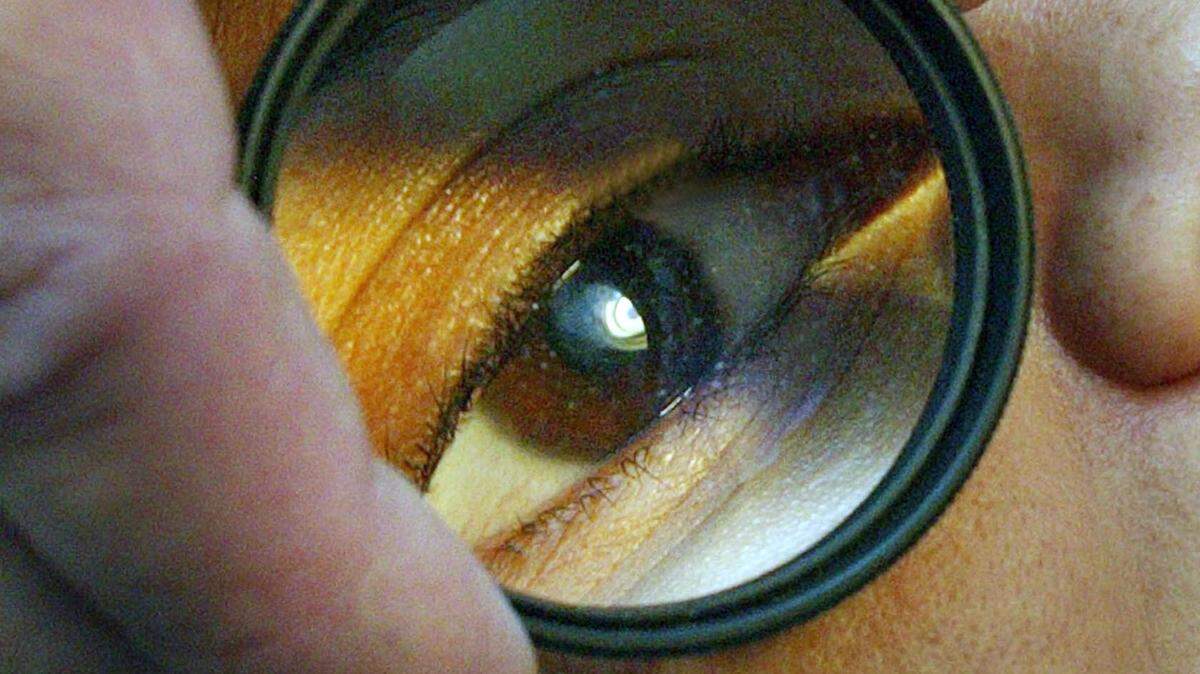
Researchers have known for several years that this part of the eyeball can be used to detect bigger neurological problems in the brain.
The retina, a layer of nerves at the back of the eyeball, is directly connected to the brain in order to send it information about what you’re seeing.
When scientists cut into the eyeballs of someone who died from Alzheimer’s disease, they found remnants of the same protein clumps that amassed in their neurons.
Duke scientists wondered whether the eye could give doctors an early warning sign of cognitive decline, before the disease has progressed into full-blown Alzheimer’s disease.
A paper published last month suggests it is possible with help from a computer. When fed photos of retinal scans and some other information, the researchers’ algorithm was able to accurately identify which scans belonged to someone with the precursors of Alzheimer’s disease.
The paper’s authors believe this algorithm could make early detection of the disease easy and accessible if it is eventually approved by regulatory bodies.
The research group had already shown in a 2020 study that a similar algorithm could be used to diagnose Alzheimer’s disease from retinal scans.
But the new algorithm, which picks up on the much subtler precursors to the disease, could have a much more significant clinical impact, said Dr. Clayton Wisely, a Duke ophthalmologist and author on the paper.
If you catch the neurodegeneration before it progresses, there’s still time to enroll patients in clinical trials and start therapies to prevent the disease, he said.
Furthermore, a retinal scan offers an alternative to the series of memory questions that are widely used in primary care offices now to assess dementia.
Some studies have suggested that the memory questions misclassify patients depending on their age, education and ethnicity (though medical algorithms can have their own biases).
MRIs can also be used to detect mild cognitive impairment. But Wisely said these scans are expensive and time-consuming.
The device used to take retinal scans — which is also used to diagnose other eye diseases like glaucoma — is available in most optometrists’ offices.
“Our test is easier and less expensive to do,” Wisely said.
Researchers don’t know exactly how the algorithm is able to tell which eye scans show signs of cognitive decline, said Alex Richardson, an undergraduate researcher.
It’s notoriously difficult to figure out the “decision-making” process used by deep learning algorithms, the type of machine learning the researchers used in this study.
“It’s kind of a black box,” Richardson said.
Even so, the researchers showed the algorithm is remarkably accurate in their paper. Their best model correctly identified retinal scans of people with mild cognitive impairment about 79% of the time.
They hope the algorithm will become even accurate if other research institutions allow the algorithm to train on their collection of retinal scans.
Teddy Rosenbluth covers science and health care for The News & Observer in a position funded by Duke Health and the Burroughs Wellcome Fund. The N&O maintains full editorial control of the work.
This story was originally published July 12, 2023 at 3:06 PM.