Durham artist wraps Chapel Hill bus in colorful celebration of Asian-American culture
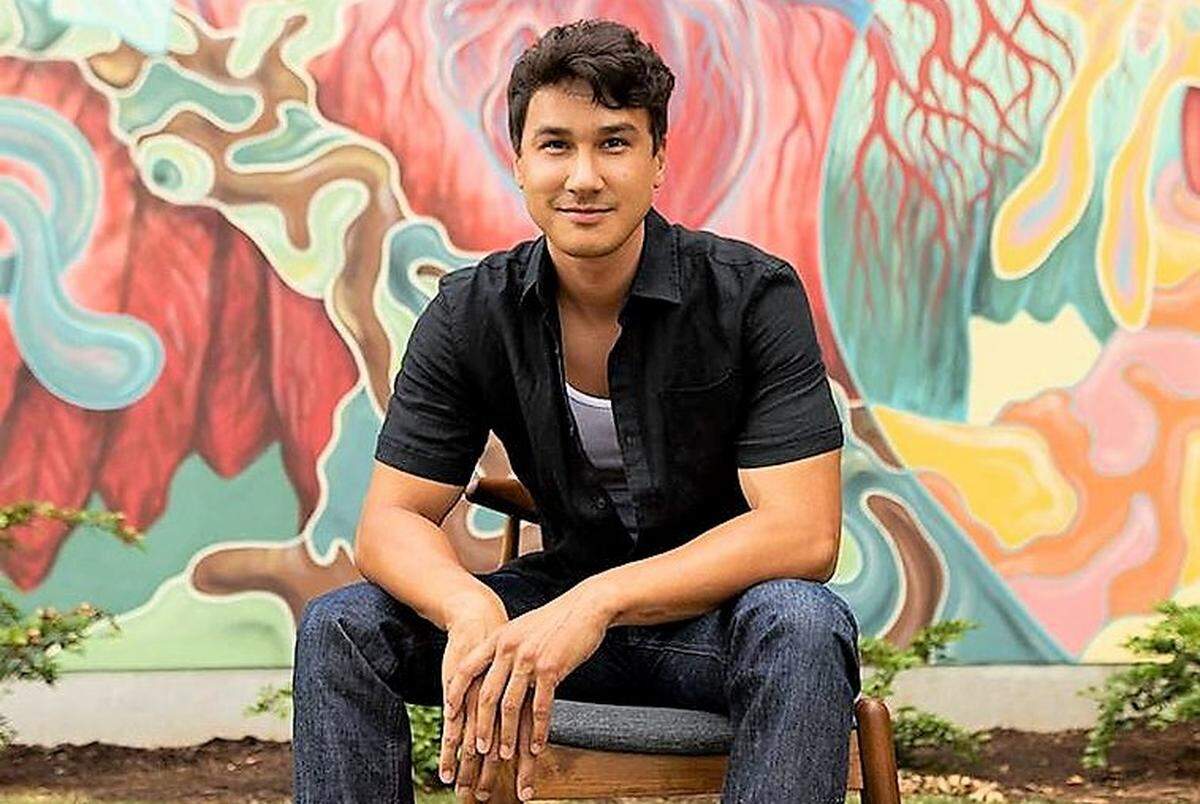
Like many immigrants, his ancestors endured hard work and sacrifice after leaving their home in China to build a better life for their family in America, Durham artist Gabriel Eng-Goetz said.
His maternal great-grandparents — from Hong Kong and Taishan, in southern China — emigrated to America in the 1800s, and started a farm in Jacksonville, Florida. They grew Chinese vegetables that they sold in the markets in Chinatown in New York, he said.
That was before the Chinese Exclusion Act of 1882 banned Chinese workers from the United States and limited what those who were already here could do. The ban, extended in 1892, later led to quotas that capped Chinese immigrants to 105 each year until 1968.
The road to his family’s farm in Florida was known informally as “Chinaman’s Road,” because there were no other Chinese people in the area, Eng-Goetz said. His mother was born there, but the family sold the farm years ago, he said.
His maternal grandfather arrived in the United States as a child and met his wife in China while serving with the U.S. Navy during World War II. They started a life together in Jacksonville after the war, and then moved to the Washington, D.C., area.
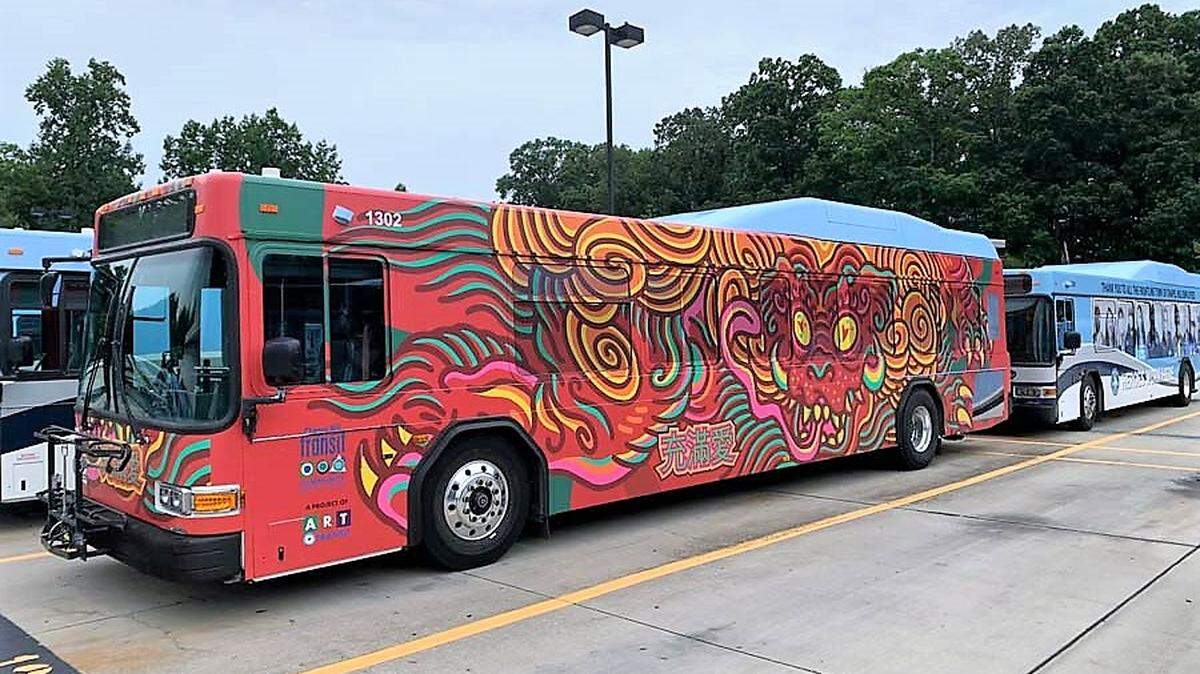
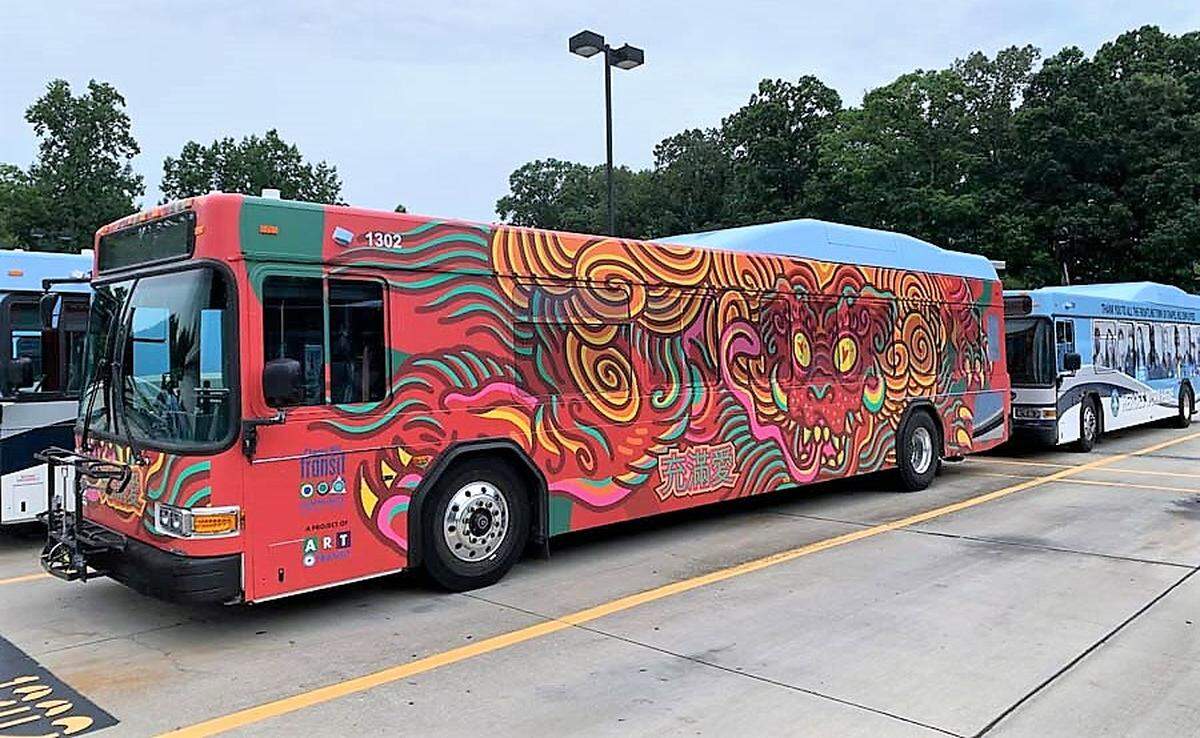
His latest work, wrapped around a Chapel Hill Transit bus, honors the communities and legacy that they and other Asian-American families have built, said Eng-Goetz, 37.
“There are countless stories of change and sacrifice that all our ancestors made to set us up for the opportunities we have today,” he said.
A growing, diverse community
Asian-Americans comprised roughly 4% of the state’s population in 2020, according to the U.S. Census, with most living in urban areas from Hickory to Charlotte, Greensboro and the Triangle.
Indian-Americans were the largest group — at roughly a third of the Asian population — followed by Chinese and Vietnamese residents at roughly 16% and 11%, respectively.
A November 2022 study from the Asian-American Center and Carolina Demography at UNC-Chapel Hill showed that the state’s Asian population growth actually outpaced the rest of the nation between 2010 and 2020.
North Carolina’s Asian-American population grew 64% during that time, compared with 35% nationwide, the study said.
In Chapel Hill, people of Asian descent made up over 14% of the town’s population in 2021, including roughly 1 in 6 town residents born outside the United States. Over half of those individuals identified specifically as Chinese, the Census showed.
Art, culture and community
Eng-Goetz’s art bus design “fuses ancient symbols with modern aesthetics,” he said.
A Chinese dog leaping from the driver’s side of the red bus symbolizes loyalty, honesty and friendship, he said, while on the other side, the eagle represents strength, freedom and vision.
On the front and back of the bus, in English and Cantonese characters, is written: “From Asia to Chapel Hill with Love.”
His mom, who speaks fluent Catonese, encouraged him to apply for the town’s program, Eng-Goetz said. He has one other mural in town outside Hawker’s restaurant at University Place mall, and others around the country and in Nicaragua.
“I just wanted to recognize the contributions of Asian communities in the area,” he said about the art bus.
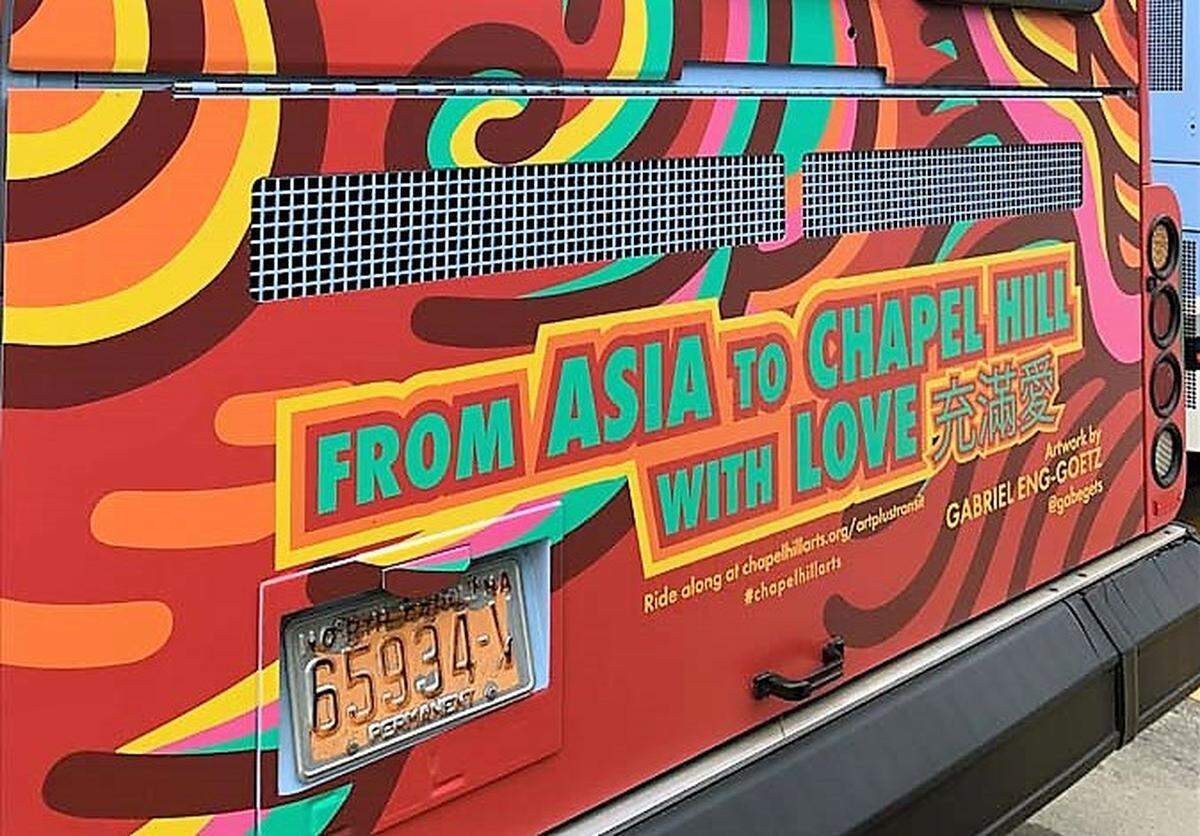
The town put its first art bus on the road since 2013: Mobile Mural by Mary Carter Taub. The murals are created using a computer, then printed out on vinyl sheets and applied to the bus.
Bus art is now just one part of Chapel Hill’s Art + Transit beautification program, launched by Chapel Hill Transit and the town’s Community Arts & Culture department in 2018. Other art buses have recognized LGBTQ+ Pride, Latinx Pride, and the struggle against racial injustice.
What started as a “fun idea shared between two town departments” has put art on bus ceilings and bus shelters all over town, Chapel Hill Transit Director Brian Litchfield said in a news release.
“The program has grown beyond our expectations,” he said.
This story was originally published July 16, 2023 at 9:19 AM.