NC civil rights activist shares the ‘twisted roots’ of her family’s role in slavery
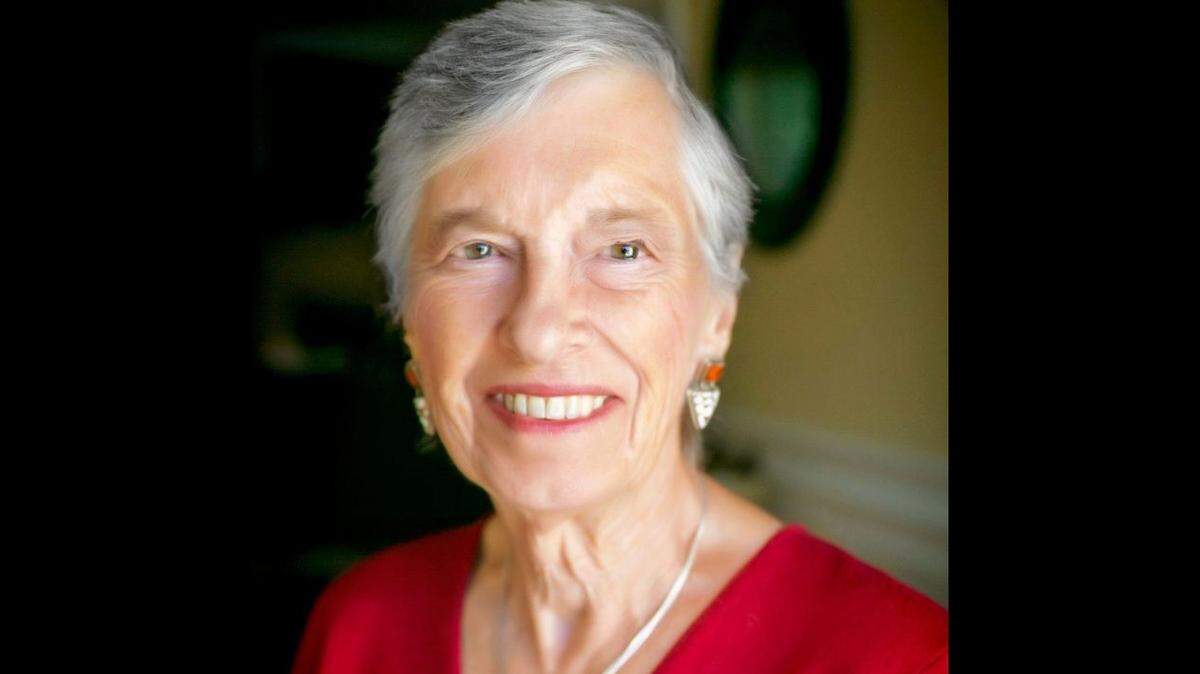
Since she could read, Marcia Herman-Giddens has wanted to know her family’s history.
It’s an interest that’s only grown as she’s gotten older, and one she wanted to share with her children and grandchildren. So, she started a personal genealogy project to document her family’s history and her experiences growing up during the Civil Rights Movement.
As part of her research, the 81-year-old Herman-Giddens, who lives in Pittsboro, would occasionally Google her ancestors’ names.
One night, Christmas 2017, she decided to look up the name of her third great-granduncle: Robert McAlpin Jr.
Included in the results was a Washington Post article from 2002. It wasn’t even about her ancestor, and only had one line referring to him.
“... down the river lay the plantation of Robert McAlpin, alleged to be the prototype for the villainous Simon Legree in ‘Uncle Tom’s Cabin,’” the article stated.
She had known from an early age that she had enslavers in her family, but that didn’t suppress the gut-wrenching feeling she felt after reading that one line.
“It gave me cold chills,” Herman-Giddens said. “He is my third great-granduncle. I just sat there stunned, thinking could this be true?”
“That really got me going,” she said. “[I thought] I’ve got to start writing about my whole story. The enslavement part. The civil rights part. The genealogy part. It all weaves together.”
This realization was the first of many that led Herman-Giddens to publish a book: “Unloose My Heart: A Personal Reckoning with the Twisted Roots of My Southern Family Tree.” It tells the story of her family’s history as slave owners, her difficult relationship with a mother who was proud of that history, and how Herman-Giddens navigated through it all.
Herman-Giddens’ story also includes her involvement in the Civil Rights Movement of the early 1960s in Birmingham, Alabama.
“Somewhere along the rumpled course of my teen and young adult years I met activists, white and Black, who protested the evils in Birmingham, and I joined their journey,” Herman-Giddens recounts in her book. “That took me places I could never have imagined. Some were dangerous.”
Life in Birmingham
Herman-Giddens’ family moved to Alabama when she was 5 years old. It was 1947, during the Jim Crow era, when segregation and violence against Black people were rampant.
This was also the start of a nickname that would define the area for the next two decades: Bombingham.
“Here I’m a little kid growing up where Black people’s homes and businesses are being bombed from the time I was school-aged and never knew it,” she said. “I never knew it, not even through high school.”
It wasn’t until she was a young adult that she learned how violent Birmingham was. By that time, she had joined a Unitarian church and become involved in the movement.
In March of 1965, Herman-Giddens and 71 others marched for Black citizens’ voting rights. It was called the Concerned White Citizens of Alabama March, and it stretched about 10 blocks, from the church to the courthouse.
As they were walking, white people in opposition lined the streets, heckling, shouting and spitting on them. Herman-Giddens, who was pregnant with her third child, was terrified.
“At some point, I got spit on. I’ve never forgotten the feeling of this warm spittle hitting my cheek and dripping down.” she said. “ I didn’t look. I didn’t react. I just kept marching.”
The day after, 600 people marched for voting rights in Selma, Alabama. The protesters were violently beaten by local police officers with clubs and bullwhips and sprayed with tear gas. The day would later become known as Bloody Sunday.
In 1966, Herman-Giddens moved from Alabama to North Carolina, where she’s been living ever since. She’s now 81 years old.
Since being in North Carolina, she’s earned degrees in medicine and public health, and worked as a pediatrician for decades. Today, she’s an adjunct professor at UNC’s Gillings School of Global Public Health and volunteers as a tick-borne infectious disease consultant.
“I was not a big civil rights hero, I was just a minor figure,” she said. “But now at my age, most of my friends are gone. Most of the people that went through these experiences with me are gone. [I knew] I needed to tell my story.”
“For almost fourscore years, I have allowed my personal ghosts to remain unexamined,” reads the preface of Herman-Giddens’ book. “What else happened in Birmingham? Which of my ancestors were enslavers? How many? How did this affect my life?”
Her family’s past and present
Herman-Giddens keeps her genealogy records in a dark-green book with golden letters that read Ancestral Tablets. Inside are slightly tanned pages filled with boxes that resemble a family tree.
The writing inside the book goes back decades: names scribbled in black India ink by her aunt, others penciled in by Herman-Giddens’ mother.
But the names go back centuries.
They include Robert McAlpin Jr., the ancestor that sparked Herman-Giddens’ journey. Her search to find out if he was the man described in that article led her to a husband-and-wife team, Robert and Laurie Gentry, in Natchitoches, Louisiana.
Robert Gentry had been researching McAlpin since the 1960s, writing papers about his possible connection to Simon Legree. The Gentrys helped Herman-Giddens trace descendants down the McAlpin line.
After looking through censuses, wills and deeds, Herman-Giddens found her ancestors had slaves across the South, including some in North Carolina.
“I went into it knowing that some of these lines were slaveholders, because there’s notes there about them,” she said. “But it never occurred to me they all were. And they virtually all were.”
“That makes me named after a line of slaveholders,” she said.
What Herman-Giddens also didn’t expect to find is that she has a long line of cousins who are descendants of both people who were enslaved and enslavers.
“I got my DNA done and pretty soon after discovered I had African-American cousins,” she said. “I reached out to some, and we’ve become very close. That’s just been wonderful and very healing.”
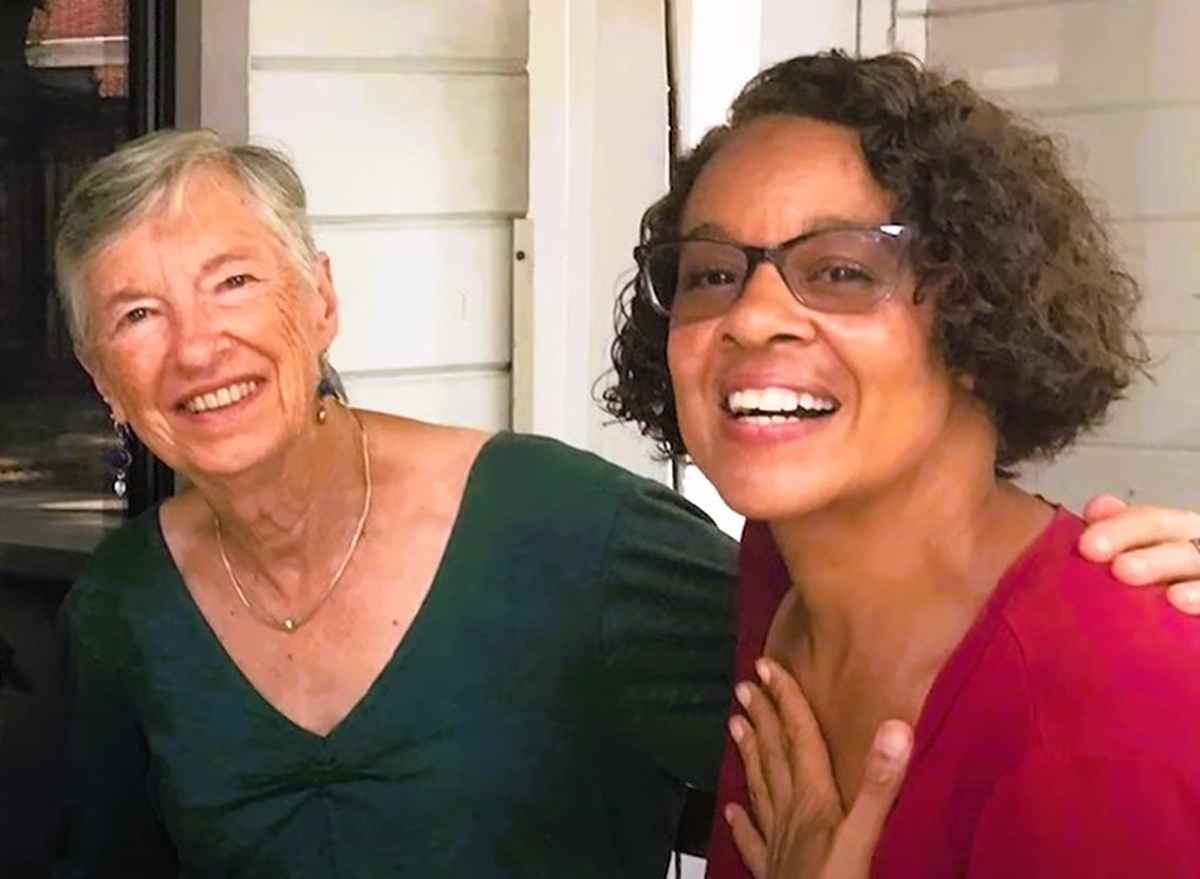
One of her cousins is a woman named PJ MacAlpine. The two were connected through MacAlpine’s son, Christopher, during the beginning of Herman-Giddens’ book-writing journey.
In the past six years, the two have deepened the understanding of their connected history, introduced one another to their families and, recently, gone on trips together to promote the book.
“It’s been wonderful,” MacAlpine said. “We’ve enhanced each other’s lives and we consider each other not just related genetically, but family. … I’m proud to know her. I’m proud to know this cousin that was active in civil rights from way back when.”
Two books of history
On the porch of her home in Pittsboro, Herman-Giddens sits beside two books.
To the left, is her green and brown genealogy book passed down through generations. To the right, is her light blue memoir also filled with a replica of her family tree, but along with a story detailing the “twisted roots” behind these names.
Her research isn’t over yet. In a couple of months, she plans to head to Nassau, Bahamas, to explore another ancestor. And perhaps record a new piece of her history.
“I believe that as a society, we cannot have dialogue, we cannot move forward, if we do not know the full truth,” Herman-Giddens said in her book. “Not knowing is insisting on staying in a state of purposeful ignorance that only hurts us.”