
Work with us. The News & Observer summer 2024 internship application period is open.
The application period for The News & Observer 2024 Summer Internship program is now open.
We’re looking for promising young journalists who can bring energy, ideas and talents to our collegial newsroom in Raleigh, N.C.
Our interns aren’t assigned so-called intern tasks. You’ll be an integral part of our news operations. You’ll work with your editor and mentors to develop ideas, write stories, take photos and videos and then share your finished articles on social media with thousands of readers and subscribers.
About the internship
Internships are full-time for 10 weeks and typically start at the end of May or beginning of June.
Interns are paid and earn $600 per week.
Internships are in-person and are based in the Raleigh area.
We are looking for the best candidates to work as reporters, visual journalists and online producers. In the past this has included assignments in metro, politics, sports, business, features, photography/video and our audience growth team. Please let us know your assignment preference as well as any specialized expertise, such as data reporting or audience/growth development.
Our internships are competitive. Not only are we looking for emerging journalists who can bring something special to The N&O this summer, we’re seeking those who may become our future colleagues. You’ll make invaluable connections in our supportive newsroom as you pursue your journalism career. Interns have been hired as full-time journalists with The N&O or have gone on to work at other McClatchy publications.
Qualifications
The internship is open to rising/current sophomores, juniors and seniors and graduating seniors. Interns must currently be enrolled in a four-year degree program, graduate program or have recently graduated.
Experience working at a college publication, either print or online, is preferred.
A previous internship or freelance experience at a daily newspaper or professional news organization is a plus.
Bilingual skills are a bonus.
A driver’s license and reliable transportation is required.
Where is the internship?
The Raleigh-Durham region, known as the Triangle, is among the fastest-growing metropolitan areas in the country. The area is home to major universities, the state capital and numerous corporate headquarters and fast-growing startups.
Our journalists work in communities with vibrant choices for foodies, outdoor enthusiasts and arts and music lovers. We’re two hours from the beach and three hours from the mountains.
We can suggest housing options.
How to apply
The deadline is Friday, Nov. 3. Candidates must apply through McClatchy’s online application portal at mcclatchy.com/careers.
Applicants are strongly encouraged to apply early and before the deadline. Applications will be screened and interviewed on a rolling basis.
To apply for an internship in one of McClatchy’s other 29 newsrooms and learn more about our company, go here.
Candidates must include the following:
A one-page cover letter that summarizes why you want to be an intern in our newsroom.
A resume that includes links to your public social media accounts (Twitter, Instagram, TikTok).
Links to samples of your work, or if available, a personal website or portfolio.
At least two references. (These may be included with your resume or with your cover letter).
Questions?
Contact Jessica Banov, internship coordinator at The News & Observer, at jbanov@newsobserver.com.
See standout work by previous interns
Not taught in medical school: How to be a doctor and a politician
The conflict between politics and medicine isn’t new, said UNC social medicine chair Jonathan Oberlander. Health care and medicine have always been intertwined with politics in the United States, he said, citing COVID-19 vaccine mandates, the Affordable Care Act and providing general health funding as a few examples. “I think a lot of it is, we’re repeating history, and we’ve just forgotten that history,” he said.
Idea exchange or corporate lobbying front? A look into ALEC’s influence in NC
As state budget negotiations stagger into August, a group of North Carolina lawmakers were ensconced last week at an Orlando resort that boasts a lazy river, water slides, restful lagoons, luxury cabanas and an 18-hole golf course. Conservatives contend that ALEC is just another player in the vast field of influences on state policy.
Backyard rink to British Columbia and back: How the Canes’ top draft pick arrived in Raleigh
Hanging from hallway walls leading to the Penticton Vees’ locker room are multiple photos of former Vees skaters who have gone on to play college and professional hockey, a guide of sorts to remind the current players to strive to make their alumni proud. It’s only a matter of time before former Vees forward Bradly Nadeau’s image is among them.
Treat Yo’ Self Bakery, a hit on TikTok, built for Instagram, brings Pride to Wilson, NC
With its pastel pink and purple walls, cookie and cupcake decals and slick black and white tile floors, Treat Yo’ Self bakery looks like it could be in any major metropolitan city. But the modern storefront isn’t in New York City or even Raleigh — it’s in Wilson, a city around 40 miles east of Raleigh with a population of 47,731.
The Instagram-ready nature of the bakery is tied to the brand’s strong social media presence. Greg Mason’s TikTok account, @trashyqweenz, has amassed 1.1 million followers in less than a year.
What is an HBCU? A look at North Carolina’s historic Black colleges & universities
In 1837, Richard Humphreys opened an institution with the mission of teaching African Americans skills to gain employment. That school was the African Institution in Pennsylvania, renamed Cheyney University in 1913, and it was the first Historically Black College or University (HBCU) in the country.
HBCUs continue to be important because they provide Black students with access to curriculum that is designed for Africans Americans.
NC’s new abortion law creates new challenges for genetic counselors and patients
Reproductive or prenatal genetic counselors help guide patients through difficult decisions regarding pregnancy. They help patients know what to expect and how to prepare for the birth of a baby with a genetic condition or disability, and discuss options such as pregnancy continuation, raising a child, adoption and abortion.
Senate Bill 20, the “Care for Women, Children and Families Act,” which Republican lawmakers approved over Gov. Roy Cooper’s veto, introduced new challenges into those conversations, several genetic counselors told The News & Observer: The law limits the options available to pregnant patients and even the options genetic counselors can discuss with them.
Social media and newsletters from our audience growth interns
RDU on the Rise: Treat Yo’ Self Bakery, Sunflowers and the Uproar Art Festival
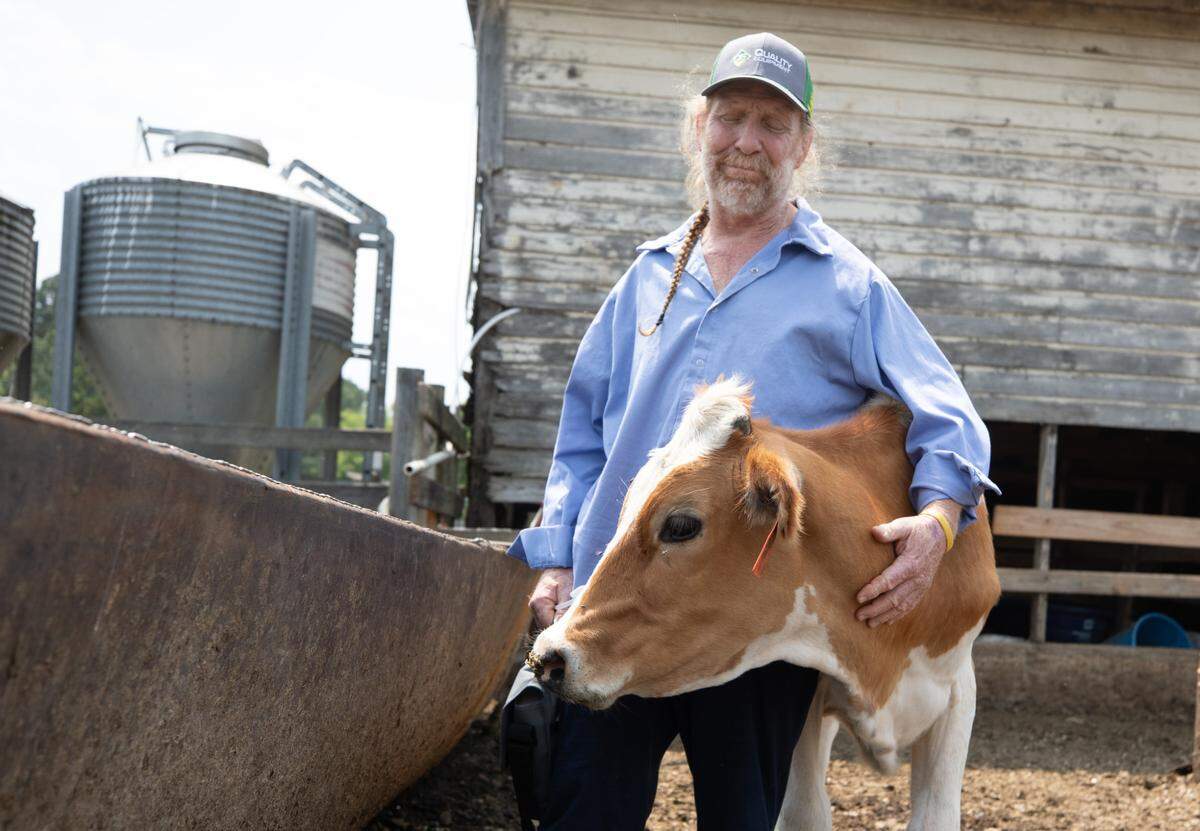
Photos by visuals intern Anna Connors
.JPG "RAL_072023_tornado-aec-0214 (1).JPG")

This story was originally published October 4, 2023 at 9:00 AM.