
A gruesome North Carolina riot remembered, and an execution lamented, 100 years later
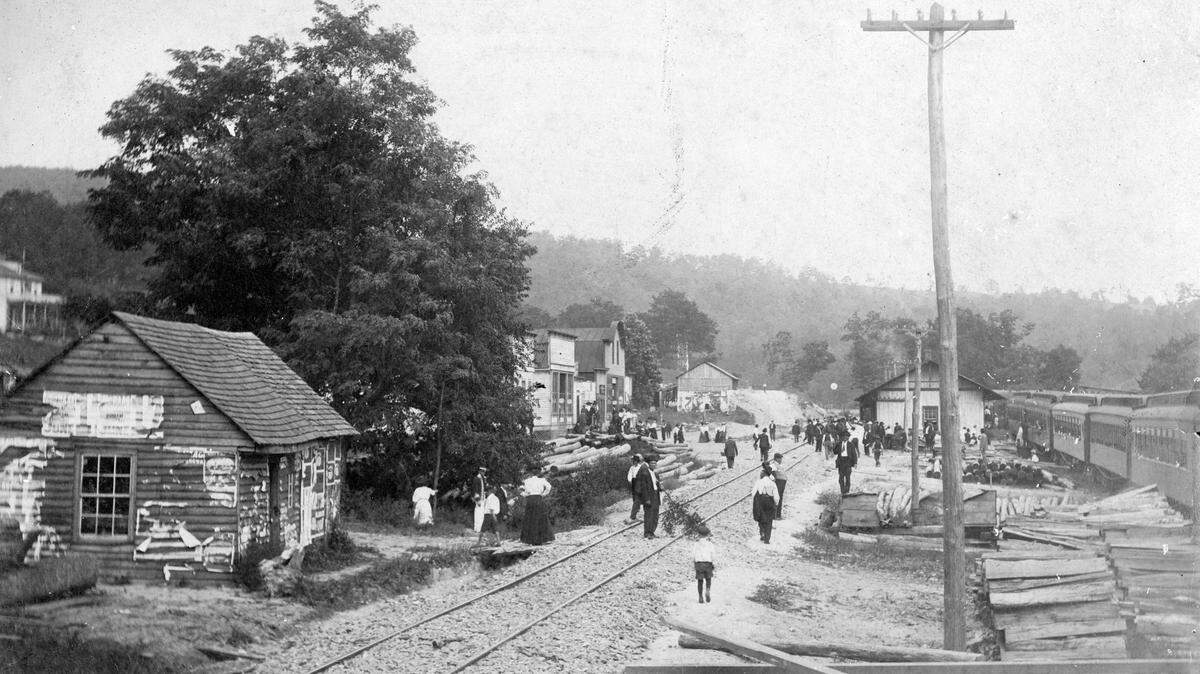
John Goss strode into the death chamber with a stoic face, keeping silent as a pair of ministers chanted a Psalm, showing no fear as the prison staff harnessed him into the electric chair.
A crowd of 52 came to watch Goss die, most of them college students, and they cracked jokes until the current hit the small man, who kept his eyes open while the windows rattled and the whole room shook.
The execution took five full minutes — an ordeal The News & Observer chronicled graphically on its front page, appearing next to a recipe for Christmas cookies.
But in his final hours, Goss composed a poem — likely dictating to someone more capable with the written word — and its ominous words survive:
“God is coming back again, brother ...
Won’t it be a mighty day when the sea shall give up its dead?
Won’t it be a mighty day when the sun shall refuse to shine?”
I’m recounting this gruesome history because it happened almost 100 years ago to the day, the final chapter in a largely forgotten ordeal known as the Spruce Pine Riot.
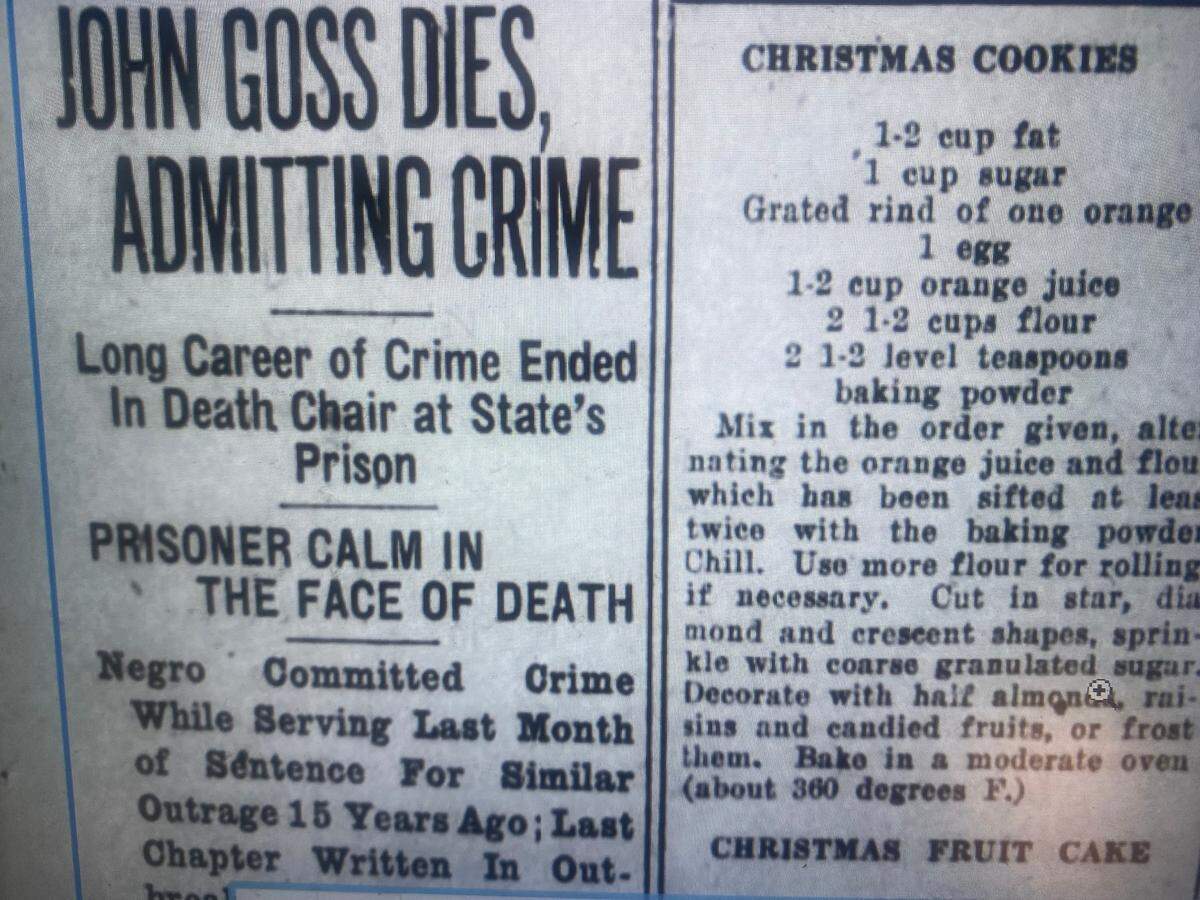
I’d never heard of John Goss or the Riot until I casually looked up The N&O’s Thanksgiving edition from 1923, curious how Raleigh passed the holiday in the era of Model T Fords.
Tensions ran high in Spruce Pine in 1923
I learned that in September of that year, tensions ran high in the mountain town of Spruce Pine, where road construction was booming and feldspar mines were churning out ore, but rural Mitchell County lacked labor for the work.
I further learned that companies there imported many of their workers — many of them Black, and many of them, like John Goss, prison inmates. In the decades before, these same companies had brought in Irish and Italian immigrants, and the Spruce Pine community developed a long-simmering resentment toward outsiders.
“While road construction was a dangerous job, there were those who would have been willing to take that job for fair wages,” wrote Michael Hardy in The Avery Journal in fall 2023. “However, the companies preferred to rely on cheap and exploitable convict labor.”
Though he had served much of his burglary sentence, though he held the position of trusty on his work crew, though he was up for release on good behavior, Goss decided to make a run for it on Sept. 26.
I like to think he got tempted by the lure of a pretty fall day.
A YouTube series about the story
But trouble struck quickly when his escape route crossed paths with Alice Thomas, who was 75 and a mother of six children. She announced that the escaped prisoner had criminally assaulted her while she was out walking near her house around noon, and a posse quickly formed to find Goss.
I’ll pause here to cite my sources here.
By far the most exhaustive work I found on the subject comes from David Biddix of the Mitchell County Historical Society, who spent two years producing a seven-part YouTube series along with his wife, Marsha, and local historian Jonathan Bennett.
We spoke last week and Biddix told me there’s a good amount of doubt Goss committed this crime, even among members of Alice Thomas’ family.
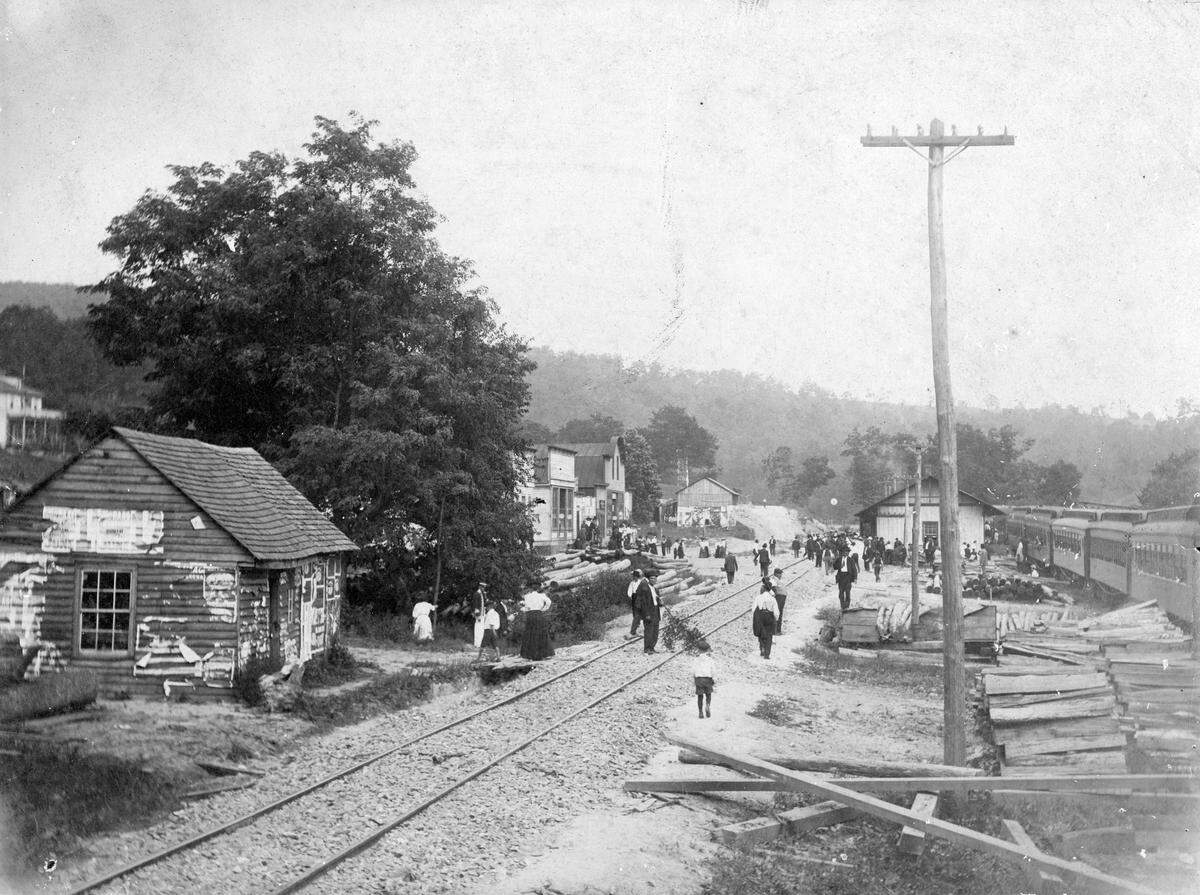
Still, anger over her accusation caused a mob of armed men to march to camps around Spruce Pine and order the Black workers there to evacuate, forcing as many as 50 at a time onto southbound trains with warnings never to return.
The mob fired only one shot during a standoff with the police chief, and that shot went wild when mob members hit the shooter’s arm at the last second. They lit no fires and broke no windows.
But then North Carolina Gov. Cameron Morrison, “the good roads governor,” responded to the local officials and companies’ pleas for help and sent more than 200 National Guardsmen to keep peace.
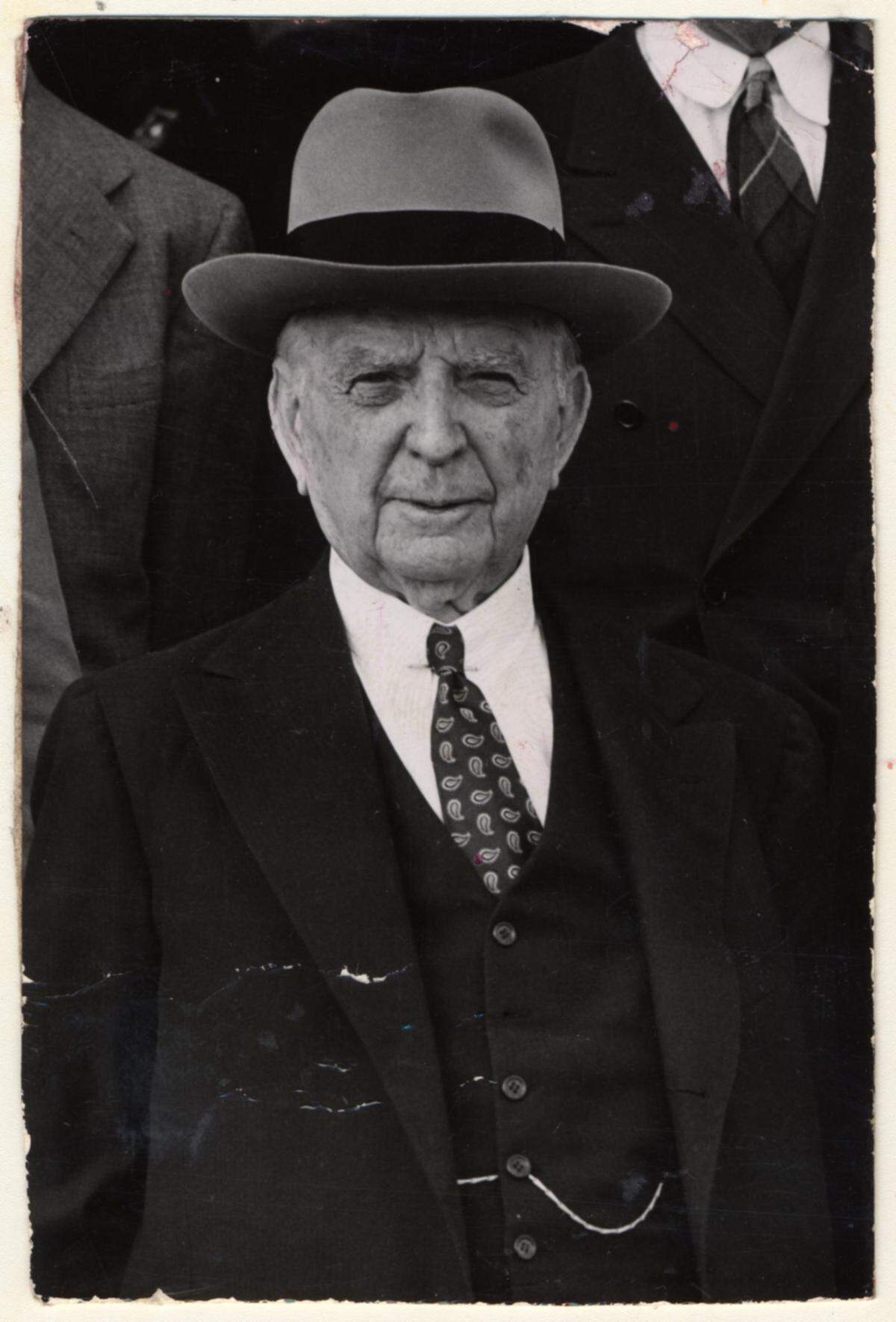
The guardsmen set up a camp in town, but stayed only into early October, guarding Black workers at the governor’s request.
And though more than a dozen got indicted for the riot, a typical punishment was a $25 fine. Records are unclear if any served jail time or performed community service.
Goss, meanwhile, got captured in Hickory and loaded on a train bound for Raleigh. Somehow, a reporter for The News & Record in Greensboro interviewed him along the way, and Goss denied assaulting Alice Thomas, but confessed he had tried to steal her shoes.
John Goss goes on trial
His trial came less than three weeks later, and more than 600 people turned up at the courthouse in tiny Bakersville. Only three witnesses took the stand, including Alice Thomas, who told jurors Goss brandished a large pocketknife and forced her to have sex with him.
Goss’ attorney had been appointed only five hours earlier. He called no witnesses and did not put his client on the stand. The jury deliberated for only five minutes.
Condemned to death, Goss told a reporter from the Asheville Citizen: “I am prepared to meet God.”
On the day of his execution, the N&O reported that Goss had confessed his crime to a pastor who tended to him. But it strikes me that a prisoner about to die by electrocution would confess most anything if he expected to meet God within minutes.
In short, I also doubt that an otherwise model inmate would sexually assault an elderly woman he randomly passed on his fugitive run from town.
I suspect local passions were already inflamed long before Goss made his break for it, and that whatever happened on the road with Thomas lit the racially motivated fuse the mob had been seeking.
But I thought his story should live into another century, when we like to think nothing like this could possibly occur.
Won’t it be a mighty day?
This story was originally published November 27, 2023 at 6:00 AM.