As seen in Raleigh: NCDOT changing how crosswalks work to better protect pedestrians
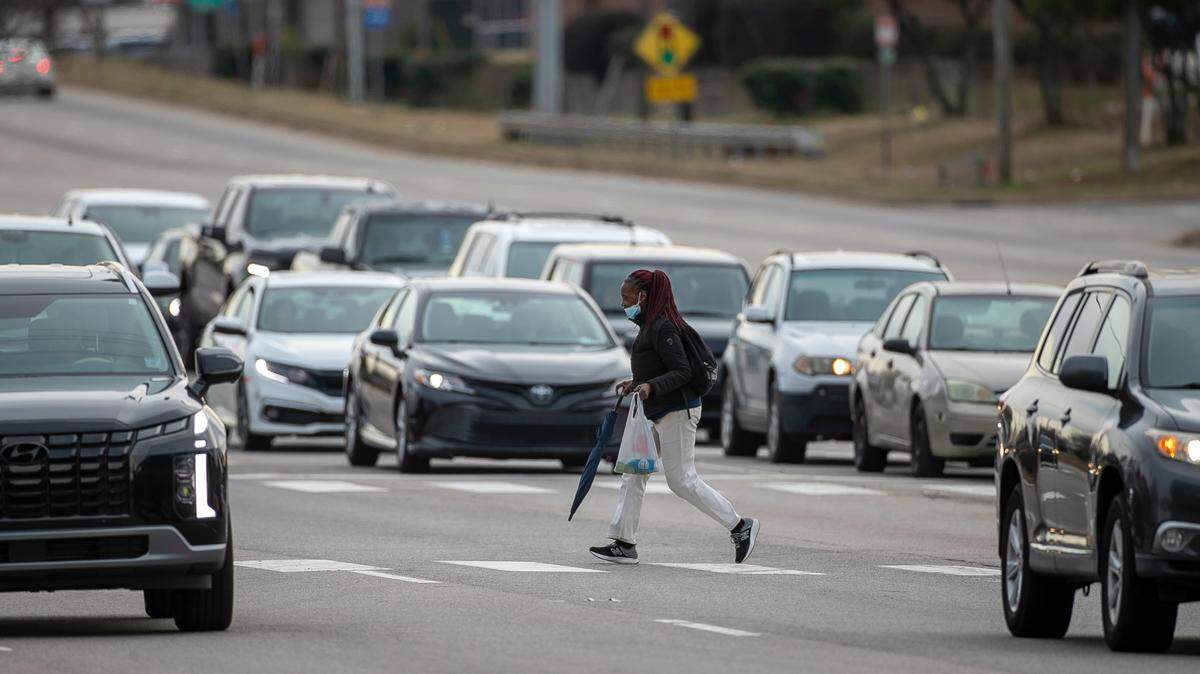
The state Department of Transportation is changing the way pedestrian signals work at crosswalks across North Carolina.
Pedestrians will now get a “Walk” sign 3 to 7 seconds before the light turns green for cars. It’s a practice known as “leading pedestrian interval,” and it’s already common in downtown Raleigh and Charlotte.
The sequence of signals gives pedestrians a head start into a crosswalk before drivers are let loose. It reduces the uncertainty over who has the right of way when a driver wants to turn right or left, said Nick Zinser, a regional signals engineer for NCDOT.
“This change makes pedestrians more visible for drivers,” Zinser said in a written statement. “It’s a safety enhancement, and it can be done at a low cost by reprogramming the existing equipment at our traffic signals.”
A study published by the Federal Highway Administration in 2018 found that leading pedestrian intervals can reduce crashes with pedestrians by 13%.
NCDOT began making the change earlier this year as it upgrades crossing signals or installs new ones. Statewide, the department controls more than 3,500 intersections that have signalized pedestrian crossings and estimates about 20% of them now have leading pedestrian intervals.
The number of pedestrians hit and killed in North Carolina has risen significantly over the last decade, to 260 in 2022, the most recent year for which complete data is available.
About 40% of pedestrian-related crashes in the state take place at or near intersections, according to NCDOT. The department says about a third of those collisions involve a car or truck turning at the intersection.
This story was originally published July 26, 2024 at 2:31 PM.