
A hidden relic from Raleigh’s past: the 1883 railroad turntable, shown from above
Hidden off Peace Street inside a no-man’s-land of weeds and gravel, a relic of Raleigh’s steel-rail past still rumbles and clangs like a steam-powered ghost.
The turntable for the old Raleigh & Gaston railroad dates to 1883 — an era so distant the city held only 9,000 people, and the newspapers of the day advertised bargain deals on hosiery gloves and bicycle shirts.
When it was built, it qualified as the largest turntable in the state at 55 feet across, and it functioned as a giant Lazy Susan for locomotives. The model you see now was rebuilt to 100 feet — nearly twice the length.
And now, owned and occasionally used by CSX, it might be the oldest machine in Raleigh still doing its original job — a rare spectacle straight out of the 19th century.
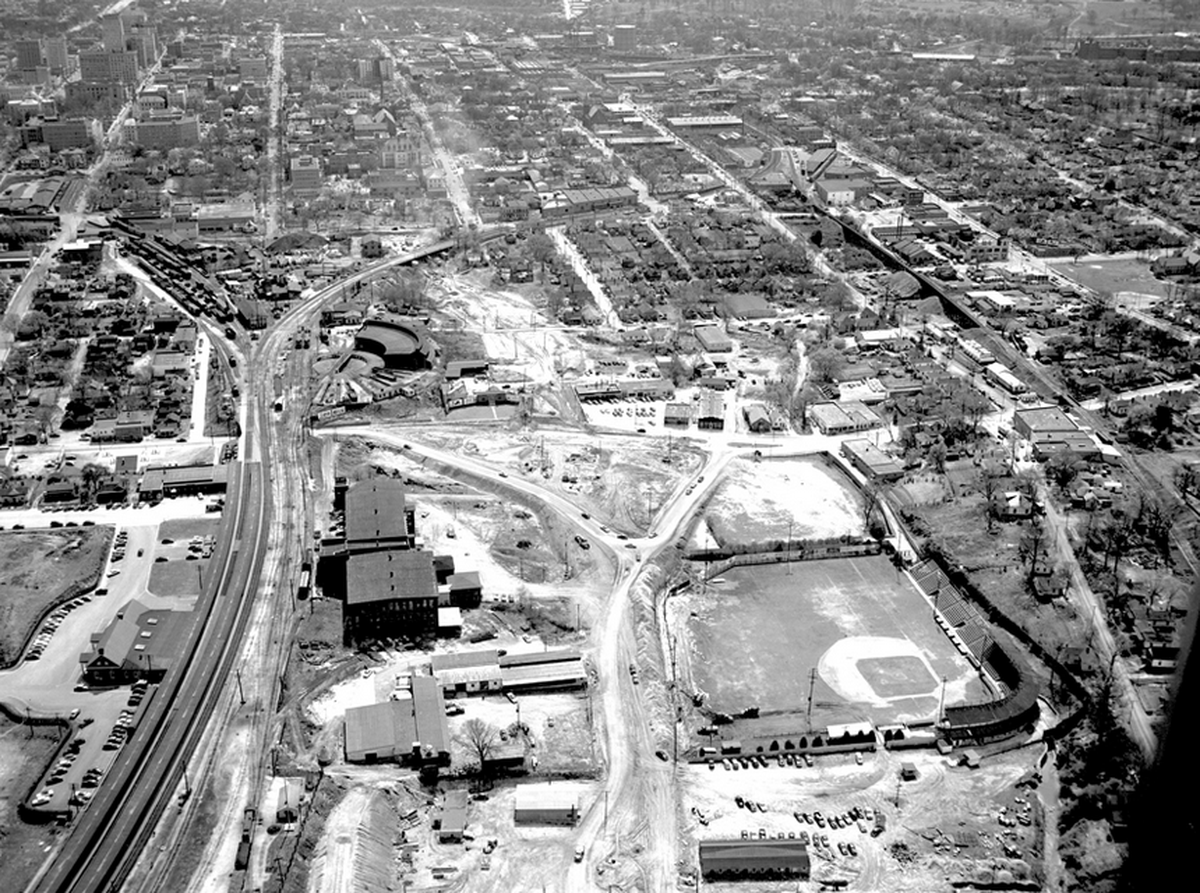
Few even know it exists, visible only from the parking decks on Salisbury Street. From there, you can see the deep circular pit splashed with graffiti, and notice how a drifter has hung some laundry out to dry along the turntable bridge.
Two turntables and ...
Railroad geeks in Raleigh — and there are plenty — will tell you the city had two turntables, the older one predating the Civil War and standing a few blocks north under a stately brick roundhouse. But it lasted until only 1927, when it was partially razed, then burned down completely nine years later.
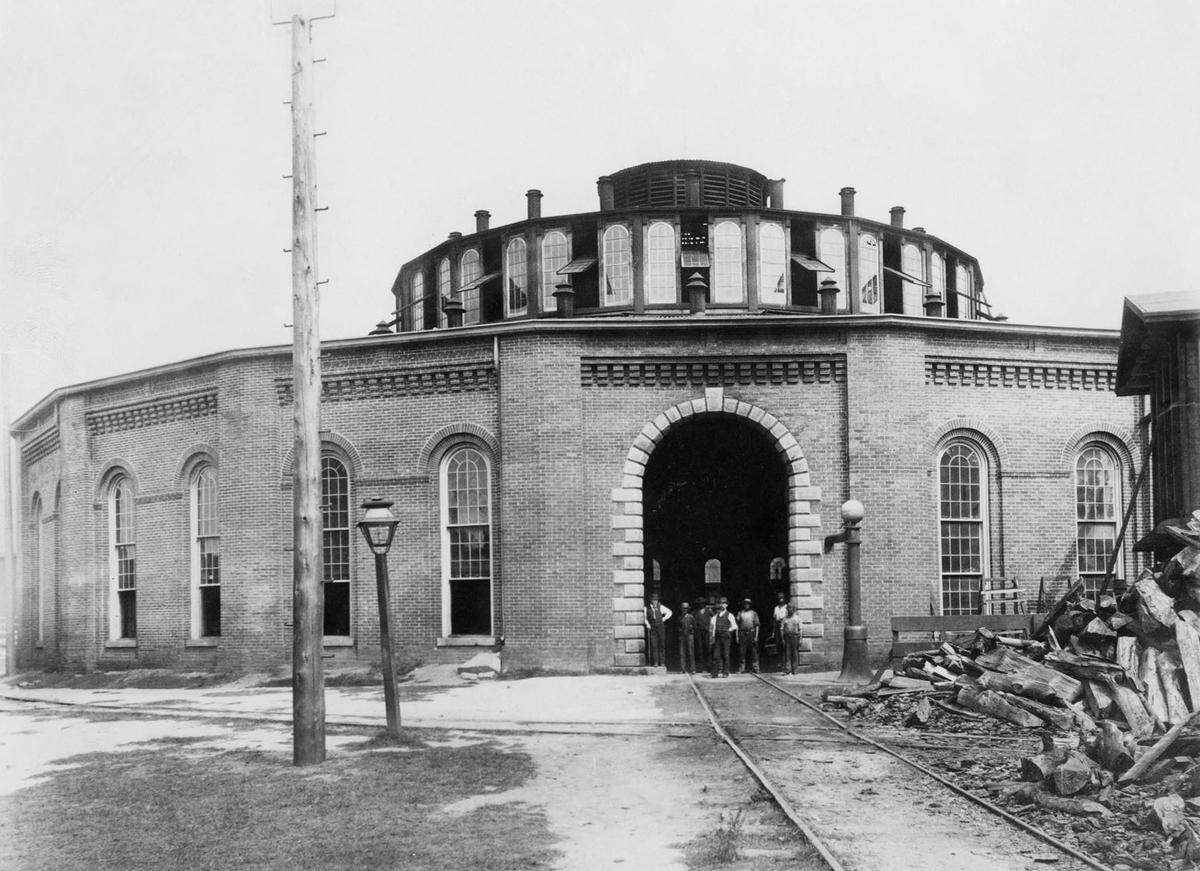
Any kid midway through a Thomas the Tank Engine phase knows a turntable spins a train around backward and sends it running the other way. Turntables tended to feature tracks radiating out from the center like bike spokes — good for parking locomotives that needed fixing.
And that same kid will tell you that turntables offer an invitation to fun, notably the massive, 100-foot model at the NC Transportation Museum that spins with the push of a button.
Series of unfortunate events
Thanks to that invitation, the history of turntables is riddled with grisly mishaps.
In 1878, Sallie Vandergrift tumbled inside Raleigh’s old turntable and suffered “severe contusions on the head.”
A year later, a boy identified only as “Master Thomas Badger” broke his leg playing on the turntable in Henderson.
And then in 1884, while on the Raleigh turntable that still stands, 8-year-old Frank Lumsden caught his leg in the machinery and nearly tore it off at the knee.
“His right leg was amputated about five inches below the hip joint,” The N&O wrote in its grim account. “But the shock was too great, and though at midnight the poor little fellow seemed fairly bright, yet death soon came and yesterday morning a 7:30, his spirit passed away ...
“It is a sad warning to children not to play around railroads. It is a dangerous business.”
This is Raleigh history: mostly invisible, persisting in obscurity, full of forgotten voices that say look but don’t touch.
This story was originally published September 16, 2024 at 6:00 AM.