
Students pay tribute to Helene’s missing and lost with an ofrenda at Raleigh cemetery
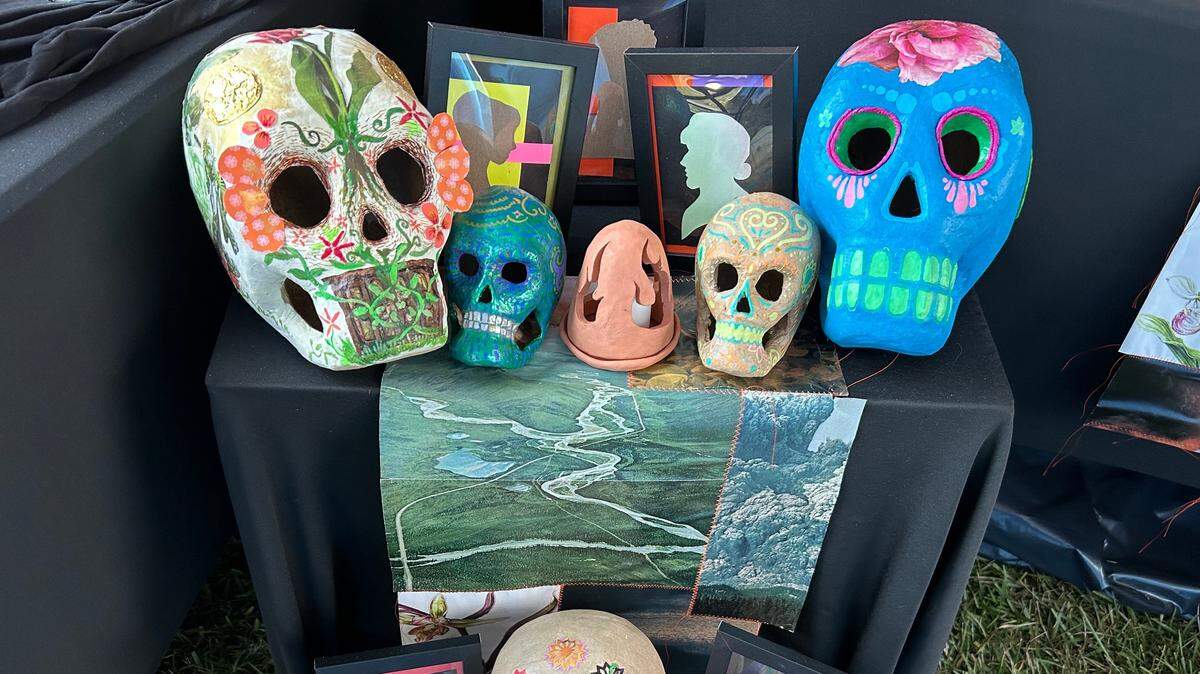
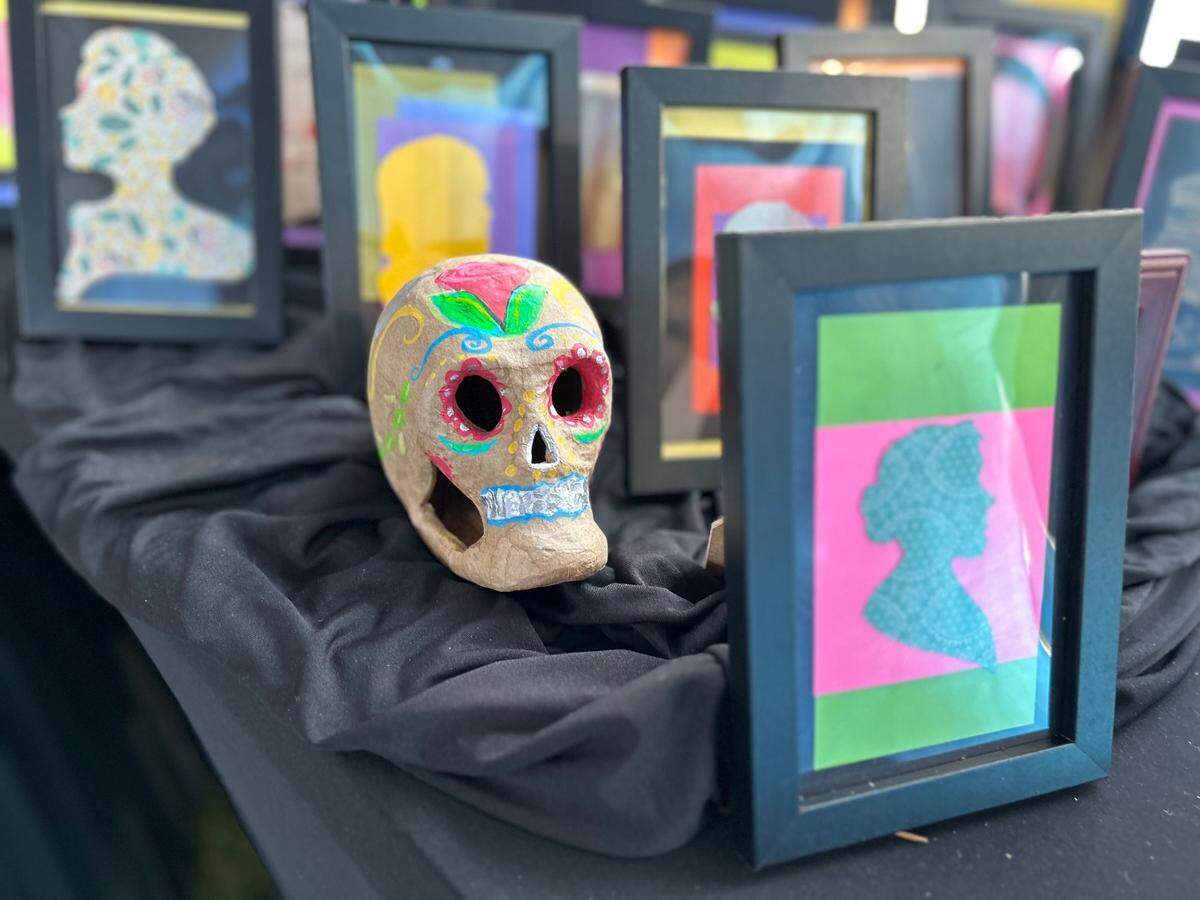
Inside the ofrenda, the victims of Hurricane Helene find Raleigh’s tribute in 92 framed silhouettes, one for each of the missing, decorated with paisleys, polka-dots and flowers.
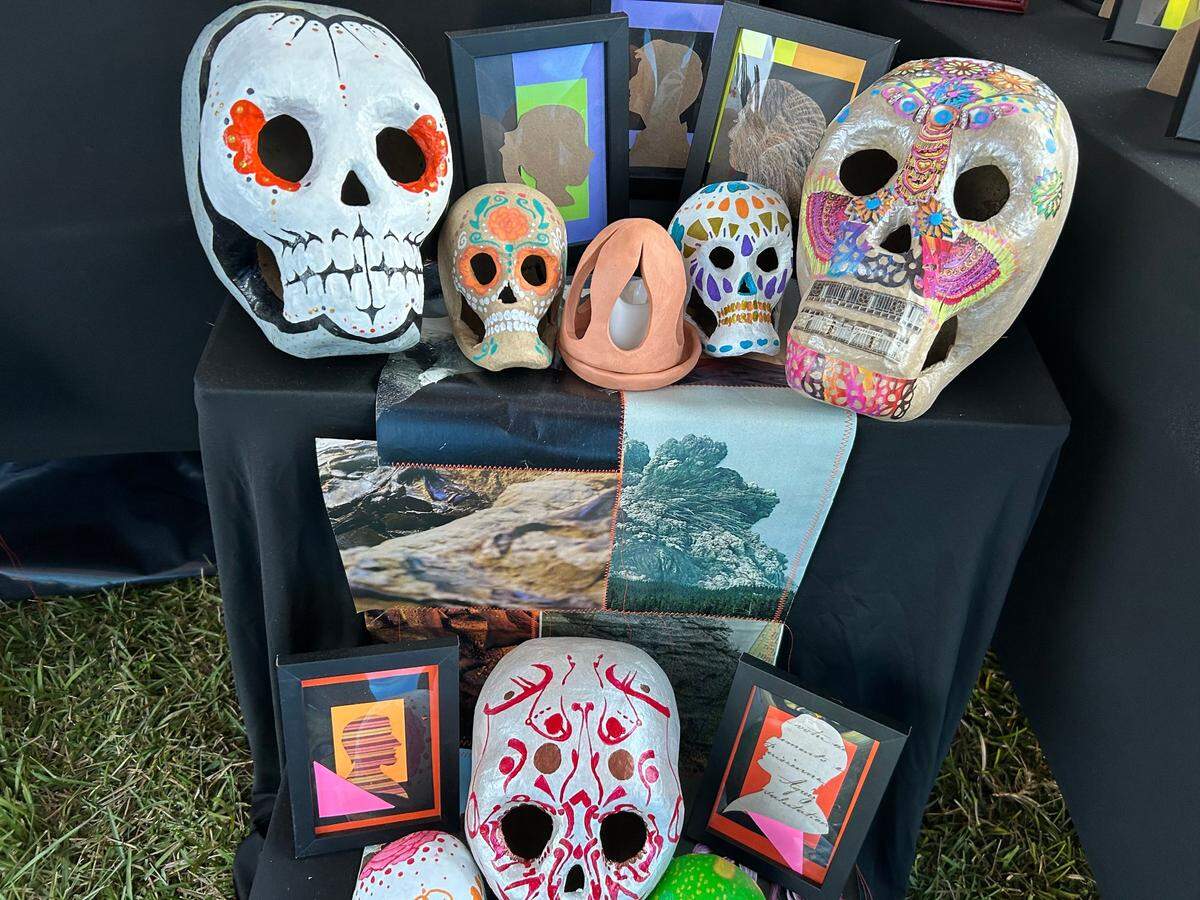
The altar set up inside Oakwood Cemetery represents the work of more than 100 students from Longleaf School of the Arts, who painted clay skulls blue and pink to represent departed souls from Western North Carolina, adorning them with roses and vines.
They added hints of the mountains to lend character to their traditional offering: pictures of rivers and leafy hillsides, and as a centerpiece to their artwork, one fat speckled trout.
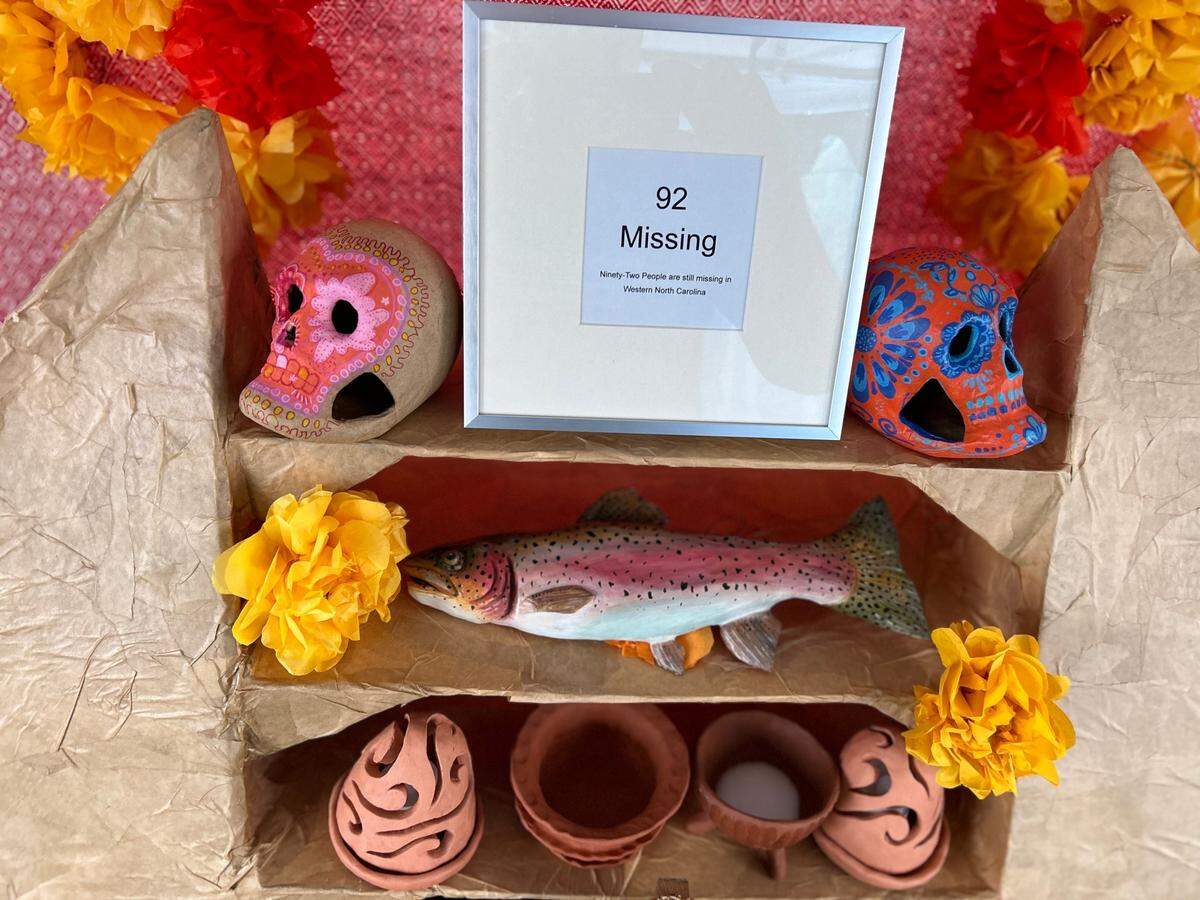
Their ofrenda, one of many set up for Oakwood Cemetery’s Dia de Muertos, both recognize the devastation from Helene and celebrate the lives it stole.
“While it’s an attempt to celebrate lives, it’s also a time to bring awareness,” said Grace Franklin, Longleaf visual arts teacher. “A lot of them had seen it on the news and though not necessarily directly affected, it really resonated. This is a time when people are thinking of this.”
What is an ofrenda?
An ofrenda, which translates to “offering” in Spanish, is an elaborate altar used in Mexican Day Dia de los Muertos, or Day of the Dead, celebrations. Generally made by families of those departed, they include skulls made from sugar or clay, candles, incense and favorite foods.
Dia de Oakwood, set in the Raleigh cemetery of the same name, includes a circle of roughly a dozen ofrendas. On Dia de Muertos, which is Saturday night, the observance includes a copal ceremony, traditional music and a Catrina parade, named for the colorful skeletons.
The students at Longleaf got a visit from Mexican-born Raleigh artist Peter Marin, who teaches through the NC Museum of Art, who asked them to participate. Helene had struck western NC only weeks before, making their choice for tributes easy.
“It didn’t take but a couple seconds to know that’s what they wanted to do,” Franklin said.
They chose silhouettes rather than printed-out pictures, wanting to show respect for those gone so recently. Adding food elements inevitably evoked trout.
“When you think about food you could get directly from the mountains, that’s how the fish came about,” Franklin said. “This is a celebration of life, so you have to bring some lightness to it.”
This story was originally published October 30, 2024 at 11:32 AM.