Work begins soon on a new bridge linking the Outer Banks with the rest of NC

Contractors will soon begin building a new bridge over the Alligator River, replacing an aging link between the Outer Banks and the rest of the state.
The current bridge connecting Tyrrell and Dare counties opened in the early 1960s, replacing a ferry.
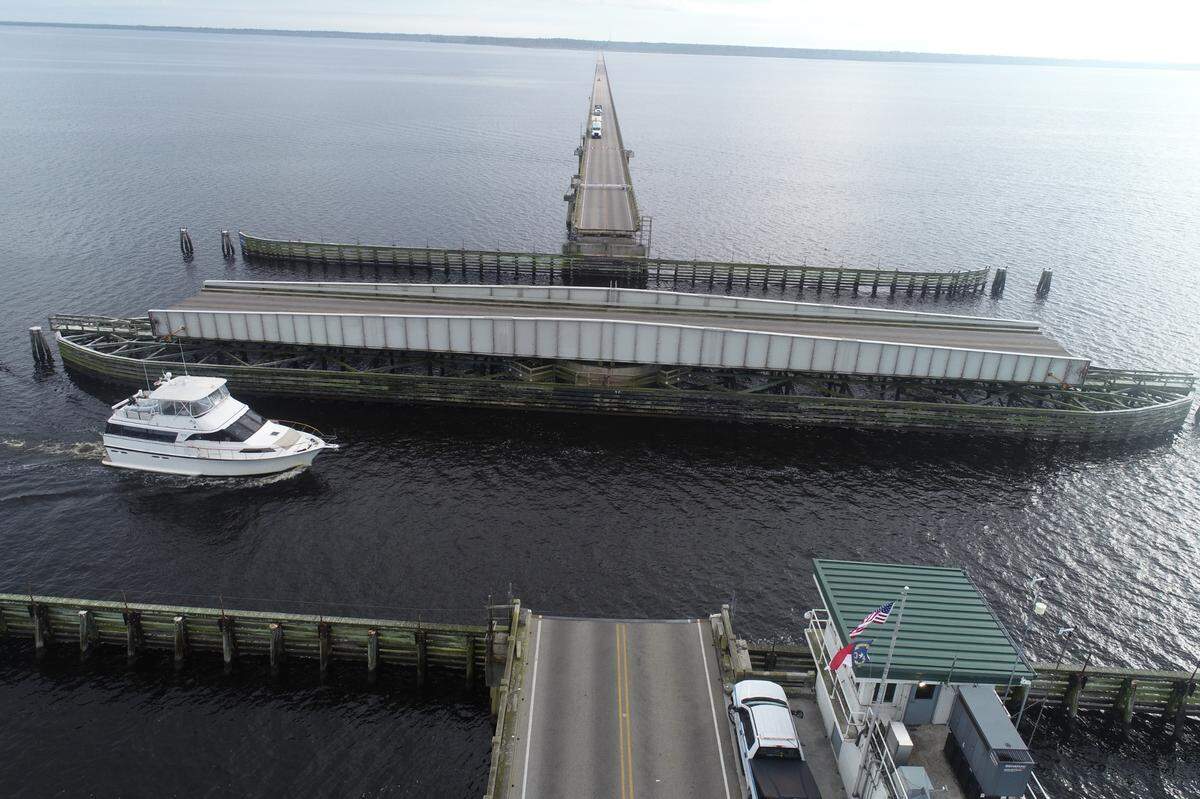
About halfway across is a swing-span that brings traffic on U.S. 64 to a halt when it opens to let boats pass or occasionally breaks down and needs repairs.
The new bridge, due to open in 2029, will be wider, with shoulders and higher guardrails. It will rise up to 65 feet above the channel, high enough to let boats pass underneath without stopping traffic. The more than 4,000 boats that navigate the channel each year will no longer have to wait for a swing-span to open.
The state Board of Transportation on Wednesday approved a $449.8 million contract with Skanska USA to build the 3.2-mile bridge just north of the existing one. The company will begin driving bridge pilings in the coming weeks, as weather permits.
Under the contract, the new bridge is expected to open in the fall of 2029. Demolition of the old structure, known as the Lindsay C. Warren Bridge, will start the following spring.
The N.C. Department of Transportation received a $110 million federal grant for the project, as part of the massive infrastructure bill passed by Congress in late 2021. Outgoing U.S. Transportation Secretary Pete Buttigieg said the federal support highlighted the importance of the bridge as not only the main link to the Outer Banks from the west but also a critical hurricane evacuation route.
Bridge will cost more than previously thought
The cost of the project has climbed in recent years.
When the federal grant was announced in January 2023, NCDOT estimated the bridge would cost $268 million. The contract with Skanska was nearly 68% higher than that.
NCDOT’s original estimate was made before the COVID-19 pandemic and was out of date, said spokesman Tim Hass.
“Since COVID, we’ve seen our construction prices increase across the board by well over 30%,” Hass wrote in an email.
When it came time to award the contract, Hass said, NCDOT’s construction estimators and an outside consultant came up with their own cost estimates to compare with Skanska’s.
“All three independent estimates were within 5% of each other,” Hass wrote. “Therefore we accepted Skanska’s proposed price.”
The new bridge will have two 12-foot travel lanes and something the current bridge does not: 8-foot shoulders on either side, with room for bicycles. The railings along the side of the new bridge will be 4 feet 6 inches high, compared to the 2-foot, 10-inch railings on the existing bridge.
NCDOT opted to build a two-lane bridge over the river, because U.S. 64 is two lanes wide from Columbia through the Alligator River National Wildlife Refuge. The department concluded it didn’t make sense to build a four-lane bridge between two stretches of two-lane road.
NCDOT has long-range plans to widen that stretch of U.S. 64 to four lanes but won’t have the money for the foreseeable future.