
Raleigh’s oldest, saddest love story — with a Valentine’s Day plea for empathy
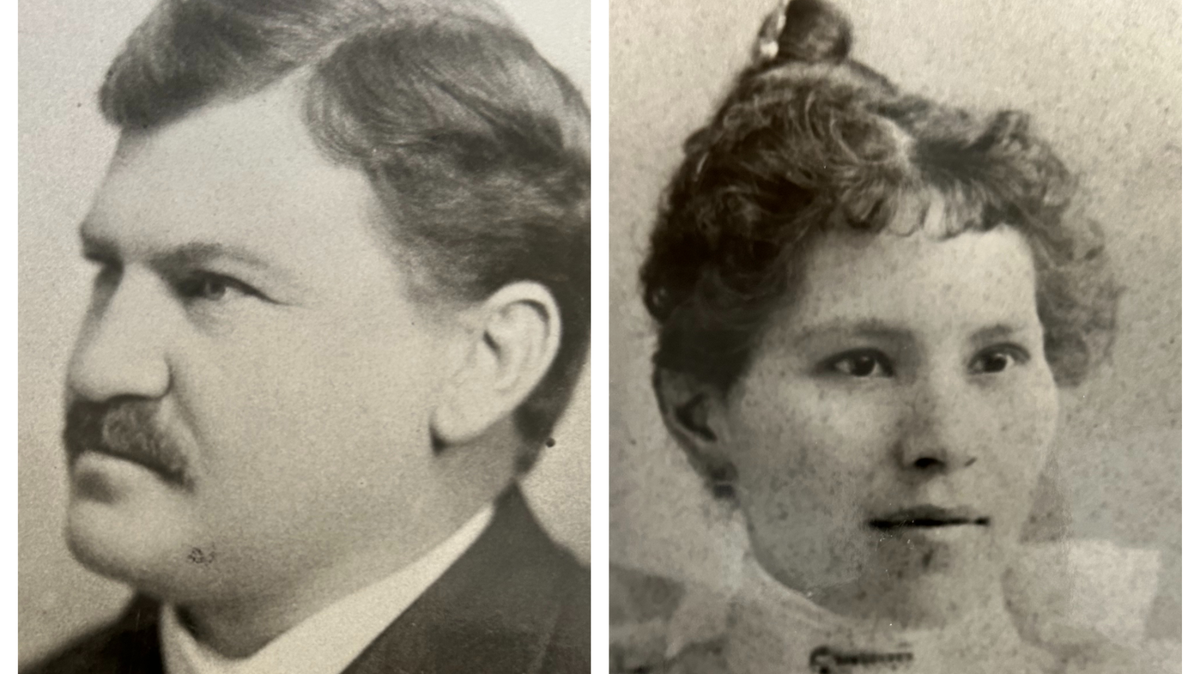
Of all the love stories burned into Raleigh’s history, none can match the heartache, the misfortune or the star-crossed calamity borne by A.G. and Rachel Blythe Bauer — blessed and cursed by their own devotion.
As lovers, they most resemble Romeo and Juliet transported to the 1890s and dressed up in Tar Heel clothing, tormented by the same prejudice, small-mindedness and mental anguish that dogged Shakespeare’s heroes.
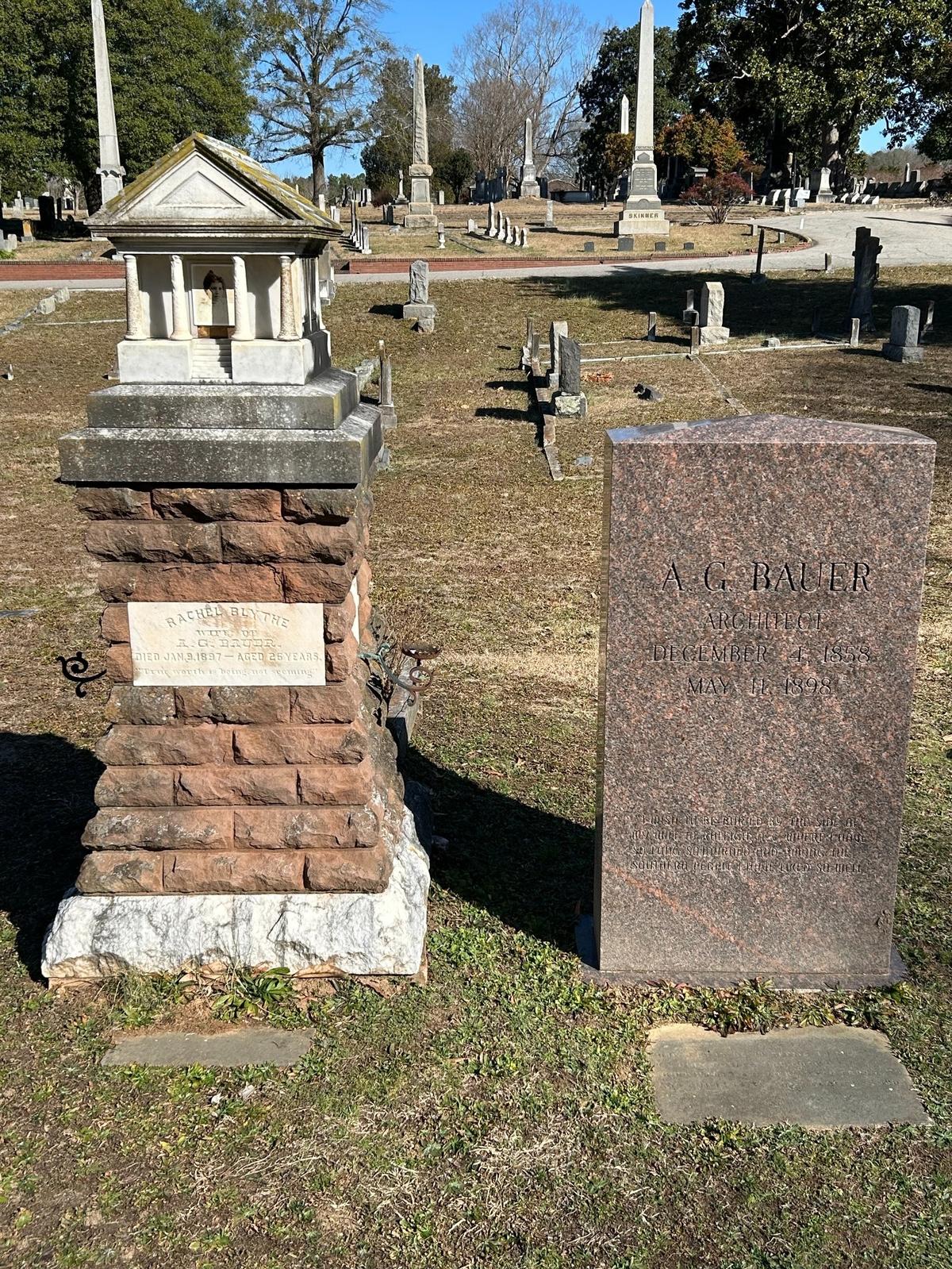
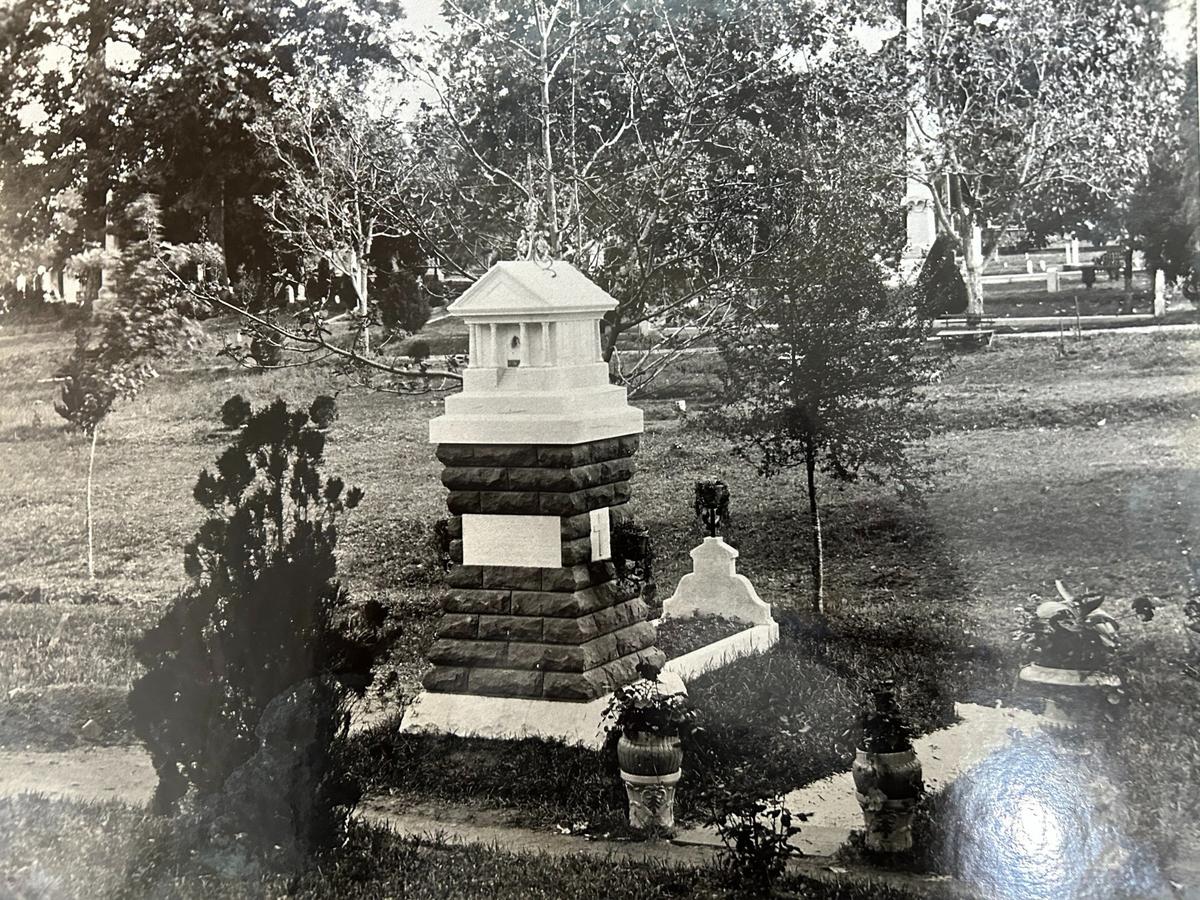
This is the story of the safe space they could find only in death — side-by-side in Oakwood Cemetery, where the temple Bauer built for his true love offers this inscription for the ages:
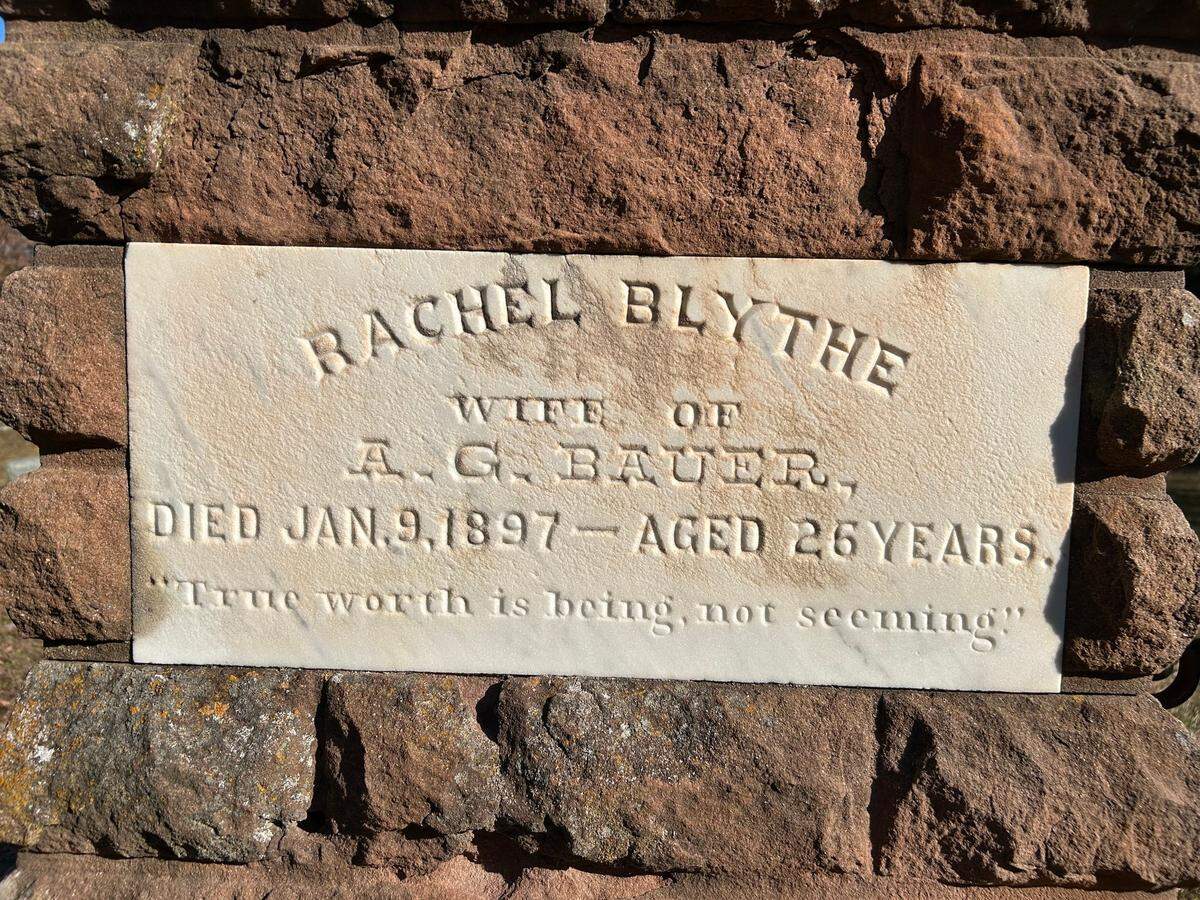
“True worth is being, not seeming.”
Secret Lovers
Adophus Gustavus Bauer called himself the black sheep of his German immigrant family, youngest of nine children. He knocked around business and art schools until his drawing ability caught the eye of a prominent but struggling Philadelphia architect, who hired young Bauer as a draftsman.
In Raleigh, Bauer quickly became the toast of the capital, drawing the plans for such projects as the new Governor’s Mansion on Blount Street — a fairytale castle in red brick. But more significant events began to bubble up in his Fayetteville Street rooming house, where his path led to a fellow lodger with haunting dark eyes.
Rachel Blythe was likely born in Jackson County, three-quarters Cherokee by what spotty records exist, and she lost both of her parents by the time she turned 3. She grew up in the newly opened Oxford Orphan’s Asylum, where she learned stenography and typing and merited this notice in an 1891 edition of The News & Observer:
“Miss Rachel Blythe, the Cherokee Indian maiden, finished her course in the Raleigh Business College, and has accepted a position as stenographer and type writer in the insurance office of Mr. R.D. Robinson at 117 Fayetteville Street. Miss Blythe has attained very high proficiency as a stenographer and type writer, and is thoroughly accomplished in her profession. She has also done some most admirable reportorial work for some of the newspapers of this city.”
No account exists of their courtship, but they would have pitched a very clandestine form of woo. North Carolina law outlawed marriage between Whites and either Blacks or American Indians, but the company Bauer kept in downtown business circles wouldn’t have wanted them seen together at all.
Still, whatever rendezvous they were able to arrange by secret knock or climbs on the fire escape developed into a passion they could not contain. In 1894, the two were secretly married in a location lost to history.
“We very much feared the revelation would call forth a clamor from the people of Raleigh and the state,” Bauer would later write, “on account of the racial prejudice that exists.”
They might have kept up this facade for years. But Rachel Bauer got pregnant, making deception more tricky, so in 1895, the Bauers wed legally in Washington, D.C.
“I don’t think there has been a marriage in years, over which there was made as much ado, as over ours,” the new husband would write, quoted in a 1983 edition of the NC Historical Review.
Is there not a law?
The Bauers returned to Raleigh fearing their arrest or worse.
The same N&O that celebrated Rachel’s business achievements now questioned her legal status, and a letter to the editor in 1895 raged:
“Now I wish to ask, simply for my own information, whether they will be subject to indictment if they return to this state? Is there not a law against intermarriage of whites and Indians, just as in the case of whites and Negroes? Can this law be evaded by going out of state to marry?”
Three years later, the newspaper in Raleigh and the leaders in the Legislature would conspire to spark white supremacist rebellion in the state, killing dozens in Wilmington and overturning the biracial government there.
But the Bauers endured only social snubs. Neither of their families attended the wedding, and Rachel was ostracized from the circles she once enjoyed. She tended to her daughter, Owenah.
“I think she gets prettier every day,” she wrote her sister.
“I am always glad when she gives up one of her Cherokee yells,” A.G. wrote his own sister, “just to show she has some temper.” He added, “I feel like I am rich in a good loving and true wife.”
Knocked senseless
The Bauers might have continued in their isolated happiness until 1896, when A.G. and a contractor friend were struck by an oncoming train in Durham. The locomotive was hidden behind some box cars in the rail yard, and it hit their buggy at 30 mph, smashing it and throwing Bauer 68 feet.
The accident left him “knocked senseless,” and he lay unconscious for days with Rachel at his bedside. When he awoke, he was raving and violent, striking at the hospital staff so ferociously they had him placed in the state insane asylum.
“I feel so lonely without him,” Rachel would write, “but I feel grateful for the hope I entertain. I felt at first I just couldn’t bear to come back without him, but God’s grace is sufficient for all our troubles and he knows what we can stand.”
The family’s finances suffered while A.G. recovered, writing that “I seem to lack mind enough to do anything.”
A cold and bleak desert
Rachel struggled to keep his office afloat while tending their first child, pregnant with a second, wondering if her husband would recover his senses. “I want to get away from this state anyway,” he would complain in convalescence.
Rachel fought a case of dysentery while pregnant, and her lingering illness complicated her delivery. Stress, both physical and emotional, did the same. In January of 1897, she died at home at 26, only a few weeks after delivering their son Fred.
“Thus,” A.G. would write, “what I had hoped and dreamed to be a life of bliss and happyness is become a cold and bleak desert. ... I can’t realize that my dear little wife is cold in death, and underneath the ground forever. She was so good and true to me. If I should ever marry an angel, she could not be more faithful, and more constant and more loving.”
He sent the children away to live with family. He sold his belongings. He closed his practice.
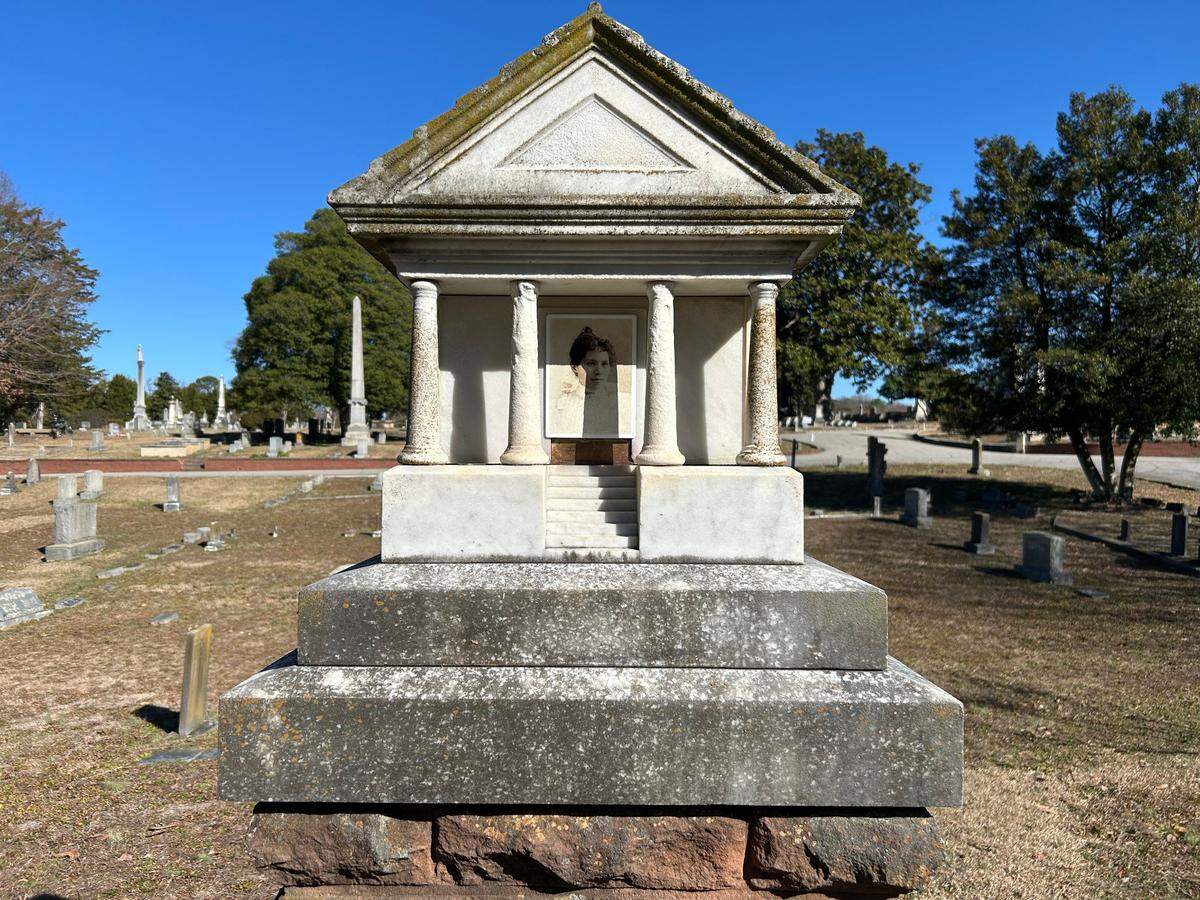
But before he walked into oblivion, A.G. Bauer built a marble temple with Rachel’s face burned into a slab of porcelain at the top. He placed it on a 9-foot slab of stone in Oakwood Cemetery, where anyone could read the state’s motto paraphrased under her name.
And then a year later, self-described as plagued by headaches and bad memories, he shot himself once in the head. Some accounts say he was discovered holding Rachel’s portrait, but this is not certain.
What is certain is that more than a century later, people still stop at the Roman temple at the top of Rachel’s grave, where her face still shows clearly.
Hers was the first grave in Oakwood to bear a photographic image, and for years, young lovers stopped to gaze at it, thinking her ghost would appear through the stone.
In many ways, it does.
This story was originally published February 10, 2025 at 5:00 AM.