3 Raleigh police chief finalists make their case to the public. Here’s what they said
Hours after their names were made public, the three finalists made their case to the public about why they should be Raleigh’s next police chief.
The candidates weighed in Monday night on topics like recruitment, transparency and leadership in a panel moderated by Adrienne Cole, president and CEO of the Greater Raleigh Chamber of Commerce, and Tiesha Mosley, the city’s director of community engagement.
Chief Estella Patterson is set to retire on Saturday, March 1, and city officials have narrowed the selection down to three finalists:
- Rico Boyce, the deputy chief of administration who has spent his entire career with the Raleigh Police Department;
- Sonia J. Russell, the commander of crime control strategies for the Detroit Police Department; and
- Joshua Wallace, the commander of the Criminal Network Group under the Chicago Police Department’s Bureau of Counterterrorism.
Despite their varied backgrounds, all three finalists gave largely similar responses, painting a picture of a solid police department that has persisted through staffing shortages and a mass shooting in recent years. Common themes included the importance of building trust in the community, solidifying officer morale and data-driven policing.
Here are highlights from the panel.
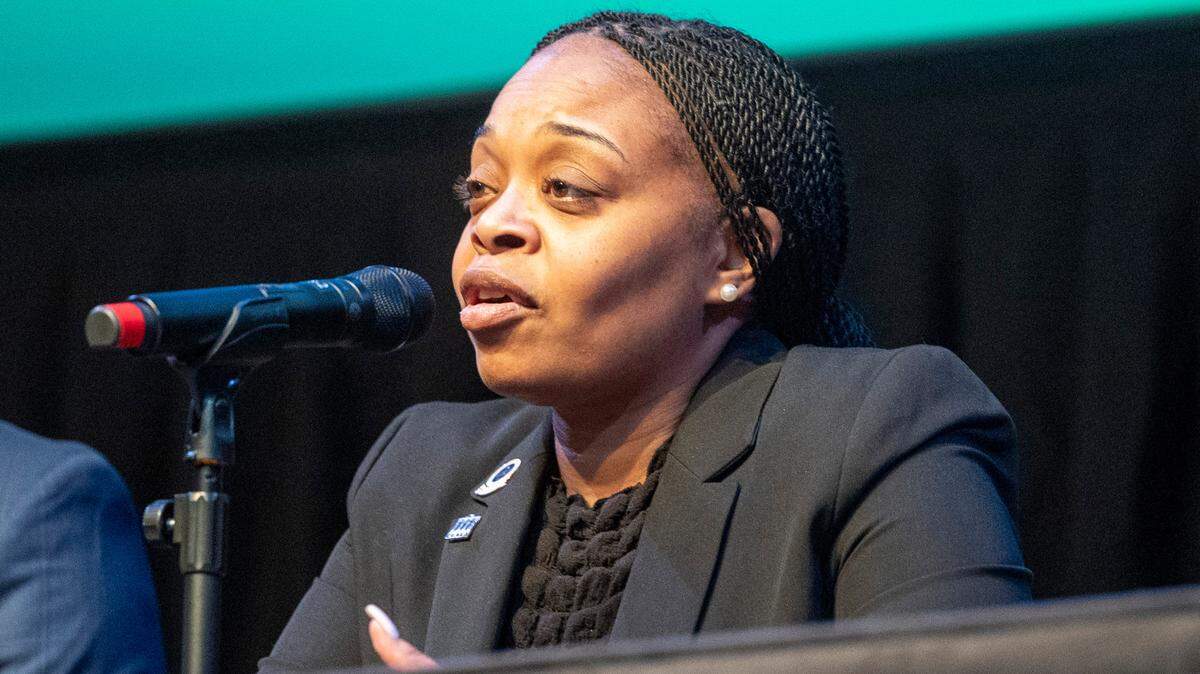
Sonia J. Russell
Russell, a Detroit native who spent time in the foster care system, was the only candidate to mention domestic violence and sexual assault as a priority.
“When we talk about aggravated assaults, when we talk about crimes with a weapon, they’re domestic related,” she said. “So that’s something else that we need to peel back the layers on.”
Russell also highlighted the importance of partnering with local clergy to reach community members through their faith.
“A lot of times, the churches are doing work that we’re doing by ourselves, and we’re working in silos,” she said.
Russell said she’d establish a faith-based advisory board that would help her work with Raleigh’s religious leaders.
“I think partnering with the faith-based community is definitely a plus,” she said.
Throughout her responses Monday night, Russell tied in her experience analyzing data at the Detroit Police Department. She cited her research into census data for the precinct where she worked, which revealed a higher-than-average illiteracy rate and poverty in the area. Those socioeconomic factors play an important part in driving crime, she said.
In her final statement, Russell acknowledged the difficulty of coming into a new department as an external candidate and shared what she’d do to mitigate that.
“I gotta be willing to listen,” she said. “Listening is everything, because listening is going to direct you into the right direction.”
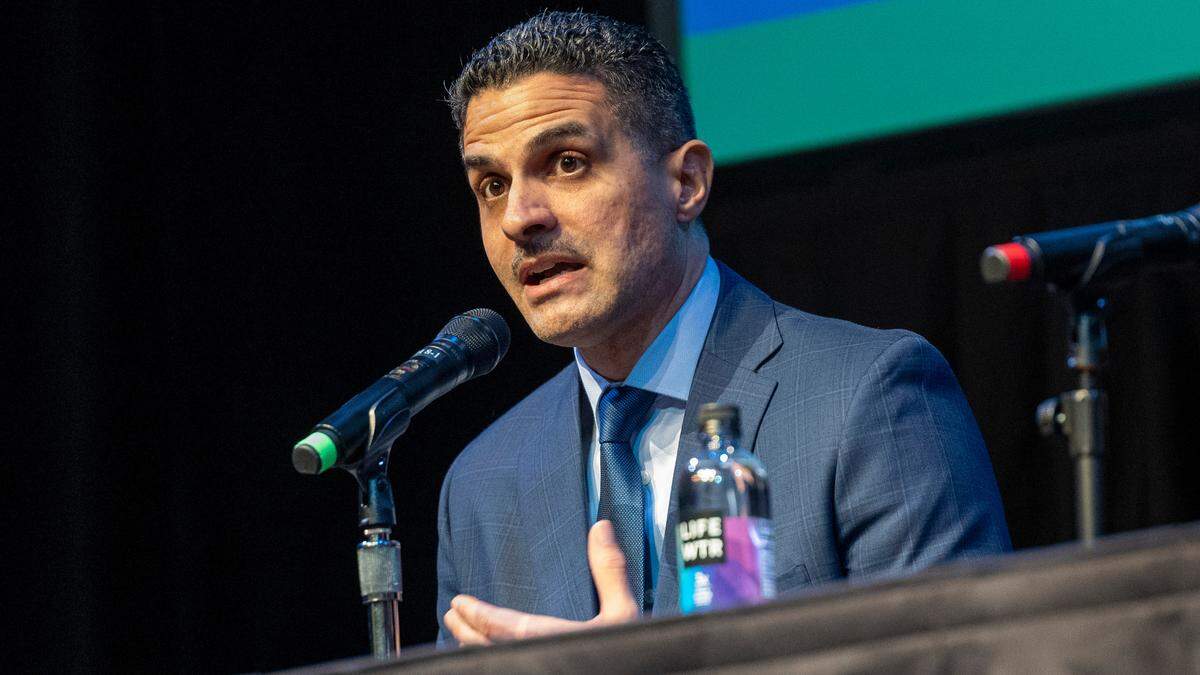
Joshua Wallace
Wallace, who has applied to police chief positions in at least four other cities in the past year, did not discuss a 2024 bankruptcy filing or citizen complaints that were filed against him while he worked for the Chicago Police Department.
Reporting on Wallace’s candidacy in Des Moines, Iowa, brought to light more than $840,000 in debt and a $285,000 settlement in one of six lawsuits naming him and other officers, The News & Observer previously reported. He told a Detroit media outlet last month that his debt is being repaid.
Monday night, Wallace hinted at his struggles while discussing the necessity of vulnerability in leadership.
“I think it’s extremely important to be vulnerable with those that you lead, because quite often … they don’t believe that you go through anything,” he said. “They believe that that gold star on your chest makes you superhuman.”
In his current role as a commander, Wallace said, he prioritizes meeting with those who work with him and speaking candidly about events in his life. That, combined with his willingness to collaborate, makes him an effective leader, he said.
Wallace also pointed to his experience collaborating with other state and federal agencies, highlighting his work coordinating security efforts for the 2024 Democratic National Convention in Chicago.
Ultimately, he said, he wouldn’t want to make major changes at the Raleigh Police Department, but would instead build on the foundation Patterson leaves behind.
“If given the opportunity, I just want to continue that momentum and keep growing and keep doing what needs to be done,” Wallace said.
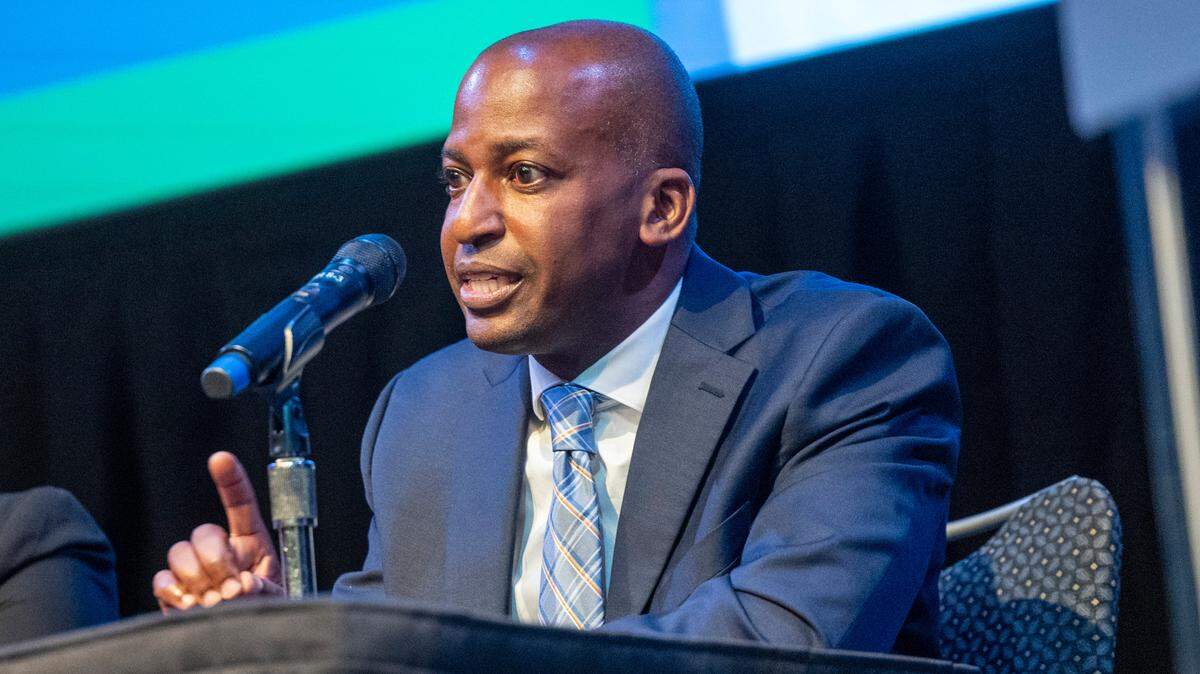
Rico Boyce
Using lessons learned from 25 years of service with the Raleigh Police Department, Boyce spoke about his strengths, repeatedly noting his deep knowledge of crime in Raleigh. Boyce has held every rank up through deputy chief and has worked in each of the department’s five divisions.
“City of Raleigh, there’s no learning curve with me,” he said. “If I’m selected [as] the chief, on Saturday, March 1, I’m ready to go. I’m prepared.”
But it wasn’t just Boyce’s experience that set him apart. The affection in the room for the deputy chief was palpable, with every remark he made met with resounding applause and the occasional whoops from the crowd.
Boyce promised he’d be an advocate for his officers and would prioritize retention over recruitment. Good retention will lead to better recruitment, he said.
“The men and women of the Raleigh Police Department, I want to tell you this – you’re not gonna get a bigger cheerleader than Chief Rico Boyce,” he said.
However, that high praise will come with high expectations, Boyce warned, referring to the “bookends” of departmental policy and understanding of the law he uses to evaluate his colleagues’ performance.
“I’m not gonna let one person tarnish the great image and reputation of the Raleigh Police Department,” he said.
Boyce’s home court advantage was clear as he wrapped up his parting remarks, which earned him loud cheers.
“I’m prepared,” he said. “I’m battle tested and I know what this city needs.”
This story was originally published February 24, 2025 at 10:27 PM.