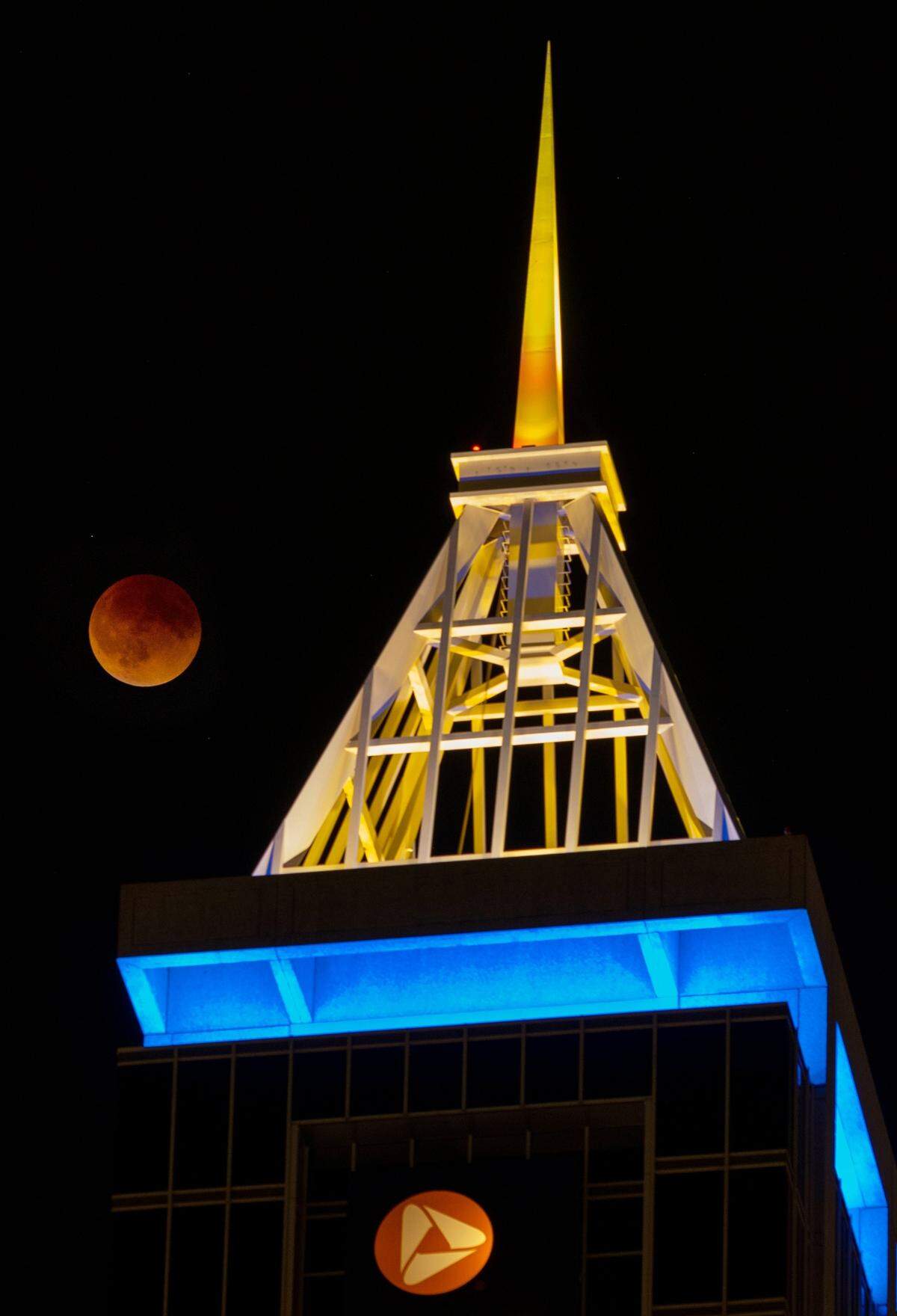
A red ‘Blood Moon’ will soon appear over NC skies for the first time in years. Here’s when
North Carolinians will have the chance to see the first Blood Moon lunar eclipse since 2022 this week, but you’ll have to stay up late to catch it.
The eclipse is set to appear over North Carolina and the rest of North America this week, according to space.com. The “blood moon” name comes from the deep reddish hue it takes on when it slips into the Earth’s shadow for just over an hour, the site says.
Here’s what to know about the Blood Moon.
When can you see the Blood Moon in NC?
A total lunar eclipse will take place on the evening of Thursday, March 13 and last into the early hours of Friday, March 14. The Blood Moon phase of the eclipse will last just over an hour, according to AccuWeather.
The event begins in North Carolina “when the moon enters Earth’s fuzzy outer shadow and loses brightness from 11:57 p.m. to 1:09 a.m.,” according to space.com. A partial phase will follow, when the moon turns red from 1:09 a.m. to 2:26 a.m.
Then, the moon will stay fully red for 65 minutes, and then the event will gradually reverse, concluding by 6 a.m.
How to observe the eclipse
While eye safety issue for solar eclipses, it’s not needed for lunar eclipses, according to CNET.
“You don’t need any special equipment, but it’s still a good opportunity to try out binoculars or a telescope if you have them,” Emily Rice, associate professor of astrophysics at the Macaulay Honors College of the City University of New York, told CNET.
It could be helpful to “scope out the moon” before the eclipse to get a feel for its location and brightness, she added.
What is a lunar eclipse?
During a lunar eclipse, Earth’s shadow obscures the moon, according to NASA.
Lunar eclipses happen when Earth is positioned exactly between the moon and the sun, NASA says. When that occurs, Earth’s shadow falls upon the surface of the moon, which appears to dim it.
Why does the moon turn red during a lunar eclipse?
When the moon moves into the inner part of the Earth’s shadow, or the umbra, some of the sunlight passes through Earth’s atmosphere, lighting the moon dimly, according to NASA.
“Colors with shorter wavelengths ― the blues and violets ― scatter more easily than colors with longer wavelengths, like red and orange,” NASA states. Because these longer wavelengths make it through Earth’s atmosphere, and the shorter wavelengths have scattered away, the Moon appears orangish or reddish during a lunar eclipse.”
Inspired by a story from The State in South Carolina.
This story was originally published March 10, 2025 at 10:39 AM with the headline "A red ‘Blood Moon’ will soon appear over NC skies for the first time in years. Here’s when."