
Raleigh family celebrates 100 years in the same house, on the same street
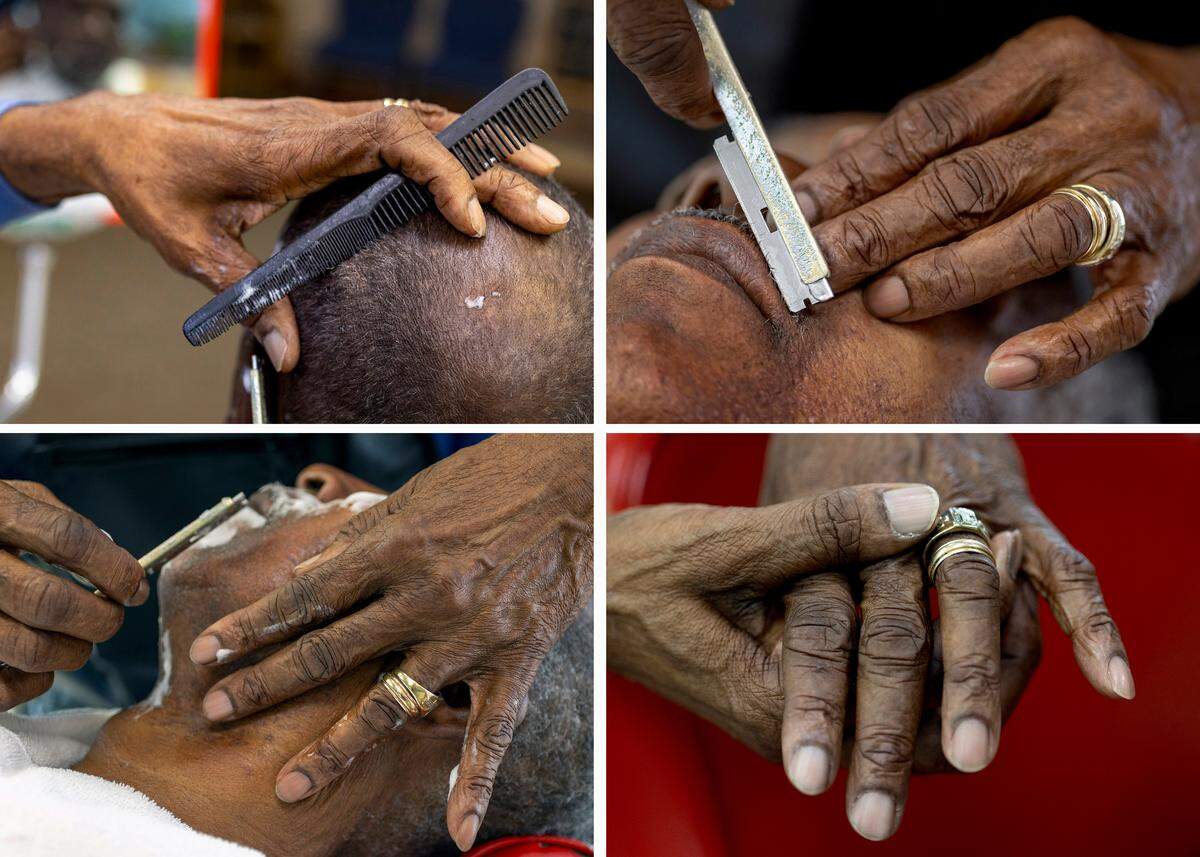
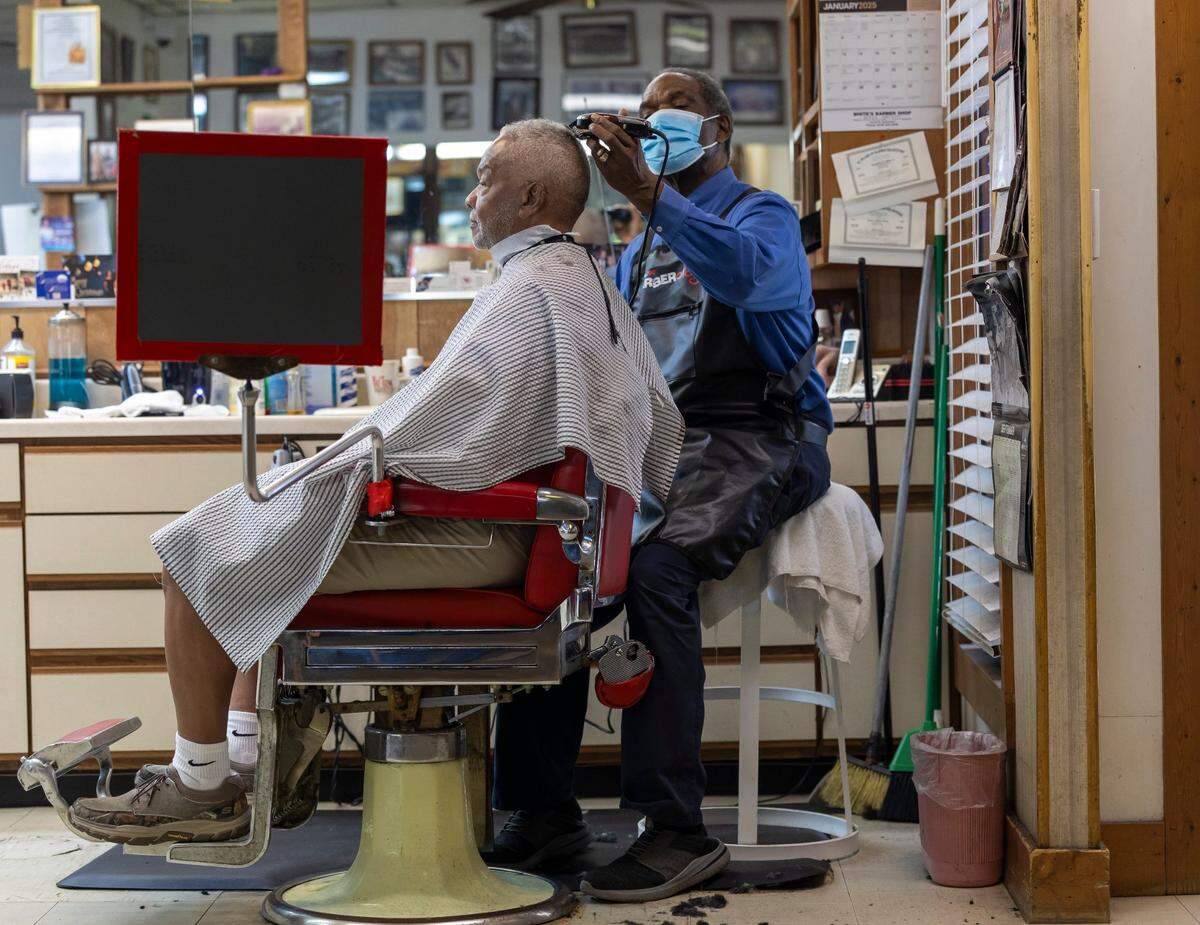
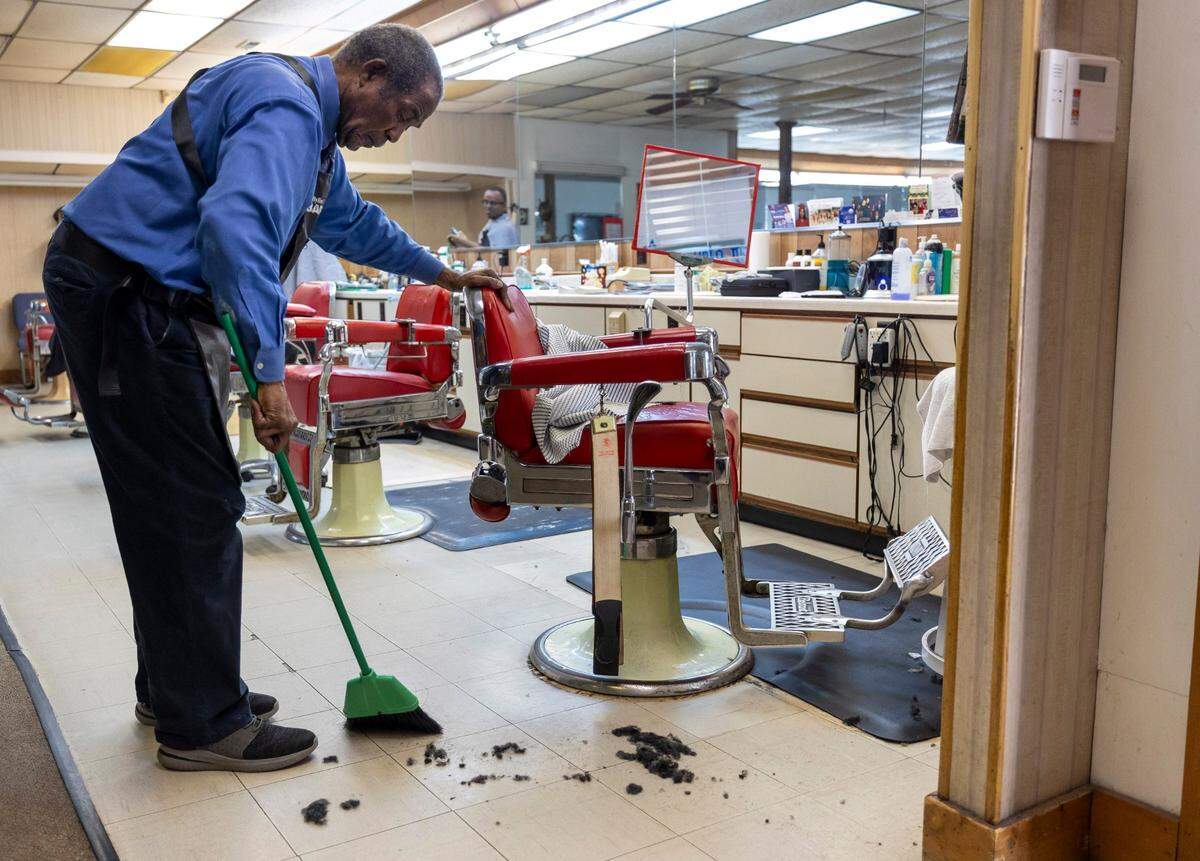
For the last 60 years, Sylvester White has flicked on the lights in his family’s barber shop, just a few blocks from the house his grandfather built in 1925, back when the streets were made of dirt.
At 84, White has cut some of the same heads of hair for a half-century, along with their children, their grandchildren and their great-grandchildren — such a mainstay on Hill Street that his customers would line up before dawn.
“I used to open at 5 o’clock in the morning,” he said last week, dressed for work in a tie, as always. “When I opened the door, I would have five people waiting in the dark. It stayed like that all day.”
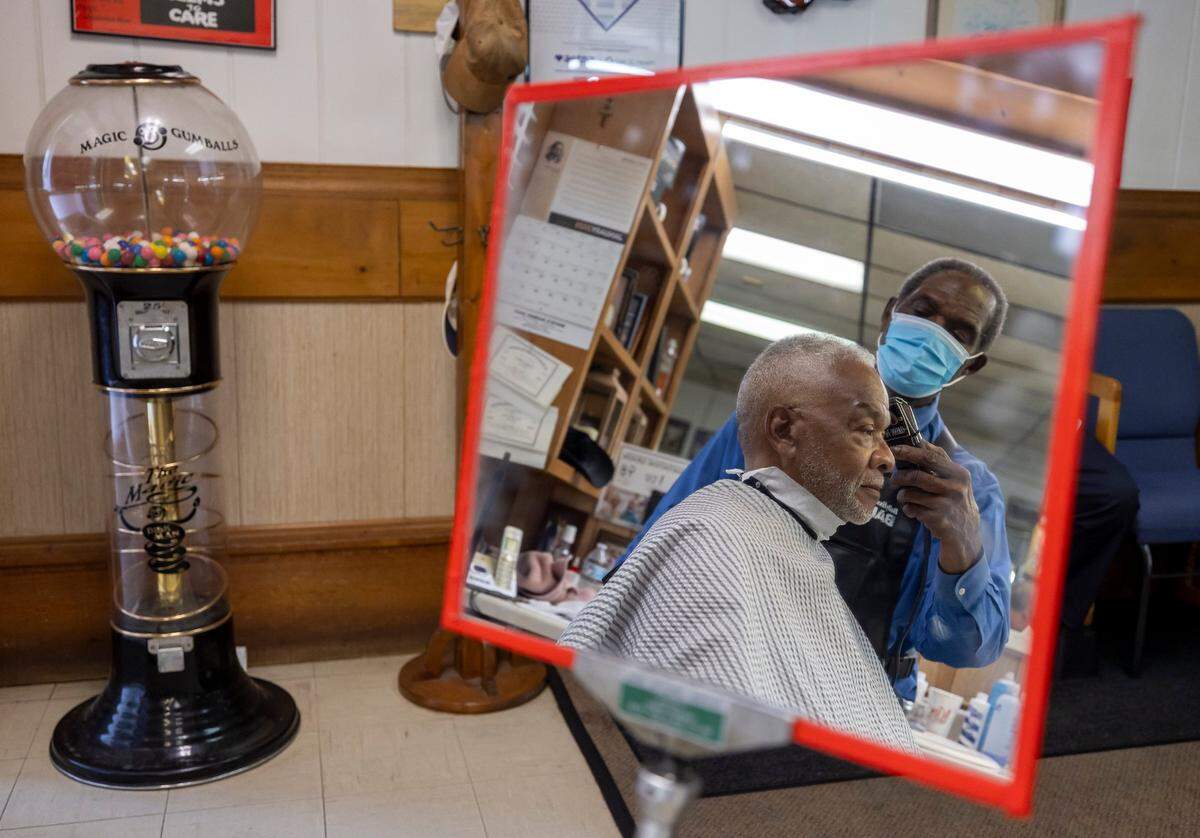
White has spent so many years on the street of his birth that he can remember blackouts during World War II. In his lifetime, he has witnessed red-lining, segregation and gentrification on the streets of his College Park neighborhood, which hugs St. Augustine’s University.
Yet his grandfather’s house still stands after 100 years, with his younger brother Harold living inside and generations of Whites clustered around nearby blocks.
“I was raised on Hill street,” he said last week. “I met my bride on Hill Street, and I’m still working on Hill Street. It’s just such an honor to be alive today and give glory to God. The only other place I would rather be than in College Park is in heaven.”
It wasn’t easy
Raleigh honored his family’s longevity last week at Tarboro Road Community Center, where White spoke alongside his wife, Rogerline, and his daughter Ulanda, both of whom work in the barbershop.
As the Whites spoke, the neighborhood also celebrated a milestone that took 20 years to acquire: a collection of College Park street signs situated around New Bern and Oakwood avenues — its borders.
Neighborhood activist and lifelong resident Octavia Rainey invited state senators, city council members, Wake County’s librarian, its register of deeds, Raleigh’s police chief, WakeMed and three pastors to recognize the fruits of a long-sought $15,000 grant.
“It wasn’t easy,” she said. “At first, the city didn’t want to cooperate with us. I don’t think they thought we were legitimate. We were born out of slavery. Don’t we get brownie points for that?”
With all the officialdom gathered, Rainey reminded the crowd that Raleigh didn’t annex the dirt-road neighborhood of College Park until 1929, and it didn’t pave the streets until the 1960s.
She spoke of outhouses, party-line phones and mom-and-pop shops that served the all-Black neighborhood, and she pointed out the tall houses for newcomers popping up around the White house of 1925.
“We were glad to even get indoor plumbing,” she said. “Black people’s houses don’t go up to heaven. They’re on one level. ... That’s why it’s so important we don’t forget.”
And while she had College Park on a roll, she launched a new project for the neighborhood: renaming Hill Street for Jesse White — Sylvester White’s grandfather.
“He was short in stature,” he said of his ancestor, “but large in heart.”
“Our home house”
You can still see the deed to Jesse White’s land on Hill Street, bought for $100.
In 1925, hardly any Black families in Raleigh owned a house. White’s grandparents lived in a shack while building theirs.
“He wanted to leave his mark here on Earth,” Sylvester White said. “That house was our home house.”
Fifteen years later, White’s father would start his own family on Hill Street, starting with Sylvester but adding nine more children, all of whom grew up inside those three bedrooms.
“And one bath,” White said, smiling at the memory.
“I remember that big ditch outside out house,” said his brother Harold, the fifth child. “Had to jump that ditch.”
White remembered walking to the corner of Oakwood Avenue for one of his first barbershop jobs, where he met Rogerline on his daily commute by foot. Their marriage has lasted 60 years, but almost none of the houses they would pass during that courtship remain.
“There were mom and pop stores on every corner,” he said. “My dad ran one. We no longer have mom and pops. Everyone knew everyone when I came along. We walked the streets together. We went to church with each other. There was less violence. There was a time nobody locked their homes. Nobody would intrude on your home. People respected each other.”
“We were going to be respectful”
White started his first barbershop on Hill Street with three chairs, then after 20 years, moved a few doors down to a larger shop with 10 chairs, then bought the whole Washington Terrace shopping center.
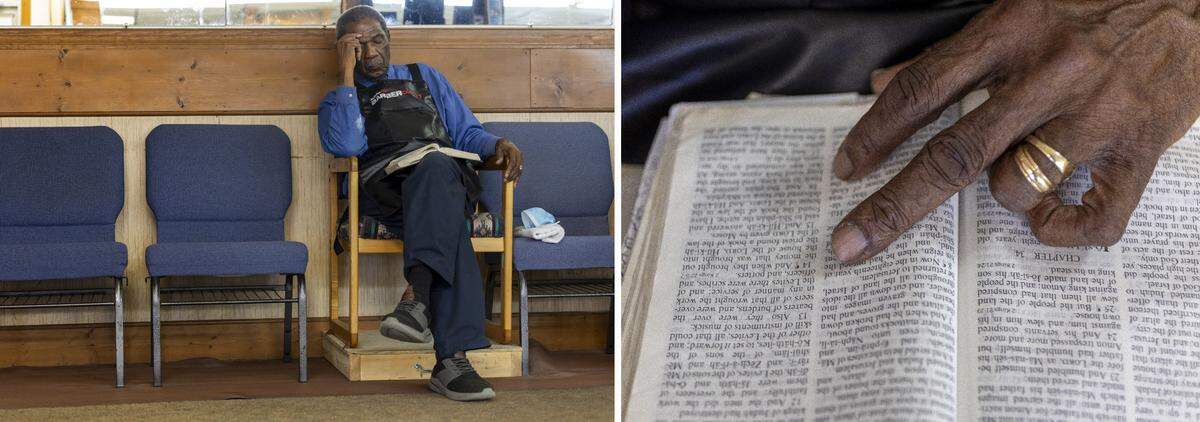
For decades, his family offered more than first-class haircuts. At White’s, a customer could argue basketball, debate politics, meet politicians, hold Bible study, get financial advice and at least once, get married. Both White and his daughter Ulanda are pastors, and his wife, Rogerline, holds a master’s degree in Christian education.
“Our shop had a good reputation,” said White last week. “People knew we were going to be respectful.”
He may not recognize as many faces. He may not know as many houses. But Sylvester White belongs to Hill Street and College Park like the thickest branch on a tall tree.
And if the neighborhood has any say, the White family name will stay fixed in College Park for another hundred years, no matter who moves in.
“Change should include us, not exclude us,” Rainey said at the celebration. “You can change, but don’t leave us out. When you start excluding us, pardon my French, but that is when I start raising Hell.”
Uniquely NC is a News & Observer subscriber collection of moments, landmarks and personalities that define the uniqueness (and pride) of why we live in the Triangle and North Carolina.