Why is the grass along NC highways getting long? Pollinators and politicians
AI-generated summary reviewed by our newsroom.
- New state law bans highway mowing in May to aid pollinators and wildflowers.
- Campaign season mowing also restricted, tied to when political signs are allowed.
- NCDOT reviewing safety concerns, especially where fast-growing weeds obstruct views.
Bees, butterflies and political candidates are the intended beneficiaries of a new law that restricts when the N.C. Department of Transportation can cut the grass along state highways.
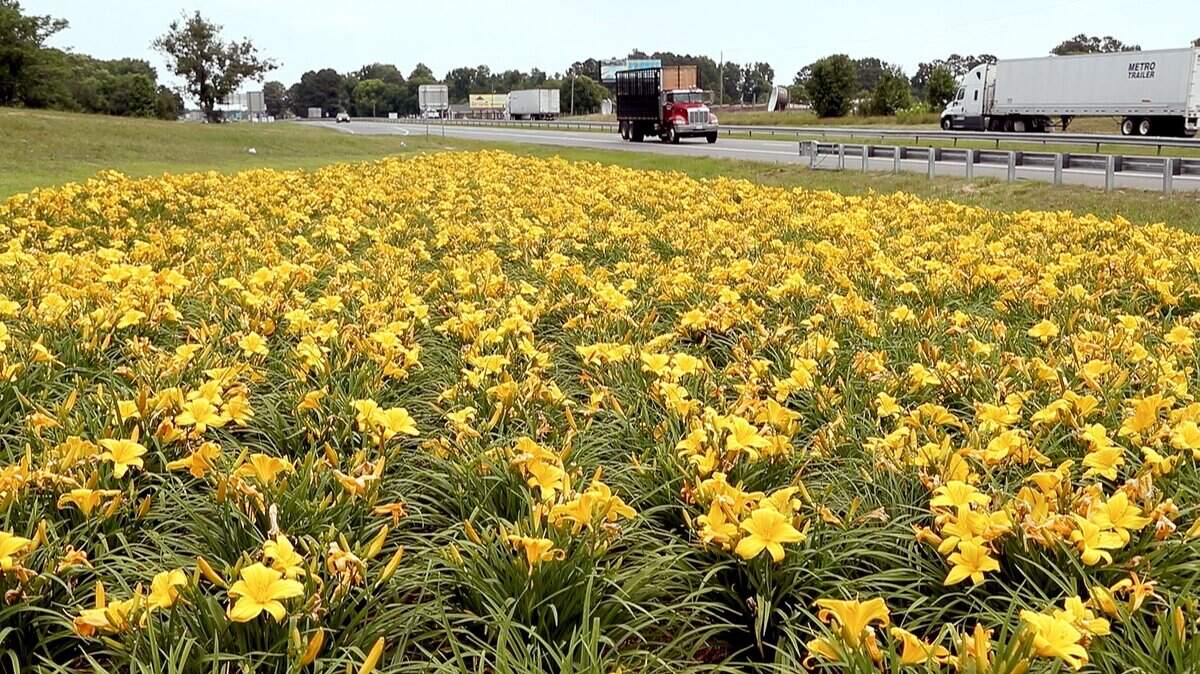
A bill signed by Gov. Josh Stein this summer prohibits mowing in state rights-of-way in May. That aims to give blooming wildflowers more time to feed pollinators and support birds and other animals that feed on them.
A second change in the bill is less straightforward.
It prohibits mowing in a highway right-of-way when politicians can post campaign signs there. State law defines that period as 30 days before the start of early voting through 10 days after a primary or election day. Those dates can vary from place to place and year to year depending on local and state election schedules.
The campaign mowing restrictions don’t apply to controlled access roads such as interstates or highways such as U.S. 1 south of Cary because political signs are not allowed there.
Environmental groups support the May mowing moratorium. It’s not clear, though, who requested the break during political seasons. That provision was added anonymously to Senate Bill 391, a larger piece of legislation containing two dozen transportation-related items.
The Republican senators who head the transportation committee where the change was made — Michael Lazzara of Onslow County, Bill Rabon of Brunswick County and Vickie Sawyer of Iredell County — did not respond to questions about it.
NCDOT may ask for changes in the law
For its part, NCDOT is still assessing how the law will affect its mowing operations. It’s also speaking with lawmakers about adding language that would make exceptions where faster-growing weeds cause safety problems.
That’s more a concern in the western half of the state, said Transportation Secretary Joey Hopkins.
“I don’t know that it would be as big an issue down east, where we’ve got more warm season grasses,” Hopkins told Board of Transportation members in July. “But you do have a lot of weeds like Johnson grass and others that pop up and that you can’t see around or over. That’s a worry for us.”
Parking the mowers in May is one of several changes the state has made in support of native plants and pollinators, said Zach Wallace, policy director for Audubon North Carolina.
The bill signed into law this summer also requires billboard companies that cut vegetation in public rights-of-way to replace them with native species. And it requires NCDOT and the Department of Natural and Cultural Resources to work with universities to develop a list of native grasses and plants to use for erosion control along highways and in state parks.
Wallace credits Sen. Rabon, a longtime advocate for birds and native plants, with ensuring those provisions made it into the bill. They build on an executive order issued by former Gov. Roy Cooper last year requiring state agencies to use native plants in their landscaping at future projects.
The reason for all this is that native plants are best for North Carolina wildlife, Wallace said.
“The insects, the pollinators, those are the plants that they crave,” he said. “The invasives and ornamental plants don’t provide those same level of benefits. And for the birds, if the insects and pollinators like it, then that’s the perfect place for birds to have their bug buffet, if you will.”
Is May the right month in North Carolina?
The May mowing moratorium was inspired by the ”No Mow May” movement that began in the United Kingdom as a way to give nature a boost on the eve of summer.
Some argue that March may be a better month to refrain from mowing in North Carolina, with its earlier growing season, said Manley Fuller, vice president for conservation policy at the N.C. Wildlife Federation. Indeed, Winston-Salem and surrounding Forsyth County began a “No Mow March” campaign this year, urging residents to let their yards be until April.
Both May and March are well-meaning, Fuller said, though there’s no single sweet spot in a state that has both the highest mountains along the East Coast and places that support Spanish moss and alligators.
“North Carolina is not a one-size-fits-all situation, because there’s quite a lot of variability in the climates,” he said.
Ideally, the state, as well as homeowners, would observe a no mow spring, March through May, Fuller said.
“You probably haven’t really done that much in terms of benefitting habitat if you just did it in May,” he said. “Now if you don’t mow before that, there could be a lot of benefits.”
Regardless of when and how long, Fuller and Wallace agree that the NCDOT mowing restrictions can help draw attention to the things homeowners and local governments can do for native plants.
“While the benefits are really important, it’s also about showing cities and towns and individuals that this is something they can do,” Wallace said. “So there’s as much of a public education piece of this as there is the actual wildlife benefits.”
This story was originally published September 2, 2025 at 5:00 AM.